
How to perform CPR
Published 15 Oct 202444 sec watch
Meets Patient’s editorial guidelines
- Share
- Discussion
- Ask Patient
- Audio Version
- Add to preferred sources on Google
Without #CPR, your chance of dying dramatically increases after cardiac arrest. By learning CPR, you can become a hero and save someone else's life. Minutes spent learning CPR can mean a lifetime saved.
The British Heart Foundation's RevivR campaign puts this power in your hands.
Taking its free 15-minute online CPR course means you could be ready to act in an emergency: https://revivr.bhf.org.uk/?_gl=1fkc6u0_gcl_auODQxNTE0NjAzLjE3MjM0NjU0MjM._gaMTk4MDI3MTAyMC4xNzIzNDY1NDI0_ga_L1TRS9RE0M*MTcyMzQ2NzQyOC4yLjAuMTcyMzQ2NzQyOC42MC4wLjA.
Visuals: Ben Hudson
 What to Expect: Ovarian Cancer Diagnosis Steps49 sec
 Ideas, Concerns and Expectations - a guide to filling in your GP’s online form4 min 56 sec
 How to register with ORB and link your NHS record1 min 37 sec
 What the NHS App is and your right to access your full record2 min 25 sec
 What is Meniere's disease?52 sec
 Welcome to Patient57 sec
Patient picks
Patient information leaflet
Heart attack
You should call for an ambulance immediately if you develop severe chest pain. [https://patient.info/health/heart-attack-myocardial-infarction-leaflet](https://patient.info/health/heart-attack-myocardial-infarction-leaflet) If you have a heart attack, a coronary artery or one of its smaller branches is suddenly blocked. If they stop responding at.

Feature
Breasts aren't barriers - the St John Ambulance 'CPR Bra' campaign
If someone needed cardiopulmonary resuscitation (CPR) and you had the skills, you’d give it to them without wasting a second, right. Wrong. Reservations could cost lives These insights came from a survey of 2,000 people, commissioned by the charity. It marks this ... Call 999. Give chest compressions. St John Ambulance’s medical director, Dr Lynn.
Patient information leaflet
Atrial fibrillation
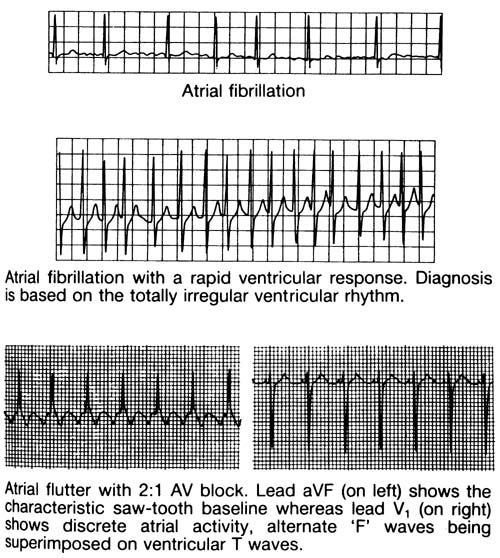
A normal heart rate is between 60 and 100 beats a minute (bpm) when you're resting. In AF the heart rate can sometimes be very fast (often between 140 and 180 bpm) as well as being irregular. Atrial fibrillation Atrial fibrillation explained is a type of abnormal heart rhythm (arrhythmia). AF can cause problems if it makes the heart beat too fast..

Feature
The importance of learning CPR: Emma tells her story
According to the British Heart Foundation (BHF) 30,000 people have a cardiac arrest each year. Fewer than one in ten of these people will survive. Cardiac arrest can happen to anyone, anywhere, at any time - and without warning. What is CPR. CPR (cardiopulmonary resuscitation) is an emergency procedure to get your heart beating again when it.

Patient information leaflet
Cardiac catheterisation
Cardiac catheterisation is a way to find out detailed information about your heart and coronary arteries and it is also possible to provide treatment for some conditions at the same time. What is a cardiac catheterisation. Cardiac catheterisation is a procedure in which a very thin plastic catheter is passed into the chambers of the heart. The.

Feature
The importance of learning CPR
According to the British Heart Foundation (BHF) 30,000 people have a cardiac arrest each year. CPR (cardiopulmonary resuscitation) is an emergency procedure to get your heart beating again when it unexpectedly stops (cardiac arrest). The British Heart Foundation's RevivR campaign puts ... Taking its free 15-minute online CPR course means you could.
Share your thoughts or experiences with others in our patient communities.