Atelosteogenesis type 1
Last updated 18 Aug 2020
Meets Patient’s editorial guidelines
- DownloadDownload
- Share
- Language
- Discussion
- Ask Patient
- Audio Version
- Add to preferred sources on Google
Atelosteogenesis type 1 is a disorder that affects the development of bones throughout the body. Affected individuals are born with inward- and upward-turning feet (clubfeet) and dislocations of the hips, knees, and elbows. Bones in the spine, rib cage, pelvis, and limbs may be underdeveloped or in some cases absent. As a result of the limb bone abnormalities, individuals with this condition have very short arms and legs. Characteristic facial features include a prominent forehead, wide-set eyes (hypertelorism), an upturned nose with a grooved tip, and a very small lower jaw and chin (micrognathia). Affected individuals may also have an opening in the roof of the mouth (a cleft palate). Males with this condition can have undescended testes.
Video picks for Genetic conditionsVideo library
Description
Atelosteogenesis type 1 is a disorder that affects the development of bones throughout the body. Affected individuals are born with inward- and upward-turning feet (clubfeet) and dislocations of the hips, knees, and elbows. Bones in the spine, rib cage, pelvis, and limbs may be underdeveloped or in some cases absent. As a result of the limb bone abnormalities, individuals with this condition have very short arms and legs. Characteristic facial features include a prominent forehead, wide-set eyes (hypertelorism), an upturned nose with a grooved tip, and a very small lower jaw and chin (micrognathia). Affected individuals may also have an opening in the roof of the mouth (a cleft palate). Males with this condition can have undescended testes.
Individuals with atelosteogenesis type 1 typically have an underdeveloped rib cage that affects the development and functioning of the lungs. As a result, affected individuals are usually stillborn or die shortly after birth from respiratory failure.
Inheritance patterns
The source lists the following possible inheritance patterns: Autosomal dominant. More than one pattern can apply in different cases.
Related genes
Other names
AOI
Atelosteogenesis type I
Giant cell chondrodysplasia
Spondylohumerofemoral hypoplasia
Patient picks for Genetic conditions

Diabetes
Type 1 diabetes
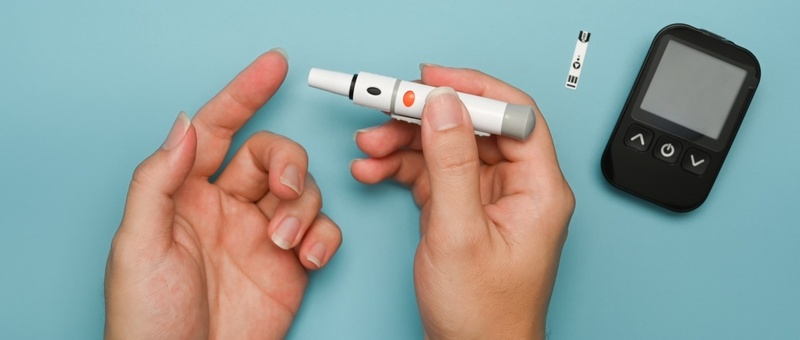
Type 1 diabetes is the type of diabetes that typically develops in children and in young adults. In type 1 diabetes the body stops making insulin and the blood sugar (glucose) level goes very high. Treatment to control the blood glucose level is with insulin injections and a healthy diet. Other treatments aim to reduce the risk of complications. They include reducing blood pressure if it is high and advice to lead a healthy lifestyle.
by Dr Colin Tidy, MRCGP
Diabetes
MHRA approves teplizumab to delay progression of type 1 diabetes
Teplizumab (Tzield) has been approved by the Medicines and Healthcare products Regulatory Agency (MHRA) to help delay the onset of Stage 3 type 1 diabetes (T1D). Read on to see what this means if you are prescribed teplizumab and what it does for you.
by Lawrence Higgins

Health and wellness video library
Type 2 diabetes videos
Our type 2 diabetes video hub features expert-led videos covering everything you need to know—from what causes type 2 diabetes and its common symptoms, to how it’s treated and the possible complications to watch out for. Whether you’re newly diagnosed or supporting someone with the condition, these videos are here to help you take control and live well.
by Lawrence Higgins

Diabetes
Continuous glucose monitoring in type 1 diabetes
Type 1 and type 2 diabetes are both potentially serious conditions which should always be taken seriously. They’re both diagnosed on the basis of high blood sugar. But in other respects they are very, very different. Type 2 is largely down to lifestyle – getting type 1 is absolutely nothing to do with whether you eat too much sugar, carry excess weight or don’t exercise enough. People with type 2 diabetes often never need insulin – those with type 1 need it from day one. Many people with type 2 diabetes never need treatment that carries a risk of disabling low blood sugar (hypoglycaemia) – people with type 1 live with this risk every day. As a result, many people with type 2 never need to check their blood sugar several times a day – for people with type 1, it’s a highly unwelcome occupational hazard.
by Dr Sarah Jarvis

Diabetes
Slowdown in type 2 diabetes cases
Some countries have seen a fall in new cases of type 2 diabetes according to a new review of the current evidence.
by Milly Evans

Diabetes
Video: What's the difference between type 1 and type 2 diabetes?
While they're both technically under the umbrella of diabetes, type 1 and type 2 are very different conditions which require a distinct set of treatments. We've looked at some of the main questions people have around each.
by Dr Sarah Jarvis
Related patient information and medicines
Patient information leaflet
Type 1 diabetes
Type 1 diabetes is the type of diabetes that typically develops in children and in young adults. However, without treatment , the blood sugar (glucose) level becomes very high and acids form in the bloodstream (ketoacidosis). However, without treatment, the blood sugar (glucose) level becomes very high and acids form in the bloodstream.

Patient information leaflet
Ketones in urine
Diabetic ketoacidosis (DKA). Severe insulin deficiency causes an increase ... Urine is tested for ketones as part of monitoring of type 1 diabetes mellitus. Monitoring of ketones is important in all people with diabetes: When they feel unwell. Diabetic ketoacidosis DKA is a serious problem that can occur in people with diabetes if their body.

Patient information leaflet
Diabetic kidney disease
Diabetic kidney disease is a complication that occurs in some people with diabetes. Diabetic kidney disease (diabetic nephropathy) is a complication that occurs in some people with diabetes... For people with type 1 diabetes Roughly 1 in 10 people with diabetes have type 1 diabetes. Type 1 diabetes is an autoimmune condition where the body's.
Patient information leaflet
Diabetes and pregnancy
Diabetes mellitus (just called diabetes from now on) occurs when the level of sugar (glucose) in the blood becomes higher than normal. Ther... These are type 1 diabetes (this usually starts in childhood or adolescence and requires insulin treatment from the start) and type 2 diabetes (this usually starts in adulthood and often can be managed with.

Patient information leaflet
Types of seizures
A seizure is a condition caused by a sudden burst of electrical activity in the brain. There are different types of seizures. This leaflet gives some information about what your doctor may wish to know and what tests may be advised after such an event. What is a seizure. A seizure is a short episode of symptoms caused by a burst of abnormal.
Patient information leaflet
Congenital pulmonary airway malformation
Congenital pulmonary airway malformation (CPAM) is a rare abnormality of lung development. It is found either in unborn babies or in young babies. The name has recently changed from congenital cystic adenomatoid malformation (CCAM). It is increasingly detected by the routine ultrasound scan during pregnancy. Congenital means present from birth..
Further reading and references
- Atelosteogenesis type 1; MedlinePlus, National Library of Medicine.
- Farrington-Rock C, Firestein MH, Bicknell LS, Superti-Furga A, Bacino CA, Cormier-Daire V, Le Merrer M, Baumann C, Roume J, Rump P, Verheij JB, Sweeney E, Rimoin DL, Lachman RS, Robertson SP, Cohn DH, Krakow D. Mutations in two regions of FLNB result in atelosteogenesis I and III. Hum Mutat. 2006 Jul;27(7):705-10. doi: 10.1002/humu.20348.
- Krakow D, Robertson SP, King LM, Morgan T, Sebald ET, Bertolotto C, Wachsmann-Hogiu S, Acuna D, Shapiro SS, Takafuta T, Aftimos S, Kim CA, Firth H, Steiner CE, Cormier-Daire V, Superti-Furga A, Bonafe L, Graham JM Jr, Grix A, Bacino CA, Allanson J, Bialer MG, Lachman RS, Rimoin DL, Cohn DH. Mutations in the gene encoding filamin B disrupt vertebral segmentation, joint formation and skeletogenesis. Nat Genet. 2004 Apr;36(4):405-10. doi: 10.1038/ng1319. Epub 2004 Feb 29.
- Sawyer GM, Clark AR, Robertson SP, Sutherland-Smith AJ. Disease-associated substitutions in the filamin B actin binding domain confer enhanced actin binding affinity in the absence of major structural disturbance: Insights from the crystal structures of filamin B actin binding domains. J Mol Biol. 2009 Jul 31;390(5):1030-47. doi: 10.1016/j.jmb.2009.06.009. Epub 2009 Jun 6.
Share your thoughts or experiences with others in our patient communities.
Simple access to trusted treatments and health services online.
Common conditions
Get help with common conditions through the NHS, without a GP appointment.





Sign up to the Patient newsletter
Your weekly dose of clear, trustworthy health advice - written to help you feel informed, confident and in control.
By subscribing you accept our Privacy Policy. You can unsubscribe at any time. We never sell your data.