arylsulfatase L
Last updated 1 Jul 2022
Meets Patient’s editorial guidelines
- DownloadDownload
- Share
- Language
- Discussion
- Ask Patient
- Audio Version
- Add to preferred sources on Google
The ARSL gene provides instructions for making an enzyme called arylsulfatase L. This enzyme is part of a group known as sulfatases, which are enzymes that help process molecules that contain chemical groups known as sulfates. Sulfatases play important roles in cartilage and bone development.
Video picks for GenesVideo library
Normal function
The ARSL gene provides instructions for making an enzyme called arylsulfatase L. This enzyme is part of a group known as sulfatases, which are enzymes that help process molecules that contain chemical groups known as sulfates. Sulfatases play important roles in cartilage and bone development.
Within cells, arylsulfatase L is located in the Golgi apparatus, a structure that modifies newly produced enzymes and other proteins. The function of this enzyme is unknown, although researchers believe it participates in a chemical pathway involving vitamin K. Evidence suggests that vitamin K normally plays a role in bone growth and maintenance of bone density.
Conditions referring to this gene or chromosome
Other names
ARSE
ARSE_HUMAN
arylsulfatase E
CDPX
CDPX1
CDPXR
MGC163310
Patient picks for Genes
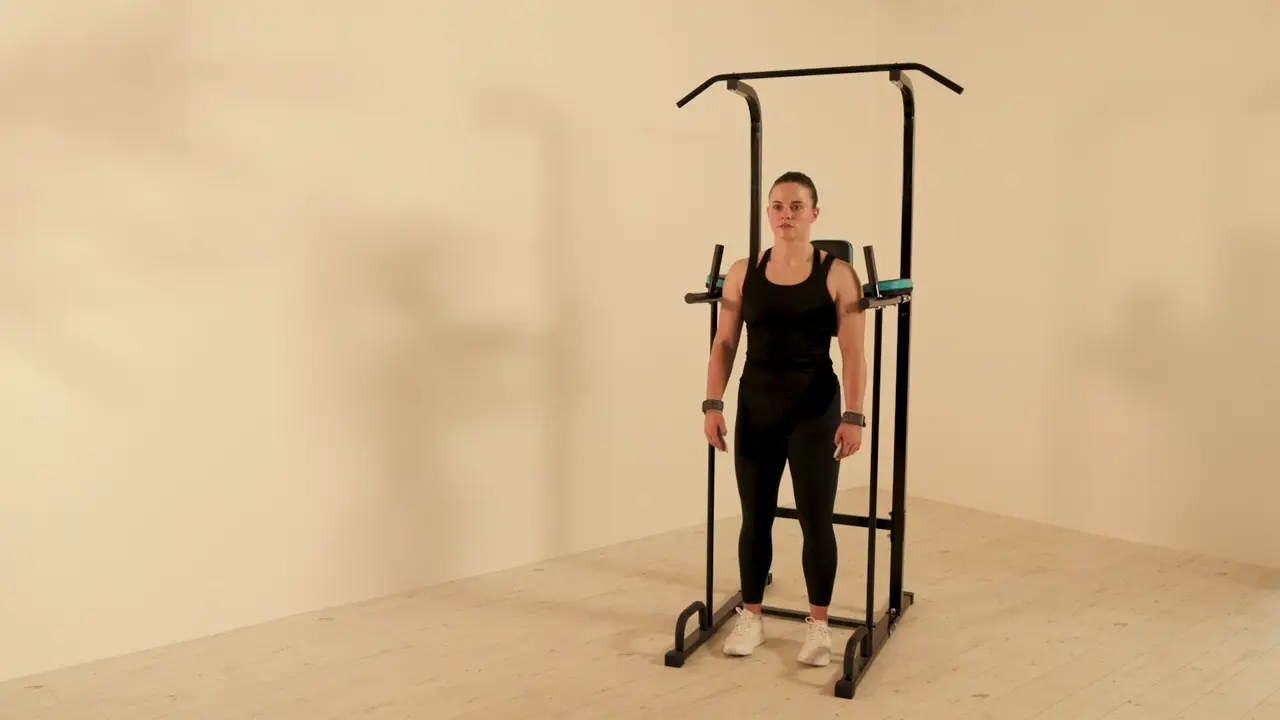
Core strength & conditioning exercises
Hanging Leg Raise (L Shape)
The Pull-Up Bar Hanging Leg Raise (L Shape) is a core exercise that targets the lower abs and hip flexors. It involves hanging from a pull-up bar with an overhand grip and lifting your legs straight out in front of you to form an "L" shape with your body. By holding this position and raising your legs, you engage the lower abdominal muscles and hip flexors while maintaining a stable core. This exercise enhances core strength, flexibility, and grip endurance.

MSK
Drawing Bow & Arrow Fly
Settle into horse stance, feet wide and knees softly bent. Bring the hands into gentle fists in front of the chest, elbows relaxed. Extend the left arm and open the hand into an “L” shape with the thumb and index finger while the other three fingers curl inward. The left arm reaches out as though holding the bow. Keeping the knees bent, let the right fist remain in front of the chest, then draw the right elbow straight back along a clean line, as if pulling a bowstring. Turn the head and gaze through the space between the left thumb and index finger. With a steady exhale, “release” the arrow. Repeat to the other side, maintaining the rootedness of the legs and the spaciousness of the chest. Traditionally, this form is said to regulate the Wood, Metal, and Fire elements, supporting the Liver, Lungs, and Heart meridians. It helps open the chest, strengthen the back and legs, and cultivate clear focus—beneficial for vision, direction, and the sense of moving toward one’s aims.
Further reading and references
- arylsulfatase L; MedlinePlus, National Library of Medicine.
- Braverman NE, Bober MB, Brunetti-Pierri N, Suchy SF. Chondrodysplasia Punctata 1, X-Linked. 2008 Apr 22 [updated 2020 Oct 15]. In: Adam MP, Bick S, Mirzaa GM, Wallace SE, Amemiya A, editors. GeneReviews(R) [Internet]. Seattle (WA): University of Washington, Seattle; 1993-2026. Available from http://www.ncbi.nlm.nih.gov/books/NBK1544/
- Brunetti-Pierri N, Andreucci MV, Tuzzi R, Vega GR, Gray G, McKeown C, Ballabio A, Andria G, Meroni G, Parenti G. X-linked recessive chondrodysplasia punctata: spectrum of arylsulfatase E gene mutations and expanded clinical variability. Am J Med Genet A. 2003 Mar 1;117A(2):164-8. doi: 10.1002/ajmg.a.10950.
- Daniele A, Parenti G, d'Addio M, Andria G, Ballabio A, Meroni G. Biochemical characterization of arylsulfatase E and functional analysis of mutations found in patients with X-linked chondrodysplasia punctata. Am J Hum Genet. 1998 Mar;62(3):562-72. doi: 10.1086/301746.
- Nino M, Matos-Miranda C, Maeda M, Chen L, Allanson J, Armour C, Greene C, Kamaluddeen M, Rita D, Medne L, Zackai E, Mansour S, Superti-Furga A, Lewanda A, Bober M, Rosenbaum K, Braverman N. Clinical and molecular analysis of arylsulfatase E in patients with brachytelephalangic chondrodysplasia punctata. Am J Med Genet A. 2008 Apr 15;146A(8):997-1008. doi: 10.1002/ajmg.a.32159.
- Parenti G, Buttitta P, Meroni G, Franco B, Bernard L, Rizzolo MG, Brunetti-Pierri N, Ballabio A, Andria G. X-linked recessive chondrodysplasia punctata due to a new point mutation of the ARSE gene. Am J Med Genet. 1997 Dec 12;73(2):139-43. doi: 10.1002/(sici)1096-8628(19971212)73:23.0.co;2-p.
- Sheffield LJ, Osborn AH, Hutchison WM, Sillence DO, Forrest SM, White SJ, Dahl HH. Segregation of mutations in arylsulphatase E and correlation with the clinical presentation of chondrodysplasia punctata. J Med Genet. 1998 Dec;35(12):1004-8. doi: 10.1136/jmg.35.12.1004.
Share your thoughts or experiences with others in our patient communities.
Simple access to trusted treatments and health services online.
Common conditions
Get help with common conditions through the NHS, without a GP appointment.





Sign up to the Patient newsletter
Your weekly dose of clear, trustworthy health advice - written to help you feel informed, confident and in control.
By subscribing you accept our Privacy Policy. You can unsubscribe at any time. We never sell your data.