chromodomain helicase DNA binding protein 2
Last updated 18 Aug 2020
Meets Patient’s editorial guidelines
- DownloadDownload
- Share
- Language
- Discussion
- Ask Patient
- Audio Version
- Add to preferred sources on Google
The CHD2 gene provides instructions for making a protein called chromodomain DNA helicase protein 2. This protein is found in cells throughout the body and regulates gene activity (expression) through a process known as chromatin remodeling. Chromatin is the complex of DNA and proteins that packages DNA into chromosomes. The structure of chromatin can be changed (remodeled) to alter how tightly DNA is packaged. When DNA is tightly packed, gene expression is lower than when DNA is loosely packed. Chromodomain DNA helicase protein 2 appears to play an important role in the brain, although its function is not well understood. Research suggests that it may help control development or functioning of nerve cells (neurons).
Video picks for GenesVideo library
Normal function
The CHD2 gene provides instructions for making a protein called chromodomain DNA helicase protein 2. This protein is found in cells throughout the body and regulates gene activity (expression) through a process known as chromatin remodeling. Chromatin is the complex of DNA and proteins that packages DNA into chromosomes. The structure of chromatin can be changed (remodeled) to alter how tightly DNA is packaged. When DNA is tightly packed, gene expression is lower than when DNA is loosely packed. Chromodomain DNA helicase protein 2 appears to play an important role in the brain, although its function is not well understood. Research suggests that it may help control development or functioning of nerve cells (neurons).
Conditions referring to this gene or chromosome
Other names
ATP-dependent helicase CHD2
CHD-2
EEOC
FLJ38614
Patient picks for Genes

Tests and investigations
Is DNA testing a good idea?
'DIY' genetic tests are heavily hyped these days - they claim to be able to predict your risk of dementia, cancer, heart disease and much more. But should you shell out your money for them? Absolutely not, according to most doctors. However, there are situations where DNA tests can save lives.
by Dr Sarah Jarvis

Diet and nutrition
How a protein-packed breakfast can boost your health
When we think of breakfast, we often picture a bowl of cornflakes with milk. While it’s a classic morning staple, it might not be the most effective way to start your day, as it lacks protein. Adding more protein to your breakfast can boost your energy levels and help keep you feeling full for longer.
by Victoria Raw
Healthy living
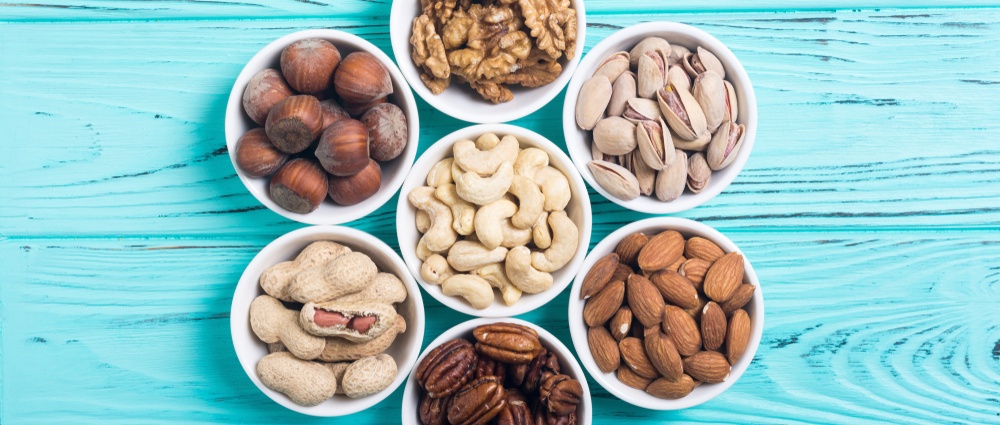
8 high-protein nuts to boost your strength
Packed with protein, delicious, easy to eat, and versatile - nuts are a great source of fuel for people building their fitness and strength. But not all nuts are created equal, which is why we count down the top eight nuts you should eat while strength training and serve these up with tasty recipe ideas.
by Lynn Stephen
Healthy living
Natural protein verses protein powder: which is better for strength training?
Consuming enough protein is essential for building strong muscles. Protein powder shakes are not a complete replacement for natural protein sources found in your food. However, you may consider supplementing your diet and strength-training regime with protein shakes. Before you decide if this is right for you, there are several benefits and considerations to take into account.
by Amberley Davis

Kidney and urinary tract
Proteinuria
Proteins are molecules that are found in almost every part of the body, including in the blood. The kidneys normally have a filter which stops protein from entering the urine, except in very tiny amounts; however, kidney problems can cause higher levels of protein to be found in the urine.
by Dr Doug McKechnie, MRCGP

Diet and nutrition
10 sources of plant-based protein for bone health
Plant-based diets are growing in popularity. People choose this way of eating for various reasons - to boost their health, help animals, and protect the environment. But switching to a plant-based diet may mean you're missing out on vital, bone-friendly nutrients. One of these is protein.
by Victoria Raw
Related patient information and medicines

Patient information leaflet
Genetic testing
Genetic testing is a type of medical test that identifies changes in chromosomes, genes or proteins. Genetic tests examine a person's DNA in a variety of ways to assess a person's genetic health. They are all designed to identify a particular gene that may cause a genetic disorder. We all have 46 chromosomes in our cells. Chromosomes are made from.

Patient information leaflet
The immune system
These diseases are managed by the specialist who knows most about the system affected for that person - eg, multiple sclerosis is managed by a neurologist. What is the immune system. We are surrounded by millions of bacteria, viruses and other germs (microbes) that have the potential to enter our bodies and cause harm. The immune system is the.

Patient information leaflet
Colour vision deficiency
Pa... Leukaemia Leukaemia. Sickle cell disease Sickle cell disease. DNA, genes and chromosomes In most cells of your body you have 46 chromosomes arranged in 23 pairs. 22 of the pairs are matching pairs. The 23rd pair of chromosomes are the sex chromosomes, which match exactly in women (who have two X chromosomes) but not in men - who have one X.

Patient information leaflet
Muscular dystrophy
There are different types of muscular dystrophy, which vary as to how severe they are, ranging from very mild to severe. The different types also vary as to what age they begin. If muscular dystrophy is suspected, tests can help to make an accurate diagnosis. Other people in the family can also be tested to see if they have a muscular dystrophy.

Patient information leaflet
Alpha-1 antitrypsin deficiency
A genetic condition is one that can be passed on from parents through genes. In alpha-1 antitrypsin deficiency the result of a genetic abnormality leads to lung and, in some people, liver damage. Lung symptoms are the most common... What is alpha-1 antitrypsin. Alpha-1 antitrypsin (A1AT) is a protein made by cells in the liver. It passes from the.

Patient information leaflet
Vaccines and egg allergies
Newer techniques have been developed to make inactivated flu vaccines; these include: Cell-based vaccines, where mammal cells are infected with flu virus, which multiplies insi... Recombinant vaccines, where DNA from the flu virus is inserted into cells in a lab, causing them to produce a set of proteins from the virus which can then be collected.
Further reading and references
- chromodomain helicase DNA binding protein 2; MedlinePlus, National Library of Medicine.
- O'Roak BJ, Stessman HA, Boyle EA, Witherspoon KT, Martin B, Lee C, Vives L, Baker C, Hiatt JB, Nickerson DA, Bernier R, Shendure J, Eichler EE. Recurrent de novo mutations implicate novel genes underlying simplex autism risk. Nat Commun. 2014 Nov 24;5:5595. doi: 10.1038/ncomms6595.
- Pinto D, Delaby E, Merico D, Barbosa M, Merikangas A, Klei L, Thiruvahindrapuram B, Xu X, Ziman R, Wang Z, Vorstman JA, Thompson A, Regan R, Pilorge M, Pellecchia G, Pagnamenta AT, Oliveira B, Marshall CR, Magalhaes TR, Lowe JK, Howe JL, Griswold AJ, Gilbert J, Duketis E, Dombroski BA, De Jonge MV, Cuccaro M, Crawford EL, Correia CT, Conroy J, Conceicao IC, Chiocchetti AG, Casey JP, Cai G, Cabrol C, Bolshakova N, Bacchelli E, Anney R, Gallinger S, Cotterchio M, Casey G, Zwaigenbaum L, Wittemeyer K, Wing K, Wallace S, van Engeland H, Tryfon A, Thomson S, Soorya L, Roge B, Roberts W, Poustka F, Mouga S, Minshew N, McInnes LA, McGrew SG, Lord C, Leboyer M, Le Couteur AS, Kolevzon A, Jimenez Gonzalez P, Jacob S, Holt R, Guter S, Green J, Green A, Gillberg C, Fernandez BA, Duque F, Delorme R, Dawson G, Chaste P, Cafe C, Brennan S, Bourgeron T, Bolton PF, Bolte S, Bernier R, Baird G, Bailey AJ, Anagnostou E, Almeida J, Wijsman EM, Vieland VJ, Vicente AM, Schellenberg GD, Pericak-Vance M, Paterson AD, Parr JR, Oliveira G, Nurnberger JI, Monaco AP, Maestrini E, Klauck SM, Hakonarson H, Haines JL, Geschwind DH, Freitag CM, Folstein SE, Ennis S, Coon H, Battaglia A, Szatmari P, Sutcliffe JS, Hallmayer J, Gill M, Cook EH, Buxbaum JD, Devlin B, Gallagher L, Betancur C, Scherer SW. Convergence of genes and cellular pathways dysregulated in autism spectrum disorders. Am J Hum Genet. 2014 May 1;94(5):677-94. doi: 10.1016/j.ajhg.2014.03.018. Epub 2014 Apr 24.
- Suls A, Jaehn JA, Kecskes A, Weber Y, Weckhuysen S, Craiu DC, Siekierska A, Djemie T, Afrikanova T, Gormley P, von Spiczak S, Kluger G, Iliescu CM, Talvik T, Talvik I, Meral C, Caglayan HS, Giraldez BG, Serratosa J, Lemke JR, Hoffman-Zacharska D, Szczepanik E, Barisic N, Komarek V, Hjalgrim H, Moller RS, Linnankivi T, Dimova P, Striano P, Zara F, Marini C, Guerrini R, Depienne C, Baulac S, Kuhlenbaumer G, Crawford AD, Lehesjoki AE, de Witte PA, Palotie A, Lerche H, Esguerra CV, De Jonghe P, Helbig I; EuroEPINOMICS RES Consortium. De novo loss-of-function mutations in CHD2 cause a fever-sensitive myoclonic epileptic encephalopathy sharing features with Dravet syndrome. Am J Hum Genet. 2013 Nov 7;93(5):967-75. doi: 10.1016/j.ajhg.2013.09.017. Epub 2013 Oct 24.
- Thomas RH, Zhang LM, Carvill GL, Archer JS, Heavin SB, Mandelstam SA, Craiu D, Berkovic SF, Gill DS, Mefford HC, Scheffer IE; EuroEPINOMICS RES Consortium. CHD2 myoclonic encephalopathy is frequently associated with self-induced seizures. Neurology. 2015 Mar 3;84(9):951-8. doi: 10.1212/WNL.0000000000001305. Epub 2015 Feb 11.
- Trivisano M, Striano P, Sartorelli J, Giordano L, Traverso M, Accorsi P, Cappelletti S, Claps DJ, Vigevano F, Zara F, Specchio N. CHD2 mutations are a rare cause of generalized epilepsy with myoclonic-atonic seizures. Epilepsy Behav. 2015 Oct;51:53-6. doi: 10.1016/j.yebeh.2015.06.029. Epub 2015 Aug 7.
Share your thoughts or experiences with others in our patient communities.
Simple access to trusted treatments and health services online.
Common conditions
Get help with common conditions through the NHS, without a GP appointment.





Sign up to the Patient newsletter
Your weekly dose of clear, trustworthy health advice - written to help you feel informed, confident and in control.
By subscribing you accept our Privacy Policy. You can unsubscribe at any time. We never sell your data.