dishevelled segment polarity protein 1
Last updated 18 Aug 2020
Meets Patient’s editorial guidelines
- DownloadDownload
- Share
- Language
- Discussion
- Ask Patient
- Audio Version
- Add to preferred sources on Google
The DVL1 gene provides instructions for making a protein that plays a critical role in development before birth. It is one of three DVL genes in humans (DVL1, DVL2, and DVL3). The proteins produced from these genes work together in chemical signaling pathways known as Wnt signaling. These pathways control the activity of certain genes and regulate the interactions between cells during embryonic development. Signaling involving the DVL proteins appears to be important for the normal development of the brain, skeleton, and many other parts of the body.
Video picks for GenesVideo library
Normal function
The DVL1 gene provides instructions for making a protein that plays a critical role in development before birth. It is one of three DVL genes in humans (DVL1, DVL2, and DVL3). The proteins produced from these genes work together in chemical signaling pathways known as Wnt signaling. These pathways control the activity of certain genes and regulate the interactions between cells during embryonic development. Signaling involving the DVL proteins appears to be important for the normal development of the brain, skeleton, and many other parts of the body.
Conditions referring to this gene or chromosome
Other names
dishevelled 1 (homologous to Drosophila dsh)
dishevelled, dsh homolog 1
dishevelled-1
DRS2
DSH homolog 1
DVL
DVL1L1
DVL1P1
segment polarity protein dishevelled homolog DVL-1
Patient picks for Genes
Healthy living
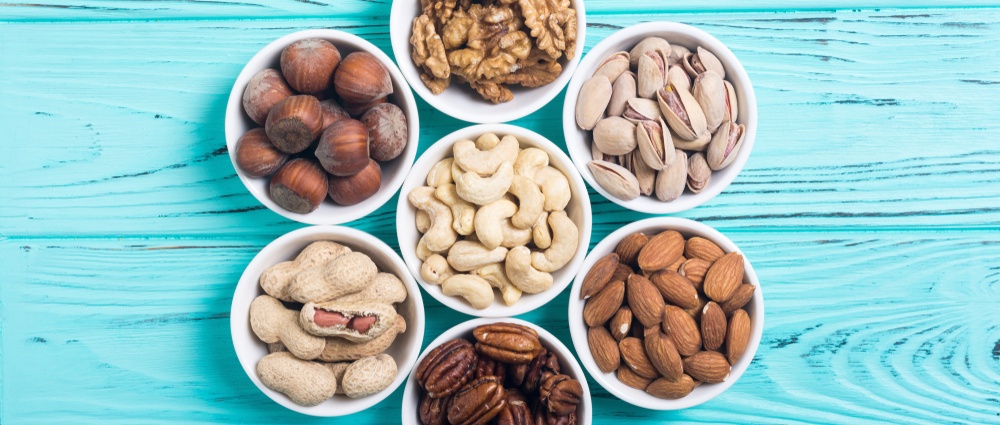
8 high-protein nuts to boost your strength
Packed with protein, delicious, easy to eat, and versatile - nuts are a great source of fuel for people building their fitness and strength. But not all nuts are created equal, which is why we count down the top eight nuts you should eat while strength training and serve these up with tasty recipe ideas.
by Lynn Stephen
Healthy living
Natural protein verses protein powder: which is better for strength training?
Consuming enough protein is essential for building strong muscles. Protein powder shakes are not a complete replacement for natural protein sources found in your food. However, you may consider supplementing your diet and strength-training regime with protein shakes. Before you decide if this is right for you, there are several benefits and considerations to take into account.
by Amberley Davis

Kidney and urinary tract
Proteinuria
Proteins are molecules that are found in almost every part of the body, including in the blood. The kidneys normally have a filter which stops protein from entering the urine, except in very tiny amounts; however, kidney problems can cause higher levels of protein to be found in the urine.
by Dr Doug McKechnie, MRCGP

Diet and nutrition
How a protein-packed breakfast can boost your health
When we think of breakfast, we often picture a bowl of cornflakes with milk. While it’s a classic morning staple, it might not be the most effective way to start your day, as it lacks protein. Adding more protein to your breakfast can boost your energy levels and help keep you feeling full for longer.
by Victoria Raw

Diet and nutrition
Plant-based proteins could help prevent high blood pressure
Eating a greater amount of minimally processed plant-based proteins - such as beans, nuts and lentils - may lower your chance of developing high blood pressure, according to new research.
by Laura Williamson

Diet and nutrition
How much protein do you need to build muscle?
If you wish to build muscle, there is no escaping the importance of protein. Why do we need protein to build muscle, and how much protein intake do we need to maximise muscle gain?
by Amberley Davis
Related patient information and medicines

Patient information leaflet
Cataracts
If left untreated it can lead to total loss of vision (blindness). Key points A cataract is when the lens inside your eye becomes cloudy, making your vision blurry and causing glare, faded colours, and trouble seeing in bright or dim light. It usually affects older people and is a normal part of ageing. It is caused by the gradual breakdown of.

Patient information leaflet
Healthy eating
If you become sick, eating a healthy diet may help you to recover more quickly. Also, a main way of preventing obesity Obesity and weight loss and overweight is to eat a healthy diet. Processed meat refers to meat that ha... For this reason, the UK Government's Scientific Advisory Committee on Nutrition (SACN) recommend that your intake of red and.

Patient information leaflet
Genetic testing
Genetic testing is a type of medical test that identifies changes in chromosomes, genes or proteins. Genetic tests examine a person's DNA in a variety of ways to assess a person's genetic health. They are all designed to identify a particular... Sometimes a gene may change (this is called a mutation) and either cause or increase the risk of a.

Patient information leaflet
Muscular dystrophy
Muscular dystrophy (MD) is the name given to a group of disorders which cause progressive muscle weakness (meaning it gets worse over time). There are many different types of MD. The different types vary as to how mild or severe they are and which muscles they affect. The genes control the chemicals (proteins) that the cell makes. Some genes.

Patient information leaflet
Buerger's disease
Buerger's disease causes inflammation of blood vessels in the legs and arms, particularly in the hands and feet. It leads to narrowing and blockage of the blood vessels so that blood flow to the hands and feet is reduced. It may eventually le... The inflammation can skip segments of the blood vessels so that there may be normal segments in between.

Patient information leaflet
Albinism
Melanin gives skin, hair, and eyes their colour. Except for vision problems, most people with albinism are just as healthy as anyone else. Symptoms of albinism Signs and symptoms include: Pale skin (or paler than expected). Hair that is very light blonde, brown, or reddish. Eyes that are pink, light blue, green, grey, or light brown. In certain.
Further reading and references
- dishevelled segment polarity protein 1; MedlinePlus, National Library of Medicine.
- Bunn KJ, Daniel P, Rosken HS, O'Neill AC, Cameron-Christie SR, Morgan T, Brunner HG, Lai A, Kunst HP, Markie DM, Robertson SP. Mutations in DVL1 cause an osteosclerotic form of Robinow syndrome. Am J Hum Genet. 2015 Apr 2;96(4):623-30. doi: 10.1016/j.ajhg.2015.02.010. Epub 2015 Mar 26.
- Klingensmith J, Nusse R, Perrimon N. The Drosophila segment polarity gene dishevelled encodes a novel protein required for response to the wingless signal. Genes Dev. 1994 Jan;8(1):118-30. doi: 10.1101/gad.8.1.118.
- Pizzuti A, Amati F, Calabrese G, Mari A, Colosimo A, Silani V, Giardino L, Ratti A, Penso D, Calza L, Palka G, Scarlato G, Novelli G, Dallapiccola B. cDNA characterization and chromosomal mapping of two human homologues of the Drosophila dishevelled polarity gene. Hum Mol Genet. 1996 Jul;5(7):953-8. doi: 10.1093/hmg/5.7.953.
- White J, Mazzeu JF, Hoischen A, Jhangiani SN, Gambin T, Alcino MC, Penney S, Saraiva JM, Hove H, Skovby F, Kayserili H, Estrella E, Vulto-van Silfhout AT, Steehouwer M, Muzny DM, Sutton VR, Gibbs RA; Baylor-Hopkins Center for Mendelian Genomics; Lupski JR, Brunner HG, van Bon BW, Carvalho CM. DVL1 frameshift mutations clustering in the penultimate exon cause autosomal-dominant Robinow syndrome. Am J Hum Genet. 2015 Apr 2;96(4):612-22. doi: 10.1016/j.ajhg.2015.02.015. Epub 2015 Mar 26.
- White JJ, Mazzeu JF, Coban-Akdemir Z, Bayram Y, Bahrambeigi V, Hoischen A, van Bon BWM, Gezdirici A, Gulec EY, Ramond F, Touraine R, Thevenon J, Shinawi M, Beaver E, Heeley J, Hoover-Fong J, Durmaz CD, Karabulut HG, Marzioglu-Ozdemir E, Cayir A, Duz MB, Seven M, Price S, Ferreira BM, Vianna-Morgante AM, Ellard S, Parrish A, Stals K, Flores-Daboub J, Jhangiani SN, Gibbs RA; Baylor-Hopkins Center for Mendelian Genomics; Brunner HG, Sutton VR, Lupski JR, Carvalho CMB. WNT Signaling Perturbations Underlie the Genetic Heterogeneity of Robinow Syndrome. Am J Hum Genet. 2018 Jan 4;102(1):27-43. doi: 10.1016/j.ajhg.2017.10.002. Epub 2017 Dec 21.
- White JJ, Mazzeu JF, Hoischen A, Bayram Y, Withers M, Gezdirici A, Kimonis V, Steehouwer M, Jhangiani SN, Muzny DM, Gibbs RA; Baylor-Hopkins Center for Mendelian Genomics; van Bon BWM, Sutton VR, Lupski JR, Brunner HG, Carvalho CMB. DVL3 Alleles Resulting in a -1 Frameshift of the Last Exon Mediate Autosomal-Dominant Robinow Syndrome. Am J Hum Genet. 2016 Mar 3;98(3):553-561. doi: 10.1016/j.ajhg.2016.01.005. Epub 2016 Feb 25.
Share your thoughts or experiences with others in our patient communities.
Simple access to trusted treatments and health services online.
Common conditions
Get help with common conditions through the NHS, without a GP appointment.





Sign up to the Patient newsletter
Your weekly dose of clear, trustworthy health advice - written to help you feel informed, confident and in control.
By subscribing you accept our Privacy Policy. You can unsubscribe at any time. We never sell your data.