heterogeneous nuclear ribonucleoprotein K
Last updated 11 Apr 2023
Meets Patient’s editorial guidelines
- DownloadDownload
- Share
- Language
- Discussion
- Ask Patient
- Audio Version
- Add to preferred sources on Google
The HNRNPK gene provides instructions for making a protein called heterogenous nuclear ribonucleoprotein K (hnRNP K). This protein attaches (binds) to DNA or its chemical cousin RNA and to other proteins. It acts as a docking site to bring together different molecules in the cell, which is important for relaying signals and controlling cellular functions. By bringing certain proteins together with DNA or RNA, the hnRNP K protein helps control the activity of genes and the production of proteins. By regulating gene activity and protein production, hnRNP K is involved in many cellular processes, including growth and division (proliferation) of cells, maturation of cells to take on specialized function (differentiation), and self-destruction (apoptosis) of cells when they are no longer needed.
Video picks for GenesVideo library
Normal function
The HNRNPK gene provides instructions for making a protein called heterogenous nuclear ribonucleoprotein K (hnRNP K). This protein attaches (binds) to DNA or its chemical cousin RNA and to other proteins. It acts as a docking site to bring together different molecules in the cell, which is important for relaying signals and controlling cellular functions. By bringing certain proteins together with DNA or RNA, the hnRNP K protein helps control the activity of genes and the production of proteins. By regulating gene activity and protein production, hnRNP K is involved in many cellular processes, including growth and division (proliferation) of cells, maturation of cells to take on specialized function (differentiation), and self-destruction (apoptosis) of cells when they are no longer needed.
The hnRNP K protein plays a role in the normal development or function of many body systems. In the brain, the protein may be involved in a process called synaptic plasticity, which is the ability of the connections between neurons (synapses) to change and adapt over time in response to experience. This process is critical for learning and memory. Another process in the brain involving the hnRNP K protein is the growth of nerve cell extensions called axons, which are essential for transmission of nerve impulses. While the protein is likely critical in other systems and processes, its role is not well understood.
Conditions referring to this gene or chromosome
Other names
CSBP
HNRPK
transformation upregulated nuclear protein
TUNP
Patient picks for Genes
Medicine
Potassium tablets
Take each of your doses with a snack or after a meal. Do not use salt substitutes while you are taking potassium.
by Michael Stewart, MRPharmS

Mental health
More than just entertainment: Jeanie Y. Chang on K-dramas and mental health
Jeanie Y. Chang is a therapist and mental health expert, who recently appeared on BBC’s Made in Korea: The K-Pop Experience. As Korean culture rises globally, Chang highlights how K-dramas can reflect real-life struggles. We spoke with her about why these shows are so popular and how they can benefit our mental health: [https://patient.info/news-and-features/more-than-just-entertainment-jeanie-y-chang-on-k-dramas-and-mental-health](https://patient.info/news-and-features/more-than-just-entertainment-jeanie-y-chang-on-k-dramas-and-mental-health) Audio: Victoria Raw Visuals: Ben Hudson
by Victoria Raw
Nutrition and diet
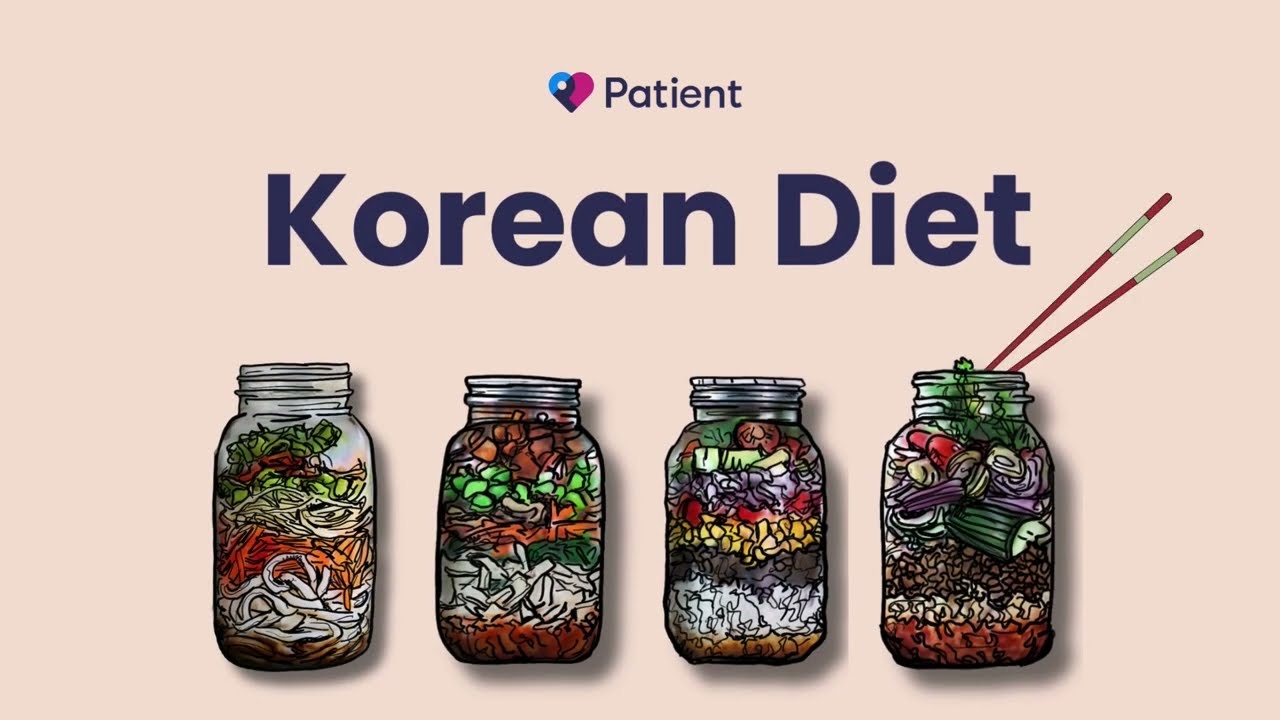
Is the The Korean Diet good for you?
The Korean Diet - often called the K-diet - is rooted in the traditional foods commonly enjoyed in Korea. With the global rise in Korean culture’s popularity, interest in the K-Diet has surged, largely due to its apparent health benefits. We look at what the K-Diet involves, and whether it's good for you. Find out more on our website: [https://patient.info/news-and-features/what-is-the-korean-diet](https://patient.info/news-and-features/what-is-the-korean-diet) Copy: Victoria Raw Visuals: Ben Hudson
by Ben Hudson
Related patient information and medicines

Patient information leaflet
Neuroblastoma
Neuroblastoma is a cancer affecting developing nerve cells. Neuroblastoma is a rare cancer and most often occurs in children under 5 years old. Neuroblastoma often starts in the tummy (abdomen) but can spread to other parts of the body, especially bones, liver and skin. The treatments for neuroblastoma include surgery, chemotherapy and.

Patient information leaflet
PET scan
A PET scan create images which show where cells are particularly active in the body. It is most commonly used to diagnose and assess cancer. Note : the information below is a general guide only. The arrangements, and the way tests are performed, may vary between different hospitals. Always follow the instructions given by your doctor or local.

Patient information leaflet
Causes of cancer
Certain risk factors are known to increase the chance that one or more of your cells will become abnormal and lead to cancer. How does cancer start. Different parts of the body such as organs, bones... Most cells have a centre called a nucleus. The nucleus in each cell contains thousands of genes which are made up from a chemical called DNA. The.

Patient information leaflet
Gallium scan
A gallium scan uses a radioactive chemical to help create pictures which can show areas of possible infection, injury, inflammation or cancer. It does this by looking for areas where there is rapid cell division within the body. Always follow the instructions given by your doctor or local hospital. What is a gallium scan. A gallium scan is a type.

Patient information leaflet
DMSA scan
DMSA scans are usually requested by hosp... The results should be given by the hospital specialist who requested the test, not by the GP. How does a DMSA scan work. A DMSA scan is a type of radionuclide scan Radionuclide scan. A radionuclide (sometimes called a radioisotope or isotope) is a chemical which emits a type of radioactivity called gamma.
Patient information leaflet
Chondrocalcinosis
Chondrocalcinosis is very common but only tends to cause symptoms when it is caused by an underlying condition, such as osteoarthritis. What is chondrocalcinosis. Chondrocalcinosis means the presence of calcium deposits in the cartilage of a joint. It was used to describe a condition called pseudogout (calcium pyrophosphate dihydrate crystal.
Further reading and references
- heterogeneous nuclear ribonucleoprotein K; MedlinePlus, National Library of Medicine.
- Au PYB, Goedhart C, Ferguson M, Breckpot J, Devriendt K, Wierenga K, Fanning E, Grange DK, Graham GE, Galarreta C, Jones MC, Kini U, Stewart H, Parboosingh JS, Kline AD, Innes AM; Care for Rare Canada Consortium. Phenotypic spectrum of Au-Kline syndrome: a report of six new cases and review of the literature. Eur J Hum Genet. 2018 Sep;26(9):1272-1281. doi: 10.1038/s41431-018-0187-2. Epub 2018 Jun 14.
- Au PYB, McNiven V, Phillips L, Innes AM, Kline AD. Au-Kline Syndrome. 2019 Apr 18 [updated 2024 Feb 1]. In: Adam MP, Bick S, Mirzaa GM, Wallace SE, Amemiya A, editors. GeneReviews(R) [Internet]. Seattle (WA): University of Washington, Seattle; 1993-2026. Available from http://www.ncbi.nlm.nih.gov/books/NBK540283/
- Bomsztyk K, Denisenko O, Ostrowski J. hnRNP K: one protein multiple processes. Bioessays. 2004 Jun;26(6):629-38. doi: 10.1002/bies.20048.
- Folci A, Mapelli L, Sassone J, Prestori F, D'Angelo E, Bassani S, Passafaro M. Loss of hnRNP K impairs synaptic plasticity in hippocampal neurons. J Neurosci. 2014 Jul 2;34(27):9088-95. doi: 10.1523/JNEUROSCI.0303-14.2014.
- Gallardo M, Lee HJ, Zhang X, Bueso-Ramos C, Pageon LR, McArthur M, Multani A, Nazha A, Manshouri T, Parker-Thornburg J, Rapado I, Quintas-Cardama A, Kornblau SM, Martinez-Lopez J, Post SM. hnRNP K Is a Haploinsufficient Tumor Suppressor that Regulates Proliferation and Differentiation Programs in Hematologic Malignancies. Cancer Cell. 2015 Oct 12;28(4):486-499. doi: 10.1016/j.ccell.2015.09.001. Epub 2015 Sep 24.
- Hutchins EJ, Szaro BG. c-Jun N-terminal kinase phosphorylation of heterogeneous nuclear ribonucleoprotein K regulates vertebrate axon outgrowth via a posttranscriptional mechanism. J Neurosci. 2013 Sep 11;33(37):14666-80. doi: 10.1523/JNEUROSCI.4821-12.2013.
- Naarmann-de Vries IS, Sackmann Y, Klein F, Ostareck-Lederer A, Ostareck DH, Jost E, Ehninger G, Brummendorf TH, Marx G, Rollig C, Thiede C, Crysandt M. Characterization of acute myeloid leukemia with del(9q) - Impact of the genes in the minimally deleted region. Leuk Res. 2019 Jan;76:15-23. doi: 10.1016/j.leukres.2018.11.007. Epub 2018 Nov 17.
- Okamoto N. Okamoto syndrome has features overlapping with Au-Kline syndrome and is caused by HNRNPK mutation. Am J Med Genet A. 2019 May;179(5):822-826. doi: 10.1002/ajmg.a.61079. Epub 2019 Feb 21.
- Sweetser DA, Peniket AJ, Haaland C, Blomberg AA, Zhang Y, Zaidi ST, Dayyani F, Zhao Z, Heerema NA, Boultwood J, Dewald GW, Paietta E, Slovak ML, Willman CL, Wainscoat JS, Bernstein ID, Daly SB. Delineation of the minimal commonly deleted segment and identification of candidate tumor-suppressor genes in del(9q) acute myeloid leukemia. Genes Chromosomes Cancer. 2005 Nov;44(3):279-91. doi: 10.1002/gcc.20236.
- Xu Y, Wu W, Han Q, Wang Y, Li C, Zhang P, Xu H. New Insights into the Interplay between Non-Coding RNAs and RNA-Binding Protein HnRNPK in Regulating Cellular Functions. Cells. 2019 Jan 17;8(1):62. doi: 10.3390/cells8010062.
Share your thoughts or experiences with others in our patient communities.
Simple access to trusted treatments and health services online.
Common conditions
Get help with common conditions through the NHS, without a GP appointment.





Sign up to the Patient newsletter
Your weekly dose of clear, trustworthy health advice - written to help you feel informed, confident and in control.
By subscribing you accept our Privacy Policy. You can unsubscribe at any time. We never sell your data.