interleukin 1 receptor associated kinase 4
Last updated 18 Aug 2020
Meets Patient’s editorial guidelines
- DownloadDownload
- Share
- Language
- Discussion
- Ask Patient
- Audio Version
- Add to preferred sources on Google
The IRAK4 gene provides instructions for making a protein that plays an important role in innate immunity, which is the body's early, nonspecific response to foreign invaders (pathogens). The IRAK-4 protein is part of a signaling pathway that is involved in early recognition of pathogens and the initiation of inflammation to fight infection.
Video picks for GenesVideo library
Normal function
The IRAK4 gene provides instructions for making a protein that plays an important role in innate immunity, which is the body's early, nonspecific response to foreign invaders (pathogens). The IRAK-4 protein is part of a signaling pathway that is involved in early recognition of pathogens and the initiation of inflammation to fight infection.
In particular, the IRAK-4 protein relays signals from proteins called Toll-like receptors and IL-1 receptor-related proteins. As one of the first lines of defense against infection, Toll-like receptors recognise patterns that are common to many pathogens, rather than recognizing specific pathogens, and stimulate a quick immune response. The IL-1 receptor and related proteins recognise immune system proteins called cytokines that signal the need for an immune response. The resulting signaling pathway triggers inflammation, a nonspecific immune response that helps fight infection.
Conditions referring to this gene or chromosome
Other names
interleukin-1 receptor-associated kinase 4
IPD1
IRAK-4
IRAK4_HUMAN
NY-REN-64
REN64
Patient picks for Genes

Preventative health
Seated Figure 4 Hamstring Stretch
The Seated Figure 4 Hamstring Stretch, is an effective and simple way to stretch your glutes, hips, hamstrings and lower back.
Travel and vaccinations
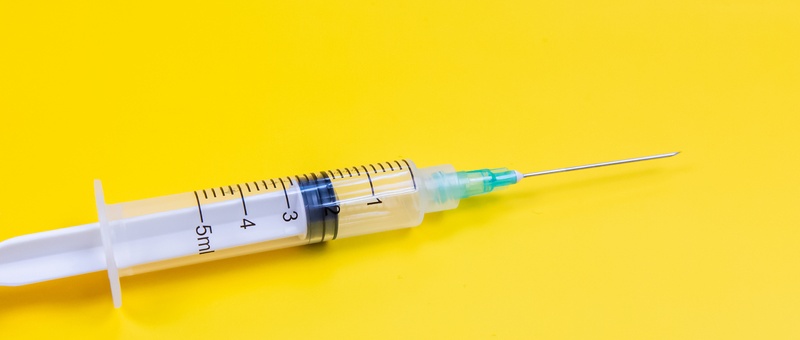
What side effects are associated with the yellow fever vaccine?
Yellow fever is endemic to many countries in Latin America and Africa and can often be fatal. Vaccination is currently the best protection against this deadly disease - but what are the risks?
by Léa Surugue

MSK
Looking at the Moon
Feet are wider than hip distance and toes are slightly pointed out. Both arms lift as you turn from the waist to lift your arms and look at the moon behind you; as you do so the back heel can lift. As you inhale, lower your arms and come back to centre. I like to imagine that I can carry the light of the moon across the still waters of a lake. This form with its deep back rotation is linked with the water element and its associated organ and meridian system of the kidneys.

PID Q&A
Does PID cause bleeding?
Dr Sarah Jarvis MBE Symptoms may develop quickly. You can become quite ill over a few days. Sometimes symptoms are mild and develop slowly. For example, you may just have a mild abdominal pain that may 'grumble on' for weeks. In some cases no symptoms develop and you do not know that you are infected. However, you are still at risk of complications even if you have no symptoms at first. [https://patient.info/health/pelvic-pain-in-women/pelvic-inflammatory-disease#nav-1](https://patient.info/health/pelvic-pain-in-women/pelvic-inflammatory-disease#nav-1)
by Dr Sarah Jarvis
MSK
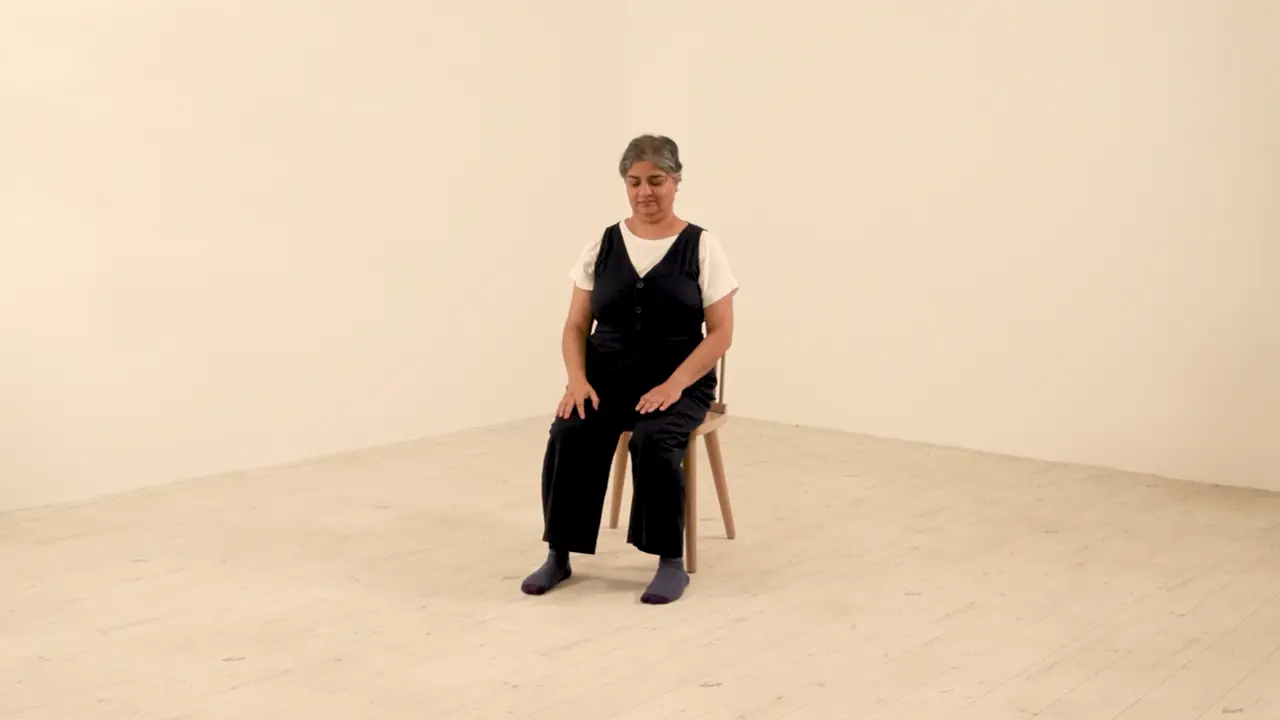
Looking at the Moon Seated
Sit toward the front of the chair with your feet flat on the floor, slightly wider than hip-distance apart, and toes pointing comfortably forward. Keep the spine long and knees soft. Lift both arms and, turning gently from the waist, move the arms as if reaching to look at the moon behind you. As you turn, you can subtly lift the heels or simply imagine the rising motion. Inhale as you lower the arms and return to centre, maintaining length through the spine. Imagine carrying the light of the moon across the still waters of a lake. This gentle twisting movement, with its deep rotation, is associated with the Water element and the Kidneys, supporting circulation, grounding, and a sense of calm and reflection.
Breast cancer
How often is breast cancer misdiagnosed?
Dr Sarah Jarvis MBE Finding out the stage of the cancer, the grade of the cells and the receptor status of the cancer helps doctors to advise on the best treatment options. It also gives a reasonable indication of outlook. [https://patient.info/health/breast-cancer-leaflet#nav-5](https://patient.info/health/breast-cancer-leaflet#nav-5)
by Dr Sarah Jarvis
Related patient information and medicines

Patient information leaflet
Mouth cancer
Dr Krishna Vakharia , 16th October 2023 The National Institute for Health and Care Excellence (NICE) has recommended that a person should receive a diagnosis or ruling out of cancer within 28 days of being referred urgently by their GP for suspected cancer. Tyrosine kinase inhibitors (TKIs) are another. It is also sometimes called biological.

Patient information leaflet
Glycogen storage disorders
Glycogen storage disorders are a group of inherited diseases. They result from a problem with one of the proteins (known as enzymes) involved in the conversion of glucose to glycogen, or the breakdown of glycogen back into glucose. They mostly tend to affect your liver and muscles. Most are diagnosed in childhood. Symptoms include weakness,.

Patient information leaflet
Chronic myeloid leukaemia
. Who develops chronic myeloid leukaemia. CML is the rarest of the four main types of leukaemia. There are around 750 cases in the UK each year. It occurs mainly in adults and becomes more common with increasing age. The average age at diagnosis is 50 years. It is very rare in children. It is more common in men than in women. What causes chronic.

Patient information leaflet
Mastocytosis and mast cell disorders
What causes mast cell disorders. If the condition is severe, surgery to remove the spleen (splenectomy), medicines that have an effect on the immune system (such as inter... Dr Sarah Jarvis , 28th September 2021 Midostaurin for treating advanced systemic mastocytosis The National Institute for Health and Care Excellence (NICE) has brought out new.

Patient information leaflet
Throat cancer
(The throat is usually sprayed with a local anaesthetic before use of a nasal endoscope, so that the procedure i... Dr Krishna Vakharia, 16th October 2023 The National Institute for Health and Care Excellence (NICE) has recommended that a person should receive a diagnosis or ruling out of cancer within 28 days of being referred urgently by their.

Patient information leaflet
Juvenile idiopathic arthritis
In most people who get JIA, it is a long-term illness. It can be treated, but not usually cured - in other words, symptoms can be relieved, and joint damage can be prevented, but symptoms may return in future. Juvenile idiopathic arthritis causes JIA is an autoimmune condition, where the body's immune system attacks its own cells and tissues. We.
Further reading and references
- interleukin 1 receptor associated kinase 4; MedlinePlus, National Library of Medicine.
- Li S, Strelow A, Fontana EJ, Wesche H. IRAK-4: a novel member of the IRAK family with the properties of an IRAK-kinase. Proc Natl Acad Sci U S A. 2002 Apr 16;99(8):5567-72. doi: 10.1073/pnas.082100399.
- Medvedev AE, Lentschat A, Kuhns DB, Blanco JC, Salkowski C, Zhang S, Arditi M, Gallin JI, Vogel SN. Distinct mutations in IRAK-4 confer hyporesponsiveness to lipopolysaccharide and interleukin-1 in a patient with recurrent bacterial infections. J Exp Med. 2003 Aug 18;198(4):521-31. doi: 10.1084/jem.20030701.
- Picard C, Puel A, Bonnet M, Ku CL, Bustamante J, Yang K, Soudais C, Dupuis S, Feinberg J, Fieschi C, Elbim C, Hitchcock R, Lammas D, Davies G, Al-Ghonaium A, Al-Rayes H, Al-Jumaah S, Al-Hajjar S, Al-Mohsen IZ, Frayha HH, Rucker R, Hawn TR, Aderem A, Tufenkeji H, Haraguchi S, Day NK, Good RA, Gougerot-Pocidalo MA, Ozinsky A, Casanova JL. Pyogenic bacterial infections in humans with IRAK-4 deficiency. Science. 2003 Mar 28;299(5615):2076-9. doi: 10.1126/science.1081902. Epub 2003 Mar 13.
- Suzuki N, Suzuki S, Yeh WC. IRAK-4 as the central TIR signaling mediator in innate immunity. Trends Immunol. 2002 Oct;23(10):503-6. doi: 10.1016/s1471-4906(02)02298-6.
Share your thoughts or experiences with others in our patient communities.
Simple access to trusted treatments and health services online.
Common conditions
Get help with common conditions through the NHS, without a GP appointment.





Sign up to the Patient newsletter
Your weekly dose of clear, trustworthy health advice - written to help you feel informed, confident and in control.
By subscribing you accept our Privacy Policy. You can unsubscribe at any time. We never sell your data.