ribosomal protein S19
Last updated 18 Aug 2020
Meets Patient’s editorial guidelines
- DownloadDownload
- Share
- Language
- Discussion
- Ask Patient
- Audio Version
- Add to preferred sources on Google
The RPS19 gene provides instructions for making one of approximately 80 different ribosomal proteins, which are components of cellular structures called ribosomes. Ribosomes process the cell's genetic instructions to create proteins.
Video picks for GenesVideo library
Normal function
The RPS19 gene provides instructions for making one of approximately 80 different ribosomal proteins, which are components of cellular structures called ribosomes. Ribosomes process the cell's genetic instructions to create proteins.
Each ribosome is made up of two parts (subunits) called the large and small subunits. The protein produced from the RPS19 gene is among those found in the small subunit.
The specific functions of the RPS19 protein and the other ribosomal proteins within these subunits are unclear. Some ribosomal proteins are involved in the assembly or stability of ribosomes. Others help carry out the ribosome's main function of building new proteins. Studies suggest that some ribosomal proteins may have other functions, such as participating in chemical signaling pathways within the cell, regulating cell division, and controlling the self-destruction of cells (apoptosis).
Conditions referring to this gene or chromosome
Other names
40S ribosomal protein S19
DBA
eS19
RS19_HUMAN
S19
Patient picks for Genes

Kidney and urinary tract
Proteinuria
Proteins are molecules that are found in almost every part of the body, including in the blood. The kidneys normally have a filter which stops protein from entering the urine, except in very tiny amounts; however, kidney problems can cause higher levels of protein to be found in the urine.
by Dr Doug McKechnie, MRCGP

Diet and nutrition
How a protein-packed breakfast can boost your health
When we think of breakfast, we often picture a bowl of cornflakes with milk. While it’s a classic morning staple, it might not be the most effective way to start your day, as it lacks protein. Adding more protein to your breakfast can boost your energy levels and help keep you feeling full for longer.
by Victoria Raw

Diet and nutrition
10 sources of plant-based protein for bone health
Plant-based diets are growing in popularity. People choose this way of eating for various reasons - to boost their health, help animals, and protect the environment. But switching to a plant-based diet may mean you're missing out on vital, bone-friendly nutrients. One of these is protein.
by Victoria Raw
Healthy living
Natural protein verses protein powder: which is better for strength training?
Consuming enough protein is essential for building strong muscles. Protein powder shakes are not a complete replacement for natural protein sources found in your food. However, you may consider supplementing your diet and strength-training regime with protein shakes. Before you decide if this is right for you, there are several benefits and considerations to take into account.
by Amberley Davis

Diet and nutrition
Plant-based proteins could help prevent high blood pressure
Eating a greater amount of minimally processed plant-based proteins - such as beans, nuts and lentils - may lower your chance of developing high blood pressure, according to new research.
by Laura Williamson
Healthy living
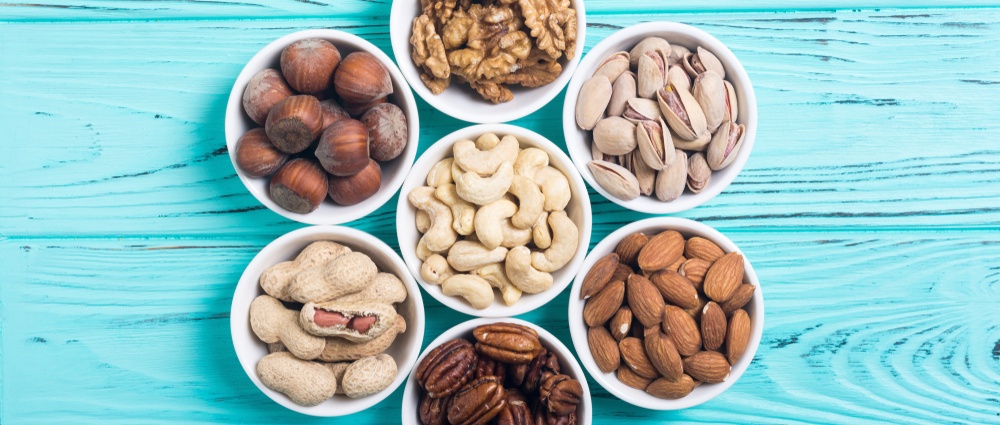
8 high-protein nuts to boost your strength
Packed with protein, delicious, easy to eat, and versatile - nuts are a great source of fuel for people building their fitness and strength. But not all nuts are created equal, which is why we count down the top eight nuts you should eat while strength training and serve these up with tasty recipe ideas.
by Lynn Stephen
Related patient information and medicines

Patient information leaflet
Genetic testing
Genetic testing is a type of medical test that identifies changes in chromosomes, genes or proteins. Genetic tests examine a person's DNA in a variety of ways to assess a person's genetic health. They are all designed to identify a particular gene that may cause a genetic disorder. We all have 46 chromosomes in our cells. Chromosomes are made from.

Patient information leaflet
Swollen legs
Legs may swell for numerous reasons. Some of the possible diagnoses are listed in this leaflet. Types of swollen legs There are many different kinds of swelling of the legs. One leg or both legs could be swollen. If both legs, it could be symmetrical or worse on one side. A specific part of the leg(s) could be swollen, or the entire leg(s). It.

Patient information leaflet
Healthy eating
As well as healthy eating, regular physical exercise is also very important for health and to avoid or reduce obesity. See also the separate leaflet called Exercise and Physical Activity Exercise and physical activity. On... For this reason, the UK Government's Scientific Advisory Committee on Nutrition (SACN) recommend that your intake of red and.

Patient information leaflet
Gastrointestinal malabsorption
Gastrointestinal malabsorption syndrome means a failure to fully absorb digested foods from the gut (bowel) into your body. There are many different causes. Prolonged intestinal malabsorption may cause problems because of a lack of carbohydrates, proteins, fats, minerals and vitamins that are essential to keep you healthy. The treatment will.

Patient information leaflet
Thrombophilia
A blood clot in the liver veins is called Budd-Chiari syndrome. A blood clot in an artery can occur with some types of thrombophilia. This is called arterial thrombosis. Depending on which artery is affected, a blood clot in an artery can cause a stroke, a heart attack or problems with the placenta during pregnancy. So the possible symptoms of.

Patient information leaflet
Glycogen storage disorders
Glycogen storage disorders are a group of inherited diseases. They result from a problem with one of the proteins (known as enzymes) involved in the conversion of glucose to glycogen, or the breakdown of glycogen back into glucose. They mostly tend to affect your liver and muscles. Most are diagnosed in childhood. Symptoms include weakness,.
Further reading and references
- ribosomal protein S19; MedlinePlus, National Library of Medicine.
- Angelini M, Cannata S, Mercaldo V, Gibello L, Santoro C, Dianzani I, Loreni F. Missense mutations associated with Diamond-Blackfan anemia affect the assembly of ribosomal protein S19 into the ribosome. Hum Mol Genet. 2007 Jul 15;16(14):1720-7. doi: 10.1093/hmg/ddm120. Epub 2007 May 20.
- Badhai J, Frojmark AS, J Davey E, Schuster J, Dahl N. Ribosomal protein S19 and S24 insufficiency cause distinct cell cycle defects in Diamond-Blackfan anemia. Biochim Biophys Acta. 2009 Oct;1792(10):1036-42. doi: 10.1016/j.bbadis.2009.08.002. Epub 2009 Aug 16.
- Campagnoli MF, Ramenghi U, Armiraglio M, Quarello P, Garelli E, Carando A, Avondo F, Pavesi E, Fribourg S, Gleizes PE, Loreni F, Dianzani I. RPS19 mutations in patients with Diamond-Blackfan anemia. Hum Mutat. 2008 Jul;29(7):911-20. doi: 10.1002/humu.20752.
- Caterino M, Aspesi A, Pavesi E, Imperlini E, Pagnozzi D, Ingenito L, Santoro C, Dianzani I, Ruoppolo M. Analysis of the interactome of ribosomal protein S19 mutants. Proteomics. 2014 Oct;14(20):2286-96. doi: 10.1002/pmic.201300513. Epub 2014 Sep 18.
- Delaporta P, Sofocleous C, Stiakaki E, Polychronopoulou S, Economou M, Kossiva L, Kostaridou S, Kattamis A. Clinical phenotype and genetic analysis of RPS19, RPL5, and RPL11 genes in Greek patients with Diamond Blackfan Anemia. Pediatr Blood Cancer. 2014 Dec;61(12):2249-55. doi: 10.1002/pbc.25183. Epub 2014 Aug 17.
- Gregory LA, Aguissa-Toure AH, Pinaud N, Legrand P, Gleizes PE, Fribourg S. Molecular basis of Diamond-Blackfan anemia: structure and function analysis of RPS19. Nucleic Acids Res. 2007;35(17):5913-21. doi: 10.1093/nar/gkm626. Epub 2007 Aug 28.
- Kuramitsu M, Hamaguchi I, Takuo M, Masumi A, Momose H, Takizawa K, Mochizuki M, Naito S, Yamaguchi K. Deficient RPS19 protein production induces cell cycle arrest in erythroid progenitor cells. Br J Haematol. 2008 Feb;140(3):348-59. doi: 10.1111/j.1365-2141.2007.06930.x.
- Morimoto K, Lin S, Sakamoto K. The functions of RPS19 and their relationship to Diamond-Blackfan anemia: a review. Mol Genet Metab. 2007 Apr;90(4):358-62. doi: 10.1016/j.ymgme.2006.11.004. Epub 2006 Dec 18.
- Ozono S, Mitsuo M, Noguchi M, Nakagawa S, Ueda K, Inada H, Ohga S, Ito E. Critical Diamond-Blackfan anemia due to ribosomal protein S19 missense mutation. Pediatr Int. 2016 Sep;58(9):930-3. doi: 10.1111/ped.13018. Epub 2016 Sep 6.
- Sieff C. DBA Syndrome. 2009 Jun 25 [updated 2025 Jul 31]. In: Adam MP, Bick S, Mirzaa GM, Wallace SE, Amemiya A, editors. GeneReviews(R) [Internet]. Seattle (WA): University of Washington, Seattle; 1993-2026. Available from http://www.ncbi.nlm.nih.gov/books/NBK7047/
- Zhang JY, Jia M, Zhao HZ, Luo ZB, Xu WQ, Shen HP, Tang YM. A new in-frame deletion in ribosomal protein S19 in a Chinese infant with Diamond-Blackfan anemia. Blood Cells Mol Dis. 2016 Nov;62:1-5. doi: 10.1016/j.bcmd.2016.08.003. Epub 2016 Aug 31.
Share your thoughts or experiences with others in our patient communities.
Simple access to trusted treatments and health services online.
Common conditions
Get help with common conditions through the NHS, without a GP appointment.





Sign up to the Patient newsletter
Your weekly dose of clear, trustworthy health advice - written to help you feel informed, confident and in control.
By subscribing you accept our Privacy Policy. You can unsubscribe at any time. We never sell your data.