troponin T3, fast skeletal type
Last updated 18 Aug 2020
Meets Patient’s editorial guidelines
- DownloadDownload
- Share
- Language
- Discussion
- Ask Patient
- Audio Version
- Add to preferred sources on Google
The TNNT3 gene provides instructions for making one form of a protein called troponin T. The troponin T protein produced from the TNNT3 gene is found in skeletal muscles, which are the muscles used for movement. Troponin T is one of three proteins that make up the troponin complex in muscle cells. The troponin complex, along with calcium, helps regulate muscle tensing (contraction).
Video picks for GenesVideo library
Normal function
The TNNT3 gene provides instructions for making one form of a protein called troponin T. The troponin T protein produced from the TNNT3 gene is found in skeletal muscles, which are the muscles used for movement. Troponin T is one of three proteins that make up the troponin complex in muscle cells. The troponin complex, along with calcium, helps regulate muscle tensing (contraction).
The troponin complex is part of a structure called the sarcomere, which is the basic unit of muscle contraction. Sarcomeres contain thick and thin filaments. The overlapping thick and thin filaments attach (bind) to each other and release, which allows the filaments to move relative to one another so that muscles can contract.
When calcium levels are low, the troponin complex blocks the binding between the thick and thin filaments that is needed for muscle contraction. An increase in calcium levels causes structural changes in the troponin complex, which exposes the binding sites and allows the thick and thin filaments to interact, leading to muscle contraction.
Conditions referring to this gene or chromosome
Other names
AMCD2B
beta TnTF
beta-TnTF
DA2B
DKFZp779M2348
fast skeletal muscle troponin T
FSSV
fTnT
TNTF
troponin T type 3 (skeletal, fast)
troponin T, fast skeletal muscle
troponin T, fast skeletal muscle isoform 1
troponin T, fast skeletal muscle isoform 2
troponin T, fast skeletal muscle isoform 3
troponin T, fast skeletal muscle isoform 4
troponin-T3, skeletal, fast
Patient picks for Genes

Tests and investigations
Blood groups and types
ABO and rhesus are both types of antigens found on the surface of red blood cells. There are lots of other types but these are the most important.
by Dr Rosalyn Adleman, MRCGP
Diabetes
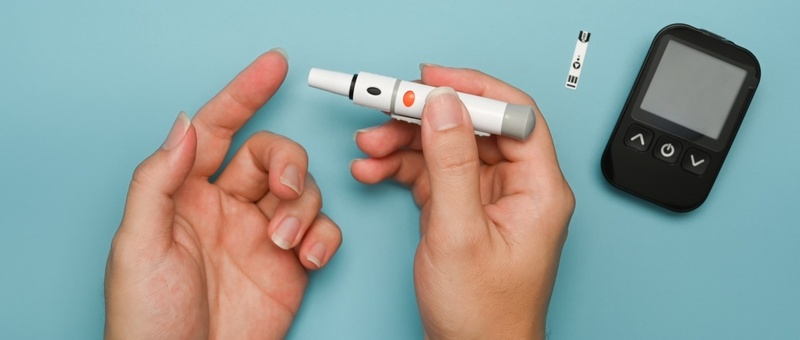
MHRA approves teplizumab to delay progression of type 1 diabetes
Teplizumab (Tzield) has been approved by the Medicines and Healthcare products Regulatory Agency (MHRA) to help delay the onset of Stage 3 type 1 diabetes (T1D). Read on to see what this means if you are prescribed teplizumab and what it does for you.
by Lawrence Higgins
Brain and nerves
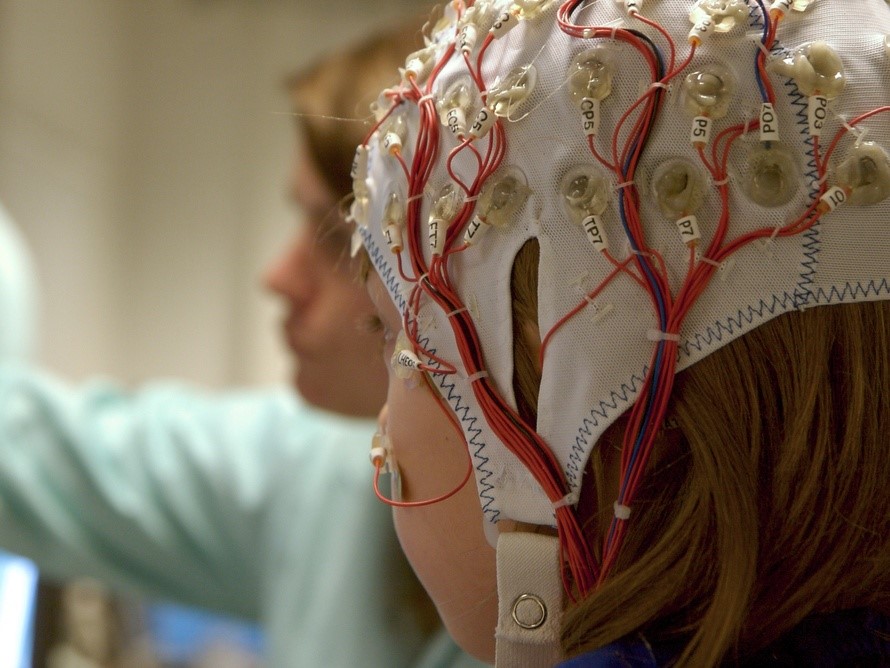
Types of seizures
A seizure is a condition caused by a sudden burst of electrical activity in the brain. There are different types of seizures. This leaflet gives some information about what your doctor may wish to know and what tests may be advised after such an event.
by Dr Doug McKechnie, MRCGP

Diet and nutrition
Everything you should know about the 3-day sardine fast
You might have heard people talking about something called a sardine fast. Despite the name, it isn't about giving up the little silver fish. If it were, it probably wouldn’t be much of a trend - after all, who eats enough sardines to need a break from them in the first place? In reality, a sardine fast means eating nothing but sardines for up to 72 hours. We take a closer look at where the sardine fast came from, the thinking behind it, and whether this unusual health trend really does what it says on the tin.
by Victoria Raw

Diabetes
Signs of type 2 diabetes found in children as young as eight
The early signs of type 2 diabetes are visible in children as young as eight years old, according to new research.
by Milly Evans
Diabetes
Changes in type 2 diabetes care - what it means for you
If you are living with type 2 diabetes your treatment may soon change to be tailored around you and your specific needs - which will help improve your long-term health. Read on to find out what the changes are and what they mean for you.
by Lawrence Higgins
Related patient information and medicines
Patient information leaflet
Cardiac enzymes
The cardiac enzyme levels that are tested are called cardiac troponins. Normal (skeletal) muscle also produces troponins but troponins T and I are more specific for heart muscle and so are the cardiac enzymes that are usually tested. Before troponins, different blood tests were checked looking for heart muscle damage. Is troponin a... Troponin is.

Patient information leaflet
Pituitary gland disorders
This leaflet gives a brief overview of the pituitary gland and the hormones it makes. The pituitary gland is found at the base of the brain and is 'pea-sized'. The pituitary gland is an overa... Helps breasts to release milk. Further more detailed information available free online The Hypophysis Cerebri From Gray's Anatomy Online Human.

Patient information leaflet
Can I take Biotin and Collagen together?
If you are due to have a blood test, tell your doctor or the lab staff that you are taking a biotin supplement. Important precautions Blood test interference Biotin can significantly interfere with laboratory blood tests, including thyroid function and heart attack markers (troponin), leading to dangerously incorrect results. You must stop taking.

Patient information leaflet
Chest pain
Based on what they ... Investigations for chest pain can include: An ECG (electrocardiogram or 'heart tracing') There are often typical changes to the normal pattern of the 'heart tracing' (electrocardiogram, or ECG) Electrocardiogram in a heart attack. Blood tests A blood test Blood tests that measures a chemical called troponin is the usual test.
Patient information leaflet
Respiratory failure
They may help to work out the cause and also to detect any factors that may be worsening the respiratory failure, such as a low blood haemoglobin level (anaemia). Troponin blood tests : these are used to determine if there has been recent heart injury - for example, a heart attack which may have caused the respiratory failure. Thyroid function.

Patient information leaflet
Thyroid and parathyroid problems
What are the thyroid and parathyroid. Both the thyroid and parathyroid glands are endocrine glands. Thyroid functions The thyroid gland makes three hormones that it releases (secretes... Two of these hormones, called thyroxine (T4) and triiodothyronine (T3), increase your body's metabolic rate. Essentially, the body's metabolic rate is how quickly.
Further reading and references
- troponin T3, fast skeletal type; MedlinePlus, National Library of Medicine.
- Beck AE, McMillin MJ, Gildersleeve HI, Kezele PR, Shively KM, Carey JC, Regnier M, Bamshad MJ. Spectrum of mutations that cause distal arthrogryposis types 1 and 2B. Am J Med Genet A. 2013 Mar;161A(3):550-5. doi: 10.1002/ajmg.a.35809. Epub 2013 Feb 7.
- Ochala J. Thin filament proteins mutations associated with skeletal myopathies: defective regulation of muscle contraction. J Mol Med (Berl). 2008 Nov;86(11):1197-204. doi: 10.1007/s00109-008-0380-9. Epub 2008 Jun 24.
- Toydemir RM, Bamshad MJ. Sheldon-Hall syndrome. Orphanet J Rare Dis. 2009 Mar 23;4:11. doi: 10.1186/1750-1172-4-11.
- Zhao N, Jiang M, Han W, Bian C, Li X, Huang F, Kong Q, Li J. A novel mutation in TNNT3 associated with Sheldon-Hall syndrome in a Chinese family with vertical talus. Eur J Med Genet. 2011 May-Jun;54(3):351-3. doi: 10.1016/j.ejmg.2011.03.002. Epub 2011 Mar 12.
Share your thoughts or experiences with others in our patient communities.
Simple access to trusted treatments and health services online.
Common conditions
Get help with common conditions through the NHS, without a GP appointment.





Sign up to the Patient newsletter
Your weekly dose of clear, trustworthy health advice - written to help you feel informed, confident and in control.
By subscribing you accept our Privacy Policy. You can unsubscribe at any time. We never sell your data.