trafficking protein particle complex subunit 2
Last updated 28 Jun 2022
Meets Patient’s editorial guidelines
- DownloadDownload
- Share
- Language
- Discussion
- Ask Patient
- Audio Version
- Add to preferred sources on Google
The TRAPPC2 gene provides instructions for producing the protein sedlin, which is found in cells throughout the body. Sedlin is part of a large group of proteins called the trafficking protein particle (TRAPP) complex, which plays a role in the transport of proteins between cell compartments (organelles). Sedlin is thought to be located between two organelles, the endoplasmic reticulum and the Golgi apparatus. The endoplasmic reticulum is involved in protein processing and transport, and the Golgi apparatus modifies newly produced proteins.
Video picks for GenesVideo library
Normal function
The TRAPPC2 gene provides instructions for producing the protein sedlin, which is found in cells throughout the body. Sedlin is part of a large group of proteins called the trafficking protein particle (TRAPP) complex, which plays a role in the transport of proteins between cell compartments (organelles). Sedlin is thought to be located between two organelles, the endoplasmic reticulum and the Golgi apparatus. The endoplasmic reticulum is involved in protein processing and transport, and the Golgi apparatus modifies newly produced proteins.
Research shows that sedlin is required for transporting large proteins from the endoplasmic reticulum to the Golgi apparatus. For example, sedlin is needed to move large molecules called procollagens out of the endoplasmic reticulum so they can be processed further by the Golgi apparatus. Later, procollagens are altered by enzymes outside the cell to create smaller mature collagen proteins, which strengthen and support connective tissues, such as skin, bone, cartilage, tendons, and ligaments.
Conditions referring to this gene or chromosome
Other names
MBP-1 interacting protein-2A
MIP-2A
SEDL
sedlin
SEDT
TPPC2_HUMAN
TRS20
ZNF547L
Patient picks for Genes

Diet and nutrition
How a protein-packed breakfast can boost your health
When we think of breakfast, we often picture a bowl of cornflakes with milk. While it’s a classic morning staple, it might not be the most effective way to start your day, as it lacks protein. Adding more protein to your breakfast can boost your energy levels and help keep you feeling full for longer.
by Victoria Raw
Healthy living
Natural protein verses protein powder: which is better for strength training?
Consuming enough protein is essential for building strong muscles. Protein powder shakes are not a complete replacement for natural protein sources found in your food. However, you may consider supplementing your diet and strength-training regime with protein shakes. Before you decide if this is right for you, there are several benefits and considerations to take into account.
by Amberley Davis

Kidney and urinary tract
Proteinuria
Proteins are molecules that are found in almost every part of the body, including in the blood. The kidneys normally have a filter which stops protein from entering the urine, except in very tiny amounts; however, kidney problems can cause higher levels of protein to be found in the urine.
by Dr Doug McKechnie, MRCGP
Healthy living
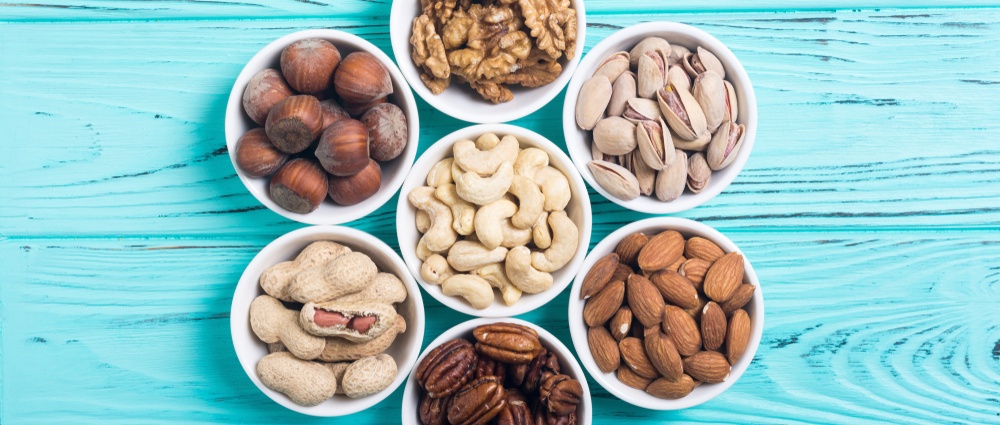
8 high-protein nuts to boost your strength
Packed with protein, delicious, easy to eat, and versatile - nuts are a great source of fuel for people building their fitness and strength. But not all nuts are created equal, which is why we count down the top eight nuts you should eat while strength training and serve these up with tasty recipe ideas.
by Lynn Stephen
Treatment and medication
Are protein shakes good for weight loss?
Protein shakes have experienced a surge in popularity recently, with many people now drinking them daily to aid their journeys to improved fitness and better health. But what benefits do they offer, and can you drink protein shakes for weight loss?
by Emily Jane Bashforth
Diet and nutrition
How much protein do you need to build muscle?
If you wish to build muscle, there is no escaping the importance of protein. Why do we need protein to build muscle, and how much protein intake do we need to maximise muscle gain?
by Amberley Davis
Related patient information and medicines

Patient information leaflet
Safeguarding adults
Adults can be abused in many different ways. Some groups, such as those who are elderly, frail or disabled, are at particular risk of abuse and harm. Domestic abuse - examples include psychological, physical, sexual, financial, emotional abuse or 'honour'-based violence. Modern slavery - includes slavery, human trafficking and forced labour..

Patient information leaflet
The immune system
There are generally two parts of the immun. The first part is the defences you are born with. These form what are known as the innate system. The innate immune system The innate system is found in many different places around the body. First line of defence is your skin. Skin forms a waterproof barrier that prevents pathogens from entering the.
Patient information leaflet
Healthy eating
The advice may be different for certain groups of people, including pregnant women, people with certain health problems or those with special dietary requirements. What are the benefits of healthy eating. Healthy eating may help to prevent certain serious diseases such as heart disease Cardiovascular disease , stroke Stroke and type 2 diabetes.

Patient information leaflet
Osmolality, osmolarity and fluid homeostasis
Osmolality and osmolarity are terms to describe how concentrated the body fluids are. What is osmolality. The osmolality of a fluid is a measure of the number of particles per kilogram of the liquid that they are dissolved in (the solute). The number of particles is measured in milliosmoles, which is a measurement widely used in chemistry. The.
Patient information leaflet
Proteinuria
Proteins are molecules that are found in almost every part of the body, including in the blood. The kidneys normally have a filter which stops protein from entering the urine, except in very tiny amounts; however, kidney problems can cause higher levels of protein to be found in the urine. What is proteinuria. Proteinuria means that there is an.
Patient information leaflet
5:2 diet
The 5:2 diet is a calorie-restricted diet that involves eating 'normally' for five days out of seven and then 'fasting' on the other two days out of seven. The proposed health effects of the 5:2 diet include weight loss, improvement in life expectancy, protection against certain cancers and protection against dementia. However, the evidence.
Further reading and references
- trafficking protein particle complex subunit 2; MedlinePlus, National Library of Medicine.
- Mumm S, Zhang X, Vacca M, D'Esposito M, Whyte MP. The sedlin gene for spondyloepiphyseal dysplasia tarda escapes X-inactivation and contains a non-canonical splice site. Gene. 2001 Aug 8;273(2):285-93. doi: 10.1016/s0378-1119(01)00571-6.
- Venditti R, Scanu T, Santoro M, Di Tullio G, Spaar A, Gaibisso R, Beznoussenko GV, Mironov AA, Mironov A Jr, Zelante L, Piemontese MR, Notarangelo A, Malhotra V, Vertel BM, Wilson C, De Matteis MA. Sedlin controls the ER export of procollagen by regulating the Sar1 cycle. Science. 2012 Sep 28;337(6102):1668-72. doi: 10.1126/science.1224947.
- Wang H, Wu W, Xu Z, Xie J. A novel splicing mutation in the SEDL gene causes spondyloepiphyseal dysplasia tarda in a large Chinese pedigree. Clin Chim Acta. 2013 Oct 21;425:30-3. doi: 10.1016/j.cca.2013.07.002. Epub 2013 Jul 19.
- Xia XY, Yu J, Li WW, Li N, Wu QY, Zhou X, Cui YX, Li XJ. A novel nonsense mutation in the sedlin gene (SEDL) causes severe spondyloepiphyseal dysplasia tarda in a five-generation Chinese pedigree. Genet Mol Res. 2014 Apr 29;13(2):3362-70. doi: 10.4238/2014.April.29.15.
Share your thoughts or experiences with others in our patient communities.
Simple access to trusted treatments and health services online.
Common conditions
Get help with common conditions through the NHS, without a GP appointment.





Sign up to the Patient newsletter
Your weekly dose of clear, trustworthy health advice - written to help you feel informed, confident and in control.
By subscribing you accept our Privacy Policy. You can unsubscribe at any time. We never sell your data.