WW domain containing E3 ubiquitin protein ligase 1
Last updated 8 May 2023
Meets Patient’s editorial guidelines
- DownloadDownload
- Share
- Language
- Discussion
- Ask Patient
- Audio Version
- Add to preferred sources on Google
The WWP1 gene provides instructions for making a protein that is found is many tissues. This protein has activity known as E3 ubiquitin ligase. Proteins with this activity are involved in the process that targets other proteins to be broken down (degraded) within cells. Protein degradation is a normal process that removes damaged or unnecessary proteins and helps maintain the normal functions of cells.
Video picks for GenesVideo library
Normal function
The WWP1 gene provides instructions for making a protein that is found is many tissues. This protein has activity known as E3 ubiquitin ligase. Proteins with this activity are involved in the process that targets other proteins to be broken down (degraded) within cells. Protein degradation is a normal process that removes damaged or unnecessary proteins and helps maintain the normal functions of cells.
The WWP1 protein can attach (bind) to various other proteins and mark them for degradation or alteration. In particular, the WWP1 protein binds to an enzyme called PTEN. The PTEN enzyme acts as a tumour suppressor, which means that it helps regulate cell division by keeping cells from growing and dividing (proliferating) too rapidly or in an uncontrolled way. To function, the PTEN enzyme has to bind to another PTEN enzyme (dimerize). Binding of the WWP1 protein to the PTEN enzyme impairs the PTEN enzyme's ability to dimerize, impairing the enzyme's activity.
Conditions referring to this gene or chromosome
Other names
TGIF-interacting ubiquitin ligase 1
TIUL1
WW domain-containing E3 ubiquitin protein ligase 1
Patient picks for Genes

Diet and nutrition
How a protein-packed breakfast can boost your health
When we think of breakfast, we often picture a bowl of cornflakes with milk. While it’s a classic morning staple, it might not be the most effective way to start your day, as it lacks protein. Adding more protein to your breakfast can boost your energy levels and help keep you feeling full for longer.
by Victoria Raw
Healthy living
Natural protein verses protein powder: which is better for strength training?
Consuming enough protein is essential for building strong muscles. Protein powder shakes are not a complete replacement for natural protein sources found in your food. However, you may consider supplementing your diet and strength-training regime with protein shakes. Before you decide if this is right for you, there are several benefits and considerations to take into account.
by Amberley Davis
Healthy living
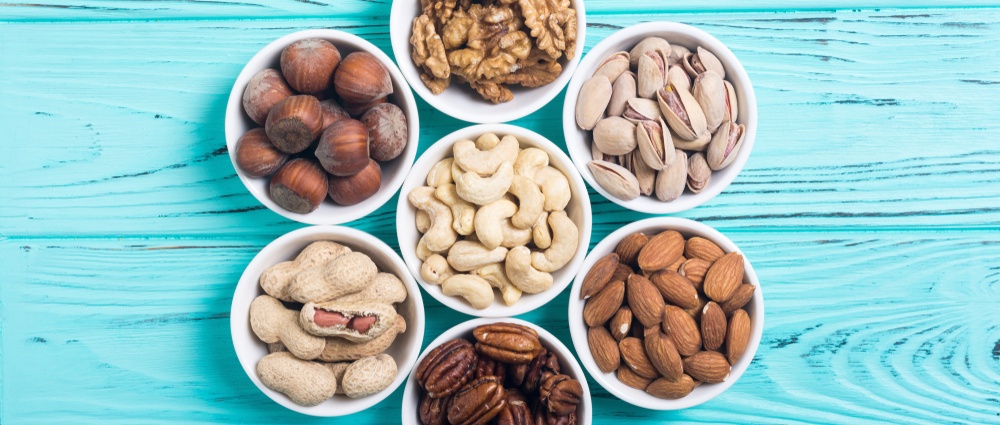
8 high-protein nuts to boost your strength
Packed with protein, delicious, easy to eat, and versatile - nuts are a great source of fuel for people building their fitness and strength. But not all nuts are created equal, which is why we count down the top eight nuts you should eat while strength training and serve these up with tasty recipe ideas.
by Lynn Stephen

Diet and nutrition
10 sources of plant-based protein for bone health
Plant-based diets are growing in popularity. People choose this way of eating for various reasons - to boost their health, help animals, and protect the environment. But switching to a plant-based diet may mean you're missing out on vital, bone-friendly nutrients. One of these is protein.
by Victoria Raw
Diet and nutrition
Plant-based proteins could help prevent high blood pressure
Eating a greater amount of minimally processed plant-based proteins - such as beans, nuts and lentils - may lower your chance of developing high blood pressure, according to new research.
by Laura Williamson

Diet and nutrition
How much protein do you need to build muscle?
If you wish to build muscle, there is no escaping the importance of protein. Why do we need protein to build muscle, and how much protein intake do we need to maximise muscle gain?
by Amberley Davis
Related patient information and medicines

Patient information leaflet
Healthy eating
You can reduce your intake of trans fats by avoiding or reducing the amount of fried foods, high-fat snacks and ... A 2019 review by the SACN (The Scientific Advisory Committee on Nutrition) determined that reducing your intake of saturated fats lowers your risk of developing coronary heart disease, although there was no evidence that it reduces.

Patient information leaflet
Weight reduction
You sho... This isn't sustainable weight loss. So, it is recommended that you lose an average of 0.5 to 1 kg per week - about 1-2 lb per week. BMI Dr Jan Sambrook Some people naturally have a larger frame than others. However, as soon as their diet is over, they often go back to their old eating habits, with their weight going straight back on..

Patient information leaflet
The immune system
This leaflet gives a brief overview of the immune system and how it works. A person with a weak immune system might have difficulty fighting off infections. In autoimmune diseases the body is unable to tell what is its own and what is foreign, so it attacks itself. Autoimmune diseases can attack any part of the body - eg, type 1 diabetes.

Patient information leaflet
Blood tests
The main reasons to know your blood group are if you need. You cannot request a blood test just to know your blood group on the NHS. What is blood made up of. Blood cells These can be seen under a microscope and make up about 40% of the blood's volume. Blood cells are made in the bone marrow by blood 'stem' cells. Blood cells are divided into.

Patient information leaflet
Bottle-feeding your baby
Follow-on formula This contains added calcium, iron and protein, and replaces lactose with corn syrup to make the milk sweeter. Babies over 6 months old don't actually need follow-on formula either, and manufacturers have been criticised by the World Health Organization (WHO) promoting it as a sensible 'switch' from breast-feeding, particularly in.
Patient information leaflet
Can I take Certican (Everolimus) and Matcha together?
Drinking matcha tea while taking Certican (everolimus) may increase the levels of the medication in your bloodstream. This could lead to an increased risk of side effects, such as mouth ulcers, infections, or kidney problems. Why this happens Certican is broken down in the body by a specific enzyme (CYP3A4) and a transport protein.
Further reading and references
- WW domain containing E3 ubiquitin protein ligase 1; MedlinePlus, National Library of Medicine.
- Lee YR, Chen M, Lee JD, Zhang J, Lin SY, Fu TM, Chen H, Ishikawa T, Chiang SY, Katon J, Zhang Y, Shulga YV, Bester AC, Fung J, Monteleone E, Wan L, Shen C, Hsu CH, Papa A, Clohessy JG, Teruya-Feldstein J, Jain S, Wu H, Matesic L, Chen RH, Wei W, Pandolfi PP. Reactivation of PTEN tumor suppressor for cancer treatment through inhibition of a MYC-WWP1 inhibitory pathway. Science. 2019 May 17;364(6441):eaau0159. doi: 10.1126/science.aau0159.
- Lee YR, Yehia L, Kishikawa T, Ni Y, Leach B, Zhang J, Panch N, Liu J, Wei W, Eng C, Pandolfi PP. WWP1 Gain-of-Function Inactivation of PTEN in Cancer Predisposition. N Engl J Med. 2020 May 28;382(22):2103-2116. doi: 10.1056/NEJMoa1914919.
- Papa A, Wan L, Bonora M, Salmena L, Song MS, Hobbs RM, Lunardi A, Webster K, Ng C, Newton RH, Knoblauch N, Guarnerio J, Ito K, Turka LA, Beck AH, Pinton P, Bronson RT, Wei W, Pandolfi PP. Cancer-associated PTEN mutants act in a dominant-negative manner to suppress PTEN protein function. Cell. 2014 Apr 24;157(3):595-610. doi: 10.1016/j.cell.2014.03.027.
- Zhi X, Chen C. WWP1: a versatile ubiquitin E3 ligase in signaling and diseases. Cell Mol Life Sci. 2012 May;69(9):1425-34. doi: 10.1007/s00018-011-0871-7. Epub 2011 Nov 4.
Share your thoughts or experiences with others in our patient communities.
Simple access to trusted treatments and health services online.
Common conditions
Get help with common conditions through the NHS, without a GP appointment.





Sign up to the Patient newsletter
Your weekly dose of clear, trustworthy health advice - written to help you feel informed, confident and in control.
By subscribing you accept our Privacy Policy. You can unsubscribe at any time. We never sell your data.