tyrosine 3-monooxygenase/tryptophan 5-monooxygenase activation protein epsilon
Last updated 24 Mar 2026
Meets Patient’s editorial guidelines
- DownloadDownload
- Share
- Language
- Discussion
- Ask Patient
- Audio Version
- Add to preferred sources on Google
The YWHAE gene provides instructions for making the 14-3-3 epsilon protein, which is part of the large 14-3-3 protein family. Proteins in this family attach (bind) to other proteins that are involved in cell signaling. Proteins in the 14-3-3 family either turn on (activate) or turn off (inactivate) these other proteins. The 14-3-3 proteins are also involved in processes such as the self-destruction of cells when they are no longer needed (apoptosis), the production of energy within cells, and the movement (transport) of proteins within cells.
Video picks for GenesVideo library
Normal function
The YWHAE gene provides instructions for making the 14-3-3 epsilon protein, which is part of the large 14-3-3 protein family. Proteins in this family attach (bind) to other proteins that are involved in cell signaling. Proteins in the 14-3-3 family either turn on (activate) or turn off (inactivate) these other proteins. The 14-3-3 proteins are also involved in processes such as the self-destruction of cells when they are no longer needed (apoptosis), the production of energy within cells, and the movement (transport) of proteins within cells.
The 14-3-3 epsilon protein is active in tissues throughout the body, although research has focused on its role in the brain. In the brain, this protein helps direct the movement of nerve cells (neuronal migration) by binding to other proteins. It is thought that the 14-3-3 epsilon protein is critical for proper neuronal migration and normal brain development.
Conditions referring to this gene or chromosome
Other names
14-3-3 epsilon
14-3-3E
HEL2
KCIP-1
MDCR
Patient picks for Genes

Healthy living
Natural protein verses protein powder: which is better for strength training?
Consuming enough protein is essential for building strong muscles. Protein powder shakes are not a complete replacement for natural protein sources found in your food. However, you may consider supplementing your diet and strength-training regime with protein shakes. Before you decide if this is right for you, there are several benefits and considerations to take into account.
by Amberley Davis
Healthy living
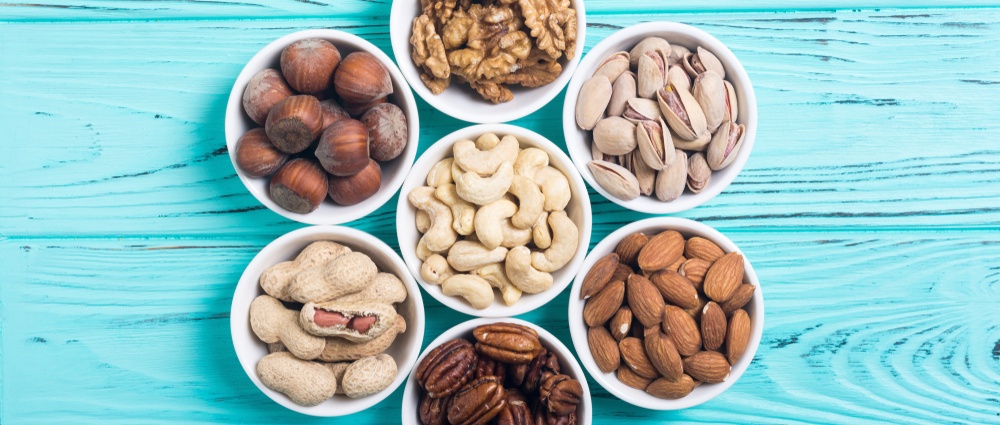
8 high-protein nuts to boost your strength
Packed with protein, delicious, easy to eat, and versatile - nuts are a great source of fuel for people building their fitness and strength. But not all nuts are created equal, which is why we count down the top eight nuts you should eat while strength training and serve these up with tasty recipe ideas.
by Lynn Stephen

Diet and nutrition
10 sources of plant-based protein for bone health
Plant-based diets are growing in popularity. People choose this way of eating for various reasons - to boost their health, help animals, and protect the environment. But switching to a plant-based diet may mean you're missing out on vital, bone-friendly nutrients. One of these is protein.
by Victoria Raw

Diet and nutrition
How a protein-packed breakfast can boost your health
When we think of breakfast, we often picture a bowl of cornflakes with milk. While it’s a classic morning staple, it might not be the most effective way to start your day, as it lacks protein. Adding more protein to your breakfast can boost your energy levels and help keep you feeling full for longer.
by Victoria Raw

Diet and nutrition
How much protein do you need to build muscle?
If you wish to build muscle, there is no escaping the importance of protein. Why do we need protein to build muscle, and how much protein intake do we need to maximise muscle gain?
by Amberley Davis

Diet and nutrition
Plant-based proteins could help prevent high blood pressure
Eating a greater amount of minimally processed plant-based proteins - such as beans, nuts and lentils - may lower your chance of developing high blood pressure, according to new research.
by Laura Williamson
Related patient information and medicines

Patient information leaflet
Chronic myeloid leukaemia
Treatment for the initial chronic phase The aim of treatment is to control the disease process, to ease any symptoms and to prevent (or delay) the progress... You may be advised to have one or more of the following treatments: Imatinib tablets. This medicine is known as a tyrosine kinase inhibitor. The chemical tyrosine kinase is made by the.

Patient information leaflet
Mouth cancer
Diagnosing mouth cancer Your healthcare professional may suspect mouth cancer if you have a lesion in your mouth (such as a sore, an ... Dr Krishna Vakharia , 16th October 2023 The National Institute for Health and Care Excellence (NICE) has recommended that a person should receive a diagnosis or ruling out of cancer within 28 days of being.

Patient information leaflet
Mastocytosis and mast cell disorders
If the condition is severe, surgery to remove the spleen (splenectomy), medicines that have an effect on the immune system (such as interferon), bone marrow transplant or... Dr Sarah Jarvis , 28th September 2021 Midostaurin for treating advanced systemic mastocytosis The National Institute for Health and Care Excellence (NICE) has brought out new.

Patient information leaflet
The immune system
Lymphatic system lymphatic system The. However it also has some highly specialised defences which give you resistance to particular pathogens. Another name for this resistance is immunity. These defences are special white blood cells called lymphocytes. Other types of white blood cells play an important part in defending your body against.

Patient information leaflet
Atkins diet
The Atkins diet is a popular weight loss plan based on eating fewer carbohydrates and more fatty foods - low-carbohydrate:high-fat (LCHF) diet. What is the Atkins diet. Dr Robert Atkins was an American heart doctor (cardiologist) who first described the diet. Normally our bodies use glycogen (stored carbohydrate) for energy, but the body uses fat.

Patient information leaflet
Refeeding syndrome
Refeeding syndrome was first described in Far East prisoners after the second world war when they developed heart failure after starting to eat again after a prolonged period of starvation. What is refeeding syndrome. Refeeding syndrome is a dangerous and life threatening shift of fluids and body salts (electrolytes) that can occur when.
Further reading and references
- tyrosine 3-monooxygenase/tryptophan 5-monooxygenase activation protein epsilon; MedlinePlus, National Library of Medicine.
- Baker EK, Brewer CJ, Ferreira L, Schapiro M, Tenney J, Wied HM, Kline-Fath BM, Smolarek TA, Weaver KN, Hopkin RJ. Further expansion and confirmation of phenotype in rare loss of YWHAE gene distinct from Miller-Dieker syndrome. Am J Med Genet A. 2023 Feb;191(2):526-539. doi: 10.1002/ajmg.a.63057. Epub 2022 Nov 25.
- Denomme-Pichon AS, Collins SC, Bruel AL, Mikhaleva A, Wagner C, Vancollie VE, Thomas Q, Chevarin M, Weber M, Prada CE, Overs A, Palomares-Bralo M, Santos-Simarro F, Pacio-Miguez M, Busa T, Legius E, Bacino CA, Rosenfeld JA, Le Guyader G, Egloff M, Le Guillou X, Mencarelli MA, Renieri A, Grosso S, Levy J, Dozieres B, Desguerre I, Vitobello A, Duffourd Y, Lelliott CJ, Thauvin-Robinet C, Philippe C, Faivre L, Yalcin B. YWHAE loss of function causes a rare neurodevelopmental disease with brain abnormalities in human and mouse. Genet Med. 2023 Jul;25(7):100835. doi: 10.1016/j.gim.2023.100835. Epub 2023 Mar 28.
- Jin DY, Lyu MS, Kozak CA, Jeang KT. Function of 14-3-3 proteins. Nature. 1996 Jul 25;382(6589):308. doi: 10.1038/382308a0. No abstract available.
- Nagamani SC, Zhang F, Shchelochkov OA, Bi W, Ou Z, Scaglia F, Probst FJ, Shinawi M, Eng C, Hunter JV, Sparagana S, Lagoe E, Fong CT, Pearson M, Doco-Fenzy M, Landais E, Mozelle M, Chinault AC, Patel A, Bacino CA, Sahoo T, Kang SH, Cheung SW, Lupski JR, Stankiewicz P. Microdeletions including YWHAE in the Miller-Dieker syndrome region on chromosome 17p13.3 result in facial dysmorphisms, growth restriction, and cognitive impairment. J Med Genet. 2009 Dec;46(12):825-33. doi: 10.1136/jmg.2009.067637. Epub 2009 Jul 6.
- Noor A, Bogatan S, Watkins N, Meschino WS, Stavropoulos DJ. Disruption of YWHAE gene at 17p13.3 causes learning disabilities and brain abnormalities. Clin Genet. 2018 Feb;93(2):365-367. doi: 10.1111/cge.13056. Epub 2017 Aug 31.
- Obsilova V, Obsil T. Structural insights into the functional roles of 14-3-3 proteins. Front Mol Biosci. 2022 Sep 16;9:1016071. doi: 10.3389/fmolb.2022.1016071. eCollection 2022.
- Ogihara T, Isobe T, Ichimura T, Taoka M, Funaki M, Sakoda H, Onishi Y, Inukai K, Anai M, Fukushima Y, Kikuchi M, Yazaki Y, Oka Y, Asano T. 14-3-3 protein binds to insulin receptor substrate-1, one of the binding sites of which is in the phosphotyrosine binding domain. J Biol Chem. 1997 Oct 3;272(40):25267-74. doi: 10.1074/jbc.272.40.25267.
- Tak H, Jang E, Kim SB, Park J, Suk J, Yoon YS, Ahn JK, Lee JH, Joe CO. 14-3-3epsilon inhibits MK5-mediated cell migration by disrupting F-actin polymerization. Cell Signal. 2007 Nov;19(11):2379-87. doi: 10.1016/j.cellsig.2007.07.016. Epub 2007 Jul 31.
- Toyo-oka K, Shionoya A, Gambello MJ, Cardoso C, Leventer R, Ward HL, Ayala R, Tsai LH, Dobyns W, Ledbetter D, Hirotsune S, Wynshaw-Boris A. 14-3-3epsilon is important for neuronal migration by binding to NUDEL: a molecular explanation for Miller-Dieker syndrome. Nat Genet. 2003 Jul;34(3):274-85. doi: 10.1038/ng1169.
Share your thoughts or experiences with others in our patient communities.
Simple access to trusted treatments and health services online.
Common conditions
Get help with common conditions through the NHS, without a GP appointment.





Sign up to the Patient newsletter
Your weekly dose of clear, trustworthy health advice - written to help you feel informed, confident and in control.
By subscribing you accept our Privacy Policy. You can unsubscribe at any time. We never sell your data.