Is athletic performance determined by genetics?
Meets Patient’s editorial guidelines
- DownloadDownload
- Share
- Language
- Discussion
- Ask Patient
- Audio Version
- Add to preferred sources on Google
Athletic performance is a complex trait that is influenced by both genetic and environmental factors. Many physical traits help determine an individual’s athletic ability, primarily the strength of muscles used for movement
(skeletal muscles)
and the predominant type of fibers that compose them. Skeletal muscles are made up of two types of muscle fibers: slow-twitch fibers and fast-twitch fibers. Slow-twitch muscle fibers contract slowly but can work for a long time without tiring; these fibers enable endurance activities like long-distance running. Fast-twitch muscle fibers contract quickly but tire rapidly; these fibers are good for sprinting and other activities that require power or strength. Other traits related to athleticism include the maximum amount of oxygen the body can deliver to its tissues (aerobic capacity), muscle mass, height, flexibility, coordination, intellectual ability, and personality.
Video picks for Understanding geneticsVideo library
Overview
Athletic performance is a complex trait that is influenced by both genetic and environmental factors. Many physical traits help determine an individual’s athletic ability, primarily the strength of muscles used for movement
(skeletal muscles)
and the predominant type of fibers that compose them. Skeletal muscles are made up of two types of muscle fibers: slow-twitch fibers and fast-twitch fibers. Slow-twitch muscle fibers contract slowly but can work for a long time without tiring; these fibers enable endurance activities like long-distance running. Fast-twitch muscle fibers contract quickly but tire rapidly; these fibers are good for sprinting and other activities that require power or strength. Other traits related to athleticism include the maximum amount of oxygen the body can deliver to its tissues (aerobic capacity), muscle mass, height, flexibility, coordination, intellectual ability, and personality.
Studies focused on similarities and differences in athletic performance within families, including between twins, suggest that genetic factors underlie 30 to 80 percent of the differences among individuals in traits related to athletic performance. Many studies have investigated variations in specific genes thought to be involved in these traits, comparing athletes with nonathletes.
The best-studied genes associated with athletic performance are ACTN3 and ACE. These genes influence the fiber type that makes up muscles, and they have been linked to strength and endurance. The ACTN3 gene provides instructions for making a protein called alpha (α)-actinin-3, which is predominantly found in fast-twitch muscle fibers. A variant in this gene, called R577X, leads to production of an abnormally short α-actinin-3 protein that is quickly broken down. Some people have this variant in both copies of the gene; this genetic pattern (genotype) is referred to as 577XX. These individuals have a complete absence of α-actinin-3, which appears to reduce the proportion of fast-twitch muscle fibers and increase the proportion of slow-twitch fibers in the body. Some studies have found that the 577XX genotype is more common among high-performing endurance athletes (for example, cyclists and long-distance runners) than in the general population, while other studies have not supported these findings. The 577RR genotype is associated with a high proportion of fast-twitch fibers and is seen more commonly in athletes who rely on strength or speed, such as short-distance runners.
The ACE gene provides instructions for making a protein called angiotensin-converting enzyme, which converts a hormone called angiotensin I to another form called angiotensin II. Angiotensin II helps control blood pressure and may also influence skeletal muscle function, although this role is not completely understood. A variation in the ACE gene, called the ACE I/D polymorphism, alters activity of the gene. Individuals can have two copies of a version called the D allele, which is known as the DD pattern, two copies of a version called the I allele, known as the II pattern, or one copy of each version, called the ID pattern. Of the three patterns, DD is associated with the highest levels of angiotensin-converting enzyme. The DD pattern is thought to be related to a higher proportion of fast-twitch muscle fibers and greater speed.
Many other genes with diverse functions have been associated with athletic performance. Some are involved in the function of skeletal muscles, while others play roles in the production of energy for cells, communication between nerve cells, or other cellular processes.
Other studies have examined variations across the entire genomes (an approach called genome-wide association studies or GWAS) of elite athletes to determine whether specific areas of the genome are associated with athleticism. More than 150 different variations linked to athletic performance have been identified in these studies; however, most have been found in only one or a few studies, and the significance of most of these genetic changes have not been identified. It is likely that a large number of genes are involved, each of which makes only a small contribution to athletic performance.
Athletic performance is also strongly influenced by the environment. Factors such as the amount of support a person receives from family and coaches, economic and other circumstances that allow one to pursue the activity, availability of resources, and a person’s relative age compared to their peers all seem to play a role in athletic excellence. A person’s environment and genes influence each other, so it can be challenging to tease apart the effects of the environment from those of genetics. For example, if a child and his or her parent excel at a sport, is that similarity due to genetic factors passed down from parent to child, to similar environmental factors, or (most likely) to a combination of the two? It is clear that both environmental and genetic factors play a part in determining athletic ability.
Patient picks for Understanding genetics

Brain and nerves
Young-onset dementia is linked to health and lifestyle, as well as genetics
Many of us fear dementia, not to mention developing it while we're young, but little is known about whether we can prevent it. However, a breakthrough study has identified 15 significant factors linked to young-onset dementia, which develops before the age of 65. And many of these are influenced by your health and lifestyle choices. With around 370,000 people developing young-onset dementia each year worldwide, experts believe this research brings us closer to finding ways to prevent, identify, and treat this devastating disease.
by Amberley Davis
Diet and nutrition
What is the carnivore diet and is it healthy?
The carnivore diet is one of the fastest-growing dietary trends on social media. Far from your average high-protein low-carb diet, on the carnivore diet you eat meat, and meat alone. If this sounds questionable for your health and contrary to mainstream nutritional advice, that's because it is.
by Victoria Raw

Healthy living
Do sports drinks really work to improve performance?
Whether it's the World Cup or the Olympics, you'll see athletes regularly picking up a sports drink for a glug. Marketeers hope we'll do the same, whether after a workout at the gym or to rehydrate in the office. But do they really help sports performance or are they just a waste of money?
by Dr Carrie Ruxton, PhD, Child Nutrition

Yorkshire talks series 3
Matthew Haywood: BBC Survivor Winner on Strategy & Men's Mental Health | Yorkshire Talks
This week on Yorkshire Talks, Christine and Matt are joined by Matthew Haywood, winner of the BBC's Survivor. At just 21 years old, Matthew travelled halfway around the world, lived on a remote beach, battled the elements, built crucial alliances and outplayed every other contestant to become the sole survivor — walking away with the £100,000 prize. In this episode, we talk about: • What it was really like competing on Survivor. • The strategy behind winning without creating unnecessary drama. • Life after the show, and building a successful outdoor adventure platform on social media. • Why he's passionate about supporting young men's mental health. • The lessons resilience, teamwork and adversity have taught him. • His love of football and family, and his lovely bond with his late gran — watch out for his emotional special item at the end. Whether you're a fan of Survivor, love stories of resilience and adventure, or are interested in honest conversations about mental health, this is an episode you won't want to miss. Watch now — and don't forget to LIKE, SUBSCRIBE and share if you enjoy the conversation. Follow: Matthew Haywood on TikTok: @matthewhaywoodx Matthew Haywood on Instagram: @matthewhaywoodx Matt Jameson: @matt_d_jameson Christine Talbot: @christineetalbot Yorkshire Talks is proudly sponsored by Patient.info and produced by @chapter_81 #YorkshireTalks #MatthewHaywood #BBCSurvivor #Survivor #MensMentalHealth #Resilience #Adventure #InspirationalStories #Podcast
Yorkshire talks series 3
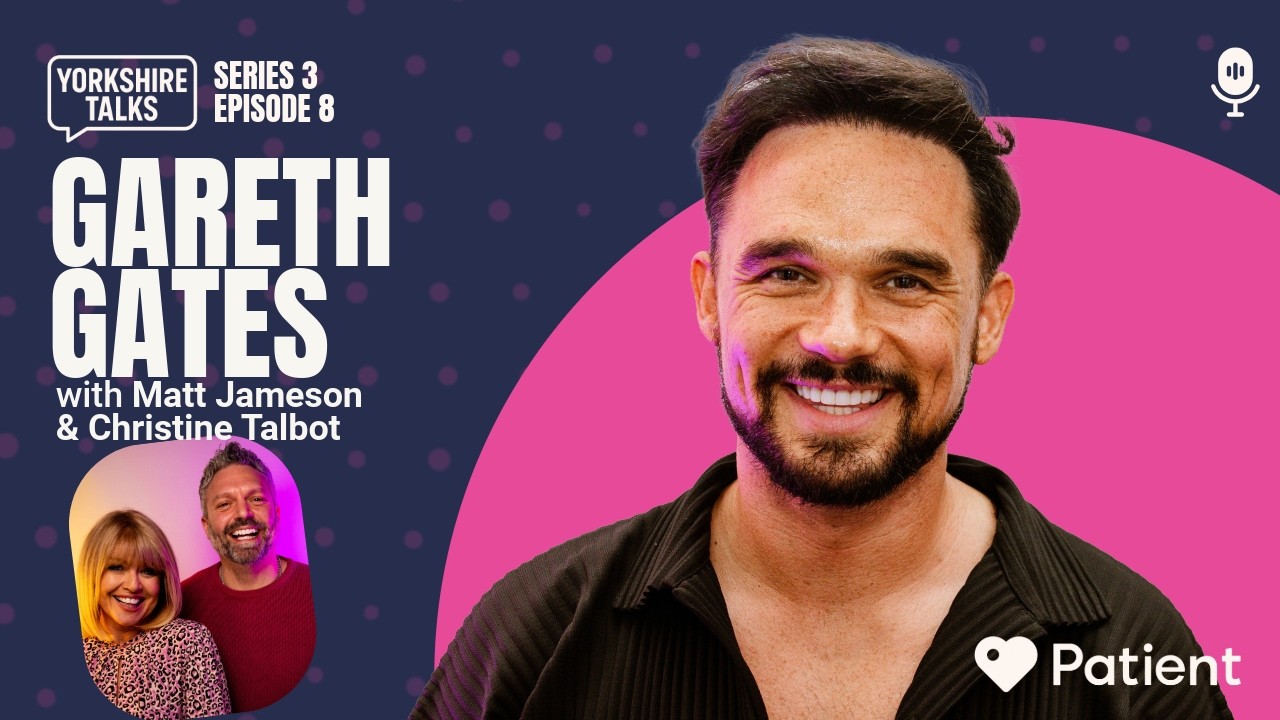
Gareth Gates: "I believed I was defective — my stammer was my superpower" | Yorkshire Talks
In our final episode of Series Three, our Yorkshire Talks guest is former Pop Idol star, producer and performer Gareth Gates. Bradford lad Gareth was first interviewed by Christine for a YTV talent show for young people nearly 30 years ago — so this episode was a bit of a reunion. Now all grown up, Gareth joins Matt and Christine to talk openly and honestly about his journey: from being bullied at school and living with a debilitating stammer, to reaching the final of the very first Pop Idol and having his whole life changed overnight. Gareth explains how taking part in the McGuire Programme has helped him manage his stammer, and how his experiences have shaped the work he does today. He also chats about his role in Boyband in the Buff, currently touring, his journey into becoming a music producer and entrepreneur, and his exciting new project — Speechless, a musical about stammering, due to hit the stage next year. Now a dad himself, with a daughter the same age he was when he first found fame, Gareth reflects on the last few decades with warmth, honesty and plenty of Yorkshire humour. 🎙️ It's a fascinating, funny and incredibly inspiring conversation — one you won't want to miss. If you enjoy the episode, don't forget to LIKE, SUBSCRIBE and leave us a comment. Follow Gareth: 📸 Instagram: @gareth_gates See Gareth on tour: 🎭 Boyband in the Buff is currently on tour. Find tour dates here: [paste official tour dates link] See Gareth in Beauty and the Beast: ✨ Gareth stars as the Beast in Beauty and the Beast at the Britannia Pier, Great Yarmouth, 8–31 December: britannia-pier.co.uk Follow the hosts: Matt Jameson: @matt_d_jameson Christine Talbot: @christineetalbot Yorkshire Talks is presented by Christine Talbot and Matt Jameson, and produced by Simon Fogal at Chapter 81 Studios in Leeds. Proudly sponsored by Patient.info.

Podcasts
Making work work
Work can take up so much of our waking hours but how often do we look at our relationship with work. Are you a workaholic or just going through the motions? Does it inspire or drain you? What about the people we work with: colleagues, managers and those unrequited crushes or unwanted attentions? When it comes to work, things can get complicated. Clare and Aileen delve into the tangled world of work to help you think about your relationship with work and give tips on how to navigate those complex relationships in the workplace.
by Thomas Andrew Porteus, MBCS
Related patient information and medicines

Patient information leaflet
Paleolithic diet (paleo diet)
It excludes foods that were not available to humans at that time and some which - although available - do not meet the fundamental nutritional characteristics of the diet (see 'Paleo Diet Food List' below). Purpose of the paleo diet Supporters of the Paleolithic diet believe that such foods are better for us because this is what our body has been.

Patient information leaflet
Weight gain
Genetics Being overweight tends to run in families. No single gene is solely responsible. Certain ethnic groups are at higher risk of developing obesity; eg, in 2021, 72% of UK adults from black ethnic groups were overweight or obese compared to 63.5% of the general adult population. South Asian adults, particularly women, are prone to gaining.

Patient information leaflet
Cri du chat syndrome
Cri du chat syndrome is a chromosome problem caused by a missing piece of chromosome 5. The syndrome is called cri du chat (French for cry of the cat) because affected babies often have a high-pitched cry. Not all babies with the missing piece of chromosome 5 will develop cri du chat syndrome. Cri du chat syndrome may cause a variety of.

Patient information leaflet
Basal metabolic rate (BMR) calculator
...your energy intake and health goals: Age – BMR decreases as you get older, due to a natural loss of muscle mass and slower metabolism Sex – Men generally have a higher BMR than women, largely because of differences in muscle mass and hormone levels Weight and height – Larger individuals tend to have a higher BMR, as their bodies require more.

Patient information leaflet
BRCA genes
There are a few known gene changes (mutations) that can increase the risk of certain cancers, and tests available for some of them, including BRCA1 and BRCA2 gene mutations. The BRCA1 and BRCA2 genes normally protect against certain cancers, particularly breast cancer and ovarian cancer. If there is a mutation in one of these genes then this may.

Patient information leaflet
ADHD in adults
Attention deficit hyperactivity disorder (ADHD) causes problems with concentrating (inattention), and being too active and having difficulty staying focused (hyperactivity). The difficulties caused by ADHD vary from mild to severe. Although ADHD starts in childhood, the difficulties often persist into adulthood. Sometimes adults are diagnosed with.
Further reading and references
- Is athletic performance determined by genetics?; MedlinePlus, National Library of Medicine.
- Ahmetov II, John G, Semenova EA, Hall ECR. Genomic predictors of physical activity and athletic performance. Adv Genet. 2024;111:311-408. doi: 10.1016/bs.adgen.2024.01.001. Epub 2024 Feb 15. PMID: 38908902.
- Ferreira CP, Silvino VO, Trevisano RG, de Moura RC, Almeida SS, Pereira Dos Santos MA. Influence of genetic polymorphism on sports talent performance versus non-athletes: a systematic review and meta-analysis. BMC Sports Sci Med Rehabil. 2024 Oct 31;16(1):223. doi: 10.1186/s13102-024-01001-5. PMID: 39482721. Free full-text available from PubMed Central: PMC11529235.
- Psatha A, Al-Mahayri ZN, Mitropoulou C, Patrinos GP. Meta-analysis of genomic variants in power and endurance sports to decode the impact of genomics on athletic performance and success. Hum Genomics. 2024 May 17;18(1):47. doi: 10.1186/s40246-024-00621-9. PMID: 38760851. Free full-text available from PubMed Central: PMC11102131.
- Varillas-Delgado D, Del Coso J, Gutiérrez-Hellín J, Aguilar-Navarro M, Muñoz A, Maestro A, Morencos E. Genetics and sports performance: the present and future in the identification of talent for sports based on DNA testing. Eur J Appl Physiol. 2022 Aug;122(8):1811-1830. doi: 10.1007/s00421-022-04945-z. Epub 2022 Apr 16. PMID: 35428907. Free full-text available from PubMed Central: PMC9012664.
Share your thoughts or experiences with others in our patient communities.
Simple access to trusted treatments and health services online.
Common conditions
Get help with common conditions through the NHS, without a GP appointment.





Sign up to the Patient newsletter
Your weekly dose of clear, trustworthy health advice - written to help you feel informed, confident and in control.
By subscribing you accept our Privacy Policy. You can unsubscribe at any time. We never sell your data.