Is longevity determined by genetics?
Meets Patient’s editorial guidelines
- DownloadDownload
- Share
- Language
- Discussion
- Ask Patient
- Audio Version
- Add to preferred sources on Google
The duration of human life (longevity) is influenced by genetics, the environment, and lifestyle. Environmental improvements beginning in the 1900s extended the average life span dramatically with significant improvements in the availability of food and clean water, better housing and living conditions, reduced exposure to infectious diseases, and access to medical care. Most significant were public health advances that reduced premature death by decreasing the risk of infant mortality, increasing the chances of surviving childhood, and avoiding infection and communicable disease. Now people in the United States live about 80 years on average, but some individuals survive for much longer.
Video picks for Understanding geneticsVideo library
Overview
The duration of human life (longevity) is influenced by genetics, the environment, and lifestyle. Environmental improvements beginning in the 1900s extended the average life span dramatically with significant improvements in the availability of food and clean water, better housing and living conditions, reduced exposure to infectious diseases, and access to medical care. Most significant were public health advances that reduced premature death by decreasing the risk of infant mortality, increasing the chances of surviving childhood, and avoiding infection and communicable disease. Now people in the United States live about 80 years on average, but some individuals survive for much longer.
Scientists are studying people in their nineties (called nonagenarians) and hundreds (called centenarians, including semi-supercentenarians of ages 105-109 years and supercentenarians, ages 110+) to determine what contributes to their long lives. They have found that long-lived individuals have little in common with one another in education, income, or profession. The similarities they do share, however, reflect their lifestyles—many are nonsmokers, do not have obesity, and cope well with stress. Also, most are women. Because of their healthy habits, these older adults are less likely to develop age-related chronic diseases, such as high blood pressure, heart disease, cancer, and diabetes, than their same-age peers.
The siblings and children (collectively called first-degree relatives) of long-lived individuals are more likely to remain healthy longer and to live to an older age than their peers. People with centenarian parents are less likely at age 70 to have the age-related diseases that are common among older adults. The brothers and sisters of centenarians typically have long lives, and if they develop age-related diseases (such as high blood pressure, heart disease, cancer, or type 2 diabetes), these diseases appear later than they do in the general population. Longer life spans tend to run in families, which suggests that shared genetics, lifestyle, or both play an important role in determining longevity.
The study of longevity genes is a developing science. It is estimated that about 25 percent of the variation in human life span is determined by genetics, but which genes, and how they contribute to longevity, are not well understood. A few of the common variations (called polymorphisms) associated with long life spans are found in the APOE, FOXO3, and CETP genes, but they are not found in all individuals with exceptional longevity. It is likely that variants in multiple genes, some of which are unidentified, act together to contribute to a long life.
Whole genome sequencing studies of supercentenarians have identified the same gene variants that increase disease risk in people who have average life spans. The supercentenarians, however, also have many other newly identified gene variants that possibly promote longevity. Scientists speculate that for the first seven or eight decades, lifestyle is a stronger determinant of health and life span than genetics. Eating well, not drinking too much alcohol, avoiding tobacco, and staying physically active enable some individuals to attain a healthy old age; genetics then appears to play a progressively important role in keeping individuals healthy as they age into their eighties and beyond. Many nonagenarians and centenarians are able to live independently and avoid age-related diseases until the very last years of their lives.
Some of the gene variants that contribute to a long life are involved with the basic maintenance and function of the body’s cells. These cellular functions include DNA repair, maintenance of the ends of chromosomes (regions called telomeres), and protection of cells from damage caused by unstable oxygen-containing molecules (free radicals). Other genes that are associated with blood fat (lipid) levels, inflammation, and the cardiovascular and immune systems contribute significantly to longevity because they reduce the risk of heart disease (the main cause of death in older people), stroke, and insulin resistance.
In addition to studying the very old in the United States, scientists are also studying a handful of communities in other parts of the world where people often live into their nineties and older—Okinawa (Japan), Ikaria (Greece), and Sardinia (Italy). These three regions are similar in that they are relatively isolated from the broader population in their countries, are lower income, have little industrialization, and tend to follow a traditional (non-Western) lifestyle. Unlike other populations of the very old, the centenarians on Sardinia include a significant proportion of men. Researchers are studying whether hormones, sex-specific genes, or other factors may contribute to longer lives among men as well as women on this island.
Patient picks for Understanding genetics

Brain and nerves
Young-onset dementia is linked to health and lifestyle, as well as genetics
Many of us fear dementia, not to mention developing it while we're young, but little is known about whether we can prevent it. However, a breakthrough study has identified 15 significant factors linked to young-onset dementia, which develops before the age of 65. And many of these are influenced by your health and lifestyle choices. With around 370,000 people developing young-onset dementia each year worldwide, experts believe this research brings us closer to finding ways to prevent, identify, and treat this devastating disease.
by Amberley Davis

Diet and nutrition
The longevity diet - can it add years to your life?
Dr Longo, a specialist in ageing, imagines a future where we can make it to 110 years old in good health - and it all comes down to what, when, and how much we eat. This is the goal of his so-called longevity diet, a meal plan that isn't just designed to help prevent disease, but also to slow down ageing in our bodies. Read on to find out what the diet involves and whether the evidence backs it up.
by Lawrence Higgins

Diet and nutrition
Is the Okinawa diet a recipe for longevity?
Once called the land of immortals, the island of Okinawa is home to some of the world's oldest and healthiest residents. These centenarians grew up eating a traditional Okinawa diet, with the ingredients available to them. We speak to an expert about replicating this way of eating, to promote healthy ageing and longevity - no matter where in the world you are. Hint: it's not just what you eat, but how.
by Lynn Stephen

Healthy living
Deep resting squat - can this simple posture unlock flexibility, mobility, and longevity?
When we go to sit down, most of us instinctively head straight for a chair or comfy sofa without giving it a second thought. Modern life has normalised this way of sitting, with many of us rarely considering any other position. Over time, however, this habit can negatively affect our flexibility, mobility, and strength. Popular across much of the world, the deep resting squat offers a natural alternative - and a range of potential benefits.
by Hannah Boynton-Forshaw

Podcasts
Making work work
Work can take up so much of our waking hours but how often do we look at our relationship with work. Are you a workaholic or just going through the motions? Does it inspire or drain you? What about the people we work with: colleagues, managers and those unrequited crushes or unwanted attentions? When it comes to work, things can get complicated. Clare and Aileen delve into the tangled world of work to help you think about your relationship with work and give tips on how to navigate those complex relationships in the workplace.
by Thomas Andrew Porteus, MBCS
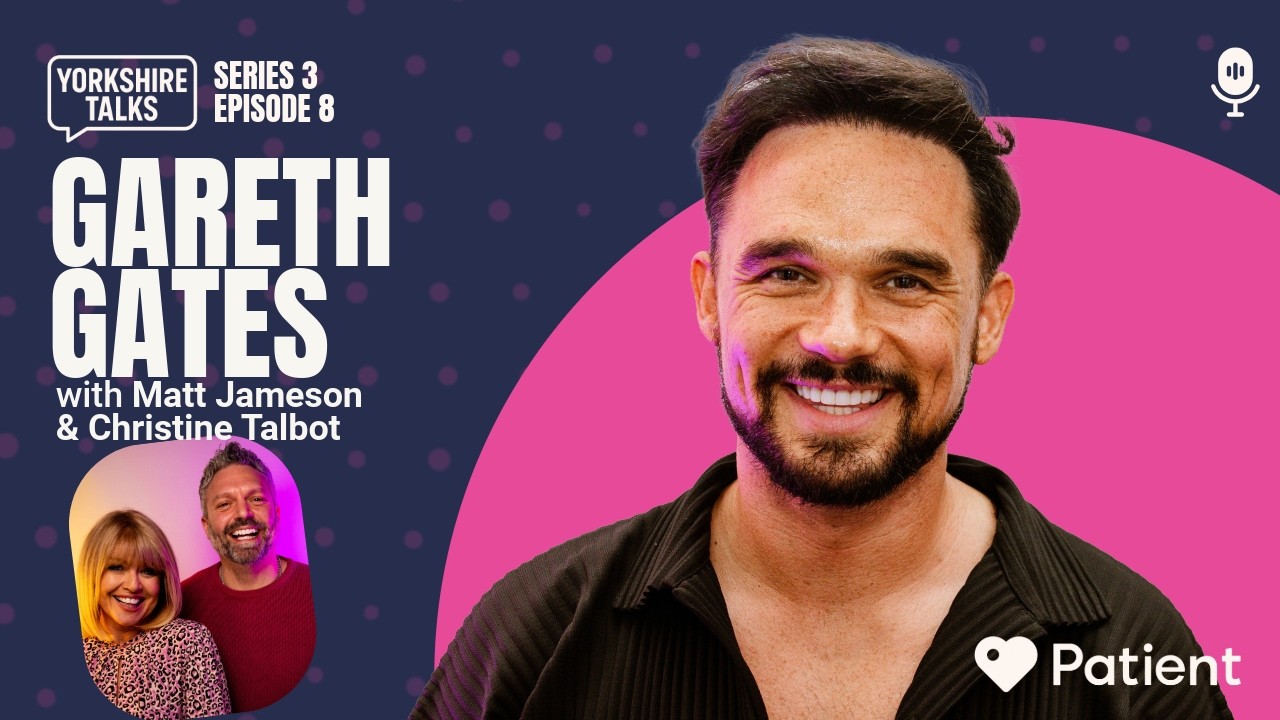
Yorkshire talks series 3
Gareth Gates: "I believed I was defective — my stammer was my superpower" | Yorkshire Talks
In our final episode of Series Three, our Yorkshire Talks guest is former Pop Idol star, producer and performer Gareth Gates. Bradford lad Gareth was first interviewed by Christine for a YTV talent show for young people nearly 30 years ago — so this episode was a bit of a reunion. Now all grown up, Gareth joins Matt and Christine to talk openly and honestly about his journey: from being bullied at school and living with a debilitating stammer, to reaching the final of the very first Pop Idol and having his whole life changed overnight. Gareth explains how taking part in the McGuire Programme has helped him manage his stammer, and how his experiences have shaped the work he does today. He also chats about his role in Boyband in the Buff, currently touring, his journey into becoming a music producer and entrepreneur, and his exciting new project — Speechless, a musical about stammering, due to hit the stage next year. Now a dad himself, with a daughter the same age he was when he first found fame, Gareth reflects on the last few decades with warmth, honesty and plenty of Yorkshire humour. 🎙️ It's a fascinating, funny and incredibly inspiring conversation — one you won't want to miss. If you enjoy the episode, don't forget to LIKE, SUBSCRIBE and leave us a comment. Follow Gareth: 📸 Instagram: @gareth_gates See Gareth on tour: 🎭 Boyband in the Buff is currently on tour. Find tour dates here: [paste official tour dates link] See Gareth in Beauty and the Beast: ✨ Gareth stars as the Beast in Beauty and the Beast at the Britannia Pier, Great Yarmouth, 8–31 December: britannia-pier.co.uk Follow the hosts: Matt Jameson: @matt_d_jameson Christine Talbot: @christineetalbot Yorkshire Talks is presented by Christine Talbot and Matt Jameson, and produced by Simon Fogal at Chapter 81 Studios in Leeds. Proudly sponsored by Patient.info.
Related patient information and medicines

Patient information leaflet
Genetic testing
Genetic testing is a type of medical test that identifies changes in chromosomes, genes or proteins. Genetic tests examine a person's DNA in a variety of ways to assess a person's genetic health. They are all designed to identify a particular gene that may cause a genetic disorder. We all have 46 chromosomes in our cells. Genes. It is the.

Patient information leaflet
Cri du chat syndrome
Cri du chat syndrome is a chromosome problem caused by a missing piece of chromosome 5. The syndrome is called cri du chat (French for cry of the cat) because affected babies often have a high-pitched cry. Understanding chromosomes and cell division Chromosomes are found in the centre (nucleus) of a cell. They carry genetic information in the form.

Patient information leaflet
Facelifts
This leaflet is provided by the British Association of Aesthetic Plastic Surgeons , the professional body responsible for the advancement of education and safety in aesthetic plastic surgery. The rate at which this happens varies from one person to another and is probably determined by our genes. Aging of the skin of the face does not necessarily.

Patient information leaflet
BRCA genes
There are a few known gene changes (mutations) that can increase the risk of certain cancers, and tests available for some of them, including BRCA1 and BRCA2 gene mutations. The BRCA1 and BRCA2 genes normally protect against certain cancers, particularly breast cancer and ovarian cancer. If there is a mutation in one of these genes then this may.

Patient information leaflet
Recurrent miscarriage
This leaflet explains the definition of recurrent miscarriage and explores the tests and treatments that may be needed. The good news is that the eventual outlook is generally good as most couples who have experienced recurrent miscarriage go on to have a successful pregnancy. Abnormalities of the genes or chromosomes of the parents. Chromosomes.

Patient information leaflet
Epilepsy
Some types of idiopathic epilepsy have now been renamed 'genetic epilepsy', as we have learned more about the genetic basis of epilepsy. Is epilepsy hereditary. We think that there is a close link between genetics and epilepsy. Some researchers think that genetics are important to some extent in everyon... This genetic tendency is often due to.
Further reading and references
- Is longevity determined by genetics?; MedlinePlus, National Library of Medicine.
- Caruso C, Ligotti ME, Accardi G, Aiello A, Duro G, Galimberti D, Candore G. How Important Are Genes to Achieve Longevity? Int J Mol Sci. 2022 May 18;23(10):5635. doi: 10.3390/ijms23105635. PMID: 35628444. Free full-text available from PubMed Central: PMC9145989.
- Sebastiani P, Gurinovich A, Bae H, Andersen S, Malovini A, Atzmon G, Villa F, Kraja AT, Ben-Avraham D, Barzilai N, Puca A, Perls TT. Four genome-wide association studies identify new extreme longevity variants. J Gerontol A Biol Sci Med Sci. 2017 Oct 12;72(11):1453-1464. doi: 10.1093/gerona/glx027. PubMed: 28329165
- Smulders L, Deelen J. Genetics of human longevity: From variants to genes to pathways. J Intern Med. 2024 Apr;295(4):416-435. doi: 10.1111/joim.13740. Epub 2023 Nov 8. PMID: 37941149.
- Wang J, Chen C, Zhou J, Ye L, Li Y, Xu L, Xu Z, Li X, Wei Y, Liu J, Lv Y, Shi X. Healthy lifestyle in late-life, longevity genes, and life expectancy among older adults: a 20-year, population-based, prospective cohort study. Lancet Healthy Longev. 2023 Oct;4(10):e535-e543. doi: 10.1016/S2666-7568(23)00140-X. Erratum in: Lancet Healthy Longev. 2023 Dec;4(12):e664. doi: 10.1016/S2666-7568(23)00219-2. PMID: 37804845.
Share your thoughts or experiences with others in our patient communities.
Simple access to trusted treatments and health services online.
Common conditions
Get help with common conditions through the NHS, without a GP appointment.





Sign up to the Patient newsletter
Your weekly dose of clear, trustworthy health advice - written to help you feel informed, confident and in control.
By subscribing you accept our Privacy Policy. You can unsubscribe at any time. We never sell your data.