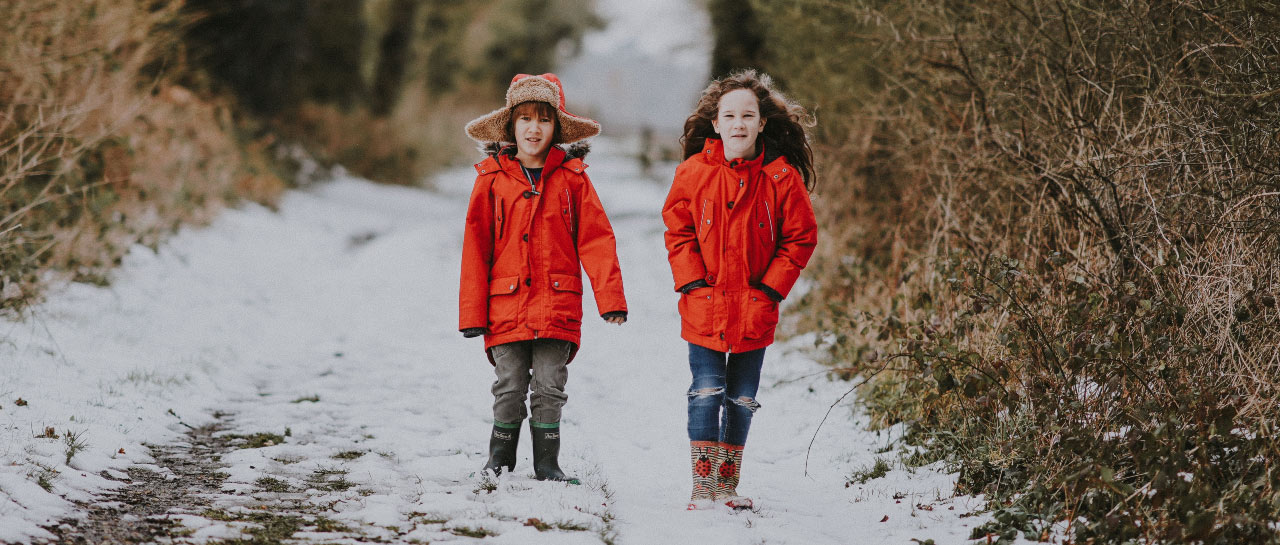
Keeping kids active over Christmas
Peer reviewed by Dr Sarah JarvisAuthored by Gillian HarveyOriginally published 21 Dec 2020
Meets Patient’s editorial guidelines
- DownloadDownload
- Share
- Language
- Discussion
- Audio Version
- Add to preferred sources on Google
During the festive season most of us look forward to having a rest, treating ourselves to some delicious food and generally making merry. But while it's nice to give ourselves a break once in a while, two weeks of inactivity can really take its toll on our fitness. And for children, staying active is particularly important.
The importance of being active
Most of us are aware that the UK is in the grip of an obesity crisis. Recent data gathered by the 'Child Measurement Programme' discovered that 20.1% of year 6 pupils (aged 10-11 years) are obese and a further 14.2% are overweight.
Even if weight is not a concern, regular exercise has a significant impact on our mental health - helping us to feel more positive. Children's mental health is also an area of concern: a survey in 2017 revealed that over 11% of 5- to 15-year-olds meet the criteria for one or two mental disorders and this number may have increased as a result of the stress experienced by many of us in 2020.
Exercise has been proven to improve mood and reduce the severity of the symptoms of conditions such as anxiety and depression - so there’s even more reason to keep kids moving.
Two weeks is a long time
Two weeks of relaxing and forgoing our usual exercise routine may sound harmless. But if children are sedentary for even that relatively short period of time, their fitness can deteriorate quite rapidly. "Fitness significantly decreases over the school holidays for many children," agrees Daniel Lavipour, Head Coach at Performance Ready, who regularly works with children and schools. "And this can have longer-term implications. If your fitness drops, you lose your ability to access sports at the same level. You may then go to try football, for example, and find it that much harder. This may even lead to a child giving up on a sport altogether."
Thinking outside the box
It may be more challenging this year. With many activities not available as usual and with visits from wider family proving impossible, children may not have others to run around with. But there are many things that your child can do that will help to keep fitness levels up during this time. Even going on a family walk will make a significant difference. And if you're unable to leave home, workouts such as Joe Wicks' 'PE classes' on YouTube are a great way to keep the kids (and adults) moving!
"Joe Wicks has demonstrated how you can do a ton of things in a small space in a really engaging way," agrees Lavipour. "And when you look at the content of his workouts, all the movements are what we call 'fundamental movement skills'. They provide the foundation of the movement that happens in other sports. For example, if you learn to improve your jumping, you'll be better equipped to jump during football."
Finding a way to motivate
Just like adults, some children are more naturally motivated to move than others. It may be that you simply have to provide the time and space for them to run and play - and keeping their fitness levels up may be achieved with a daily trip to the park.
However, other children may not feel so keen on exercise and may need more encouragement to get moving. One way to help children to want to exercise is by rethinking the way you talk about it.
"Talking about exercise as something we have to do can be off-putting," says Nicky Adams, director of Full of Beans, children's fitness training company. "Rather than labelling what you're doing as exercise, re-brand it as something fun. For example, you can say 'let's go out and have a treasure hunt', 'let's explore' or 'let's play football', rather than looking at exercise as a chore you have to do.
"Some children aren't motivated by traditional sport. My advice for those families would say don't worry about that. It's just important to let them find ways to move that are fun for them that make them happy," she adds.
Setting a challenge
Even at the park, some children may need encouragement to use the equipment in a way that gets their heart rate up. One way of doing this is by leading them - either joining in, or setting challenges. "See how many bars they can do on the monkey bars," says Adams. "Suggest a race. Use chalk to draw out an obstacle course."
"We have to find out what drives an individual to exercise and ir's different for everyone," agrees Lavipour. "Try linking exercise to an interest, a superhero character or a sports hero - this can be really powerful."
"If your child loves Minecraft or other computer games, why not suggest they try acting out the games in real life?" adds Adams.
Rethinking the way you talk to your children about exercise, thinking about their individual preferences and finding something they will enjoy should ensure that a break in schooling doesn't lead to a deterioration in fitness. Plus, getting the whole family active might just add an extra element of fun to the festive season!
Patient picks for Exercise and physical activity

Healthy living
Can you do too much exercise?
Exercise should form part of our day-to-day lives but it is possible to overdo it and cause your body harm - we take a look at whether too much exercise can be bad for your health.
by Andrea Downey

Healthy living
How to get over your fear of exercise
The benefits of physical activity are well known. In the short term, doing some exercise can improve your mood and help you sleep better, as well as giving you a sense of accomplishment. Over the longer term, it can lower your risk of many chronic diseases, help keep your weight under control and strengthen your muscles and bones.
by Abi Millar
About the authorView full bio
Authored by

Gillian Harvey
Freelance Writer
BA (Hons) English
Gillian is a freelance writer and columnist for a variety of national newspapers and magazines.
About the reviewerView full bio

Dr Sarah Jarvis
Clinical Consultant
MA (Cantab), BM, BCh (Oxon), DRCOG, FRCGP, MBE
After training in medicine at Cambridge and Oxford, Dr Sarah Jarvis MBE became a GP.
Article history
Article also available in English, German, Spanish, French, Italian, Portuguese, Hindi, Hebrew, Arabic, and Swedish.
21 Dec 2020 | Originally published
Authored by:
Gillian HarveyPeer reviewed by
Dr Sarah Jarvis
Join the conversation
Share your thoughts or experiences with others in our patient communities.

Ask, share, connect.
Browse discussions, ask questions, and share experiences across hundreds of health topics.

Feeling unwell?
Assess your symptoms online for free
Sign up to the Patient newsletter
Your weekly dose of clear, trustworthy health advice - written to help you feel informed, confident and in control.
By subscribing you accept our Privacy Policy. You can unsubscribe at any time. We never sell your data.