
Debunking lesbian stereotypes and myths
Peer reviewed by Dr Krishna Vakharia, MRCGPAuthored by Emily Jane BashforthOriginally published 1 Jul 2022
Meets Patient’s editorial guidelines
- DownloadDownload
- Share
- Language
- Discussion
- Ask Patient
- Audio Version
- Add to preferred sources on Google
There are many misconceptions and lesbian stereotypes surrounding how they look and act, what they're interested in and the reality of their relationships. As result, young people often struggle to accept their own identities, and lesbians can be treated unfairly or even outcast from environments completely.
Video picks for Gender identityVideo library
What is a lesbian?
"Lesbian" is a term that defines queer attraction towards women. While reading the word "queer" could potentially make you feel uncomfortable at first, you might not know that the slur was reclaimed by the community in the late 1980s1. In the past, it was used as a derogatory term and while it isn't a label every LGBTQ+ person feels comfortable with today, it has been embraced and accepted as an umbrella term in place of specific labels for romantic or sexual orientation, and/or gender identity.
A lesbian is usually referring to a woman whose primary sexual and affectional orientation is towards people of the same sex. However, some trans and non-binary people also identify as lesbians if they are only attracted to women.
A brief history of lesbianism
The word "lesbian" derives from the name of the Greek island of Lesbos. Its connotations with female homosexuality were added in the late 19th century, as Lesbos was home to 6th-century BCE poet Sappho. She wrote tender and often passionate poetry about women's daily lives, their relationships and rituals. The term "sapphic" is now also used when referencing female homosexuality.
Other terms for lesbianism
Sometimes, lesbians will use different terms when describing their sexuality, such as:
Gay.
Queer.
WLW (woman-loving-woman or women who love women).
Sapphic.
How do stereotypes affect lesbians?
Only 46% of lesbian, gay, and bisexual people feel able be open about their sexual orientation to everyone in their family2. 33% of lesbians say they never attend LGBTQ+ specific venues and events in their local communities3.
Additionally, lesbians can face discrimination in the workplace, oversexualisation and fetishisation. The category "lesbian" has been one of the most popular on pornography sites consistently for several years.
In 2019, a lesbian couple made headlines as victims of a bloody attack on a London bus. They were asked to kiss by a group of teenage boys, before being assaulted.
In January 2022, a lesbian couple from Texas were sexually assaulted and brutally murdered in Mexico because they were gay.
Stereotypes play a major role in the treatment of lesbians and can influence how safe lesbians feel in being who they are.
Enforcing anti-lesbian stereotypes also makes children less likely to feel comfortable coming out. For young people feelings of internalised homophobia are not usually conscious thoughts4. However, if they face criticism, judgement, hatred and discrimination from peers, family, teachers, or others within the community, they can begin to feel bad about their own identity. This can make young LGBTQ+ people afraid, confused and less self-accepting.
Dispelling lesbian stereotypes ...
All lesbians look "masculine"
This lesbian stereotype suggests that you can tell someone is a lesbian from their appearance. There is a widespread misconception that all lesbians are "butch", have short hair, and wear baggy clothing. This means more feminine lesbians (also referred to as "femmes") hear, "But you don’t look gay," on a regular basis. In fact, you cannot tell a person's sexual orientation based on their looks. Just as all heterosexual people look different, have different interests and different hobbies, it is the same for people of other sexual orientation.
The masculine lesbian stereotype isn't a new idea. A 2002 study found that people are more likely to attribute lesbians with typically masculine traits5.
Steph, 35, is a lesbian, and she finds she must constantly "come out".
"I don’t look typically gay, so feel that I have to come out all the time. Even as I was approaching my marriage date at work, a colleague asked me whether I'd be taking my husband's name. I'm totally out and open at work, but they had obviously forgotten and reverted to straight as the default. In that split second, you must decide whether it's better to take the easy route and ignore their assumptions or call it out. It always makes me question how safe I am in that environment."
Steph adds that she always feels like she should apologise for being "different".
There are plenty of examples of queer women in history who were not typically "masculine". These historical figures include Emily Dickinson, Eleanor Roosevelt, Virginia Woolf, Vita Sackville-West and Audre Lorde.
You can't know you're a lesbian unless you have dated men
There's a harmful lesbian stereotype that someone cannot be certain they are a lesbian unless they are able to completely rule out attraction to men by dating or becoming sexually involved with them. This feeds into the idea of compulsory heterosexuality (also known as comp het), which is the pressure society enforces on people to be attracted to the opposite sex.
Comp het is mostly something that affects women, because it ties in with the misogyny that causes women's sexualities, and even identities, to be defined by their relationships with men.
Heterosexual people's sexuality is rarely questioned because they haven't dated someone of the same sex. It is unlikely a straight person would be frequently asked, "How do you know you are straight if you haven't been with a man/woman?" Asking this question to lesbians can not only be invalidating, but also feed into comp het.
As a result, this can force lesbians to struggle through learning the difference between what they've been taught they want (to be with men) and what they really want (to be with women).
Likewise, many lesbians only come out later in life, perhaps after marriage and raising a family with a man. This does not make them "less" of a lesbian.
Both women in female-female relationships identify as lesbians
While it might be the case that two people who identify as women in a relationship are lesbians, this isn't true for all.
There is a range of sexualities that include attraction towards other women, and this lesbian stereotype that just because someone is in a female-female relationship, or dating a woman, doesn't guarantee that they are solely attracted to women.
A woman in a same-sex relationship might also identify as bisexual, pansexual, queer, or use another label entirely. It is also worth noting that not all women-loving-women are comfortable with the term "lesbian".
What's in a name?
From 1983 to 2020, British support for same-sex relationships has more than quadrupled. However, a survey of women-loving-women found that just 33% felt "very comfortable" with calling themselves lesbian, while 70% were actually "very comfortable" being labelled gay6.
There are many factors that might contribute to people's labels. Many young girls struggle with accepting "lesbian" as a term due to its connotations of being hyper-sexual and inappropriate. While society has progressed, and continues to do so, the ways in which we discuss lesbianism can make it seem shameful, and a far cry from the genuine, loving relationships that many gay women desire.
Therefore, some WLW might use "gay" if the label feels more comfortable. While "gay" has been adopted as an umbrella term for multiple identities in the LGBTQ+ community, and it's OK to have a preference, there is still much work to do around dismantling harmful lesbian stereotypes.
Moving forwards ...
Steph, who frequently feels a need to defend her identity as a lesbian, wants people to realise how severely stereotypes can impact someone's thinking.
"They make you question whether being your true self also means you're conforming to heteronormative expectations of couples. A prime example is that, on my wedding day, I wore a dress and my wife a suit. We wanted to do that because we felt comfortable with it, but we questioned whether subconsciously we were just playing up to gender norms."
She believes the only way we can break down these lesbian stereotypes is to continue having open conversations.
"We need to talk about these assumptions (however innocent) and the impact they can have. We also need allies to call them out and stand by us, and also be kind when asking questions. Otherwise, the discussion never progresses."
Further reading
Patient picks for Gender identity

Healthy living
Debunking gay men stereotypes and myths
Gay stereotypes and myths can have severe mental and physical health consequences. It wasn't so long ago that it was illegal to be gay in Britain. While areas of society have progressed, it's important we continue dismantling harmful misconceptions to create safe spaces for LGBTQ+ people to be themselves.
by Emily Jane Bashforth
Healthy living
Debunking bisexual stereotypes and myths
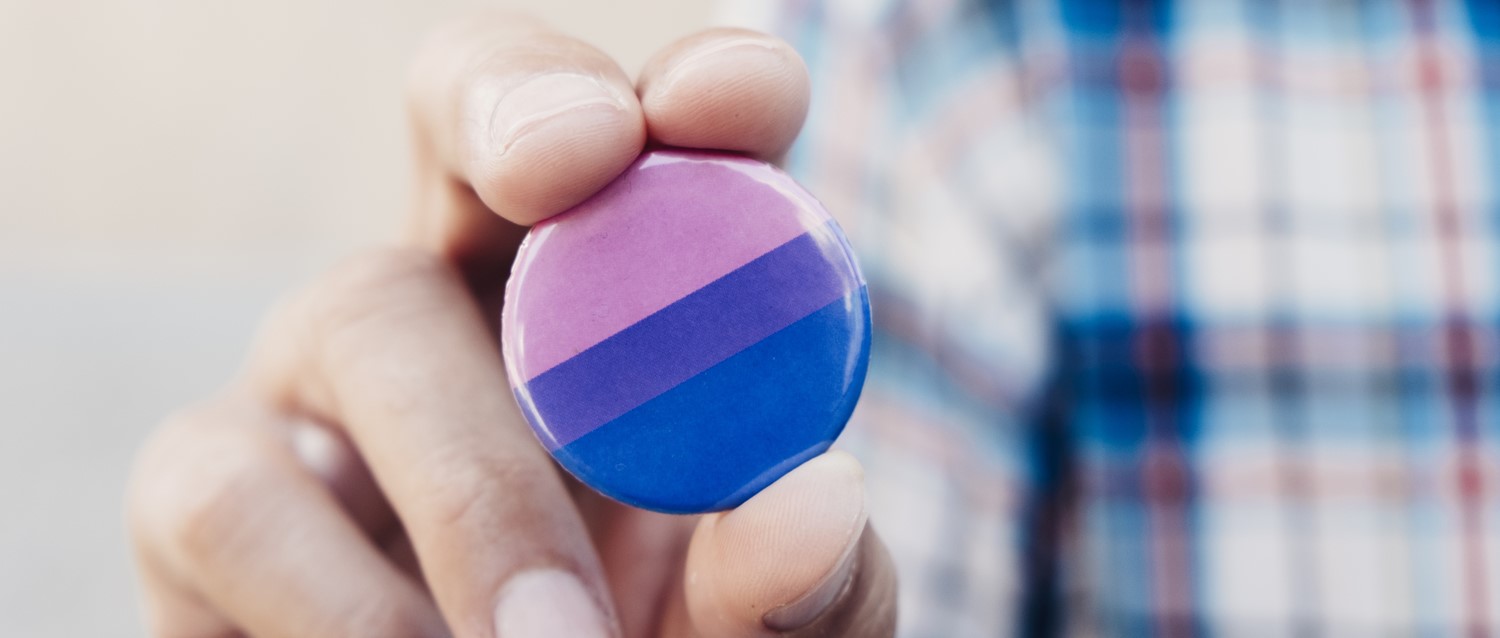
More people now identify as bisexual than ever before, which is why it's important to have an understanding of what it really means, rather than perpetuating harmful bisexual stereotypes. When the world is accepting of bisexuality and bisexual people feel safe to be themselves, the world is a happier, healthier place to be.
by Emily Jane Bashforth
Mental health
Debunking eating disorder myths and stereotypes
Mental health care provider The Priory Group estimates that 1.25-3.4 million people in the UK have an eating disorder. Despite this number, there are still many eating disorder myths and stereotypes surrounding the reality of eating disorders. While these misconceptions remain prevalent, people with eating disorder symptoms are likely to face barriers when reaching out for help. In this piece, we’ll explore some of the most common eating disorder myths, and assess why they are damaging.
by Emily Jane Bashforth

Cancer
Do lesbian and bisexual women still need smear tests?
Cervical cancer is the most common cancer in women aged 35 and under, with around 3,000 women diagnosed each year in the UK. Despite this, just 72 per cent of eligible women in England attend cervical screening (or smear) tests, which can help to detect abnormal cells early, and prevent around 75 per cent of cervical cancers from developing. In the LGBT+ community however, the figures are much lower still. According to Lawrie Roberts, Macmillan LGBT and Cancer Programme Co-ordinator at the LGBT Foundation, around half (51 per cent) of eligible women who have sex with women have never attended a smear test.
by Sarah Graham

Podcasts
Me and myself
In this episode, Clare and Aileen turn their attention to what they describe as the primary relationship - the relationship we have with ourselves - and why it is so often the one we neglect, misunderstand or actively sideline.
by Thomas Andrew Porteus, MBCS
Podcasts
The Big O... Oh No!
Clare and Janet discuss orgasms - and what can help if it isn’t happening for you or your partner. Also the myths surrounding female orgasm. Do you really know what the clitoris looks like?!
by Thomas Andrew Porteus, MBCS
About the authorView full bio
Authored by

Emily Jane Bashforth
Feature Writer
NCTJ
Emily is a Feature Writer with Patient, writing articles on a variety of topics relating to health and well-being.
About the reviewerView full bio

Dr Krishna Vakharia, MRCGP
Chief Medical Officer for Health, Optum UK
MBChB, MRCGP(2013), BMedSci (hons), DFSRH, DRCOG, PGDipDerm (Distn)
Dr Krishna Vakharia is an NHS GP. She is also a regular examiner for the postgraduate Diploma in Practical Dermatology at Cardiff University as well as being the Chief Medical Officer for health at Optum UK.
Article history
Article also available in English, German, Spanish, French, Italian, Portuguese, Hindi, Hebrew, Arabic, and Swedish.
1 Jul 2022 | Originally published
Authored by:
Emily Jane BashforthPeer reviewed by
Dr Krishna Vakharia, MRCGP
Share your thoughts or experiences with others in our patient communities.
Sign up to the Patient newsletter
Your weekly dose of clear, trustworthy health advice - written to help you feel informed, confident and in control.
By subscribing you accept our Privacy Policy. You can unsubscribe at any time. We never sell your data.