
Video: What are the causes of anorexia?
Peer reviewed by Dr Hayley Willacy, FRCGP Authored by Dr Sarah JarvisOriginally published 4 Dec 2017
Meets Patient’s editorial guidelines
- DownloadDownload
- Share
- Language
- Discussion
- Ask Patient
- Audio Version
- Add to preferred sources on Google
Whether it's you, a family member or a close friend who's suffering from anorexia, there are always going to be a lot of questions around this complex condition. Our experts take a look at some of the main ones.
Mental health support for adults and children
Online CBT and psychological therapy for adults and children aged 8–17. Onebright’s accredited clinicians support people experiencing anxiety, depression and other emotional challenges.
Playlist: Anorexia Q&A
7 videos
What can cause anorexia? | Patient
Dr Sarah Jarvis
What can cause anorexia? | Patient
Dr. Sarah Jarvis

Is anorexia dangerous?
Dr. Sarah Jarvis

Can men have anorexia?
Dr. Sarah Jarvis

Can anorexia give you diarrhoea?
Dr. Sarah Jarvis

How can you help someone with an eating disorder?
Dr. Sarah Jarvis

How do you treat an eating disorder?
Dr. Sarah Jarvis

How long does anorexia last?
Dr. Sarah Jarvis
What are the causes of anorexia?
Dr Sarah Jarvis
Anorexia has been around for a long time, but in many respects it is a modern disease. I don’t think there is any doubt that social media plays a huge part. Whatever we look we see pictures of beautiful perfect slim air-brushed women and to an extent men. But anorexia is about much, much more than eating. It’s about control, or lack of control. So, for instance, if you are a perfectionist and you set yourself impossibly high targets, you may find that controlling your eating is one way that you can feel in control of your life, when the rest of it feels out of control.
We know that certain jobs, certain hobbies and certain professions make you more likely to have anorexia, if the focus is all about weight. Among men it might be jockeys and among women it might be ballet dancers or models.
We think that there may be a genetic element. In other words, anorexia sometimes runs in families. But we do know that by improving self-esteem and addressing the underlying psychological issues that go with anorexia, we can deal with it - whatever the cause.
Is anorexia dangerous?
Dr Sarah Jarvis
Anorexia can be dangerous, In fact, it can be fatal! People with anorexia often don’t see themselves as being thin. They may think that they are horribly overweight, while what you are seeing is skin and bone. They may also want to get better but that urge to be in control of what they are eating and starve themselves to do it, can be so deep-seated that they just can’t get over it. So, yes, people with anorexia can literally starve themselves to death, if they don’t get the right help.
If you don’t have enough food in your system, and you are starving, you can end up with imbalances in your body salts, your electrolytes. Things like potassium, where problems with too high or too low levels can lead to abnormal heart rhythms or to muscle spasms or all sorts of physical issues.
What we do know is that the best chance of preventing anorexia from having a deadly outcome is getting the right help at the right time.
Can men have anorexia?
Dr Sarah Jarvis
Men can absolutely have anorexia. Anorexia is an eating disorder and it has no respect for gender, age or ethnicity.
Although traditionally anorexia is seen as being a condition that affects teenage girls, men can get it. Probably upto 1 in 10 people with anorexia is male, and of course it can strike at any age. So if you suspect someone you know has anorexia, maybe they are lying about what they are eating, hiding their shape under baggy clothes, becoming obsessed by weighing themselves and seem to think that they are really overweight when in fact they are really underweight.
Please don’t assume that there must be something else, just because they are a man.
Can anorexia give you diarrhoea?
Dr Sarah Jarvis
Anorexia can cause diarrhoea, but it can also give you constipation, bloating and vomiting. You might assume that if you are eating very little that you won’t have much fibre going through your body and you wont have much food going through your system, and therefore you should be constipated. But, if your body goes into starvation mode, your stomach may not empty properly.
You may not be getting vitamin and minerals that you need. So you may be suffering from malabsorption and, of course, many people with anorexia would use laxatives as well, to help them get rid of the few calories they do take in!
How do you help someone with an eating disorder?
Dr Sarah Jarvis
Trying to help someone with an eating disorder can be incredibly frustrating because what you might see is that they are just not trying to help themselves.
Maybe they are bingeing and purging all the time. Why can’t they just stop? Maybe they are not eating and they have anorexia. Why can’t they just start? But please try to remember that eating disorders are not just the physical problem. They are an emotional, psychological, medical condition.
Someone who has an eating disorder is going to be in complete psychological turmoil. They feel a huge compulsion to do what they do, whether it is to starve themselves or to purge or to binge. So please, try to be patient. Wait for them to come to you but let them know that you are there to support. Don’t focus too much on food - start thinking about things where you can connect, that aren’t food-related. But make sure that they know that you are there for them.
How do you treat eating disorders?
Dr Sarah Jarvis
Make no mistake, eating disorders - particularly anorexia - can kill. So treatment is partly by keeping somebody safe and partly about addressing the physical and the emotional problems that lie at the root of eating disorders.
If you have somebody who is underweight, you have to try to help them to regain and stay at a healthy weight. If you have somebody who is bingeing or purging, you're going to try to help them to stop that behaviour. But to do that, you need to look at the underlying problems - the emotional turmoil that’s causing that behaviour. That means they don’t feel that they have any choice but to behave in that way.
So treatment is usually a combination of supportive, sometimes physical, treatment and counselling. Sometimes with tablets as well. A multi-disciplinary team where everybody is working together in the same direction gives someone with an eating disorder a much better chance of a full recovery.
How long does anorexia last?
Dr Sarah Jarvis
How long does anorexia last? As long as a piece of string - that’s not a sick joke of any sort. The simple fact of the matter is, someone who seems to have fairly mild anorexia can have a deep-seated psychological problem that can last a very long time. But, on the whole, someone who has relatively mild symptoms may be back to their normal weight within a year or two, although the psychological problems that triggered it in the first place can take longer.
The people with really severe anorexia though, may stay underweight and would be at risk of losing more weight for a very long time. And the mental issues that cause them to have anorexia in the first place can last a lifetime.
But one thing is certain. The sooner you get professional help, the more likely it is you are going to make quick and full recovery.
Patient picks for Eating disorders
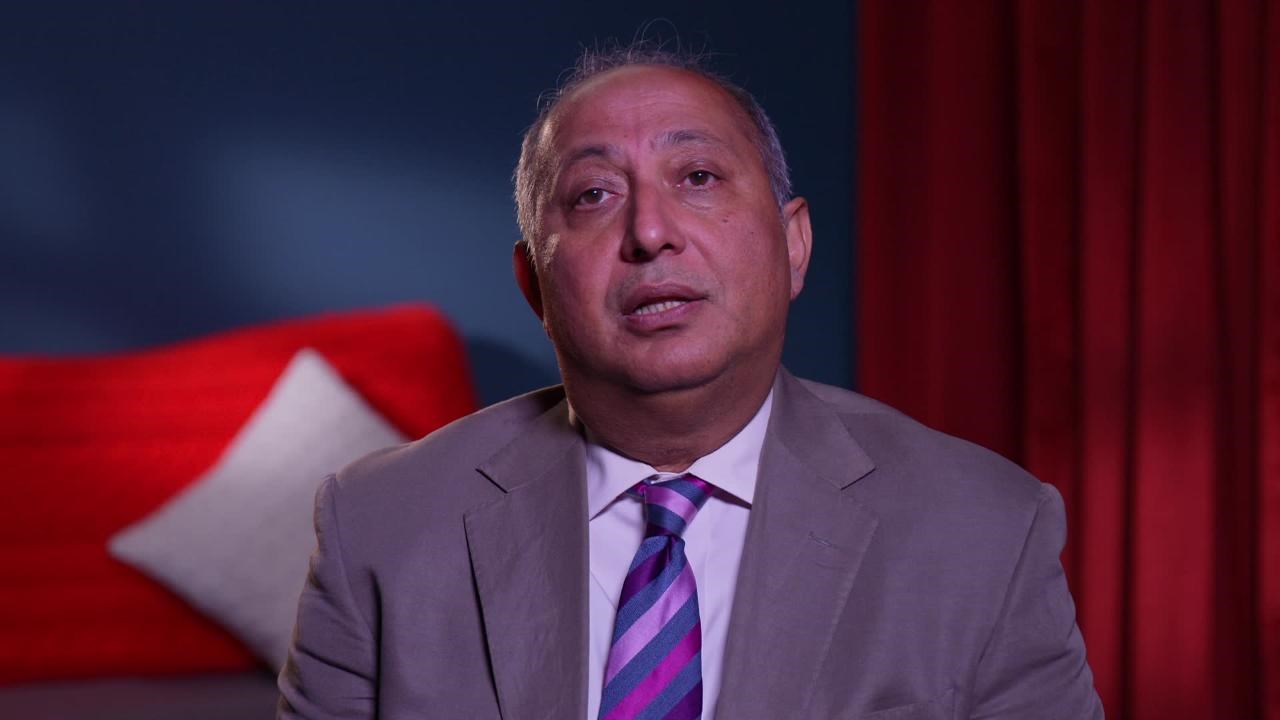
Mental health
Video: What are the different types of mental health disorder?
The brain is a complicated organ, which makes mental health a complex subject. There are many types of mental health disorder, from the mild to the severe and even potentially life-threatening. Our experts explain some of the more common types you may encounter.
by Prof Swaran Singh, FRCPsych

Sexual health
Erectile dysfunction in your 20s and 30s - what causes it?
Erectile dysfunction is often associated with growing older, but it can affect people at any age. If you are in your 20s or 30s and find it difficult to get or keep an erection, you are not alone. It can be frustrating or upsetting, particularly if it feels unexpected, but it is often possible to identify contributing factors and find a treatment that helps. Stress, anxiety, and relationship difficulties can all affect erections. Physical health conditions, medicines, and lifestyle factors can also play a part. Understanding what might be behind the issue is the first step towards getting support.
by Thomas Andrew Porteus, MBCS

Podcasts
The parental minefield
How often have you said something quite ordinary to a parent, or they’ve said something to you and suddenly the room feels like it’s about to explode? Welcome to the parental nightmare. It’s not just about conflict, it’s about what’s hidden underneath these relationships – family secrets, unspoken stories, patterns of behaviour passed from one generation to the next. In this episode Clare and Aileen explore the complex, often lifelong, relationship we have with our parents and discuss practical strategies to help you navigate this important relationship.
by Thomas Andrew Porteus, MBCS
Podcasts
Making work work
Work can take up so much of our waking hours but how often do we look at our relationship with work. Are you a workaholic or just going through the motions? Does it inspire or drain you? What about the people we work with: colleagues, managers and those unrequited crushes or unwanted attentions? When it comes to work, things can get complicated. Clare and Aileen delve into the tangled world of work to help you think about your relationship with work and give tips on how to navigate those complex relationships in the workplace.
by Thomas Andrew Porteus, MBCS

Podcasts
The Big O... Oh No!
Clare and Janet discuss orgasms - and what can help if it isn’t happening for you or your partner. Also the myths surrounding female orgasm. Do you really know what the clitoris looks like?!
by Thomas Andrew Porteus, MBCS

Women's health
Endometrial hyperplasia
Endometrial hyperplasia is a thickening of the womb (uterus) lining. The womb lining is called the endometrium. Hyperplasia means over ("hyper" in Latin) growth ("plasia" in Latin).
by Dr Philippa Vincent, MRCGP
About the authorView full bio
Authored by

Dr Sarah Jarvis
Clinical Consultant
MA (Cantab), BM, BCh (Oxon), DRCOG, FRCGP, MBE
After training in medicine at Cambridge and Oxford, Dr Sarah Jarvis MBE became a GP.
About the reviewerView full bio

Dr Hayley Willacy, FRCGP
General Practitioner, Medical Author
MBChB (1992), DRCOG, DFFP, MRCOG (Part 1) MRCGP (2007), DFSRH (2013), MSc - medical education (2020)
Dr Hayley Willacy was an NHS GP working in northwest England, who retired from clinical practice in 2022 after 30 years.
Article history
Article also available in English, German, Spanish, French, Italian, Portuguese, Hindi, Hebrew, Arabic, and Swedish.
4 Dec 2017 | Originally published
Authored by:
Dr Sarah JarvisPeer reviewed by
Dr Hayley Willacy, FRCGP
Share your thoughts or experiences with others in our patient communities.
Sign up to the Patient newsletter
Your weekly dose of clear, trustworthy health advice - written to help you feel informed, confident and in control.
By subscribing you accept our Privacy Policy. You can unsubscribe at any time. We never sell your data.