
What to do if someone is choking - first aid advice from St John Ambulance
Peer reviewed by Dr Colin Tidy, MRCGPAuthored by Victoria RawOriginally published 1 Oct 2026
Meets Patient’s editorial guidelines
- DownloadDownload
- Share
- Language
- Discussion
- Audio Version
- Add to preferred sources on Google
Would you know what to do if you saw someone choking and struggling to breathe?
According to St John Ambulance, one in three people in the UK don’t realise that failing to act in the first few minutes of a choking emergency could cost a life.
That’s why the charity is aiming to teach 500,000 people life-saving first aid skills, giving more people the confidence to act quickly and potentially save a life during one of the most common everyday emergencies.
Choking in the UK - what the figures show
There are several reasons why we might choke, leaving us unable to breathe. It could happen while we’re eating too quickly, when food becomes lodged in our throat, or when a small object gets stuck and restricts our airways.
Around 300 people die from choking each year in England - a figure that includes both adults and children.
It’s concerning, then, that research from St John Ambulance found that fewer than half of people in the UK know how to help someone who is choking. Even more strikingly, one in three say they have experienced a choking episode where they were unable to breathe and feared they might die.
Yet many people are still unfamiliar with the simple techniques that can help someone who is choking, such as the Heimlich manoeuvre - now commonly known as abdominal thrusts. Others mistakenly believe that certain techniques will help when they actually won’t, which could delay the right response.
There is also a misconception among some people that it is the responsibility of restaurant staff, rather than bystanders, to step in during a choking emergency. This highlights just how important it is for everyone to know what to do and feel confident acting quickly.
That’s why St John Ambulance has spent the past month encouraging 500,000 people to take action. The charity wants people to learn how to recognise when someone is choking, understand the correct first aid response, and potentially save a life.
What is Save a Life September?
Throughout September, thousands of St John Ambulance volunteers across the country have been helping members of the public learn how to respond in a choking emergency. They have also been teaching vital skills for dealing with cardiac arrests and severe bleeding, including how to perform CPR, and use a defibrillator. However, the charity is keen to build on this work and encourage more people to learn these potentially life-saving skills all year round.
Jordan Davison, Community Education Partner at St John Ambulance, explains that choking is often dismissed as a minor incident, but the consequences can be devastating.
"Tragically, too many people die because those around them do not have the knowledge or confidence to intervene," he says. "This September, we urged people to take a few minutes to learn these essential first aid skills.
"Through St John Ambulance's videos and public demonstrations, people can learn simple, life-saving skills that could help them save a loved one, friend, colleague, or even a stranger. Our volunteers will be out in communities across the country, putting the power of first aid into more people's hands.”
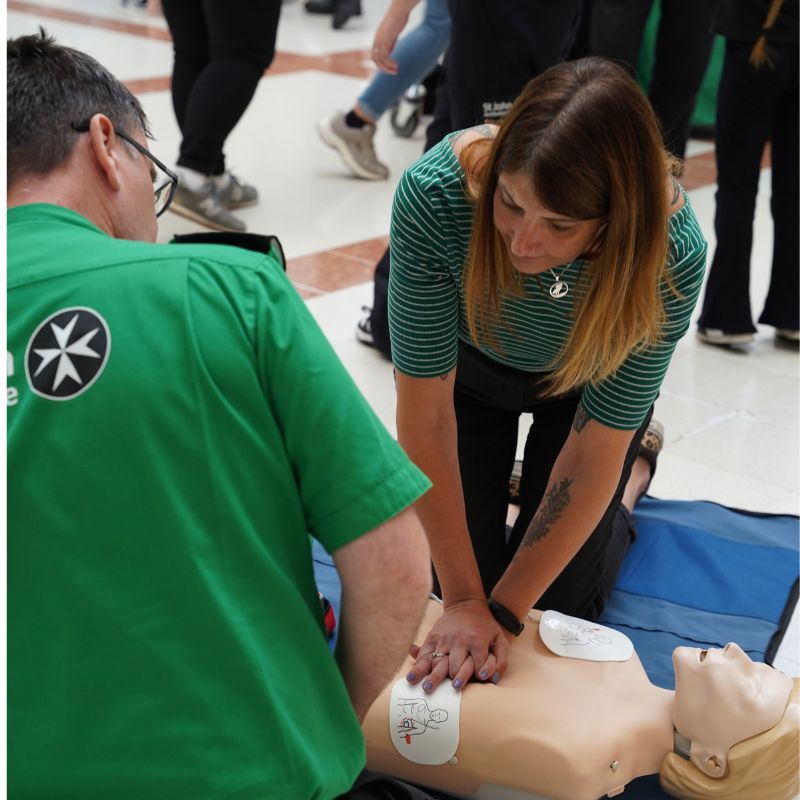
What should you do if someone is choking?
Since the 2024 relaunch of its Save a Life September campaign, St John Ambulance has delivered vital first aid training to more than 800,000 people. If you would like to get involved or find out more, you can visit their Save a Life September page.
In the meantime, St John Ambulance has shared some helpful advice on what to do and what to avoid when someone is choking. This can help you feel more prepared to respond in an emergency while you wait to receive formal first aid training.
What to do if an adult is choking
Encourage them to cough - ask the person to cough to try to clear the obstruction themselves. If this doesn’t work, support their upper body with one hand and help them lean forwards.
Give up to five back blows - if they can’t clear the obstruction by coughing, give up to five sharp blows between their shoulder blades using the heel of your hand.
Try abdominal thrusts - if the back blows don’t work, give up to five abdominal thrusts. Stand behind the person and place both arms around their upper abdomen, making sure they are still leaning forwards. Clench one fist and place it between their belly button and the bottom of their ribs. Grasp your fist with your other hand and pull sharply inwards and upwards, up to five times.
Check their mouth - if the obstruction still hasn’t cleared, call 999 or 112 for emergency help.
Keep going - continue alternating between up to five back blows and up to five abdominal thrusts until the obstruction is dislodged or help arrives.
If they become unresponsive - carefully lower them to the floor and start CPR.
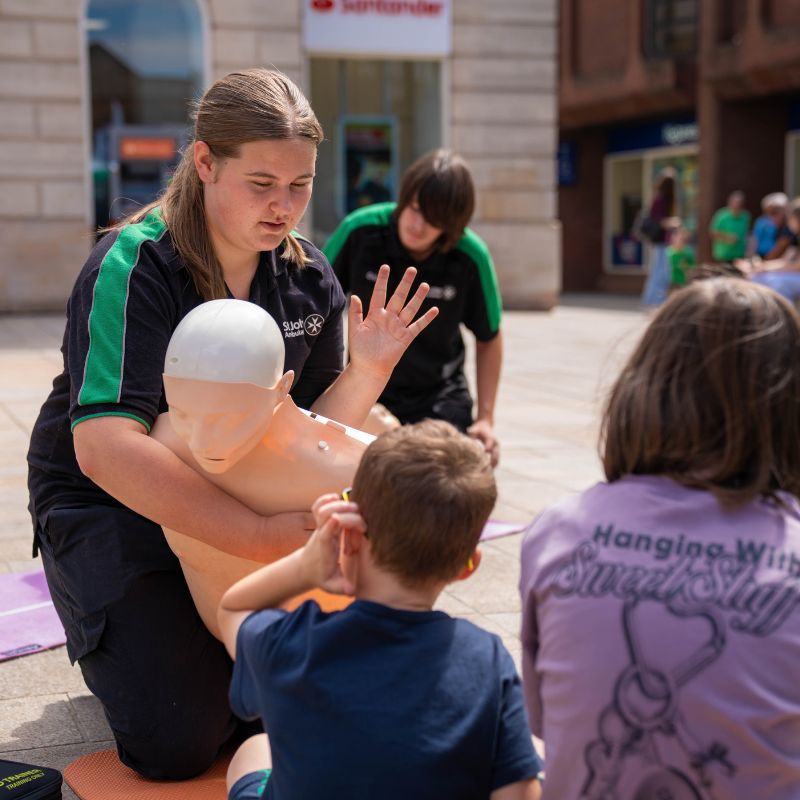
What to do if a baby is choking
Give back blows - lay the baby face down along your thigh, supporting their head and neck. Give up to five sharp back blows between their shoulder blades. After each blow, turn the baby over and check their mouth to see if the obstruction has cleared.
Try chest thrusts - if the back blows don’t work, give up to five chest thrusts. Turn the baby onto their back and lay them along your knees. Using the two-thumb encircling technique, as you would for chest compressions, give sharper compressions to the breastbone (sternum). Repeat up to five times, or until the obstruction is cleared.
Call 999 or 112 - if the obstruction still hasn’t cleared, call 999 or 112 for emergency help. Continue alternating between back blows and chest thrusts until help arrives, taking the baby with you if you need to make the call.
What not to do if someone is choking
Don’t try to remove the blockage with your fingers - 1 in 5 people wrongly believe you should use your fingers to pull the obstruction out. Unless you can clearly see the object and it is easy to remove, avoid putting your fingers into the person’s mouth, as this could push the blockage further down.
Don’t give them water - more than 1 in 10 people wrongly believe you should tell someone who is choking to drink water. This won’t clear the obstruction and could make the situation worse.
Don’t wait for restaurant staff to step in - nearly 6 in 10 people said they would expect restaurant staff to help first if someone was choking. In an emergency, it’s important to act quickly rather than waiting for someone else to intervene.
Where to learn more about choking first aid
For more information on the first aid procedures outlined above, visit the links and videos below for more detailed advice and guidance from St John Ambulance.
Patient picks for First aid

Treatment and medication
The importance of learning CPR: Emma tells her story
According to the British Heart Foundation (BHF) 30,000 people have a cardiac arrest each year. Fewer than one in ten of these people will survive. Cardiac arrest can happen to anyone, anywhere, at any time - and without warning. Knowing how to perform CPR could double someone's chances of surviving it. We hear from real-life heroes who've saved lives through CPR. Their stories highlight the vital importance of learning this life-saving skill.
by Victoria Raw
Treatment and medication
Empowering the next generation: St John Ambulance and the Young Responders campaign
Street violence is a more widespread issue among young people than many might realise. A 2024 report by the Youth Endowment Fund (YEF) highlighted this reality, revealing that almost 50% of teenagers had been a victim or a witness of violence within the past year. To address this, St John Ambulance has developed the Young Responders programme - a free initiative for people aged 11-25, that teaches them street first aid skills they can use in real life.
by Victoria Raw
About the authorView full bio
Authored by

Victoria Raw
Feature Writer
BA (Hons), English Literature
Victoria is a content writer at Patient, with special interests spanning mental wellbeing, societal trends and the impact of technology on our health.
About the reviewerView full bio

Dr Colin Tidy, MRCGP
General Practitioner, Medical Author
MBBS, MRCGP, MRCP (Paediatrics), DCH
Dr Colin Tidy is an NHS Doctor, based in Oxfordshire.
Article history
Article also available in English, German, Spanish, French, Italian, Portuguese, Hindi, Hebrew, Arabic, and Swedish.
Next review due: 1 Oct 2029
1 Oct 2026 | Originally published
Authored by:
Victoria RawPeer reviewed by
Dr Colin Tidy, MRCGP
Join the conversation
Share your thoughts or experiences with others in our patient communities.

Ask, share, connect.
Browse discussions, ask questions, and share experiences across hundreds of health topics.

Feeling unwell?
Assess your symptoms online for free
Sign up to the Patient newsletter
Your weekly dose of clear, trustworthy health advice - written to help you feel informed, confident and in control.
By subscribing you accept our Privacy Policy. You can unsubscribe at any time. We never sell your data.