Chromosome 14
Last updated 17 Mar 2023
Meets Patient’s editorial guidelines
- DownloadDownload
- Share
- Language
- Discussion
- Ask Patient
- Audio Version
- Add to preferred sources on Google
Humans normally have 46 chromosomes in each cell, divided into 23 pairs. Two copies of chromosome 14, one copy inherited from each parent, form one of the pairs. Chromosome 14 spans more than 107 million DNA building blocks (base pairs) and represents about 3.5 percent of the total DNA in cells.
Video picks for Chromosomes and mitochondrial DNAVideo library
Description
Humans normally have 46 chromosomes in each cell, divided into 23 pairs. Two copies of chromosome 14, one copy inherited from each parent, form one of the pairs. Chromosome 14 spans more than 107 million DNA building blocks (base pairs) and represents about 3.5 percent of the total DNA in cells.
Identifying genes on each chromosome is an active area of genetic research. Because researchers use different approaches to predict the number of genes on each chromosome, the estimated number of genes varies. Chromosome 14 likely contains 800 to 900 genes that provide instructions for making proteins. These proteins perform a variety of different roles in the body.
Conditions referring to this gene or chromosome
Patient picks for Chromosomes and mitochondrial DNA
Gynae cancer
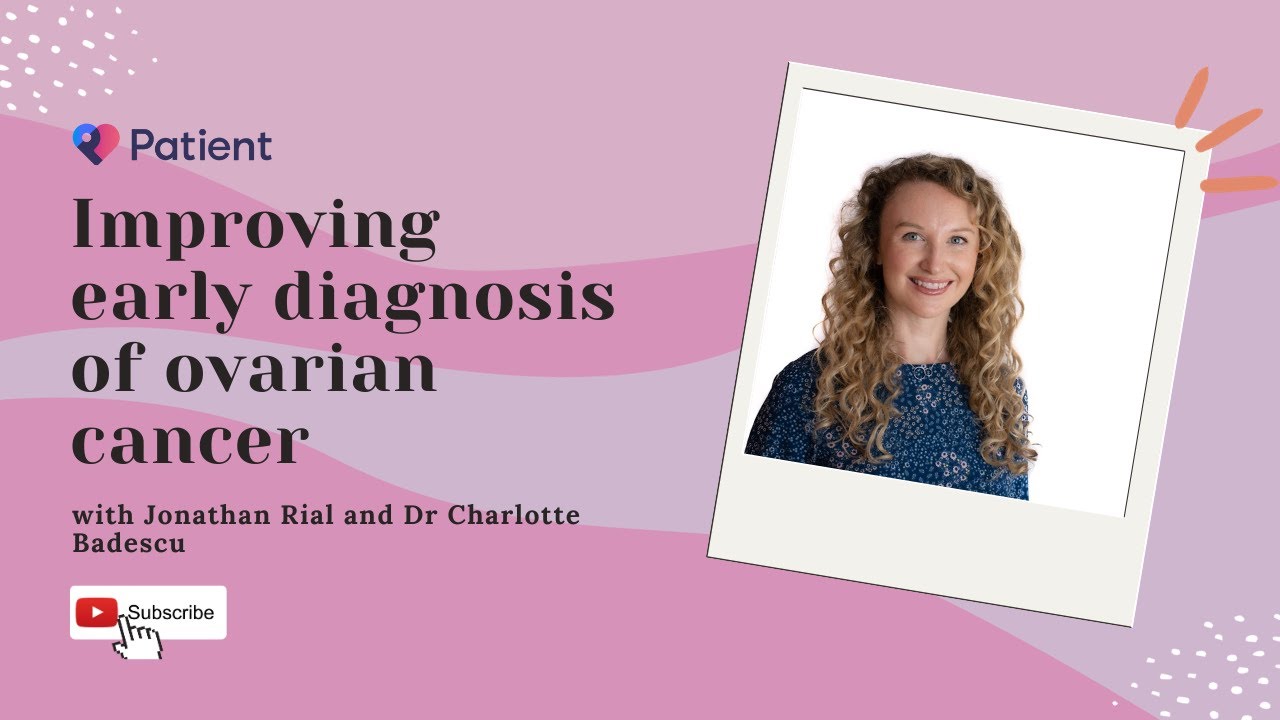
Improving early diagnosis of ovarian cancer
In this video, GP and Education Director Jonathan Rial talks to Dr Charlotte Badescu, GP and part of the Primary Care Advisory Board for Target Ovarian Cancer about early signs of ovarian cancer and symptoms of ovarian cancer. Find out more about ovarian cancer diagnosis on our website: [https://patient.info/cancer/gynaecological-cancer/ovarian-cancer](https://patient.info/cancer/gynaecological-cancer/ovarian-cancer) 00:00 - 01:04 - Introduction to Dr Charlotte Badescu 01:04 - 02:36 - What symptoms should you look out for? 02:36 - 03:50 - Is there a family link with ovarian cancer? 03:50 - 04:55 - What to expect if you're experiencing symptoms of ovarian cancer 04:55 - 06:14 - Resources for people who are experiencing symptoms of ovarian cancer

Meningitis Q&A
What is the most common cause of meningitis in children?
Dr Sarah Jarvis You can decide to vaccinate your child privately, but the number of cases of MenB is in decline and immunising children over the age of five may not be effective. According to figures from Public Health England, 24% of cases of MenB between 2014/15 were in babies aged one and 33% were in children aged one to five, but only 12% of cases were in children aged five to 14. [https://patient.info/health/meningitis-leaflet/features/should-you-vaccinate-your-family-against-meningitis](https://patient.info/health/meningitis-leaflet/features/should-you-vaccinate-your-family-against-meningitis)
by Dr Sarah Jarvis

The sex and relationships podcast
The Big O... Oh No! I The Sex and Relationships Podcast I S1E5
Clare and Janet discuss orgasms - and what can help if it isn’t happening for you or your partner. Also the myths surrounding female orgasm. Do you really know what the clitoris looks like?! Dip into some of things Clare and Janet chat about in this episode: 01:54 What is an organism? What are common misunderstandings? 06:09 Why orgasms add years to your life! Am I enjoying this? Do I understand how it works? 10:01 Will it happen, won’t it happen? Your orgasm is about you and not about them. 14:02 How communication can be the key to successful orgasms. 20: 16 Emily Nagoski: Come As You Are 21:01 Exercises to help women who don’t have orgasms 24:57 The Great Wall of Vulva 26:19 Getting familiar with the female body. Professor Helen O’Connell The anatomy of the clitoris Want to know more? Visit our website The Sex and Relationships Podcast for more information on the issues discussed in this episode: [https://thesexandrelationshipspodcast.com/](https://thesexandrelationshipspodcast.com/) You can also Ask Clare a question or suggest a topic for future episodes. Follow us on social media: Instagram: [https://www.instagram.com/s3x_and_relationships_podcast/profilecard/?igsh=MXIza3BxeWg3OTJxOA%3D%3D](https://www.instagram.com/s3x_and_relationships_podcast/profilecard/?igsh=MXIza3BxeWg3OTJxOA%3D%3D) Facebook: [https://www.facebook.com/people/The-Sex-and-Relationships-Podcast-With-Therapists-Clare-Janet/61558082319934/](https://www.facebook.com/people/The-Sex-and-Relationships-Podcast-With-Therapists-Clare-Janet/61558082319934/) About The Sex and Relationships Podcast: This podcast is for anyone looking for information or help with their sex lives or relationships. Your hosts Clare Prendergast and Janet Eccles are sex and relationship therapists. In each episode they chat about common problems they see in the therapy room and draw on their years of experience to give you some insights, advice and top tips to help guide you through your relationships and sex lives.

Pelvic pain Q&A
How much pelvic pain is normal during pregnancy?
Dr Sarah Jarvis MBE The pelvis can become very painful in pregnancy - usually in late pregnancy but sometimes as early as 14 weeks. This is because the joint in the bone can become loosened and the bones separate a little and then rub against one another. For more information, go to [https://patient.info/health/common-problems-in-pregnancy-leaflet](https://patient.info/health/common-problems-in-pregnancy-leaflet)
by Dr Sarah Jarvis
The sex and relationships podcast
The Arousal Paradox I The Sex and Relationships Podcast I S1E2
When Porn or Hollywood are your sex educators, it can get confusing when things don’t work that way for us! Why is it that the things that are supposed to turn us on, sometimes turn us off? How come our desires can vary or be so different from our partner’s? Dip into some of things Clare and Janet chat about in this episode: 05:12 Where are you on the arousal scale? 09:02 Why does one person have more desire for sex than another? Do you understand how your sexual arousal system works? 13:14 How biological difficulties can affect sexual desire. 17:10 The impact of stress and obesity on attraction and desire. 18:22 What are the things that turn you on and what turns you off? Emily Nagoski: Come As You Are 24:51 The way you feel about your body affects your arousal. Want to know more? Visit our website The Sex and Relationships Podcast for more information on the issues discussed in this episode: [https://thesexandrelationshipspodcast.com/](https://thesexandrelationshipspodcast.com/) You can also Ask Clare a question or suggest a topic for future episodes. Follow us on social media: Instagram: [https://www.instagram.com/s3x_and_relationships_podcast/profilecard/?igsh=MXIza3BxeWg3OTJxOA%3D%3D](https://www.instagram.com/s3x_and_relationships_podcast/profilecard/?igsh=MXIza3BxeWg3OTJxOA%3D%3D) Facebook: [https://www.facebook.com/people/The-Sex-and-Relationships-Podcast-With-Therapists-Clare-Janet/61558082319934/](https://www.facebook.com/people/The-Sex-and-Relationships-Podcast-With-Therapists-Clare-Janet/61558082319934/) About The Sex and Relationships Podcast: This podcast is for anyone looking for information or help with their sex lives or relationships. Your hosts Clare Prendergast and Janet Eccles are sex and relationship therapists. In each episode they chat about common problems they see in the therapy room and draw on their years of experience to give you some insights, advice and top tips to help guide you through your relationships and sex lives.

The sex and relationships podcast
Me and Myself I The Sex and Relationships Podcast I S2E3
Your relationship with yourself might sound a bit odd. But it’s so important. How often have you sidelined or neglected yourself to focus on everyone else? When did you last think paying attention to yourself was selfish? Clare and Aileen share their top tips on how to bring your relationship back to you and reveal how investing in yourself can make a real difference not just to you but to those around you. Dip into some of the things Clare and Aileen chat about in this episode: 00:36 Why we look away 10:14 Why loving yourself is worth it 14:30 How to check in with yourself 22:06 Recognising and understanding code switching 24:40 Tips for getting in touch with your inner self 30:31 Finding buried treasure Want to know more? If you want to hear why it’s so important for your relationships to have ‘me’ time, listen to Episode 9 Me-Topia from Season 1: [https://www.youtube.com/watch?v=_OeNvaVV6Hg](https://www.youtube.com/watch?v=_OeNvaVV6Hg) Visit our website for more information on the issues discussed in this episode: [https://thesexandrelationshipspodcast.com/](https://thesexandrelationshipspodcast.com/) You can also Ask Clare a question or suggest a topic for future episodes. Follow us on social media: Instagram: [https://www.instagram.com/s3x_and_rel](https://www.instagram.com/s3x_and_rel)... Facebook: / 61558082319934 About the Sex and Relationships Podcast This podcast is for anyone looking for information or help with their sex lives or relationships. In this season your hosts Clare Prendergast and Aileen Gonsalves deep dive into the world of relationships to give you insights, advice and top tips to help guide you through your relationships. Your hosts Clare Prendergast is a sex and relationships therapist and draws on her knowledge and years of experience in the therapy room to give you help and guidance. Aileen Gonsalves is fascinated in human behaviour and drawing on her many years in the theatre has developed the unique Gonsalves Method which helps people be more present and develop authentic connections with those around them.
Related patient information and medicines

Patient information leaflet
Down's syndrome
Down's syndrome (also known as Down syndrome) is a genetic chromosome problem. That is, part of one of their chromosome 21s becomes attached to another chromosome. (It is often chromosome 14 that is affected.). They have one normal chromosome 21, one chromosome 21 that has a piece 'broken off' or missing, one chromosome 14 that has an extra bit of.

Patient information leaflet
Alpha-1 antitrypsin deficiency
Alpha-1 antitrypsin (A1AT) is a protein made by cells in the liver. A1AT deficiency is an inherited genetic condition. A genetic condition is one that can be passed on from parents through genes. Someone with A1AT deficiency has a fault in a gene on chromosome number 14. In order to develop A1AT deficiency, a person has to have two copies of the.

Patient information leaflet
Acute lymphoblastic leukaemia
Acute lymphoblastic leukaemia (ALL) is a condition where the bone marrow makes large numbers of abnormal immature lymphocytes. ... are done on abnormal cells obtained from the bone marrow sample or bloodThe chromosomes within the cells are checked for certain changes. (These changes in chromosomes only occur in the leukaemia cells, not the normal.
Patient information leaflet
Molar pregnancy
Dr Sarah Jarvis MBE A hydatidiform mole is a growing mass of tissue inside your womb (uterus) that will not develop into a baby. How does conception work. Chromosomes are found in the centre (the nucleus) of the cells in your body. They carry genetic information in the form of genes. Most of the cells in your body contain 46 sets of chromosomes.

Patient information leaflet
Down's syndrome screening
There are two different types of tests that can be done to look for Down's syndrome during pregnancy - a screening test and a diagnostic test. ... is a genetic chromosome problemWhat Down's syndrome screening tests are available? 10-14 weeks - combined test The standard test for Down's syndrome includes a combination of a nuchal translucency scan.
Patient information leaflet
Acute myeloid leukaemia
Cell and chromosome analysis Detailed tests are done on abnormal blast cells obtained from the bone marrow sample or blood test. The chromosomes within the cells are checked for certain changes. Chromosomes are the parts in the cell which contain DNA - the genetic make-up of the cell. Various subtypes of AML can be diagnosed by detecting changes.
Further reading and references
- Chromosome 14; MedlinePlus, National Library of Medicine.
- Campo E. Genetic and molecular genetic studies in the diagnosis of B-cell lymphomas I: mantle cell lymphoma, follicular lymphoma, and Burkitt's lymphoma. Hum Pathol. 2003 Apr;34(4):330-5. doi: 10.1053/hupa.2003.97. No abstract available.
- Falk MJ, Curtis CA, Bass NE, Zinn AB, Schwartz S. Maternal uniparental disomy chromosome 14: case report and literature review. Pediatr Neurol. 2005 Feb;32(2):116-20. doi: 10.1016/j.pediatrneurol.2004.07.007.
- Gabrea A, Leif Bergsagel P, Michael Kuehl W. Distinguishing primary and secondary translocations in multiple myeloma. DNA Repair (Amst). 2006 Sep 8;5(9-10):1225-33. doi: 10.1016/j.dnarep.2006.05.012. Epub 2006 Jul 10.
- Gilbert F. Disease genes and chromosomes: disease maps of the human genome. Chromosome 14. Genet Test. 1999;3(4):379-91. doi: 10.1089/gte.1999.3.379. No abstract available.
- Heilig R, Eckenberg R, Petit JL, Fonknechten N, Da Silva C, Cattolico L, Levy M, Barbe V, de Berardinis V, Ureta-Vidal A, Pelletier E, Vico V, Anthouard V, Rowen L, Madan A, Qin S, Sun H, Du H, Pepin K, Artiguenave F, Robert C, Cruaud C, Bruls T, Jaillon O, Friedlander L, Samson G, Brottier P, Cure S, Segurens B, Aniere F, Samain S, Crespeau H, Abbasi N, Aiach N, Boscus D, Dickhoff R, Dors M, Dubois I, Friedman C, Gouyvenoux M, James R, Madan A, Mairey-Estrada B, Mangenot S, Martins N, Menard M, Oztas S, Ratcliffe A, Shaffer T, Trask B, Vacherie B, Bellemere C, Belser C, Besnard-Gonnet M, Bartol-Mavel D, Boutard M, Briez-Silla S, Combette S, Dufosse-Laurent V, Ferron C, Lechaplais C, Louesse C, Muselet D, Magdelenat G, Pateau E, Petit E, Sirvain-Trukniewicz P, Trybou A, Vega-Czarny N, Bataille E, Bluet E, Bordelais I, Dubois M, Dumont C, Guerin T, Haffray S, Hammadi R, Muanga J, Pellouin V, Robert D, Wunderle E, Gauguet G, Roy A, Sainte-Marthe L, Verdier J, Verdier-Discala C, Hillier L, Fulton L, McPherson J, Matsuda F, Wilson R, Scarpelli C, Gyapay G, Wincker P, Saurin W, Quetier F, Waterston R, Hood L, Weissenbach J. The DNA sequence and analysis of human chromosome 14. Nature. 2003 Feb 6;421(6923):601-7. doi: 10.1038/nature01348. Epub 2003 Jan 1.
- Kagami M, Nishimura G, Okuyama T, Hayashidani M, Takeuchi T, Tanaka S, Ishino F, Kurosawa K, Ogata T. Segmental and full paternal isodisomy for chromosome 14 in three patients: narrowing the critical region and implication for the clinical features. Am J Med Genet A. 2005 Oct 1;138A(2):127-32. doi: 10.1002/ajmg.a.30941.
- Kamnasaran D, Cox DW. Current status of human chromosome 14. J Med Genet. 2002 Feb;39(2):81-90. doi: 10.1136/jmg.39.2.81.
- Keats JJ, Reiman T, Belch AR, Pilarski LM. Ten years and counting: so what do we know about t(4;14)(p16;q32) multiple myeloma. Leuk Lymphoma. 2006 Nov;47(11):2289-300. doi: 10.1080/10428190600822128.
- Kortum F, Das S, Flindt M, Morris-Rosendahl DJ, Stefanova I, Goldstein A, Horn D, Klopocki E, Kluger G, Martin P, Rauch A, Roumer A, Saitta S, Walsh LE, Wieczorek D, Uyanik G, Kutsche K, Dobyns WB. The core FOXG1 syndrome phenotype consists of postnatal microcephaly, severe mental retardation, absent language, dyskinesia, and corpus callosum hypogenesis. J Med Genet. 2011 Jun;48(6):396-406. doi: 10.1136/jmg.2010.087528. Epub 2011 Mar 25.
- Lemire EG, Cardwell S. Unusual phenotype in partial trisomy 14. Am J Med Genet. 1999 Dec 3;87(4):294-6. doi: 10.1002/(sici)1096-8628(19991203)87:43.0.co;2-s.
- Ogata T, Kagami M, Ferguson-Smith AC. Molecular mechanisms regulating phenotypic outcome in paternal and maternal uniparental disomy for chromosome 14. Epigenetics. 2008 Jul-Aug;3(4):181-7. doi: 10.4161/epi.3.4.6550. Epub 2008 Jul 2.
- Rinaldi B, Vaisfeld A, Amarri S, Baldo C, Gobbi G, Magini P, Melli E, Neri G, Novara F, Pippucci T, Rizzi R, Soresina A, Zampini L, Zuffardi O, Crimi M. Guideline recommendations for diagnosis and clinical management of Ring14 syndrome-first report of an ad hoc task force. Orphanet J Rare Dis. 2017 Apr 11;12(1):69. doi: 10.1186/s13023-017-0606-4.
- Schlade-Bartusiak K, Costa T, Summers AM, Nowaczyk MJ, Cox DW. FISH-mapping of telomeric 14q32 deletions: search for the cause of seizures. Am J Med Genet A. 2005 Oct 15;138A(3):218-24. doi: 10.1002/ajmg.a.30942.
- van Karnebeek CD, Quik S, Sluijter S, Hulsbeek MM, Hoovers JM, Hennekam RC. Further delineation of the chromosome 14q terminal deletion syndrome. Am J Med Genet. 2002 Jun 1;110(1):65-72. doi: 10.1002/ajmg.10207.
- Vitolo U, Ferreri AJ, Montoto S. Follicular lymphomas. Crit Rev Oncol Hematol. 2008 Jun;66(3):248-61. doi: 10.1016/j.critrevonc.2008.01.014. Epub 2008 Mar 21.
- Wintle RF, Costa T, Haslam RH, Teshima IE, Cox DW. Molecular analysis redefines three human chromosome 14 deletions. Hum Genet. 1995 May;95(5):495-500. doi: 10.1007/BF00223859.
Share your thoughts or experiences with others in our patient communities.
Simple access to trusted treatments and health services online.
Common conditions
Get help with common conditions through the NHS, without a GP appointment.





Sign up to the Patient newsletter
Your weekly dose of clear, trustworthy health advice - written to help you feel informed, confident and in control.
By subscribing you accept our Privacy Policy. You can unsubscribe at any time. We never sell your data.