Chromosome 17
Last updated 14 Nov 2024
Meets Patient’s editorial guidelines
- DownloadDownload
- Share
- Language
- Discussion
- Ask Patient
- Audio Version
- Add to preferred sources on Google
Humans normally have 46 chromosomes in each cell, divided into 23 pairs. Two copies of chromosome 17, one copy inherited from each parent, form one of the pairs. Chromosome 17 spans about 83 million DNA building blocks (base pairs) and represents between 2.5 and 3 percent of the total DNA in cells.
Video picks for Chromosomes and mitochondrial DNAVideo library
Description
Humans normally have 46 chromosomes in each cell, divided into 23 pairs. Two copies of chromosome 17, one copy inherited from each parent, form one of the pairs. Chromosome 17 spans about 83 million DNA building blocks (base pairs) and represents between 2.5 and 3 percent of the total DNA in cells.
Identifying the genes on each chromosome is an active area of genetic research. Because researchers use different approaches to predict the number of genes on each chromosome, the estimated number of genes varies. Chromosome 17 likely contains 1,100 to 1,200 genes that provide instructions for making proteins. These proteins perform a variety of different roles in the body.
Conditions referring to this gene or chromosome
Patient picks for Chromosomes and mitochondrial DNA

The sexual health series
Gonorrhoea - Symptoms, testing and treatment
Gonorrhoea is an infection affecting mainly the genital areas. It can also affect the throat and eyes. Very occasionally the infection can spread to other parts of the body. In this video, you'll find out more about gonorrhoea, including the symptoms, how it gets tested, treatments and if it can cause any complications. *Design and video production by Cáit Hanstock, Georgia Townsend, and the team at Wowvi.* Visit our website to find out more: [https://patient.info/sexual-health/sexually-transmitted-infections-leaflet/gonorrhoea](https://patient.info/sexual-health/sexually-transmitted-infections-leaflet/gonorrhoea) #gonorrhea #sexualhealtheducation 00:00 - 00:29 - Introduction to Dr Krishna and the sexual health series 00:36 - 00:47 - What is gonorrhoea? 00:49 - 01:11 - What are the symptoms of gonorrhoea? 01:13 - 01:33 - How can gonorrhoea be treated? 01:34 - 02:17 - How do you get tested for gonorrhoea? 02:18 - 03:10 - What complications are there for gonorrhoea?
by Dr Krishna Vakharia, MRCGP
The sex and relationships podcast
The Arousal Paradox I The Sex and Relationships Podcast I S1E2
When Porn or Hollywood are your sex educators, it can get confusing when things don’t work that way for us! Why is it that the things that are supposed to turn us on, sometimes turn us off? How come our desires can vary or be so different from our partner’s? Dip into some of things Clare and Janet chat about in this episode: 05:12 Where are you on the arousal scale? 09:02 Why does one person have more desire for sex than another? Do you understand how your sexual arousal system works? 13:14 How biological difficulties can affect sexual desire. 17:10 The impact of stress and obesity on attraction and desire. 18:22 What are the things that turn you on and what turns you off? Emily Nagoski: Come As You Are 24:51 The way you feel about your body affects your arousal. Want to know more? Visit our website The Sex and Relationships Podcast for more information on the issues discussed in this episode: [https://thesexandrelationshipspodcast.com/](https://thesexandrelationshipspodcast.com/) You can also Ask Clare a question or suggest a topic for future episodes. Follow us on social media: Instagram: [https://www.instagram.com/s3x_and_relationships_podcast/profilecard/?igsh=MXIza3BxeWg3OTJxOA%3D%3D](https://www.instagram.com/s3x_and_relationships_podcast/profilecard/?igsh=MXIza3BxeWg3OTJxOA%3D%3D) Facebook: [https://www.facebook.com/people/The-Sex-and-Relationships-Podcast-With-Therapists-Clare-Janet/61558082319934/](https://www.facebook.com/people/The-Sex-and-Relationships-Podcast-With-Therapists-Clare-Janet/61558082319934/) About The Sex and Relationships Podcast: This podcast is for anyone looking for information or help with their sex lives or relationships. Your hosts Clare Prendergast and Janet Eccles are sex and relationship therapists. In each episode they chat about common problems they see in the therapy room and draw on their years of experience to give you some insights, advice and top tips to help guide you through your relationships and sex lives.

The sex and relationships podcast
From Bliss to Blame I The Sex and Relationships Podcast I S2E5
Have you ever found yourself thinking, ‘What on earth was I doing? This person is all wrong for me’, when only a few months ago they seemed perfect? How did that feeling of bliss when you’re finishing each other’s sentences and laughing at the same jokes turn to irritation, resentment and blaming them for everything that’s wrong? Clare and Aileen help you understand the natural cycle from falling-in-love bliss to relationship blame, why it happens, and how to navigate your way through it. Dip into some of the things Clare and Aileen chat about in this episode: 03:51 What’s happening to our bodies during the bliss phase 10:54 Difference – the good, the bad and the ugly 17:35 The danger of confiding in people who agree with you 20:49 Tips for navigating through the bliss to blame phases 23:50 Esther Perel – many different marriages within the same marriage 26:08 Tips on better communication 28:03 Has this relationship come to the end of the road? 34:22 Tips on how to have honest conversations with partners and friends Want to know more? If you want to hear more about what to do when sexual attraction starts to fade in a relationship listen to Episode 7 “Lust or Bust” from Season 1: [https://www.youtube.com/watch?v=oczHRWuev30&list=PLx6Nf3acNljjvrnko9zfaOBzGCQxLrTic&index=7](https://www.youtube.com/watch?v=oczHRWuev30&list=PLx6Nf3acNljjvrnko9zfaOBzGCQxLrTic&index=7) Visit our website The Sex and Relationships Podcast for more information on the issues discussed in this episode: [https://thesexandrelationshipspodcast.com/](https://thesexandrelationshipspodcast.com/) You can also Ask Clare a question or suggest a topic for future episodes. Follow us on social media: Instagram: [https://www.instagram.com/s3x_and_relationships_podcast/profilecard/?igsh=MXIza3BxeWg3OTJxOA%3D%3D](https://www.instagram.com/s3x_and_relationships_podcast/profilecard/?igsh=MXIza3BxeWg3OTJxOA%3D%3D) Facebook: [https://www.facebook.com/people/The-Sex-and-Relationships-Podcast-With-Therapists-Clare-Janet/61558082319934/](https://www.facebook.com/people/The-Sex-and-Relationships-Podcast-With-Therapists-Clare-Janet/61558082319934/) About the Sex and Relationships Podcast This podcast is for anyone looking for information or help with their sex lives or relationships. In this season your hosts Clare Prendergast and Aileen Gonsalves deep dive into the world of relationships to give you insights, advice and top tips to help guide you through your relationships. Your hosts Clare Prendergast is a sex and relationships therapist and draws on her knowledge and years of experience in the therapy room to give you help and guidance. Aileen Gonsalves is fascinated in human behaviour and drawing on her many years in the theatre has developed the unique Gonsalves Method which helps people be more present and develop authentic connections with those around them.

The sex and relationships podcast
Green Eyes I The Sex and Relationships Podcast I S2E8
Have you ever had that knot in your stomach when your partner is spending a lot of time with someone else, or that emotional reaction when a colleague gets promoted over you? Then it’s likely you’ve experienced this week’s topic: jealousy. In this episode, Clare and Aileen discuss what jealousy is, where it comes from and tips on what you can do about it. They will give you a set of tools to help you work with your jealous emotions in a better way when you feel them welling up inside you. Dip into some of the things Clare and Aileen chat about in this episode: 02:42 Jealousy – an emotional response 11:01 The three faces of jealousy 15:05 How jealousy impacts others 17:18 Tips on how to deal with jealous emotions 21:43 What is jealousy telling you about your life? 28:04 Choosing the right people to talk to 30:06 Is it true? Want to know more? Visit our website, The Sex and Relationships Podcast for more information on the issues discussed in this episode: [https://thesexandrelationshipspodcast.com/](https://thesexandrelationshipspodcast.com/) You can also Ask Clare a question or suggest a topic for future episodes. Instagram: [https://www.instagram.com/s3x_and_relationships_podcast/profilecard/?igsh=MXIza3BxeWg3OTJxOA%3D%3D](https://www.instagram.com/s3x_and_relationships_podcast/profilecard/?igsh=MXIza3BxeWg3OTJxOA%3D%3D) Facebook: [https://www.facebook.com/people/The-Sex-and-Relationships-Podcast-With-Therapists-Clare-Janet/61558082319934/](https://www.facebook.com/people/The-Sex-and-Relationships-Podcast-With-Therapists-Clare-Janet/61558082319934/) About the Sex and Relationships Podcast This podcast is for anyone looking for information or help with their sex lives or relationships. In this season, your hosts Clare Prendergast and Aileen Gonsalves deep dive into the world of relationships to give you insights, advice and top tips to help guide you through your relationships. Your hosts Clare Prendergast is a sex and relationships therapist and draws on her knowledge and years of experience in the therapy room to give you help and guidance. Aileen Gonsalves is fascinated in human behaviour and drawing on her many years in the theatre has developed the unique Gonsalves Method which helps people be more present and develop authentic connections with those around them.
The sex and relationships podcast
Beyond Human I The Sex and Relationships Podcast I S2E4
Have you ever felt transformed after a walk by the sea or in the woods? Have you ever found yourself reaching for the biscuit tin when anxious rather than hungry, or noticed how your pet knows when you are feeling low? This podcast is for you. Clare and Aileen take a tour of those relationships we often don’t think about but matter deeply. From pets and nature to time, food and even life and the divine, these relationships have the ability to shape our lives, comfort us, challenge us and sometimes reveal parts of ourselves we didn’t know were there. Dip into some of the things Clare and Aileen chat about in this episode: 00:24 How your pet can teach you about tuning into your senses and being present. 03:34 Nature - when did you last give yourself permission just to experience it? 04:49 Time: what is your relationship to it? Do you find you don’t have enough or are you able to make time for yourself? 12:14 Having a relationship with place, do you have a sense of belonging where you are? 17:49 Understanding your relationship with food. 23:46 Relationships with the divine, the higher power, the universe. 27:19 Embracing the idea that everything will come to an end helps to embrace and enjoy each moment. Visit our website for more information on the issues discussed in this episode: [https://thesexandrelationshipspodcast.com/](https://thesexandrelationshipspodcast.com/) You can also Ask Clare a question or suggest a topic for future episodes. Follow us on social media: Instagram: [https://www.instagram.com/s3x_and_relationships_podcast/profilecard/?igsh=MXIza3BxeWg3OTJxOA%3D%3D](https://www.instagram.com/s3x_and_relationships_podcast/profilecard/?igsh=MXIza3BxeWg3OTJxOA%3D%3D) Facebook: [https://www.facebook.com/people/The-Sex-and-Relationships-Podcast-With-Therapists-Clare-Janet/61558082319934/](https://www.facebook.com/people/The-Sex-and-Relationships-Podcast-With-Therapists-Clare-Janet/61558082319934/) About the Sex and Relationships Podcast This podcast is for anyone looking for information or help with their sex lives or relationships. In this season your hosts Clare Prendergast and Aileen Gonsalves deep dive into the world of relationships to give you insights, advice and top tips to help guide you through your relationships. Your hosts Clare Prendergast is a sex and relationships therapist and draws on her knowledge and years of experience in the therapy room to give you help and guidance. Aileen Gonsalves is fascinated in human behaviour and drawing on her many years in the theatre has developed the unique Gonsalves Method which helps people be more present and develop authentic connections with those around them.
Related patient information and medicines

Patient information leaflet
Immunisation for flu
For example, the live flu vaccine shouldn't be given to children with a severely weakened immune system (for example, children with leuk... However, they can still safely have the inactivated (injected) flu vaccine. Flu immunisation can be given at the same time as other immunisation; it is often given at the same time as the pneumonia.

Patient information leaflet
Acute lymphoblastic leukaemia
Acute lymphoblastic leukaemia (ALL) is a condition where the bone marrow makes large numbers of abnormal immature lymphocytes. ... are done on abnormal cells obtained from the bone marrow sample or bloodThe chromosomes within the cells are checked for certain changes. (These changes in chromosomes only occur in the leukaemia cells, not the normal.
Patient information leaflet
Acute myeloid leukaemia
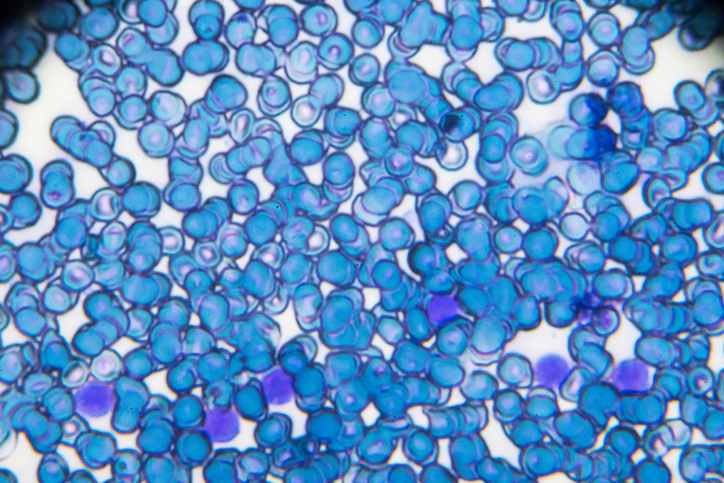
Cell and chromosome analysis Detailed tests are done on abnormal blast cells obtained from the bone marrow sample or blood test. The chromosomes within the cells are checked for certain changes. Chromosomes are the parts in the cell which contain DNA - the genetic make-up of the cell. Various subtypes of AML can be diagnosed by detecting changes.
Patient information leaflet
Leukaemia
Leukaemia is a cancer of blood-forming cells. There are different types of leukaemia. (See the separate leaflet called ... A bone marrow test may not be needed to confirm the diagnosis of CLL. Cell and chromosome analysis Detailed tests are often done on abnormal cells obtained from the bone marrow sample or blood test. These find out the exact.

Patient information leaflet
Genetic testing
Genetic testing is a type of medical test that identifies changes in chromosomes, genes or proteins. Genetic tests examine a person's DNA in a variety of ways to assess a person's genetic health. They are all designed to identify a particular... Sometimes a gene may change (this is called a mutation) and either cause or increase the risk of a.

Patient information leaflet
Molar pregnancy
Dr Sarah Jarvis MBE A hydatidiform mole is a growing mass of tissue inside your womb (uterus) that will not develop into a baby. How does conception work. Chromosomes are found in the centre (the nucleus) of the cells in your body. They carry genetic information in the form of genes. Most of the cells in your body contain 46 sets of chromosomes.
Further reading and references
- Chromosome 17; MedlinePlus, National Library of Medicine.
- Armour CM, Bulman DE, Jarinova O, Rogers RC, Clarkson KB, DuPont BR, Dwivedi A, Bartel FO, McDonell L, Schwartz CE, Boycott KM, Everman DB, Graham GE. 17p13.3 microduplications are associated with split-hand/foot malformation and long-bone deficiency (SHFLD). Eur J Hum Genet. 2011 Nov;19(11):1144-51. doi: 10.1038/ejhg.2011.97. Epub 2011 Jun 1.
- Baker EK, Brewer CJ, Ferreira L, Schapiro M, Tenney J, Wied HM, Kline-Fath BM, Smolarek TA, Weaver KN, Hopkin RJ. Further expansion and confirmation of phenotype in rare loss of YWHAE gene distinct from Miller-Dieker syndrome. Am J Med Genet A. 2023 Feb;191(2):526-539. doi: 10.1002/ajmg.a.63057. Epub 2022 Nov 25.
- Barbouti A, Stankiewicz P, Nusbaum C, Cuomo C, Cook A, Hoglund M, Johansson B, Hagemeijer A, Park SS, Mitelman F, Lupski JR, Fioretos T. The breakpoint region of the most common isochromosome, i(17q), in human neoplasia is characterized by a complex genomic architecture with large, palindromic, low-copy repeats. Am J Hum Genet. 2004 Jan;74(1):1-10. doi: 10.1086/380648. Epub 2003 Dec 8.
- Cardoso C, Leventer RJ, Ward HL, Toyo-Oka K, Chung J, Gross A, Martin CL, Allanson J, Pilz DT, Olney AH, Mutchinick OM, Hirotsune S, Wynshaw-Boris A, Dobyns WB, Ledbetter DH. Refinement of a 400-kb critical region allows genotypic differentiation between isolated lissencephaly, Miller-Dieker syndrome, and other phenotypes secondary to deletions of 17p13.3. Am J Hum Genet. 2003 Apr;72(4):918-30. doi: 10.1086/374320. Epub 2003 Mar 5.
- Chen KS, Manian P, Koeuth T, Potocki L, Zhao Q, Chinault AC, Lee CC, Lupski JR. Homologous recombination of a flanking repeat gene cluster is a mechanism for a common contiguous gene deletion syndrome. Nat Genet. 1997 Oct;17(2):154-63. doi: 10.1038/ng1097-154.
- de The H, Lavau C, Marchio A, Chomienne C, Degos L, Dejean A. The PML-RAR alpha fusion mRNA generated by the t(15;17) translocation in acute promyelocytic leukemia encodes a functionally altered RAR. Cell. 1991 Aug 23;66(4):675-84. doi: 10.1016/0092-8674(91)90113-d.
- Dupont C, Pipiras E, Chantot-Bastaraud S, Verloes A, Baumann C, Wolf JP, Benzacken B. CGH and direct diagnosis of mosaic structural chromosomal abnormalities: description of a mosaic ring chromosome 17 and review of the literature. Eur J Hum Genet. 2003 Jun;11(6):452-6. doi: 10.1038/sj.ejhg.5200984.
- Elias RC, Galera MF, Schnabel B, Briones MR, Borri ML, Lipay M, Carvalheira G, Brunoni D, Melaragno MI. Deletion of 17p13 and LIS1 gene mutation in isolated lissencephaly sequence. Pediatr Neurol. 2006 Jul;35(1):42-6. doi: 10.1016/j.pediatrneurol.2005.12.001.
- Falco M, Amabile S, Acquaviva F. RAI1 gene mutations: mechanisms of Smith-Magenis syndrome. Appl Clin Genet. 2017 Nov 3;10:85-94. doi: 10.2147/TACG.S128455. eCollection 2017.
- Fusco C, Nittis P, Alfaiz AA, Pellico MT, Augello B, Malerba N, Zelante L, Reymond A, Merla G. A New Split Hand/Foot Malformation with Long Bone Deficiency Familial Case. J Pediatr Genet. 2017 Jun;6(2):98-102. doi: 10.1055/s-0036-1588029. Epub 2016 Aug 31.
- Gilbert F. Disease genes and chromosomes: disease maps of the human genome. Chromosome 17. Genet Test. 1998;2(4):357-81. doi: 10.1089/gte.1998.2.357. No abstract available.
- Greco A, Fusetti L, Villa R, Sozzi G, Minoletti F, Mauri P, Pierotti MA. Transforming activity of the chimeric sequence formed by the fusion of collagen gene COL1A1 and the platelet derived growth factor b-chain gene in dermatofibrosarcoma protuberans. Oncogene. 1998 Sep 10;17(10):1313-9. doi: 10.1038/sj.onc.1202051.
- Katona I, Wu X, Feely SM, Sottile S, Siskind CE, Miller LJ, Shy ME, Li J. PMP22 expression in dermal nerve myelin from patients with CMT1A. Brain. 2009 Jul;132(Pt 7):1734-40. doi: 10.1093/brain/awp113. Epub 2009 May 15.
- Koolen DA, Kramer JM, Neveling K, Nillesen WM, Moore-Barton HL, Elmslie FV, Toutain A, Amiel J, Malan V, Tsai AC, Cheung SW, Gilissen C, Verwiel ET, Martens S, Feuth T, Bongers EM, de Vries P, Scheffer H, Vissers LE, de Brouwer AP, Brunner HG, Veltman JA, Schenck A, Yntema HG, de Vries BB. Mutations in the chromatin modifier gene KANSL1 cause the 17q21.31 microdeletion syndrome. Nat Genet. 2012 Apr 29;44(6):639-41. doi: 10.1038/ng.2262.
- Koolen DA, Vissers LE, Pfundt R, de Leeuw N, Knight SJ, Regan R, Kooy RF, Reyniers E, Romano C, Fichera M, Schinzel A, Baumer A, Anderlid BM, Schoumans J, Knoers NV, van Kessel AG, Sistermans EA, Veltman JA, Brunner HG, de Vries BB. A new chromosome 17q21.31 microdeletion syndrome associated with a common inversion polymorphism. Nat Genet. 2006 Sep;38(9):999-1001. doi: 10.1038/ng1853. Epub 2006 Aug 13.
- Mefford HC, Clauin S, Sharp AJ, Moller RS, Ullmann R, Kapur R, Pinkel D, Cooper GM, Ventura M, Ropers HH, Tommerup N, Eichler EE, Bellanne-Chantelot C. Recurrent reciprocal genomic rearrangements of 17q12 are associated with renal disease, diabetes, and epilepsy. Am J Hum Genet. 2007 Nov;81(5):1057-69. doi: 10.1086/522591. Epub 2007 Sep 26.
- Nagamani SC, Erez A, Shen J, Li C, Roeder E, Cox S, Karaviti L, Pearson M, Kang SH, Sahoo T, Lalani SR, Stankiewicz P, Sutton VR, Cheung SW. Clinical spectrum associated with recurrent genomic rearrangements in chromosome 17q12. Eur J Hum Genet. 2010 Mar;18(3):278-84. doi: 10.1038/ejhg.2009.174. Epub 2009 Oct 21.
- Nagamani SC, Zhang F, Shchelochkov OA, Bi W, Ou Z, Scaglia F, Probst FJ, Shinawi M, Eng C, Hunter JV, Sparagana S, Lagoe E, Fong CT, Pearson M, Doco-Fenzy M, Landais E, Mozelle M, Chinault AC, Patel A, Bacino CA, Sahoo T, Kang SH, Cheung SW, Lupski JR, Stankiewicz P. Microdeletions including YWHAE in the Miller-Dieker syndrome region on chromosome 17p13.3 result in facial dysmorphisms, growth restriction, and cognitive impairment. J Med Genet. 2009 Dec;46(12):825-33. doi: 10.1136/jmg.2009.067637. Epub 2009 Jul 6.
- Potocki L, Bi W, Treadwell-Deering D, Carvalho CM, Eifert A, Friedman EM, Glaze D, Krull K, Lee JA, Lewis RA, Mendoza-Londono R, Robbins-Furman P, Shaw C, Shi X, Weissenberger G, Withers M, Yatsenko SA, Zackai EH, Stankiewicz P, Lupski JR. Characterization of Potocki-Lupski syndrome (dup(17)(p11.2p11.2)) and delineation of a dosage-sensitive critical interval that can convey an autism phenotype. Am J Hum Genet. 2007 Apr;80(4):633-49. doi: 10.1086/512864. Epub 2007 Feb 26.
- Potocki L, Chen KS, Park SS, Osterholm DE, Withers MA, Kimonis V, Summers AM, Meschino WS, Anyane-Yeboa K, Kashork CD, Shaffer LG, Lupski JR. Molecular mechanism for duplication 17p11.2- the homologous recombination reciprocal of the Smith-Magenis microdeletion. Nat Genet. 2000 Jan;24(1):84-7. doi: 10.1038/71743.
- Smith ACM, Berens J, Boyd KE, Brennan C, Gropman A, Haas-Givler B, Vlangos C, Foster R, Franciskovich R, Girirajan S, Raitano Lee N, Taylor C, Turnacioglu SO, Elsea SH. Smith-Magenis Syndrome. 2001 Oct 22 [updated 2026 Apr 2]. In: Adam MP, Bick S, Mirzaa GM, Wallace SE, Amemiya A, editors. GeneReviews(R) [Internet]. Seattle (WA): University of Washington, Seattle; 1993-2026. Available from http://www.ncbi.nlm.nih.gov/books/NBK1310/
- Yuan B, Harel T, Gu S, Liu P, Burglen L, Chantot-Bastaraud S, Gelowani V, Beck CR, Carvalho CM, Cheung SW, Coe A, Malan V, Munnich A, Magoulas PL, Potocki L, Lupski JR. Nonrecurrent 17p11.2p12 Rearrangement Events that Result in Two Concomitant Genomic Disorders: The PMP22-RAI1 Contiguous Gene Duplication Syndrome. Am J Hum Genet. 2015 Nov 5;97(5):691-707. doi: 10.1016/j.ajhg.2015.10.003.
- Zody MC, Garber M, Adams DJ, Sharpe T, Harrow J, Lupski JR, Nicholson C, Searle SM, Wilming L, Young SK, Abouelleil A, Allen NR, Bi W, Bloom T, Borowsky ML, Bugalter BE, Butler J, Chang JL, Chen CK, Cook A, Corum B, Cuomo CA, de Jong PJ, DeCaprio D, Dewar K, FitzGerald M, Gilbert J, Gibson R, Gnerre S, Goldstein S, Grafham DV, Grocock R, Hafez N, Hagopian DS, Hart E, Norman CH, Humphray S, Jaffe DB, Jones M, Kamal M, Khodiyar VK, LaButti K, Laird G, Lehoczky J, Liu X, Lokyitsang T, Loveland J, Lui A, Macdonald P, Major JE, Matthews L, Mauceli E, McCarroll SA, Mihalev AH, Mudge J, Nguyen C, Nicol R, O'Leary SB, Osoegawa K, Schwartz DC, Shaw-Smith C, Stankiewicz P, Steward C, Swarbreck D, Venkataraman V, Whittaker CA, Yang X, Zimmer AR, Bradley A, Hubbard T, Birren BW, Rogers J, Lander ES, Nusbaum C. DNA sequence of human chromosome 17 and analysis of rearrangement in the human lineage. Nature. 2006 Apr 20;440(7087):1045-9. doi: 10.1038/nature04689.
- Zollino M, Orteschi D, Murdolo M, Lattante S, Battaglia D, Stefanini C, Mercuri E, Chiurazzi P, Neri G, Marangi G. Mutations in KANSL1 cause the 17q21.31 microdeletion syndrome phenotype. Nat Genet. 2012 Apr 29;44(6):636-8. doi: 10.1038/ng.2257.
Share your thoughts or experiences with others in our patient communities.
Simple access to trusted treatments and health services online.
Common conditions
Get help with common conditions through the NHS, without a GP appointment.





Sign up to the Patient newsletter
Your weekly dose of clear, trustworthy health advice - written to help you feel informed, confident and in control.
By subscribing you accept our Privacy Policy. You can unsubscribe at any time. We never sell your data.