Acute promyelocytic leukemia
Last updated 8 Sept 2020
Meets Patient’s editorial guidelines
- DownloadDownload
- Share
- Language
- Discussion
- Ask Patient
- Audio Version
- Add to preferred sources on Google
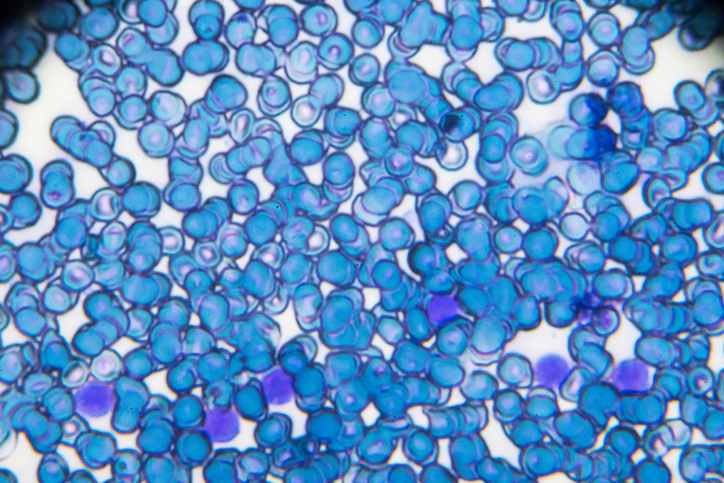
Acute promyelocytic leukemia is a form of acute myeloid leukemia, a cancer of the blood-forming tissue (bone marrow). In normal bone marrow, hematopoietic stem cells produce red blood cells (erythrocytes) that carry oxygen, white blood cells (leukocytes) that protect the body from infection, and platelets (thrombocytes) that are involved in blood clotting. In acute promyelocytic leukemia, immature white blood cells called promyelocytes accumulate in the bone marrow. The overgrowth of promyelocytes leads to a shortage of normal white and red blood cells and platelets in the body, which causes many of the signs and symptoms of the condition.
Video picks for Genetic conditionsVideo library
Description
Acute promyelocytic leukemia is a form of acute myeloid leukemia, a cancer of the blood-forming tissue (bone marrow). In normal bone marrow, hematopoietic stem cells produce red blood cells (erythrocytes) that carry oxygen, white blood cells (leukocytes) that protect the body from infection, and platelets (thrombocytes) that are involved in blood clotting. In acute promyelocytic leukemia, immature white blood cells called promyelocytes accumulate in the bone marrow. The overgrowth of promyelocytes leads to a shortage of normal white and red blood cells and platelets in the body, which causes many of the signs and symptoms of the condition.
People with acute promyelocytic leukemia are especially susceptible to developing bruises, small red dots under the skin (petechiae), nosebleeds, bleeding from the gums, blood in the urine (hematuria), or excessive menstrual bleeding. The abnormal bleeding and bruising occur in part because of the low number of platelets in the blood (thrombocytopenia) and also because the cancerous cells release substances that cause excessive bleeding.
The low number of red blood cells (anaemia) can cause people with acute promyelocytic leukemia to have pale skin (pallor) or excessive tiredness (fatigue). In addition, affected individuals may heal slowly from injuries or have frequent infections due to the loss of normal white blood cells that fight infection. Furthermore, the leukemic cells can spread to the bones and joints, which may cause pain in those areas. Other general signs and symptoms may occur as well, such as fever, loss of appetite, and weight loss.
Acute promyelocytic leukemia is most often diagnosed around age 40, although it can be diagnosed at any age.
Inheritance patterns
The source lists the following possible inheritance patterns: Not inherited. More than one pattern can apply in different cases.
Related genes
Other names
AML M3
APL
Leukemia, acute promyelocytic
M3 ANLL
Myeloid leukemia, acute, M3
Patient picks for Genetic conditions

Cancer
Acute myeloid leukaemia
Acute myeloid leukaemia is where the bone marrow makes large numbers of abnormal immature white blood cells which are derived from a myeloid stem cell.
by Dr Laurence Knott

Cancer
Acute lymphoblastic leukaemia
Acute lymphoblastic leukaemia (ALL) is a condition where the bone marrow makes large numbers of abnormal immature lymphocytes.
by Dr Laurence Knott

Men's health
Acute prostatitis
When the prostate gland becomes infected with a germ (a bacterial infection), the condition is known as acute prostatitis. 'itis' means inflammation, so prostatitis is inflammation of the prostate - not all forms of prostatitis are bacterial, but this leaflet will mainly cover bacterial prostatitis. Symptoms include pain, mainly at the base of the penis and around the anus. A bladder infection commonly occurs at the same time. Treatment includes a four-week course of antibiotic medication.
by Dr Toni Hazell, FRCGP

Children's health
Acute diarrhoea in children
Diarrhoea can be of sudden onset and lasting for less than two weeks (acute) or persistent (chronic). This leaflet deals with infectious diarrhoea, which is common in children. In most cases, diarrhoea improves and stops within several days but can sometimes takes longer. The main risk is lack of fluid in the body (dehydration). The main treatment is to give the affected child enough to drink; this may be by giving special rehydration drinks. Medical help should be sought if there is suspicion that the child is dehydrating, or if they have any worrying symptoms such as those listed below.
by Dr Philippa Vincent, MRCGP

Ear, nose and throat
Acute sinusitis
Sinusitis - also known as a sinus infection - is the swelling of the sinuses, often caused by viral or bacterial infections. Most cases are mild and get better within a few weeks, but chronic sinusitis may require medical treatment. This leaflet explains the symptoms, causes, treatment, and prevention of acute sinusitis.
by Dr Surangi Mendis, MRCGP

Digestive health
Acute pancreatitis
Acute pancreatitis is an inflammation of the pancreas that develops quickly. The main symptom is abdominal pain. It usually settles in a few days but sometimes it becomes severe and very serious. The most common causes of acute pancreatitis are gallstones and drinking alcohol above recommended limits.
by Dr Philippa Vincent, MRCGP
Related patient information and medicines
Patient information leaflet
Acute myeloid leukaemia
Acute myeloid leukaemia is where the bone marrow makes large numbers of abnormal immature white blood cells which are derived from a myeloid stem cell. Acute myeloid leukaemia (AML) is a condition where the bone marrow makes large numbers of abnormal immature white blood cells which are derived from a myeloid stem cell. ...All-trans retinoic acid.

Patient information leaflet
Immunisation for flu
Getting the flu vaccine is a safe and effective way to protect against becoming seriously ill with flu. What is the flu jab for. Influenza (flu) Flu is a common viral infection that tends to be most common in the winter. Flu can cause much more severe symptoms than the common cold Common cold. Some people can become seriously ill with flu, needing.
Patient information leaflet
Leukaemia
Leukaemia is a cancer of blood-forming cells. There are different types of leukaemia. If you develop leukaemia it is important to know what type it is. This is because the outlook (prognosis) and treatments vary for the different types. What is leukaemia. Leukaemia is a cancer of cells in the bone marrow (the cells which develop into white blood.

Patient information leaflet
Mastocytosis and mast cell disorders
A mast cell is a type of white blood cell. If the condition is severe, surgery to remove the spleen (splenectomy), medicines that have an effect on the immune system (suc... Dr Sarah Jarvis , 28th September 2021 Midostaurin for treating advanced systemic mastocytosis The National Institute for Health and Care Excellence (NICE) has brought out new.

Patient information leaflet
CT scan
Note : the information below is a general guide only. The arrangements, and the way tests are performed, may vary between different hospitals. Always follow the instructions given by your doctor or local hospital. What is a CT scan. A CT scan is a specialised X-ray test. It can give quite clear pictures of the inside of your body. In particular,.

Patient information leaflet
Types of cancer
...er/types-of-cancer](https://patient.info/health/cancer/types-of-cancer) Follow Patient: Website: [https://patient.info/](https://patient.info/) Facebook: [https://www.facebook.com/patient](https://www.facebook.com/patient) Twitter: [https://twitter.com/patient](https://twitter.com/patient) Pinterest:.
Further reading and references
- Acute promyelocytic leukemia; MedlinePlus, National Library of Medicine.
- Collins SJ. The role of retinoids and retinoic acid receptors in normal hematopoiesis. Leukemia. 2002 Oct;16(10):1896-905. doi: 10.1038/sj.leu.2402718.
- de The H, Chen Z. Acute promyelocytic leukaemia: novel insights into the mechanisms of cure. Nat Rev Cancer. 2010 Nov;10(11):775-83. doi: 10.1038/nrc2943. Epub 2010 Oct 22.
- de The H, Lavau C, Marchio A, Chomienne C, Degos L, Dejean A. The PML-RAR alpha fusion mRNA generated by the t(15;17) translocation in acute promyelocytic leukemia encodes a functionally altered RAR. Cell. 1991 Aug 23;66(4):675-84. doi: 10.1016/0092-8674(91)90113-d.
- Pandolfi PP. Oncogenes and tumor suppressors in the molecular pathogenesis of acute promyelocytic leukemia. Hum Mol Genet. 2001 Apr;10(7):769-75. doi: 10.1093/hmg/10.7.769.
- Parmar S, Tallman MS. Acute promyelocytic leukaemia:a review. Expert Opin Pharmacother. 2003 Aug;4(8):1379-92. doi: 10.1517/14656566.4.8.1379.
- Salomoni P, Pandolfi PP. The role of PML in tumor suppression. Cell. 2002 Jan 25;108(2):165-70. doi: 10.1016/s0092-8674(02)00626-8.
- Sanz MA, Montesinos P. Open issues on bleeding and thrombosis in acute promyelocytic leukemia. Thromb Res. 2010 Apr;125 Suppl 2:S51-4. doi: 10.1016/S0049-3848(10)70013-X.
- Yamamoto JF, Goodman MT. Patterns of leukemia incidence in the United States by subtype and demographic characteristics, 1997-2002. Cancer Causes Control. 2008 May;19(4):379-90. doi: 10.1007/s10552-007-9097-2. Epub 2007 Dec 7.
- Zelent A, Guidez F, Melnick A, Waxman S, Licht JD. Translocations of the RARalpha gene in acute promyelocytic leukemia. Oncogene. 2001 Oct 29;20(49):7186-203. doi: 10.1038/sj.onc.1204766.
Share your thoughts or experiences with others in our patient communities.
Simple access to trusted treatments and health services online.
Common conditions
Get help with common conditions through the NHS, without a GP appointment.





Sign up to the Patient newsletter
Your weekly dose of clear, trustworthy health advice - written to help you feel informed, confident and in control.
By subscribing you accept our Privacy Policy. You can unsubscribe at any time. We never sell your data.