Crouzon syndrome with acanthosis nigricans
Last updated 18 Aug 2020
Meets Patient’s editorial guidelines
- DownloadDownload
- Share
- Language
- Discussion
- Ask Patient
- Audio Version
- Add to preferred sources on Google
Crouzon syndrome with acanthosis nigricans is a disorder characterised by the premature joining of certain bones of the skull (craniosynostosis) during development and a skin condition called acanthosis nigricans.
Video picks for Genetic conditionsVideo library
Description
Crouzon syndrome with acanthosis nigricans is a disorder characterised by the premature joining of certain bones of the skull (craniosynostosis) during development and a skin condition called acanthosis nigricans.
The signs and symptoms of Crouzon syndrome with acanthosis nigricans overlap with those of a similar condition called Crouzon syndrome. Both conditions involve premature fusion of the skull bones, which affects the shape of the head and face. Other common features of both conditions include wide-set, bulging eyes due to shallow eye sockets; eyes that do not point in the same direction (strabismus); a small, beaked nose; and a flat or sunken appearance of the middle of the face (midface hypoplasia). Less common features that can occur in either disorder include an opening in the roof of the mouth (cleft palate), dental problems, or hearing loss. People with Crouzon syndrome or Crouzon syndrome with acanthosis nigricans usually have normal intelligence.
Crouzon syndrome with acanthosis nigricans is distinguished from Crouzon syndrome by several features, including skin abnormalities. Acanthosis nigricans is a skin condition characterised by thick, dark, velvety skin in body folds and creases, including the neck and underarms. People with Crouzon syndrome with acanthosis nigricans may also have other skin abnormalities; for example, scars in the thick, dark areas of skin are flat and pale. These scars are usually from surgical procedures that are commonly needed in affected individuals. Additionally, in some people with the condition, one or both nasal passages are narrowed (choanal stenosis) or completely blocked (choanal atresia), which can cause difficulty breathing. A buildup of fluid in the brain (hydrocephalus) can also occur. Nasal passage abnormalities and hydrocephalus are rare in Crouzon syndrome. Less common features of Crouzon syndrome with acanthosis nigricans include subtle changes in the bones of the spine (vertebrae), abnormalities of the finger bones, and noncancerous growths in the jaw called cementomas.
Inheritance patterns
The source lists the following possible inheritance patterns: Autosomal dominant. More than one pattern can apply in different cases.
Related genes
Other names
CAN
Crouzonodermoskeletal syndrome
Patient picks for Genetic conditions

General health and lifestyle
Book a Pharmacy First online consultation
NHS Pharmacy First is a new scheme from the Government and NHS in England. It allows patients to get treatment, including prescription medications where necessary, for common conditions without t... Through NHS Pharmacy First, My Local Surgery offers fast, free private online consultations with an NHS pharmacist for quick diagnosis and.
by Thomas Andrew Porteus, MBCS
Digestive health
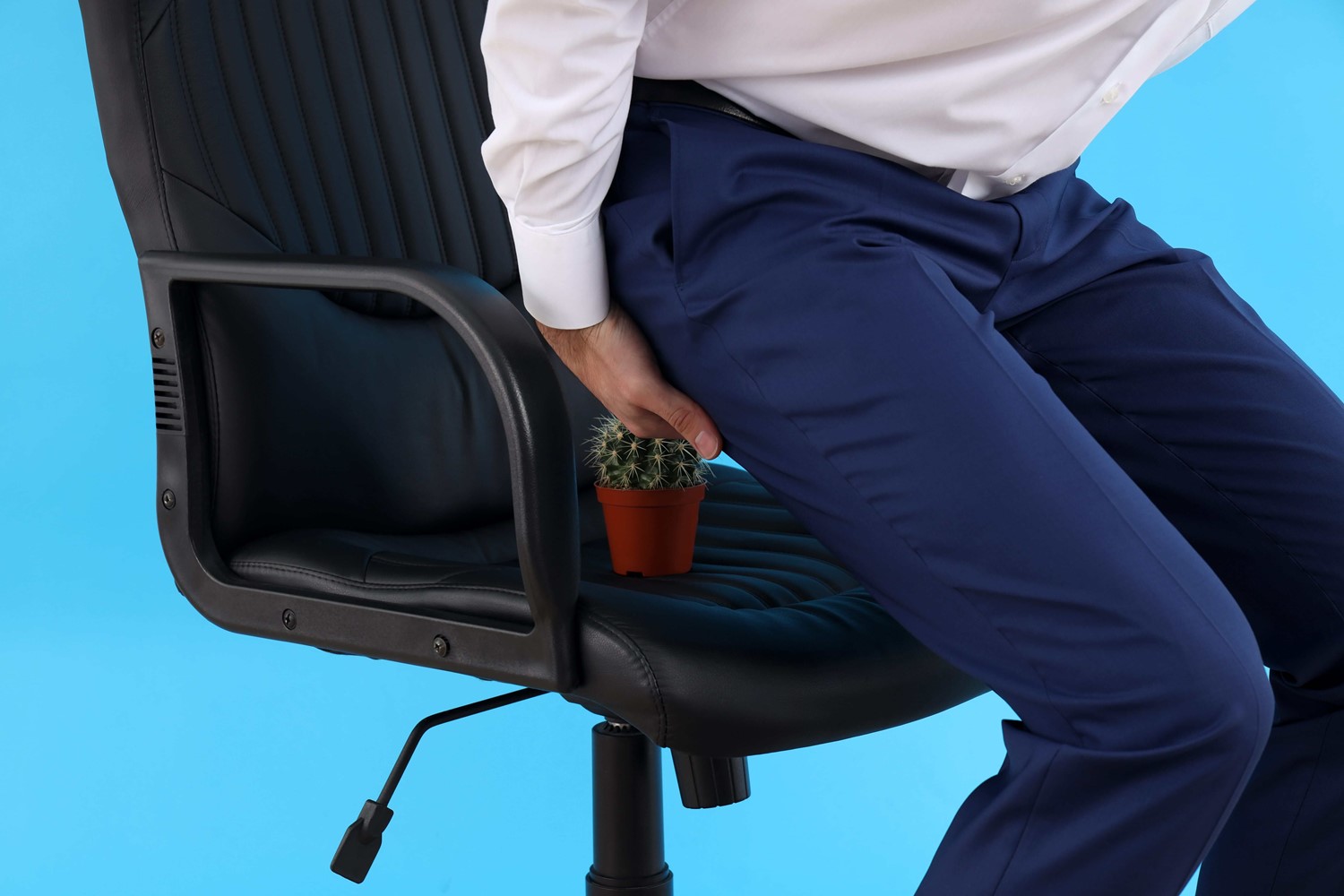
Proctalgia fugax and anal pain
Proctalgia fugax is a fleeting pain in the anus. It lasts less than 20 minutes, with no symptoms whatsoever in between episodes. Levator ani syndrome is a pain which lasts for longer. Both are only diagnosed when no other cause is found.
by Dr Hayley Willacy, FRCGP

Brain and nerves
Cervical rib
About 1 in 100 people are born with an extra rib called a cervical rib. About 1 in 10 people who have a cervical rib develop thoracic outlet syndrome. This happens if the cervical rib squashes the nerves and blood vessels going into the arm. Treatment can include painkillers, physiotherapy and sometimes surgery to relieve the compression caused by, for example, a cervical rib.
by Dr Doug McKechnie, MRCGP
Podcasts
Losing it!
Why losing your erection doesn’t have to be the catastrophe you might think it is. Clare and Janet discuss ways to help with erection problems.
by Thomas Andrew Porteus, MBCS
Condition & symptom support
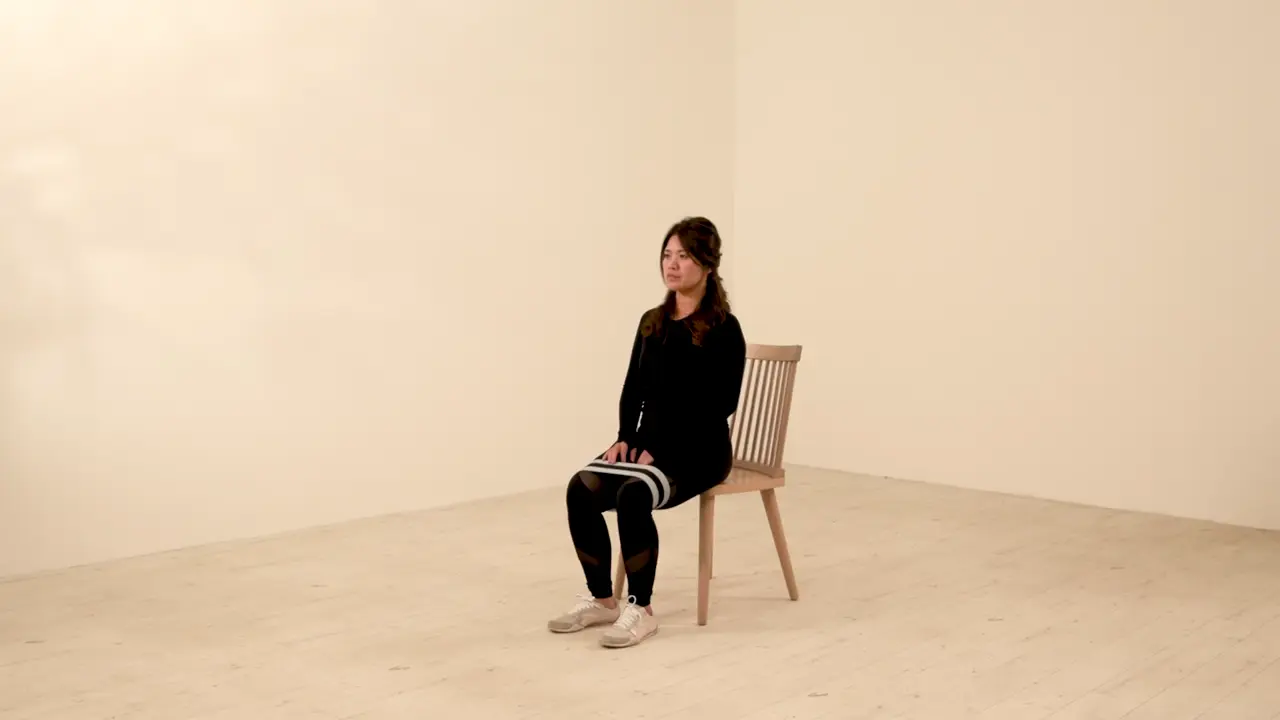
Seated Hip Abductions With Resistance Band
The Seated Hip Abduction With Resistance Band strengthens the outer hips and glutes while improving lower-body control. Sit tall with a resistance band looped around your thighs, feet flat, and knees bent. Press your knees outward against the band, then return slowly to the starting position. This exercise enhances hip strength, joint stability, and posture.

Preventative health
March In Place With Knee Tap
The March in Place with Knee Tap is a coordination and mobility exercise that engages the legs, hips, and core while improving rhythm and balance. March in place with high knees, tapping each knee with the opposite hand as it lifts. Maintain an upright posture and a steady, controlled rhythm throughout. This exercise enhances coordination, balance, and core engagement through dynamic movement.
Related patient information and medicines
Patient information leaflet
Proctalgia fugax and anal pain
Proctalgia fugax is a fleeting pain in the anus. It lasts less than 20 minutes, with no symptoms whatsoever in between episodes. Levator ani syndrome is a pain which lasts for longer. Proctalgia fugax is one of a number of conditions which cause anal or rectal pain ... Again, usually you can see a blister or blistery rash. Crohn's disease Crohn's.
Patient information leaflet
Cervical rib
About 1 in 100 people are born with an extra rib called a cervical rib. About 1 in 10 people who have a cervical rib develop thoracic outlet syndrome. Treatment can include painkillers, physiotherapy and sometimes surgery to relieve the compression caused by, for example, a cervical rib. ServiceUpsellPlaceholder What is a cervical rib. About 1 in.

Patient information leaflet
Irritable bowel syndrome
IBS stands for irritable bowel syndrome, and it is a long-term chronic condition of the gut (bowel) that causes episodes of tummy (abdominal) cramps, bloating and either constipation or diarrhoea. IBS is a problem with how the bowel works. IBS stands for irritable bowel syndrome and may not cause any harm to your body but sometimes causes a lot of.

Patient information leaflet
Oral allergy syndrome
Oral allergy syndrome causes symptoms around the mouth that are triggered by certain foods. It is associated with other conditions caused by plant allergies, such as hay fever and allergy to birch pollen. It's also called pollen-food syndrom... What is oral allergy syndrome. Oral allergy syndrome (OAS) is an allergic condition which causes itching.

Patient information leaflet
Marfan syndrome
Marfan syndrome (named after Dr Antoine Marfan, the French doctor who first described it in 1896) is a genetic disorder which people are born with and which lasts lifelong. Marfan syndrome can affect different people in different ways. You may have a history of Marfan syndrome in your family. If you have Marfan syndrome, you have a 50:50 chance of.
Patient information leaflet
Cyclical vomiting syndrome
Cyclical vomiting syndrome is a condition which occurs mainly in children but can also affect adults. It is more common in people who have migraines. Children have severe episodes of feeling sick (nausea) and being sick (vomiting), sometimes with other symptoms. In between these episodes the person is completely well. There are various treatments.
Further reading and references
- Crouzon syndrome with acanthosis nigricans; MedlinePlus, National Library of Medicine.
- Arnaud-Lopez L, Fragoso R, Mantilla-Capacho J, Barros-Nunez P. Crouzon with acanthosis nigricans. Further delineation of the syndrome. Clin Genet. 2007 Nov;72(5):405-10. doi: 10.1111/j.1399-0004.2007.00884.x.
- Chen F, Degnin C, Laederich M, Horton WA, Hristova K. The A391E mutation enhances FGFR3 activation in the absence of ligand. Biochim Biophys Acta. 2011 Aug;1808(8):2045-50. doi: 10.1016/j.bbamem.2011.04.007. Epub 2011 Apr 22.
- Chen F, Sarabipour S, Hristova K. Multiple consequences of a single amino acid pathogenic RTK mutation: the A391E mutation in FGFR3. PLoS One. 2013;8(2):e56521. doi: 10.1371/journal.pone.0056521. Epub 2013 Feb 20.
- Cohen MM Jr. Let's call it "Crouzonodermoskeletal syndrome" so we won't be prisoners of our own conventional terminology. Am J Med Genet. 1999 May 7;84(1):74. No abstract available.
- Mir A, Wu T, Orlow SJ. Cutaneous features of Crouzon syndrome with acanthosis nigricans. JAMA Dermatol. 2013 Jun;149(6):737-41. doi: 10.1001/jamadermatol.2013.3019.
- Schweitzer DN, Graham JM Jr, Lachman RS, Jabs EW, Okajima K, Przylepa KA, Shanske A, Chen K, Neidich JA, Wilcox WR. Subtle radiographic findings of achondroplasia in patients with Crouzon syndrome with acanthosis nigricans due to an Ala391Glu substitution in FGFR3. Am J Med Genet. 2001 Jan 1;98(1):75-91.
- Vajo Z, Francomano CA, Wilkin DJ. The molecular and genetic basis of fibroblast growth factor receptor 3 disorders: the achondroplasia family of skeletal dysplasias, Muenke craniosynostosis, and Crouzon syndrome with acanthosis nigricans. Endocr Rev. 2000 Feb;21(1):23-39. doi: 10.1210/edrv.21.1.0387.
- Wenger T, Miller D, Evans K. FGFR Craniosynostosis Syndromes Overview. 1998 Oct 20 [updated 2020 Apr 30]. In: Adam MP, Bick S, Mirzaa GM, Wallace SE, Amemiya A, editors. GeneReviews(R) [Internet]. Seattle (WA): University of Washington, Seattle; 1993-2026. Available from http://www.ncbi.nlm.nih.gov/books/NBK1455/
Share your thoughts or experiences with others in our patient communities.
Simple access to trusted treatments and health services online.
Common conditions
Get help with common conditions through the NHS, without a GP appointment.





Sign up to the Patient newsletter
Your weekly dose of clear, trustworthy health advice - written to help you feel informed, confident and in control.
By subscribing you accept our Privacy Policy. You can unsubscribe at any time. We never sell your data.