Fanconi anaemia
Last updated 19 May 2025
Meets Patient’s editorial guidelines
- DownloadDownload
- Share
- Language
- Discussion
- Ask Patient
- Audio Version
- Add to preferred sources on Google
Fanconi anaemia is a condition that is characterised by bone marrow failure, physical differences, organ problems, and an increased risk of certain cancers.
Video picks for Genetic conditionsVideo library
Description
Fanconi anaemia is a condition that is characterised by bone marrow failure, physical differences, organ problems, and an increased risk of certain cancers.
Approximately 90 percent of people with Fanconi anaemia have impaired bone marrow function. Bone marrow primarily produces new blood cells. These include red blood cells, which carry oxygen to the body's tissues; white blood cells, which fight infections; and platelets, which are necessary for normal blood clotting. In people with Fanconi anaemia, impaired bone marrow function leads to a decrease in the production of all blood cells (aplastic anaemia). Affected individuals experience extreme tiredness (fatigue) due to low numbers of red blood cells (anaemia), frequent infections due to low numbers of white blood cells (neutropenia), and clotting problems due to low numbers of platelets (thrombocytopenia). People with Fanconi anaemia may also develop myelodysplastic syndrome, a condition in which immature blood cells fail to develop normally.
People with Fanconi anaemia often have growth problems before or after birth that often result in short stature. Affected individuals can also have irregular skin coloring such as unusually light-colored skin (hypopigmentation) or café-au-lait spots, which are flat patches on the skin that are darker than the surrounding area. People with Fanconi anaemia can have skeletal problems that often include malformed thumbs or forearms or an unusually small head size (microcephaly).
Problems in hormone-producing (endocrine) tissues are common in people with Fanconi anaemia, including abnormally low levels of thyroid hormones (hypothyroidism), and high blood glucose levels (hyperglycemia). Individuals with Fanconi anaemia can also have eye abnormalities such as small or abnormally shaped eyes or malformed or absent kidneys and other defects of the urinary tract. Less frequent problems include gastrointestinal abnormalities, heart defects, brain abnormalities, and hearing loss. People with Fanconi anaemia may have abnormal genitalia or malformations of the reproductive system, which can result in difficulty having biological children (infertility).
Individuals with Fanconi anaemia have an increased risk of developing a cancer of blood-forming cells called acute myeloid leukemia (AML). They are also at risk of developing tumours of the liver, gastrointestinal system, genital tract, or head and neck (known as head and neck squamous cell carcinoma). The likelihood of a person with Fanconi anaemia developing one of these cancers is between 10 and 30 percent.
Inheritance patterns
The source lists the following possible inheritance patterns: Autosomal recessive; X-linked; X-linked recessive; Autosomal dominant. More than one pattern can apply in different cases.
Related genes
Other names
FA
Fanconi hypoplastic anaemia
Fanconi pancytopenia
Fanconi panmyelopathy
Patient picks for Genetic conditions
Allergies, blood and immune system
Diets suitable for people with anaemia
If you have anaemia, you may be able to change your diet to include foods which contain more of the vitamins or minerals you are short of. The sort of foods you should eat will depend on whether you are short of iron, vitamin B12 or folic acid.
by Dr Doug McKechnie, MRCGP

Allergies, blood and immune system
Signs you may have anaemia
It's usual to feel a little tired and run-down from time to time. But if the feeling continues, or is excessive, you may need to speak with your doctor. One common cause of feeling run-down is anaemia. Here we look at the signs and symptoms, whether you might be susceptible, and what to do next.
by Victoria Raw

Allergies, blood and immune system
Anaemia
Anaemia means that you have fewer red blood cells than normal or you have less haemoglobin than normal in each red blood cell. In either case, a reduced amount of oxygen is carried around in the bloodstream.
by Dr Hayley Willacy, FRCGP
Allergies, blood and immune system
Iron-deficiency anaemia
Iron-deficiency anaemia is a common type of anaemia that is caused by a lack of iron. Symptoms include pale skin and lack of energy. A low level of iron, leading to anaemia, can result from various causes. Some are more serious than others.
by Dr Rachel Hudson, MRCGP
Allergies, blood and immune system
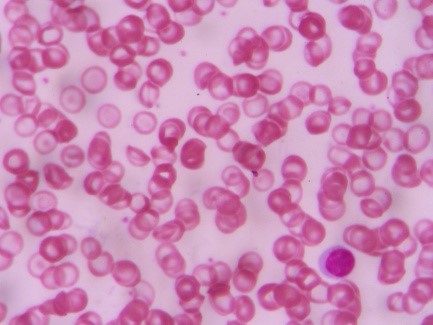
Sickle cell disease
Sickle cell disease (SCD) is a serious, inherited condition affecting the blood and various organs in the body. It affects the red blood cells, causing episodes of 'sickling', which produce episodes of pain and other symptoms. In between episodes of sickling, people with SCD are normally well. Long-term complications can occur. Good treatment, started early in life, can prevent complications. So, early diagnosis and specialist treatment are advised for SCD. Sickle cell trait is not the same as sickle cell disease.
by Dr Hayley Willacy, FRCGP
Allergies, blood and immune system
Vitamin B12 deficiency and pernicious anaemia
Vitamin B12 is essential for life. It is needed to make new cells in the body, such as the many new red blood cells which are made every day. Vitamin B12 is found in meat, fish, eggs and milk - but not in fruit or vegetables. A normal balanced diet must contain enough vitamin B12. A lack of vitamin B12 leads to anaemia and sometimes to other problems.
by Dr Colin Tidy, MRCGP
Related patient information and medicines

Patient information leaflet
Glycogen storage disorders
... Type IV (Andersen's disease). Type V (McArdle's disease). Type VI (Hers' disease). Type VII (Tarui's disease). Type IX (liver phosphorylase kinase deficiency). Type XI (Fanconi-Bickel syndrome). Type 0 (Lewis' disease). Type I glycogen storage disorder is the most common. About one quarter of people who have glycogen storage disorder have type.

Patient information leaflet
Swollen legs
Heart failure If you have this condition, your heart is not working as effectively to push the blood around your circul... You may also feel out of breath, and this can be worse when lying down flat at night or on walking. Anaemia Anaemia. This is a problem with the red blood cells of your body. Venous insufficiency (which also causes varicose.

Patient information leaflet
Breathlessness and difficulty breathing
The rapid breathing makes you feel breathless. Anaemia Iron-deficiency anaemia - not enough haemoglobin in the blood to carry oxygen to cells. This causes tiredness and breathlessness. For more information, go to.

Patient information leaflet
Tiredness
One UK survey of over 15,000 people found that 10-18% reported tiredness that lasted for one month or longer, and a study looking at GP databases found that 1.5 in 100 peopl... Causes of tiredness Physical causes of tiredness Tiredness may be due to a wide range of physical illnesses. Examples include: A low iron level ( anaemia Anaemia ). For.

Patient information leaflet
Oral thrush
Oral thrush is an infection in the mouth caused by a yeast fungus called candida. It is not usually serious and can generally ... Having diabetes. Having severe anaemia Anaemia. Lacking iron Iron-deficiency anaemia , folate Folic acid deficiency or vitamin B12 Vitamin B12 deficiency and pernicious anaemia. Having a poor immune system. Anti-thrush.
Patient information leaflet
Cancer symptoms
Loss of appetite. Pale skin and paleness of the inside of the lower eyelid , a low blood count (anaemia). Other cancer symptoms you may be asked about include: Any visible loss of blood. This may include the following: Features of excessive weight loss. Evidence of anaemia Anaemia - pale skin and pallor inside the lower eyelid. Any enlarged lymph.
Further reading and references
- Fanconi anaemia; MedlinePlus, National Library of Medicine.
- Auerbach AD. Fanconi anemia and its diagnosis. Mutat Res. 2009 Jul 31;668(1-2):4-10. doi: 10.1016/j.mrfmmm.2009.01.013. Epub 2009 Feb 28.
- de Winter JP, Joenje H. The genetic and molecular basis of Fanconi anemia. Mutat Res. 2009 Jul 31;668(1-2):11-9. doi: 10.1016/j.mrfmmm.2008.11.004. Epub 2008 Nov 14.
- Deakyne JS, Mazin AV. Fanconi anemia: at the crossroads of DNA repair. Biochemistry (Mosc). 2011 Jan;76(1):36-48. doi: 10.1134/s0006297911010068.
- Green AM, Kupfer GM. Fanconi anemia. Hematol Oncol Clin North Am. 2009 Apr;23(2):193-214. doi: 10.1016/j.hoc.2009.01.008.
- Hoover A, Turcotte LM, Phelan R, Barbus C, Rayannavar A, Miller BS, Reardon EE, Theis-Mahon N, MacMillan ML. Longitudinal clinical manifestations of Fanconi anemia: A systematized review. Blood Rev. 2024 Nov;68:101225. doi: 10.1016/j.blre.2024.101225. Epub 2024 Aug 2.
- Kee Y, D'Andrea AD. Expanded roles of the Fanconi anemia pathway in preserving genomic stability. Genes Dev. 2010 Aug 15;24(16):1680-94. doi: 10.1101/gad.1955310.
- Kitao H, Takata M. Fanconi anemia: a disorder defective in the DNA damage response. Int J Hematol. 2011 Apr;93(4):417-424. doi: 10.1007/s12185-011-0777-z. Epub 2011 Feb 18.
- Mathew CG. Fanconi anaemia genes and susceptibility to cancer. Oncogene. 2006 Sep 25;25(43):5875-84. doi: 10.1038/sj.onc.1209878.
- Mehta PA, Ebens CL. Fanconi Anemia. 2002 Feb 14 [updated 2026 Jan 15]. In: Adam MP, Bick S, Mirzaa GM, Wallace SE, Amemiya A, editors. GeneReviews(R) [Internet]. Seattle (WA): University of Washington, Seattle; 1993-2026. Available from http://www.ncbi.nlm.nih.gov/books/NBK1401/
- Neveling K, Endt D, Hoehn H, Schindler D. Genotype-phenotype correlations in Fanconi anemia. Mutat Res. 2009 Jul 31;668(1-2):73-91. doi: 10.1016/j.mrfmmm.2009.05.006. Epub 2009 May 21.
- Peake JD, Noguchi E. Fanconi anemia: current insights regarding epidemiology, cancer, and DNA repair. Hum Genet. 2022 Dec;141(12):1811-1836. doi: 10.1007/s00439-022-02462-9. Epub 2022 May 21.
- Taniguchi T, D'Andrea AD. Molecular pathogenesis of Fanconi anemia: recent progress. Blood. 2006 Jun 1;107(11):4223-33. doi: 10.1182/blood-2005-10-4240. Epub 2006 Feb 21.
Share your thoughts or experiences with others in our patient communities.
Simple access to trusted treatments and health services online.
Common conditions
Get help with common conditions through the NHS, without a GP appointment.





Sign up to the Patient newsletter
Your weekly dose of clear, trustworthy health advice - written to help you feel informed, confident and in control.
By subscribing you accept our Privacy Policy. You can unsubscribe at any time. We never sell your data.