Iron-refractory iron deficiency anaemia
Last updated 18 Aug 2020
Meets Patient’s editorial guidelines
- DownloadDownload
- Share
- Language
- Discussion
- Ask Patient
- Audio Version
- Add to preferred sources on Google
Iron-refractory iron deficiency anaemia is one of many types of anaemia, which is a group of conditions characterised by a shortage of healthy red blood cells. This shortage prevents the blood from carrying an adequate supply of oxygen to the body's tissues.
Video picks for Genetic conditionsVideo library
Description
Iron-refractory iron deficiency anaemia is one of many types of anaemia, which is a group of conditions characterised by a shortage of healthy red blood cells. This shortage prevents the blood from carrying an adequate supply of oxygen to the body's tissues.
Iron-refractory iron deficiency anaemia results from an inadequate amount (deficiency) of iron in the bloodstream. It is described as "iron-refractory" because the condition is totally resistant (refractory) to treatment with iron given orally and partially resistant to iron given in other ways, such as intravenously (by IV). In people with this form of anaemia, red blood cells are abnormally small (microcytic) and pale (hypochromic). The symptoms of iron-refractory iron deficiency anaemia can include tiredness (fatigue), weakness, pale skin, and other complications. These symptoms are most pronounced during childhood, although they tend to be mild. Affected individuals usually have normal growth and development.
Inheritance patterns
The source lists the following possible inheritance patterns: Autosomal recessive. More than one pattern can apply in different cases.
Related genes
Other names
Anaemia, hypochromic microcytic, with defect in iron metabolism
IRIDA
IRIDA syndrome
Iron-handling disorder, hereditary
Patient picks for Genetic conditions
Women's health
Ferritin face - signs of low iron, or viral skin trend?
There’s a new viral wellness term in town called ‘ferritin face’. It’s being used to describe the apparent link between low iron stores and symptoms such as dark circles under your eyes, dull, tired-looking skin, cracked lips, and hair loss. But what exactly is ferritin, and can low levels really affect your facial appearance? We spoke to consultant gynaecologist, Dr Lamia Zafrani, and consultant dermatologist, Dr Sidra Khan, to demystify what ferritin is, how it affects our bodies, and why women are more vulnerable to lower levels.
by Hannah Boynton-Forshaw
Allergies, blood and immune system
Iron-deficiency anaemia
Iron-deficiency anaemia is a common type of anaemia that is caused by a lack of iron. Symptoms include pale skin and lack of energy. A low level of iron, leading to anaemia, can result from various causes. Some are more serious than others.
by Dr Rachel Hudson, MRCGP

Allergies, blood and immune system
Signs you may have anaemia
It's usual to feel a little tired and run-down from time to time. But if the feeling continues, or is excessive, you may need to speak with your doctor. One common cause of feeling run-down is anaemia. Here we look at the signs and symptoms, whether you might be susceptible, and what to do next.
by Victoria Raw

Allergies, blood and immune system
Anaemia
Anaemia means that you have fewer red blood cells than normal or you have less haemoglobin than normal in each red blood cell. In either case, a reduced amount of oxygen is carried around in the bloodstream.
by Dr Hayley Willacy, FRCGP

Diet and nutrition
How to avoid iron deficiency
As the cost of living rises, many people in the UK are looking for ways to cut back on bills, including groceries. But iron-rich foods - whether red meat or vegetarian - remain essential to avoid iron deficiency, whatever our weekly budget.
by Ellie Broughton
Allergies, blood and immune system
Diets suitable for people with anaemia
If you have anaemia, you may be able to change your diet to include foods which contain more of the vitamins or minerals you are short of. The sort of foods you should eat will depend on whether you are short of iron, vitamin B12 or folic acid.
by Dr Doug McKechnie, MRCGP
Related patient information and medicines
Patient information leaflet
Iron-deficiency anaemia
Iron-deficiency anaemia is a common type of anaemia that is caused by a lack of iron. A low level of iron, leading to anaemia, can result from various causes. What is iron-deficiency anaemia. Anaemia Anaemia means: You have fewer red blood cells than normal; or You have less haemoglobin than normal in each red blood cell. The most common cause of.
Patient information leaflet
Anaemia
Anaemia means that you have fewer red blood cells than normal or you have less haemoglobin than normal in each red blood cell. In either case, a reduced amount of oxygen is carried around in the bloodstream. Anaemia types and causes Iron-deficiency anaemia Lack of iron is the most common type of anaemia in the UK. This is called iron-deficiency.
Patient information leaflet
Diets suitable for people with anaemia
If you have anaemia, you may be able to change your diet to include foods which contain more of the vitamins or minerals you are short of. Diet and anaemia Not eating foods with enough iron is sometimes the cause of iron-deficiency anaemia. Some people who have a poor diet with just enough ... There are other causes of iron-deficiency anaemia, and.
Patient information leaflet
Full blood count and blood film
The main abnormalities which can be detected are: Anaemia Anaemia - this means that you have fewer red blood cells than normal, or have less haemoglobin than normal in each red blood cell. ... With this type of anaemia, the average size of the red blood cells is smaller than normal. The cause of iron deficiency can be benign (for example, heavy.

Patient information leaflet
Coeliac disease
Coeliac disease is caused by a reaction of the gut to gluten. (F... Symptoms in adults Poor absorption of food may cause deficiencies of vitamins, iron and other nutrients and may make you feel tired and weak. Common symptoms of coeliac disease in adults are: Anaemia Iron-deficiency anaemia due to poor absorption of iron. Abdominal pains which.
Patient information leaflet
Pregnancy screening tests
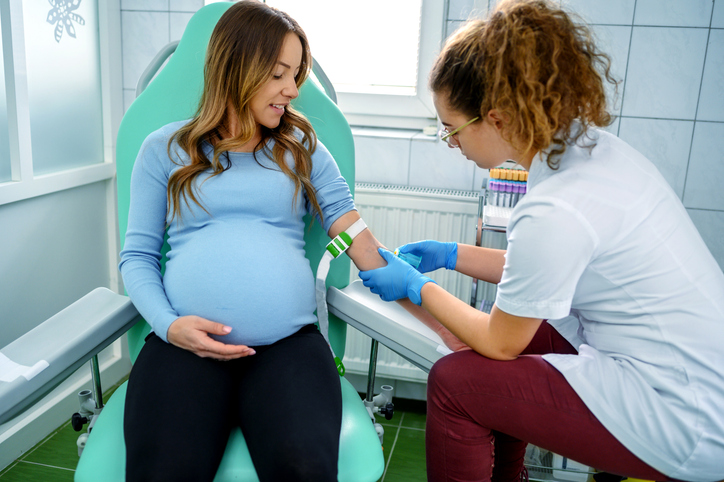
Blood tests A sample of blood is taken early on in pregnancy and put into several tubes. These are sent to the laboratory to check for: Anaemia. The common reason for anaemia is lack of iron Iron-deficiency anaemia , which can usually be treated easily with iron tablets. Blood group including rhesus D status and red cell antibodies. If you are.
Further reading and references
- Iron-refractory iron deficiency anaemia; MedlinePlus, National Library of Medicine.
- Brissot P, Bardou-Jacquet E, Jouanolle AM, Loreal O. Iron disorders of genetic origin: a changing world. Trends Mol Med. 2011 Dec;17(12):707-13. doi: 10.1016/j.molmed.2011.07.004. Epub 2011 Aug 20.
- De Falco L, Sanchez M, Silvestri L, Kannengiesser C, Muckenthaler MU, Iolascon A, Gouya L, Camaschella C, Beaumont C. Iron refractory iron deficiency anemia. Haematologica. 2013 Jun;98(6):845-53. doi: 10.3324/haematol.2012.075515.
- De Falco L, Totaro F, Nai A, Pagani A, Girelli D, Silvestri L, Piscopo C, Campostrini N, Dufour C, Al Manjomi F, Minkov M, Van Vuurden DG, Feliu A, Kattamis A, Camaschella C, Iolascon A. Novel TMPRSS6 mutations associated with iron-refractory iron deficiency anemia (IRIDA). Hum Mutat. 2010 May;31(5):E1390-405. doi: 10.1002/humu.21243.
- Finberg KE, Heeney MM, Campagna DR, Aydinok Y, Pearson HA, Hartman KR, Mayo MM, Samuel SM, Strouse JJ, Markianos K, Andrews NC, Fleming MD. Mutations in TMPRSS6 cause iron-refractory iron deficiency anemia (IRIDA). Nat Genet. 2008 May;40(5):569-71. doi: 10.1038/ng.130. Epub 2008 Apr 13.
Share your thoughts or experiences with others in our patient communities.
Simple access to trusted treatments and health services online.
Common conditions
Get help with common conditions through the NHS, without a GP appointment.





Sign up to the Patient newsletter
Your weekly dose of clear, trustworthy health advice - written to help you feel informed, confident and in control.
By subscribing you accept our Privacy Policy. You can unsubscribe at any time. We never sell your data.