Mucolipidosis type IV
Last updated 3 Apr 2025
Meets Patient’s editorial guidelines
- DownloadDownload
- Share
- Language
- Discussion
- Ask Patient
- Audio Version
- Add to preferred sources on Google
Mucolipidosis type IV is an inherited disorder characterised by delayed development and vision impairment that worsens over time. The severe form of the disorder is called typical mucolipidosis type IV, and the mild form is called atypical mucolipidosis type IV.
Video picks for Genetic conditionsVideo library
Description
Mucolipidosis type IV is an inherited disorder characterised by delayed development and vision impairment that worsens over time. The severe form of the disorder is called typical mucolipidosis type IV, and the mild form is called atypical mucolipidosis type IV.
Approximately 95 percent of individuals with this condition have the severe form. People with typical mucolipidosis type IV have delayed development of mental and motor skills (psychomotor delay). Motor skills include sitting, standing, walking, grasping objects, and writing. Psychomotor delay is moderate to severe and usually becomes apparent during the first year of life. Affected individuals have intellectual disability, limited or absent speech, difficulty chewing and swallowing, weak muscle tone (hypotonia) that gradually turns into abnormal muscle stiffness (spasticity), and problems controlling hand movements. Most people with typical mucolipidosis type IV are unable to walk independently. In about 15 percent of affected individuals, the psychomotor problems worsen over time.
Vision may be normal at birth in people with typical mucolipidosis type IV, but it becomes increasingly impaired during the first decade of life. Individuals with this condition develop clouding of the clear covering of the eye (cornea) and progressive breakdown of the light-sensitive layer at the back of the eye (retina). By their early teens, affected individuals have severe vision loss or blindness.
People with typical mucolipidosis type IV also have impaired production of stomach acid (achlorhydria). Achlorhydria does not cause any symptoms in these individuals, but it does result in unusually high levels of gastrin in the blood. Gastrin is a hormone that regulates the production of stomach acid. Individuals with mucolipidosis type IV may not have enough iron in their blood, which can lead to a shortage of red blood cells (anaemia). People with the severe form of this disorder usually survive to adulthood; however, they may have a shortened lifespan.
About 5 percent of affected individuals have atypical mucolipidosis type IV. These individuals usually have mild psychomotor delay and may develop the ability to walk. People with atypical mucolipidosis type IV tend to have milder eye abnormalities than those with the severe form of the disorder. Achlorhydria also may be present in mildly affected individuals.
Inheritance patterns
The source lists the following possible inheritance patterns: Autosomal recessive. More than one pattern can apply in different cases.
Related genes
Other names
Ganglioside sialidase deficiency
ML4
MLIV
Sialolipidosis
Patient picks for Genetic conditions

Tests and investigations
Blood groups and types
ABO and rhesus are both types of antigens found on the surface of red blood cells. There are lots of other types but these are the most important.
by Dr Rosalyn Adleman, MRCGP

Cancer
Ivermectin explained: facts, evidence and common myths
Ivermectin is a medicine with a long and respected history. It has been used for decades to treat specific parasitic infections and, when prescribed correctly, it remains an effective and important drug. In recent years, however, ivermectin has also become the focus of widespread online claims suggesting it can treat viral infections, cure cancer, or prevent and treat COVID-19. These claims are often shared confidently and repeatedly. Some are supported by personal testimonies, others by references to scientific studies that appear convincing at first glance. But when the evidence is examined properly, those claims do not stand up. Understanding why requires stepping back from headlines and looking carefully at how ivermectin works and how medical evidence is established.
by Thomas Andrew Porteus, MBCS
Brain and nerves
Types of seizures
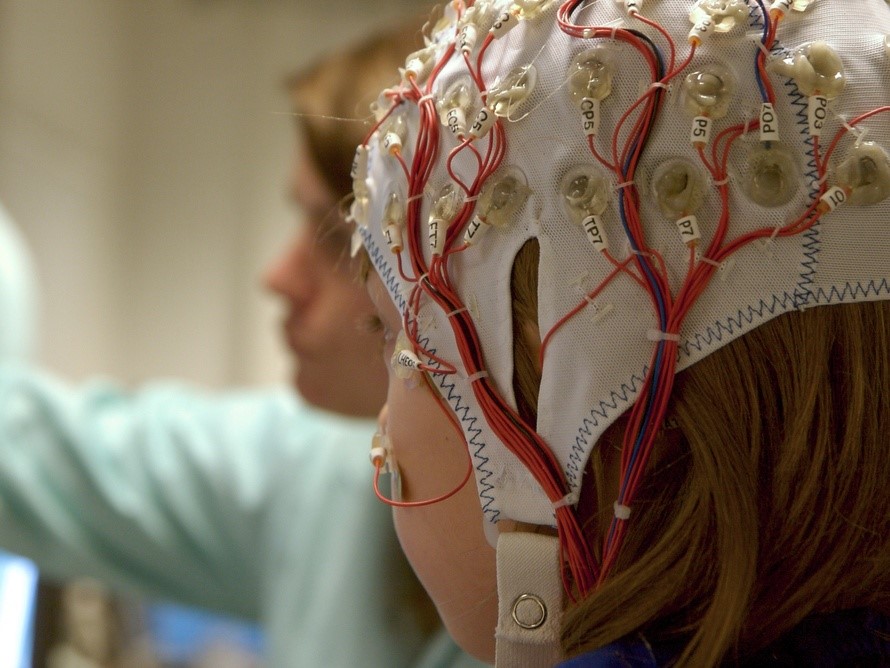
A seizure is a condition caused by a sudden burst of electrical activity in the brain. There are different types of seizures. This leaflet gives some information about what your doctor may wish to know and what tests may be advised after such an event.
by Dr Doug McKechnie, MRCGP

Cancer
Types of cancer
There are more than 100 different types of cancer. Each type is classified by the type of cell the cancer originates from.
by Dr Hayley Willacy, FRCGP

Cancer
Skin cancer types
This leaflet gives a general overview about skin cancer and the different skin cancer types - melanoma and non-melanoma.
by Dr Toni Hazell, FRCGP
Diabetes
MHRA approves teplizumab to delay progression of type 1 diabetes
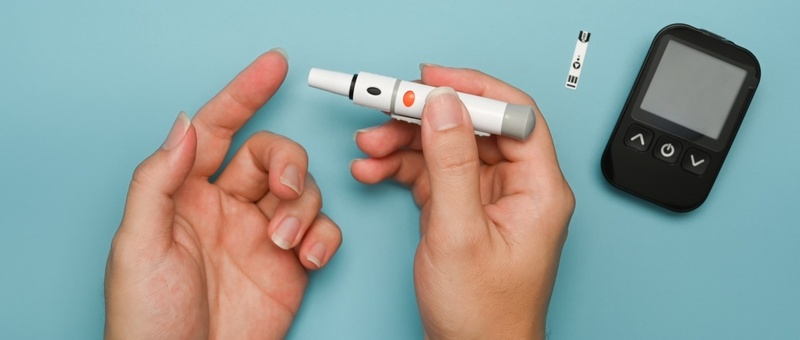
Teplizumab (Tzield) has been approved by the Medicines and Healthcare products Regulatory Agency (MHRA) to help delay the onset of Stage 3 type 1 diabetes (T1D). Read on to see what this means if you are prescribed teplizumab and what it does for you.
by Lawrence Higgins
Related patient information and medicines

Patient information leaflet
Glycogen storage disorders
However, some glycogen storage disorders can affect other parts of the body such as the kidney, heart, blood vessels, nervous system and bowel (see below). The different types of glycogen storage disorder include: Type Ia (von Gierke's disease), type Ib. Type II (Pompe's disease). Type III (Forbes-Cori disease). Type IV (Andersen's disease). Type.

Patient information leaflet
Left upper quadrant pain
Kidney stones and infections Kidney stones Kidney stones can cause a severe pain around the left-hand side of the LUQ, or in your back (loin), but the pain may spread and involve the front of the abdominal area. A kidney stone or infection Kidney infection can cause pain anywhere along your urinary tract. So this could be anywhere from the loin in.

Patient information leaflet
Coombs test
A Coombs test is a type of blood test. It is named after the person who invented it, Dr Robin Coombs. There are two types of Coombs test. What is a Coombs test. The two types of Coombs test are as follows: The direct Coombs test involves looking directly at red blood cells found in a sample of blood. The direct Coombs test is sometimes called the.

Patient information leaflet
Lung cancer
Other tests are therefore needed. Dr Krishna Vakharia , 16th October 2023 The National Institute for Health and Care Excellence (NICE) has recommended that a person should receive a diagnosis or ruling out of cancer within 28 days of being referred urgently by their GP for suspected cancer. Confirming the diagnosis You may be offered a.
Patient information leaflet
Blood groups and types
ABO and rhesus are both types of antigens found on the surface of red blood cells. There are lots of other types but these are the most important. The main reasons to know your blood group are if you need to have a blood transfusion or if you are pregnant. What is a blood group. Red blood cells (erythrocytes) have certain proteins on their.

Patient information leaflet
Mouth cancer
Diagnosing mouth cancer Your healthcare professional may suspect mouth cancer if you have a lesion in your mouth (such as a sore, an ulcer or a lump) which has not healed for 3 wee... Dr Krishna Vakharia , 16th October 2023 The National Institute for Health and Care Excellence (NICE) has recommended that a person should receive a diagnosis or.
Further reading and references
- Mucolipidosis type IV; MedlinePlus, National Library of Medicine.
- Altarescu G, Sun M, Moore DF, Smith JA, Wiggs EA, Solomon BI, Patronas NJ, Frei KP, Gupta S, Kaneski CR, Quarrell OW, Slaugenhaupt SA, Goldin E, Schiffmann R. The neurogenetics of mucolipidosis type IV. Neurology. 2002 Aug 13;59(3):306-13. doi: 10.1212/wnl.59.3.306.
- Dong XP, Cheng X, Mills E, Delling M, Wang F, Kurz T, Xu H. The type IV mucolipidosis-associated protein TRPML1 is an endolysosomal iron release channel. Nature. 2008 Oct 16;455(7215):992-6. doi: 10.1038/nature07311. Epub 2008 Sep 14.
- Miedel MT, Rbaibi Y, Guerriero CJ, Colletti G, Weixel KM, Weisz OA, Kiselyov K. Membrane traffic and turnover in TRP-ML1-deficient cells: a revised model for mucolipidosis type IV pathogenesis. J Exp Med. 2008 Jun 9;205(6):1477-90. doi: 10.1084/jem.20072194. Epub 2008 May 26.
- Misko A, Grishchuk Y, Goldin E, Schiffmann R. Mucolipidosis IV. 2005 Jan 28 [updated 2021 Feb 11]. In: Adam MP, Bick S, Mirzaa GM, Wallace SE, Amemiya A, editors. GeneReviews(R) [Internet]. Seattle (WA): University of Washington, Seattle; 1993-2026. Available from http://www.ncbi.nlm.nih.gov/books/NBK1214/
- Puertollano R, Kiselyov K. TRPMLs: in sickness and in health. Am J Physiol Renal Physiol. 2009 Jun;296(6):F1245-54. doi: 10.1152/ajprenal.90522.2008. Epub 2009 Jan 21.
- Ruivo R, Anne C, Sagne C, Gasnier B. Molecular and cellular basis of lysosomal transmembrane protein dysfunction. Biochim Biophys Acta. 2009 Apr;1793(4):636-49. doi: 10.1016/j.bbamcr.2008.12.008. Epub 2008 Dec 24.
- Venugopal B, Mesires NT, Kennedy JC, Curcio-Morelli C, Laplante JM, Dice JF, Slaugenhaupt SA. Chaperone-mediated autophagy is defective in mucolipidosis type IV. J Cell Physiol. 2009 May;219(2):344-53. doi: 10.1002/jcp.21676.
- Vergarajauregui S, Connelly PS, Daniels MP, Puertollano R. Autophagic dysfunction in mucolipidosis type IV patients. Hum Mol Genet. 2008 Sep 1;17(17):2723-37. doi: 10.1093/hmg/ddn174. Epub 2008 Jun 11.
- Vergarajauregui S, Oberdick R, Kiselyov K, Puertollano R. Mucolipin 1 channel activity is regulated by protein kinase A-mediated phosphorylation. Biochem J. 2008 Mar 1;410(2):417-25. doi: 10.1042/BJ20070713.
- Vergarajauregui S, Puertollano R. Mucolipidosis type IV: the importance of functional lysosomes for efficient autophagy. Autophagy. 2008 Aug;4(6):832-4. doi: 10.4161/auto.6567. Epub 2008 Jul 8.
- Wakabayashi K, Gustafson AM, Sidransky E, Goldin E. Mucolipidosis type IV: an update. Mol Genet Metab. 2011 Nov;104(3):206-13. doi: 10.1016/j.ymgme.2011.06.006. Epub 2011 Jun 16.
Share your thoughts or experiences with others in our patient communities.
Simple access to trusted treatments and health services online.
Common conditions
Get help with common conditions through the NHS, without a GP appointment.





Sign up to the Patient newsletter
Your weekly dose of clear, trustworthy health advice - written to help you feel informed, confident and in control.
By subscribing you accept our Privacy Policy. You can unsubscribe at any time. We never sell your data.