NGLY1-congenital disorder of deglycosylation
Last updated 18 Aug 2020
Meets Patient’s editorial guidelines
- DownloadDownload
- Share
- Language
- Discussion
- Ask Patient
- Audio Version
- Add to preferred sources on Google
NGLY1-congenital disorder of deglycosylation (NGLY1-CDDG) is an inherited condition that affects many parts of the body. The severity of the signs and symptoms varies widely among people with the condition.
Video picks for Genetic conditionsVideo library
Description
NGLY1-congenital disorder of deglycosylation (NGLY1-CDDG) is an inherited condition that affects many parts of the body. The severity of the signs and symptoms varies widely among people with the condition.
Individuals with NGLY1-CDDG typically develop features of the condition during infancy. They often have delayed development of speech and motor skills, such as sitting and walking, and weak muscle tone (hypotonia). Many affected individuals have movement abnormalities, such as uncontrolled movements of the limbs (choreoathetosis), and some develop seizures that are difficult to treat. Individuals with NGLY1-CDDG may also have problems with liver function. Some affected individuals have eye abnormalities, including degeneration of the nerves that carry information from the eyes to the brain (optic atrophy) and changes in the light-sensing tissue at the back of the eye (the retina). A reduction or absence of tears (hypolacrima or alacrima) is a common feature of NGLY1-CDDG.
Inheritance patterns
The source lists the following possible inheritance patterns: Autosomal recessive. More than one pattern can apply in different cases.
Related genes
Other names
Congenital disorder of deglycosylation
Deficiency of N-glycanase 1
NGLY1-CDDG
Patient picks for Genetic conditions

Women's health
Ferritin face - signs of low iron, or viral skin trend?
There’s a new viral wellness term in town called ‘ferritin face’. It’s being used to describe the apparent link between low iron stores and symptoms such as dark circles under your eyes, dull, tired-looking skin, cracked lips, and hair loss. But what exactly is ferritin, and can low levels really affect your facial appearance? We spoke to consultant gynaecologist, Dr Lamia Zafrani, and consultant dermatologist, Dr Sidra Khan, to demystify what ferritin is, how it affects our bodies, and why women are more vulnerable to lower levels.
by Hannah Boynton-Forshaw
Healthy living
Glucose Ketone Index (GKI) calculator
Open GKI calculator Want to track your level of ketosis? Use our Glucose Ketone Index (GKI) calculator to assess your metabolic state. Whether you're following a ketogenic diet for weight loss, diabetes management, or therapeutic reasons, this tool gives you a clearer picture of your current glucose–ketone balance.
by Patient infomatics team

Children's health
Congenital heart disease
Congenital heart disease is a condition where an abnormality (defect) develops in the heart before birth. There are a number of types of congenital heart defect. Some are mild and cause few problems; others are life-threatening for the baby.
by Dr Mary Harding, MRCGP

Hormones
Congenital adrenal hyperplasia
Congenital adrenal hyperplasia is an inherited (genetic) condition causing swelling of the adrenal glands. The condition is associated with a decrease in the blood level of a hormone called cortisol and an increase in the level of male sex hormones (androgens) in both sexes. Some people get a mild condition that produces no symptoms. Others (mainly baby boys) develop a severe form that can be life-threatening. Medical treatment to correct hormone levels is available. Surgery to improve the appearance of unusual genitalia (in girls) is sometimes considered.
by Dr Rosalyn Adleman, MRCGP
Brain and nerves
Functional neurological disorder
The term functional neurological disorder encompasses a wide range of symptoms that are often very debilitating. Doctors tend to categorise these symptoms according to their medical frame of reference, but often fail. Functional neurological disorders have no formal way of being diagnosed by doctors. They can, however, be treated.
by Dr Hayley Willacy, FRCGP

Women's health
Endometrial hyperplasia
Endometrial hyperplasia is a thickening of the womb (uterus) lining. The womb lining is called the endometrium. Hyperplasia means over ("hyper" in Latin) growth ("plasia" in Latin).
by Dr Philippa Vincent, MRCGP
Related patient information and medicines

Patient information leaflet
Glycogen storage disorders
Glycogen storage disorders are a group of inherited diseases. They result from a problem with one of the proteins (known as enzymes) involved in the conversion of glucose to glycogen, or the breakdown of glycogen back into glucose. Glycogen storage disorders are a group of inherited diseases that result from a lack of, or abnormal functioning of,.
Patient information leaflet
Pituitary gland disorders
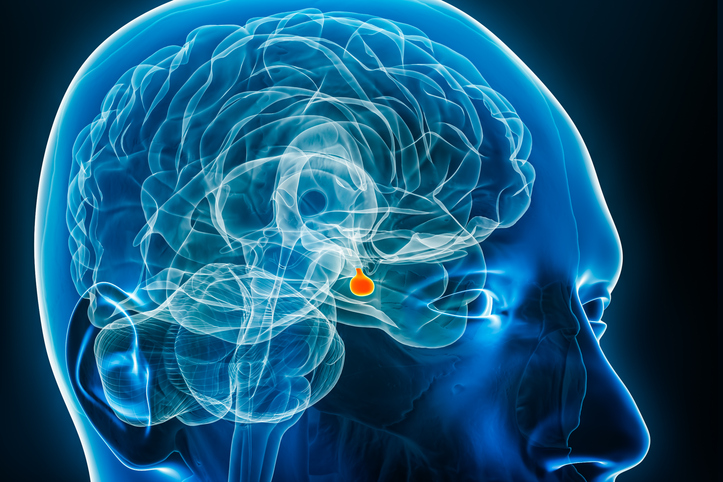
This leaflet gives a brief overview of the pituitary gland and the hormones it makes. The pituitary gland is found at the base of the brain and is 'pea-sized'. The pituitary gland is an overall controller of a number of other glands in the body, overseeing the function of these organs through hormones. Some of the pituitary gland disorders.

Patient information leaflet
Nephrotic syndrome
Nephrotic syndrome is a condition where the 'filters' in the kidney become 'leaky' and large amounts of protein leak from the blood into the urine. Treatment and outcome (prognosis) vary, depending on the cause. A syndrome is a set of symptoms and... FSGS accounts for up to 1 in 10 cases of nephrotic syndrome in children but a higher percentage of.
Patient information leaflet
Congenital heart disease
Congenital heart disease is a condition where an abnormality (defect) develops in the heart before birth. There are a number of types of congenital heart defect. What is congenital heart disease. Abnormalities or defects of the heart which develop before birth are together (collectively) called congenital heart disease. Some of these are listed in.

Patient information leaflet
Somatisation and functional disorders
Somatisation is no longer a commonly used term. What used to be considered somatising symptoms or somatoform disorders are now more commonly termed "functional disorders" or "functional symptoms". Terminology can be confusing; lots of different terms are used and some terms have been changed in recent years. Illness is what we experience when we.
Patient information leaflet
Congenital adrenal hyperplasia
Congenital adrenal hyperplasia is an inherited (genetic) condition causing swelling of the adrenal glands. The condition is associated with a decrease in the blood level of a hormone called cortisol and an increase in the level of male sex hormones (androgens) in both sexes. Some people get a mild condition that produces no symptoms. Others.
Further reading and references
- NGLY1-congenital disorder of deglycosylation; MedlinePlus, National Library of Medicine.
- Enns GM, Shashi V, Bainbridge M, Gambello MJ, Zahir FR, Bast T, Crimian R, Schoch K, Platt J, Cox R, Bernstein JA, Scavina M, Walter RS, Bibb A, Jones M, Hegde M, Graham BH, Need AC, Oviedo A, Schaaf CP, Boyle S, Butte AJ, Chen R, Chen R, Clark MJ, Haraksingh R; FORGE Canada Consortium; Cowan TM, He P, Langlois S, Zoghbi HY, Snyder M, Gibbs RA, Freeze HH, Goldstein DB. Mutations in NGLY1 cause an inherited disorder of the endoplasmic reticulum-associated degradation pathway. Genet Med. 2014 Oct;16(10):751-8. doi: 10.1038/gim.2014.22. Epub 2014 Mar 20.
- He P, Grotzke JE, Ng BG, Gunel M, Jafar-Nejad H, Cresswell P, Enns GM, Freeze HH. A congenital disorder of deglycosylation: Biochemical characterization of N-glycanase 1 deficiency in patient fibroblasts. Glycobiology. 2015 Aug;25(8):836-44. doi: 10.1093/glycob/cwv024. Epub 2015 Apr 21.
- Huang C, Harada Y, Hosomi A, Masahara-Negishi Y, Seino J, Fujihira H, Funakoshi Y, Suzuki T, Dohmae N, Suzuki T. Endo-beta-N-acetylglucosaminidase forms N-GlcNAc protein aggregates during ER-associated degradation in Ngly1-defective cells. Proc Natl Acad Sci U S A. 2015 Feb 3;112(5):1398-403. doi: 10.1073/pnas.1414593112. Epub 2015 Jan 20.
- Lam C, Ferreira C, Krasnewich D, Toro C, Latham L, Zein WM, Lehky T, Brewer C, Baker EH, Thurm A, Farmer CA, Rosenzweig SD, Lyons JJ, Schreiber JM, Gropman A, Lingala S, Ghany MG, Solomon B, Macnamara E, Davids M, Stratakis CA, Kimonis V, Gahl WA, Wolfe L. Prospective phenotyping of NGLY1-CDDG, the first congenital disorder of deglycosylation. Genet Med. 2017 Feb;19(2):160-168. doi: 10.1038/gim.2016.75. Epub 2016 Jul 7.
Share your thoughts or experiences with others in our patient communities.
Simple access to trusted treatments and health services online.
Common conditions
Get help with common conditions through the NHS, without a GP appointment.





Sign up to the Patient newsletter
Your weekly dose of clear, trustworthy health advice - written to help you feel informed, confident and in control.
By subscribing you accept our Privacy Policy. You can unsubscribe at any time. We never sell your data.