SLC4A1-associated distal renal tubular acidosis
Last updated 2 Oct 2024
Meets Patient’s editorial guidelines
- DownloadDownload
- Share
- Language
- Discussion
- Ask Patient
- Audio Version
- Add to preferred sources on Google
SLC4A1-associated distal renal tubular acidosis is a kidney (renal) disorder that sometimes includes blood cell abnormalities. The kidneys normally filter fluid and waste products from the body and remove them in urine; however, in people with distal renal tubular acidosis, the kidneys are unable to remove enough acid from the body, and the blood becomes too acidic. This chemical imbalance is called metabolic acidosis. The inability to remove acids from the body often results in slowed growth and may also lead to softening and weakening of the bones, called rickets in children and osteomalacia in adults. This bone disorder is characterised by bone pain, bowed legs, and difficulty walking. In addition, most children and adults with SLC4A1-associated distal renal tubular acidosis have excess calcium in the urine (hypercalciuria), calcium deposits in the kidneys (nephrocalcinosis), and kidney stones (nephrolithiasis). In rare cases, these kidney abnormalities lead to life-threatening kidney failure. Affected individuals may also have low levels of potassium in the blood (hypokalemia).
Video picks for Genetic conditionsVideo library
Description
SLC4A1-associated distal renal tubular acidosis is a kidney (renal) disorder that sometimes includes blood cell abnormalities. The kidneys normally filter fluid and waste products from the body and remove them in urine; however, in people with distal renal tubular acidosis, the kidneys are unable to remove enough acid from the body, and the blood becomes too acidic. This chemical imbalance is called metabolic acidosis. The inability to remove acids from the body often results in slowed growth and may also lead to softening and weakening of the bones, called rickets in children and osteomalacia in adults. This bone disorder is characterised by bone pain, bowed legs, and difficulty walking. In addition, most children and adults with SLC4A1-associated distal renal tubular acidosis have excess calcium in the urine (hypercalciuria), calcium deposits in the kidneys (nephrocalcinosis), and kidney stones (nephrolithiasis). In rare cases, these kidney abnormalities lead to life-threatening kidney failure. Affected individuals may also have low levels of potassium in the blood (hypokalemia).
Individuals with the features described above have complete distal renal tubular acidosis, which usually becomes apparent in childhood. Some people do not develop metabolic acidosis even though their kidneys have trouble removing acids; these individuals are said to have incomplete distal renal tubular acidosis. Additionally, these individuals may have other features of distal renal tubular acidosis, such as bone problems and kidney stones. Often, people who initially have incomplete distal renal tubular acidosis develop metabolic acidosis later in life.
Some people with SLC4A1-associated distal renal tubular acidosis also have blood cell abnormalities. These can vary in severity from no symptoms to a condition called hemolytic anaemia, in which red blood cells prematurely break down (undergo hemolysis), causing a shortage of red blood cells (anaemia). Hemolytic anaemia can lead to unusually pale skin (pallor), extreme tiredness (fatigue), shortness of breath (dyspnea), and an enlarged spleen (splenomegaly).
There are two forms of SLC4A1-associated distal renal tubular acidosis; they are distinguished by their inheritance pattern. The autosomal dominant form is more common and is usually less severe than the autosomal recessive form. The autosomal dominant form can be associated with incomplete or complete distal renal tubular acidosis and is rarely associated with blood cell abnormalities. The autosomal recessive form is always associated with complete distal renal tubular acidosis and is more commonly associated with blood cell abnormalities, although not everyone with this form has abnormal blood cells.
Inheritance patterns
The source lists the following possible inheritance patterns: Autosomal recessive; Autosomal dominant. More than one pattern can apply in different cases.
Related genes
Other names
Classic distal renal tubular acidosis
Renal tubular acidosis type I
RTA, classic type
Patient picks for Genetic conditions

Surgery and procedures
Kidney biopsy
A kidney biopsy involves taking a small sample of tissue from the kidney. Cells from the kidney can then be looked at in detail. It is used to diagnose and monitor certain conditions. Note: the information below is a general guide only. The arrangements, and the way tests are performed, may vary between different hospitals. Always follow the instructions given by your doctor or local hospital.
by Dr Doug McKechnie, MRCGP
Travel and vaccinations
What side effects are associated with the yellow fever vaccine?
Yellow fever is endemic to many countries in Latin America and Africa and can often be fatal. Vaccination is currently the best protection against this deadly disease - but what are the risks?
by Léa Surugue

Preventative health
Looking at the Moon Seated
Sit toward the front of the chair with your feet flat on the floor, slightly wider than hip-distance apart, and toes pointing comfortably forward. Keep the spine long and knees soft. Lift both arms and, turning gently from the waist, move the arms as if reaching to look at the moon behind you. As you turn, you can subtly lift the heels or simply imagine the rising motion. Inhale as you lower the arms and return to centre, maintaining length through the spine. Imagine carrying the light of the moon across the still waters of a lake. This gentle twisting movement, with its deep rotation, is associated with the Water element and the Kidneys, supporting circulation, grounding, and a sense of calm and reflection.

Preventative health
Looking at the Moon
Feet are wider than hip distance and toes are slightly pointed out. Both arms lift as you turn from the waist to lift your arms and look at the moon behind you; as you do so the back heel can lift. As you inhale, lower your arms and come back to centre. I like to imagine that I can carry the light of the moon across the still waters of a lake. This form with its deep back rotation is linked with the water element and its associated organ and meridian system of the kidneys.

Rashes
What could this rash be? (Adults)
Dr Sarah Jarvis MBE Some rashes (especially dark red or purple rashes that don't fade with pressure) may need urgent medical treatment as they can be associated with meningitis and blood infection (septicaemia). For more information, go to [https://patient.info/health/skin-rashes](https://patient.info/health/skin-rashes)
by Dr Sarah Jarvis

Knee pain and exercises
What causes pain at the back of the knee?
Dr Sarah Jarvis MBE A Baker's cyst is a swelling that can develop behind the knee. It is filled with synovial fluid which is the lubricating fluid that is usually found inside the knee joint. It most commonly occurs if there is an underlying problem with your knee such as osteoarthritis. Symptoms can include pain, swelling and tightness behind the knee. Rarely, a Baker's cyst can split open (rupture) and cause similar symptoms to a deep vein thrombosis (DVT). A Baker's cyst often gets better and disappears by itself over time. However, there are various treatments that may help if you do have symptoms associated with it. [https://patient.info/health/knee-pain-patellofemoral-pain/bakers-cyst](https://patient.info/health/knee-pain-patellofemoral-pain/bakers-cyst)
by Dr Sarah Jarvis
Related patient information and medicines
Patient information leaflet
MRI scan
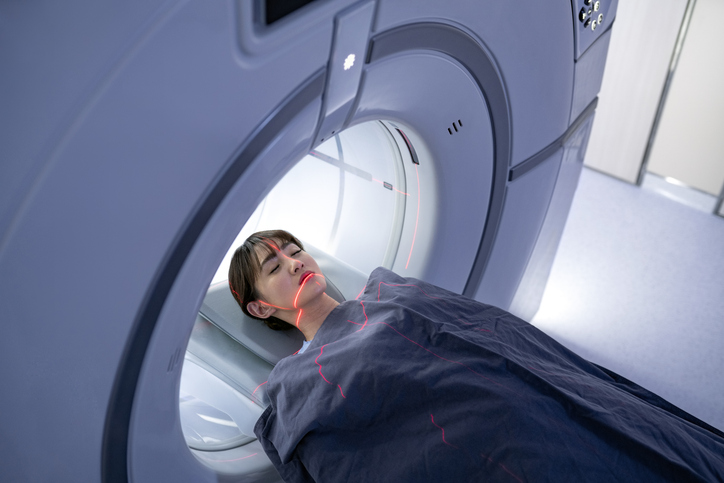
An MRI scan is a safe and painless test that can provide detailed pictures of organs and other structures inside your body. Note : the information below is a general guide only. The arrangements (and the way tests are performed) may vary between different hospitals. Always follow the instructions given by your doctor or local hospital. These are.

Patient information leaflet
Can I take Aspirin and Metformin together?
Important preca... Severe kidney disease You must not take metformin if your kidneys are not working properly. This can lead to a rare but life-threatening build-up of lactic acid in the blood (lactic acidosis). Our Medicines Interaction Checker helps you check whether your prescriptions, over-the-counter medicines, and supplements are safe to.

Patient information leaflet
Can I take Apixaban and Metformin together?
Why this happens Apixaban is a blood thinner (anticoagulant) and metformin is a medicine for type 2 diabetes. Severe kidney disease or dehydration Metformin must be stopped if you have severe kidney problems or become severely dehydrated (e.g., through severe vomiting or diarrhoea), as this can lead to a life-threatening build-up of acid in the.

Patient information leaflet
Arterial blood gases
These acids and alkali have to be carefully balanced wit... The body has a number of mechanisms to counteract changes in the acid-base balance. The most important of which are the lungs and kidneys. An arterial blood gas (ABG) test is a quick and reliable blood test which can help medical professionals determine the diagnosis and treatment.
Patient information leaflet
Kidney biopsy
A kidney biopsy involves taking a small sample of tissue from the kidney. Cells from the kidney can then be looked at in detail. It is used to diagnose and monitor certain conditions. Note : the information below is a general guide only. The arrangements, and the way tests are performed, may vary between different hospitals. Always follow the.

Patient information leaflet
ACE inhibitors
ACE inhibitors are medicines that are used mainly in the treatment of high blood pressure (hypertension) and heart failure. This reduces the amount of force needed to eject blood ... Diabetic kidney disease Diabetic kidney disease (diabetic nephropathy) - these medicines can help to maintain good kidney function. Chronic kidney disease Chronic.
Further reading and references
- SLC4A1-associated distal renal tubular acidosis; MedlinePlus, National Library of Medicine.
- Alper SL. Molecular physiology and genetics of Na+-independent SLC4 anion exchangers. J Exp Biol. 2009 Jun;212(Pt 11):1672-83. doi: 10.1242/jeb.029454.
- Batlle D, Haque SK. Genetic causes and mechanisms of distal renal tubular acidosis. Nephrol Dial Transplant. 2012 Oct;27(10):3691-704. doi: 10.1093/ndt/gfs442.
- Cordat E, Kittanakom S, Yenchitsomanus PT, Li J, Du K, Lukacs GL, Reithmeier RA. Dominant and recessive distal renal tubular acidosis mutations of kidney anion exchanger 1 induce distinct trafficking defects in MDCK cells. Traffic. 2006 Feb;7(2):117-28. doi: 10.1111/j.1600-0854.2005.00366.x.
- Khositseth S, Sirikanaerat A, Khoprasert S, Opastirakul S, Kingwatanakul P, Thongnoppakhun W, Yenchitsomanus PT. Hematological abnormalities in patients with distal renal tubular acidosis and hemoglobinopathies. Am J Hematol. 2008 Jun;83(6):465-71. doi: 10.1002/ajh.21151.
- Ungsupravate D, Sawasdee N, Khositseth S, Udomchaiprasertkul W, Khoprasert S, Li J, Reithmeier RA, Yenchitsomanus PT. Impaired trafficking and intracellular retention of mutant kidney anion exchanger 1 proteins (G701D and A858D) associated with distal renal tubular acidosis. Mol Membr Biol. 2010 Apr;27(2-3):92-103. doi: 10.3109/09687681003588020.
- Yenchitsomanus PT, Kittanakom S, Rungroj N, Cordat E, Reithmeier RA. Molecular mechanisms of autosomal dominant and recessive distal renal tubular acidosis caused by SLC4A1 (AE1) mutations. J Mol Genet Med. 2005 Nov 16;1(2):49-62. doi: 10.4172/1747-0862.1000013.
Share your thoughts or experiences with others in our patient communities.
Simple access to trusted treatments and health services online.
Common conditions
Get help with common conditions through the NHS, without a GP appointment.





Sign up to the Patient newsletter
Your weekly dose of clear, trustworthy health advice - written to help you feel informed, confident and in control.
By subscribing you accept our Privacy Policy. You can unsubscribe at any time. We never sell your data.