X-linked chondrodysplasia punctata 2
Last updated 7 Apr 2021
Meets Patient’s editorial guidelines
- DownloadDownload
- Share
- Language
- Discussion
- Ask Patient
- Audio Version
- Add to preferred sources on Google
X-linked chondrodysplasia punctata 2 is a disorder characterised by bone, skin, and eye abnormalities. It occurs almost exclusively in females.
Video picks for Genetic conditionsVideo library
Description
X-linked chondrodysplasia punctata 2 is a disorder characterised by bone, skin, and eye abnormalities. It occurs almost exclusively in females.
Although the signs and symptoms of this condition vary widely, almost all affected individuals have chondrodysplasia punctata, an abnormality that appears on x-rays as spots (stippling) near the ends of bones and in cartilage. In this form of chondrodysplasia punctata, the stippling typically affects the long bones in the arms and legs, the ribs, the spinal bones (vertebrae), and the cartilage that makes up the windpipe (trachea). The stippling is apparent in infancy but disappears in early childhood. Other skeletal abnormalities seen in people with X-linked chondrodysplasia punctata 2 include shortening of the bones in the upper arms and thighs (rhizomelia) that is often different on the right and left sides, and progressive abnormal curvature of the spine (kyphoscoliosis). As a result of these abnormalities, people with this condition tend to have short stature.
Infants with X-linked chondrodysplasia punctata 2 are born with dry, scaly patches of skin (ichthyosis) in a linear or spiral (whorled) pattern. The scaly patches fade over time, leaving abnormally colored blotches of skin without hair (follicular atrophoderma). Most affected individuals also have sparse, coarse hair on their scalps.
Most people with X-linked chondrodysplasia punctata 2 have clouding of the lens of the eye (cataracts) from birth or early childhood. Other eye abnormalities that have been associated with this disorder include unusually small eyes (microphthalmia) and small corneas (microcornea). The cornea is the clear front surface of the eye. These eye abnormalities can impair vision.
In affected females, X-linked chondrodysplasia punctata 2 is typically associated with normal intelligence and a normal lifespan. However, a much more severe form of the condition has been reported in a small number of males. Affected males have some of the same features as affected females, as well as weak muscle tone (hypotonia), changes in the structure of the brain, moderately to profoundly delayed development, seizures, distinctive facial features, and other birth defects. The health problems associated with X-linked chondrodysplasia punctata 2 are often life-threatening in males.
Inheritance patterns
The source lists the following possible inheritance patterns: X-linked dominant. More than one pattern can apply in different cases.
Related genes
Other names
CDPX2
Chondrodysplasia punctata 2, X-linked
Conradi-Hünermann syndrome
Conradi-Hünermann-Happle syndrome
Happle syndrome
X-linked dominant chondrodysplasia punctata
Patient picks for Genetic conditions

Heart health and blood vessels
Microvascular angina
There is no agreed definition for CSX. The underlying cause may be sudden narrowing (spasm) of normal coronary arteries without any evidence of atheromatous fatty plaques.
by Dr Hayley Willacy, FRCGP

Bones, joints and muscles
Chemical found in soap and toothpaste linked to osteoporosis
New research shows a link between a chemical used in some soaps, toothpastes and antibacterial products, and osteoporosis.
by Milly Evans

Hormones
Poor social life linked to bone loss in postmenopausal women
Negative friendships and social relationships have been linked to bone loss in postmenopausal women in a new study.
by Milly Evans
MSK
Looking at the Moon
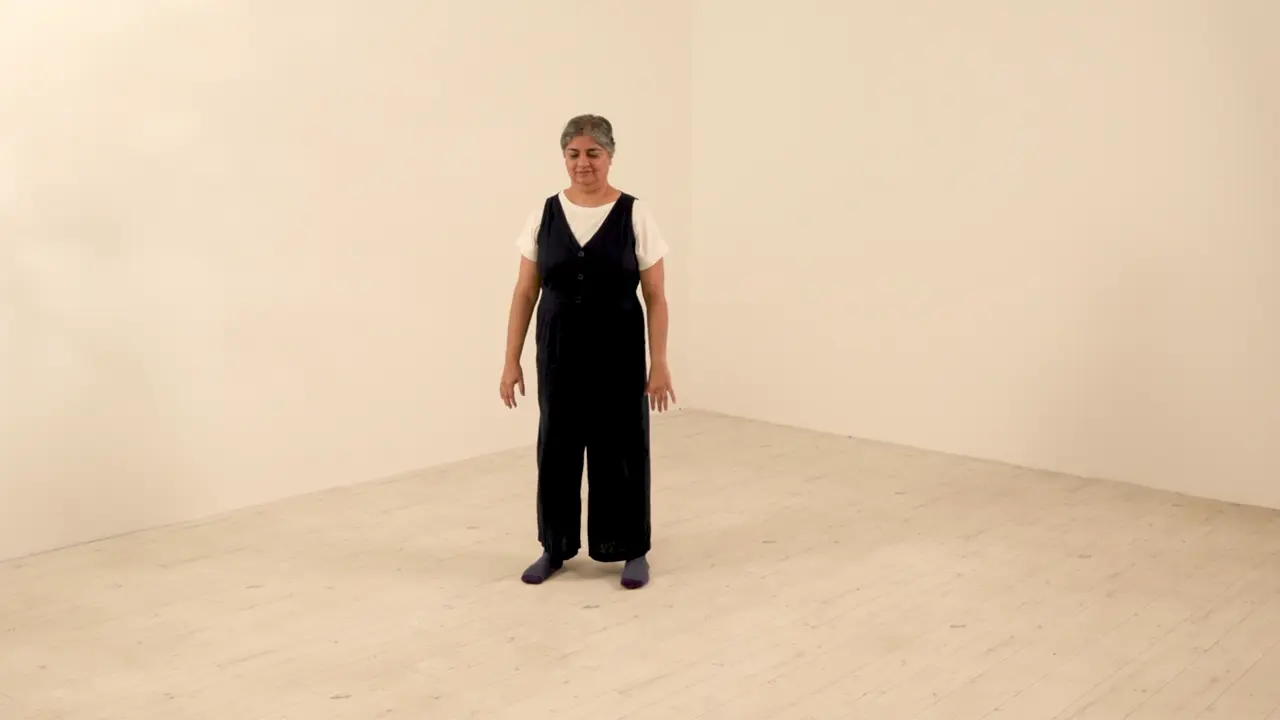
Feet are wider than hip distance and toes are slightly pointed out. Both arms lift as you turn from the waist to lift your arms and look at the moon behind you; as you do so the back heel can lift. As you inhale, lower your arms and come back to centre. I like to imagine that I can carry the light of the moon across the still waters of a lake. This form with its deep back rotation is linked with the water element and its associated organ and meridian system of the kidneys.
MSK
Rainbow Dance Seated
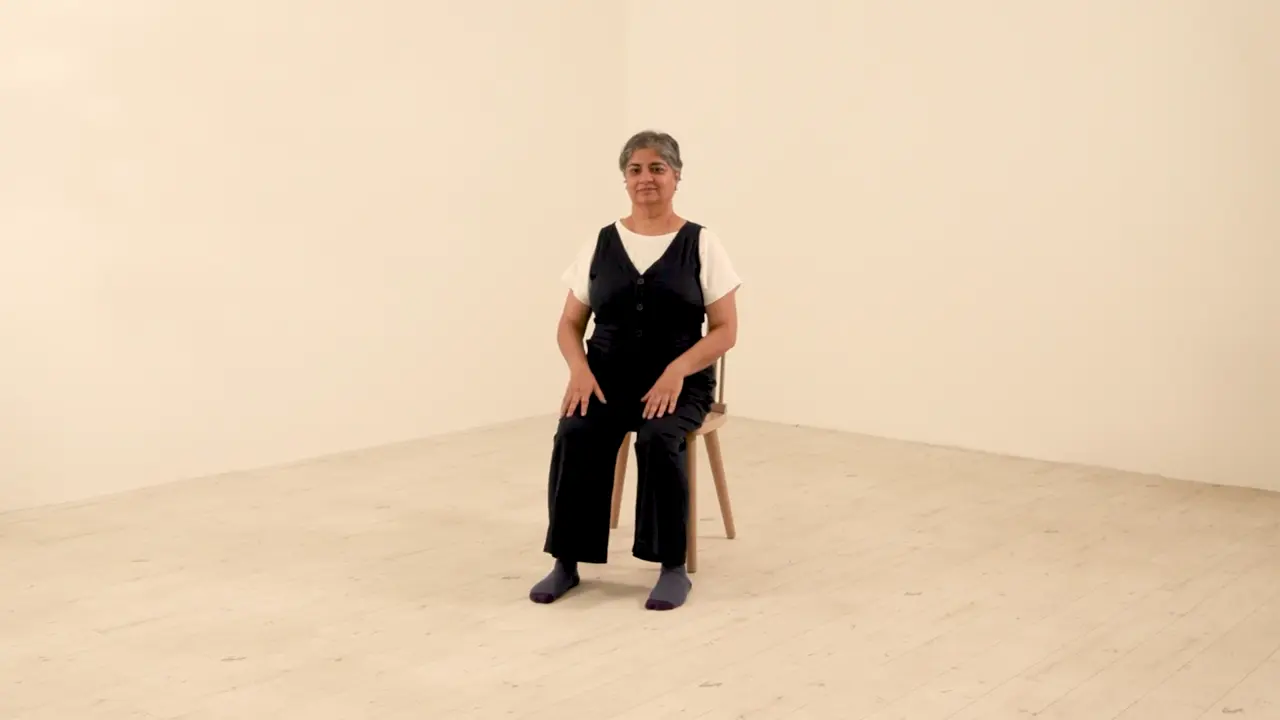
Sit comfortably toward the front of the chair with your feet flat on the floor, knees slightly apart and aligned with the hips. Keep the spine long and relaxed. Open your arms out to the sides, imagining you are holding a rainbow — each palm supporting one end of its arc. Gently shift your weight into one sit bone, and as you do, bend sideways toward the opposite side (so if you shift right, you lean left). Keep the movement soft and spacious, lifting through the ribs rather than collapsing. This gentle lateral stretch supports the Stomach meridian, traditionally linked with digestion and overall nourishment. The movement can also help release tension across the shoulders and encourage ease in the nervous system. Return to centre, switch sides, and continue flowing side to side, as though moving beneath a rainbow that arches and softens with each breath.

Brain and nerves
Young-onset dementia is linked to health and lifestyle, as well as genetics
Many of us fear dementia, not to mention developing it while we're young, but little is known about whether we can prevent it. However, a breakthrough study has identified 15 significant factors linked to young-onset dementia, which develops before the age of 65. And many of these are influenced by your health and lifestyle choices. With around 370,000 people developing young-onset dementia each year worldwide, experts believe this research brings us closer to finding ways to prevent, identify, and treat this devastating disease.
by Amberley Davis
Related patient information and medicines

Patient information leaflet
Simple, secure access to your NHS GP record
Patient.info has partnered with ORB Connect - a UK, clinician-led, secure platform - to help you see and download your NHS GP records clearly and in one place. Linking your record is entirely consent-based, and you can stop sharing or adjust access at any time. ORB is NHS-assured and designed to meet the highest standards of da... The NHS App is a.

Patient information leaflet
Glycogen storage disorders
However, type II (infantile Pompe's disease) can be difficult to treat and can affect life expectancy. It is estimated that about one baby in every 20,000 to 40,000 babies born has a glycogen storage disorder. ...e pattern of inheritance autosomal recessive pattern of inheritance Someone can be a carrier for a glycogen storage disorderX-linked.

Patient information leaflet
Haemophilia
Haemophilia is a rare bleeding disorder that affects your ability to make a clot. The blood contains substances called clotting factors that work with platelets to form a clot. When you injure yourself the clot stops you bleeding. Haemophilia is a condition where there is a deficiency of clotting factors, so people with this condition usually have.

Patient information leaflet
Oral hygiene
Eating a healthy diet Healthy eating , which includes limiting sugary drinks and foods. If you smoke, stopping smoking How to quit smoking. Having a dental check-up at least once a year. What's the best way to brush your teeth. Teeth should be brushed twice a day, once just before bed and once first thing in the morning, before you have had.

Patient information leaflet
Causes of cancer
Certain risk factors are known to increase the chance that one or more of your cells will become abnormal and lead to cancer. How does cancer start. The body is made up from millions of tiny cells. Different parts of the body such as organs, bones, muscles, skin and blood are made up from different specialised cells. Most cells have a centre.

Patient information leaflet
Can I take Iron supplements and Pregabalin together?
Vitamin C (Orange Juice) Taking your iron supplement with a glass of ... Using other medicines Taking multiple medicines. Our Medicines Interaction Checker helps you check whether your prescriptions, over-the-counter medicines, and supplements are safe to take together. Simply search for your medicines to see potential interactions and what to do.
Further reading and references
- X-linked chondrodysplasia punctata 2; MedlinePlus, National Library of Medicine.
- Aughton DJ, Kelley RI, Metzenberg A, Pureza V, Pauli RM. X-linked dominant chondrodysplasia punctata (CDPX2) caused by single gene mosaicism in a male. Am J Med Genet A. 2003 Jan 30;116A(3):255-60. doi: 10.1002/ajmg.a.10852.
- Braverman N, Lin P, Moebius FF, Obie C, Moser A, Glossmann H, Wilcox WR, Rimoin DL, Smith M, Kratz L, Kelley RI, Valle D. Mutations in the gene encoding 3 beta-hydroxysteroid-delta 8, delta 7-isomerase cause X-linked dominant Conradi-Hunermann syndrome. Nat Genet. 1999 Jul;22(3):291-4. doi: 10.1038/10357.
- Derry JM, Gormally E, Means GD, Zhao W, Meindl A, Kelley RI, Boyd Y, Herman GE. Mutations in a delta 8-delta 7 sterol isomerase in the tattered mouse and X-linked dominant chondrodysplasia punctata. jderry@immunex.com. Nat Genet. 1999 Jul;22(3):286-90. doi: 10.1038/10350.
- Furtado LV, Bayrak-Toydemir P, Hulinsky B, Damjanovich K, Carey JC, Rope AF. A novel X-linked multiple congenital anomaly syndrome associated with an EBP mutation. Am J Med Genet A. 2010 Nov;152A(11):2838-44. doi: 10.1002/ajmg.a.33674.
- Herman GE, Kelley RI, Pureza V, Smith D, Kopacz K, Pitt J, Sutphen R, Sheffield LJ, Metzenberg AB. Characterization of mutations in 22 females with X-linked dominant chondrodysplasia punctata (Happle syndrome). Genet Med. 2002 Nov-Dec;4(6):434-8. doi: 10.1097/00125817-200211000-00006.
- Hoang MP, Carder KR, Pandya AG, Bennett MJ. Ichthyosis and keratotic follicular plugs containing dystrophic calcification in newborns: distinctive histopathologic features of x-linked dominant chondrodysplasia punctata (Conradi-Hunermann-Happle syndrome). Am J Dermatopathol. 2004 Feb;26(1):53-8. doi: 10.1097/00000372-200402000-00007.
- Ikegawa S, Ohashi H, Ogata T, Honda A, Tsukahara M, Kubo T, Kimizuka M, Shimode M, Hasegawa T, Nishimura G, Nakamura Y. Novel and recurrent EBP mutations in X-linked dominant chondrodysplasia punctata. Am J Med Genet. 2000 Oct 2;94(4):300-5. doi: 10.1002/1096-8628(20001002)94:43.0.co;2-3.
- Kumble S, Savarirayan R. EBP-Related X-Linked Chondrodysplasia Punctata. 2011 May 31 [updated 2026 Jun 4]. In: Adam MP, Bick S, Mirzaa GM, Wallace SE, Amemiya A, editors. GeneReviews(R) [Internet]. Seattle (WA): University of Washington, Seattle; 1993-2026. Available from http://www.ncbi.nlm.nih.gov/books/NBK55062/
- Milunsky JM, Maher TA, Metzenberg AB. Molecular, biochemical, and phenotypic analysis of a hemizygous male with a severe atypical phenotype for X-linked dominant Conradi-Hunermann-Happle syndrome and a mutation in EBP. Am J Med Genet A. 2003 Jan 30;116A(3):249-54. doi: 10.1002/ajmg.a.10849.
Share your thoughts or experiences with others in our patient communities.
Simple access to trusted treatments and health services online.
Common conditions
Get help with common conditions through the NHS, without a GP appointment.





Sign up to the Patient newsletter
Your weekly dose of clear, trustworthy health advice - written to help you feel informed, confident and in control.
By subscribing you accept our Privacy Policy. You can unsubscribe at any time. We never sell your data.