X-linked infantile nystagmus
Last updated 6 Mar 2025
Meets Patient’s editorial guidelines
- DownloadDownload
- Share
- Language
- Discussion
- Ask Patient
- Audio Version
- Add to preferred sources on Google
X-linked infantile nystagmus is a condition characterised by abnormal eye movements. Nystagmus is a term that refers to involuntary side-to-side, up-and-down, or circular movements of the eyes. In people with X-linked infantile nystagmus, the movements are typically side-to-side. In individuals with this condition, nystagmus is present at birth or develops within the first six months of life.
Video picks for Genetic conditionsVideo library
Description
X-linked infantile nystagmus is a condition characterised by abnormal eye movements. Nystagmus is a term that refers to involuntary side-to-side, up-and-down, or circular movements of the eyes. In people with X-linked infantile nystagmus, the movements are typically side-to-side. In individuals with this condition, nystagmus is present at birth or develops within the first six months of life.
The abnormal eye movements may worsen when an affected person is feeling anxious or tries to stare directly at an object. Some affected individuals will experience involuntary changes in the direction of their eye movements (periodic alternating nystagmus). The severity of nystagmus varies, even among affected individuals within the same family. Sometimes, affected individuals will turn or tilt their head to compensate for the irregular eye movements. Individuals with X-linked infantile nystagmus may have other eye abnormalities. For example, the region at the back of the eye responsible for sharp central vision may be underdeveloped (foveal hypoplasia).
Inheritance patterns
The source lists the following possible inheritance patterns: X-linked. More than one pattern can apply in different cases.
Related genes
Other names
Congenital motor nystagmus
FRMD7-related infantile nystagmus
Idiopathic infantile nystagmus
NYS1
X-linked congenital nystagmus
X-linked idiopathic infantile nystagmus
Patient picks for Genetic conditions

Preventative health
Rainbow Dance Seated
Sit comfortably toward the front of the chair with your feet flat on the floor, knees slightly apart and aligned with the hips. Keep the spine long and relaxed. Open your arms out to the sides, imagining you are holding a rainbow — each palm supporting one end of its arc. Gently shift your weight into one sit bone, and as you do, bend sideways toward the opposite side (so if you shift right, you lean left). Keep the movement soft and spacious, lifting through the ribs rather than collapsing. This gentle lateral stretch supports the Stomach meridian, traditionally linked with digestion and overall nourishment. The movement can also help release tension across the shoulders and encourage ease in the nervous system. Return to centre, switch sides, and continue flowing side to side, as though moving beneath a rainbow that arches and softens with each breath.

Heart health and blood vessels
Microvascular angina
There is no agreed definition for CSX. The underlying cause may be sudden narrowing (spasm) of normal coronary arteries without any evidence of atheromatous fatty plaques.
by Dr Hayley Willacy, FRCGP

Allergies, blood and immune system
Is hay fever linked to depression?
For Claire, 32, the arrival of spring means one thing and one thing only - hay fever season. Every May, she spends three to four weeks with the runny nose, itchy eyes and constant fatigue that characterise allergic rhinitis. Unsurprisingly, this has an impact on her mood.
by Abi Millar
Preventative health
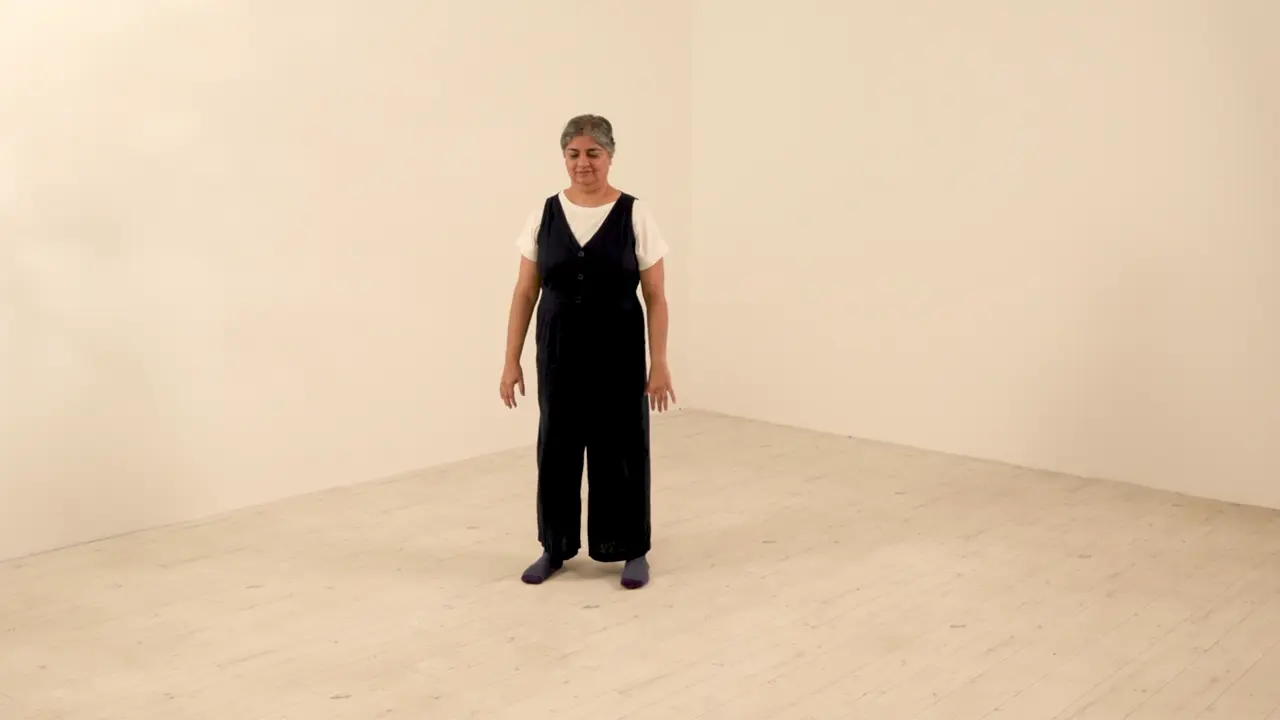
Looking at the Moon
Feet are wider than hip distance and toes are slightly pointed out. Both arms lift as you turn from the waist to lift your arms and look at the moon behind you; as you do so the back heel can lift. As you inhale, lower your arms and come back to centre. I like to imagine that I can carry the light of the moon across the still waters of a lake. This form with its deep back rotation is linked with the water element and its associated organ and meridian system of the kidneys.
Medicine
Amiodarone for irregular heartbeats
Amiodarone is used to treat irregular heartbeats. Treatment with it will be started by a heart specialist. It is very important that you take amiodarone exactly as your doctor tells you to. You will be started on a high dose, for one week only. Your dose will then be reduced over the following two weeks to a maintenance dose. Amiodarone is likely to cause your skin to become more sensitive to sunlight than normal. Use a sunscreen on the areas of your skin exposed to sunlight.
by Michael Stewart, MRPharmS

General health and lifestyle
Air pollution linked to mental health problems
New research shows that pollution could be linked to psychiatric disorders and poorer mental health.
by Milly Evans
Related patient information and medicines

Patient information leaflet
Eye problems
Severe nystagmus (jumping of the eyes, usually from side to side), light sensitivity, squint and reduced vision are common fea... Squint in children Nystagmus Nystagmus is a symptom, rather than a diagnosis, in which there is a repetitive to-and-fro oscillation of the eyes outside the person's control. Most nystagmus is present from an early age.

Patient information leaflet
Glycogen storage disorders
For a child to be affected, both parents need to carry the faulty gene. If both parents are carriers of the faulty gene, the chance of each one of their children being affected by the glycogen storage disorder is 1 in 4. X-linked inheritance pattern This occurs in some people with glycogen storage disorder type IX. X-linked inheritance pattern.

Patient information leaflet
Albinism
Albinism is a rare inherited (genetic) condition which reduces the amount of of melanin pigment in the skin, hair and/or eyes. People with albinism are often pale, with light-coloured irises. The most common ones include: Nystagmus (regular horizontal back and forth movement of the eyes). Squint Squint in children (mus... People with albinism have.
Patient information leaflet
Vestibular neuritis and labyrinthitis
In milder cases the vertigo is less intens... Other symptoms You may also have: Hearing loss on the affected side if you have labyrinthitis. Nystagmus. This is a 'shaking' of the eyes from side to side or in a rotating movement. You may not notice this but a doctor will look for it as it is often present when the vertigo starts. (Vestibular.

Patient information leaflet
Haemophilia
Haemophilia is a rare bleeding disorder that affects your ability to make a clot. The blood contains substances called clotting factors that work with platelets to form a clot. When you injure yourself the clot stops you bleeding. The vast majority of cases are inherited, so people are usually born with the condition. Both haemophilias are.

Patient information leaflet
Duchenne muscular dystrophy
DMD is inherited in a pattern called 'X-linked inheritance'. X-linked inheritance pattern x-linked pattern of inheritance If my child has DMD, does that mean that other family members have the DMD gene. Gene therapy The National Institute for Health and Care Excellence (NICE) approved the use of ataluren in 2023. Although this has not been in use.
Further reading and references
- X-linked infantile nystagmus; MedlinePlus, National Library of Medicine.
- He X, Gu F, Wang Z, Wang C, Tong Y, Wang Y, Yang J, Liu W, Zhang M, Ma X. A novel frameshift mutation in FRMD7 causing X-linked idiopathic congenital nystagmus. Genet Test. 2008 Dec;12(4):607-13. doi: 10.1089/gte.2008.0070.
- Kuht HJ, Maconachie GDE, Han J, Kessel L, van Genderen MM, McLean RJ, Hisaund M, Tu Z, Hertle RW, Gronskov K, Bai D, Wei A, Li W, Jiao Y, Smirnov V, Choi JH, Tobin MD, Sheth V, Purohit R, Dawar B, Girach A, Strul S, May L, Chen FK, Heath Jeffery RC, Aamir A, Sano R, Jin J, Brooks BP, Kohl S, Arveiler B, Montoliu L, Engle EC, Proudlock FA, Nishad G, Pani P, Varma G, Gottlob I, Thomas MG. Genotypic and Phenotypic Spectrum of Foveal Hypoplasia: A Multicenter Study. Ophthalmology. 2022 Jun;129(6):708-718. doi: 10.1016/j.ophtha.2022.02.010. Epub 2022 Feb 11.
- Li N, Wang L, Cui L, Zhang L, Dai S, Li H, Chen X, Zhu L, Hejtmancik JF, Zhao K. Five novel mutations of the FRMD7 gene in Chinese families with X-linked infantile nystagmus. Mol Vis. 2008 Apr 18;14:733-8.
- Sarvananthan N, Surendran M, Roberts EO, Jain S, Thomas S, Shah N, Proudlock FA, Thompson JR, McLean RJ, Degg C, Woodruff G, Gottlob I. The prevalence of nystagmus: the Leicestershire nystagmus survey. Invest Ophthalmol Vis Sci. 2009 Nov;50(11):5201-6. doi: 10.1167/iovs.09-3486. Epub 2009 May 20.
- Self J, Lotery A. A review of the molecular genetics of congenital Idiopathic Nystagmus (CIN). Ophthalmic Genet. 2007 Dec;28(4):187-91. doi: 10.1080/13816810701651233.
- Self JE, Shawkat F, Malpas CT, Thomas NS, Harris CM, Hodgkins PR, Chen X, Trump D, Lotery AJ. Allelic variation of the FRMD7 gene in congenital idiopathic nystagmus. Arch Ophthalmol. 2007 Sep;125(9):1255-63. doi: 10.1001/archopht.125.9.1255.
- Shiels A, Bennett TM, Prince JB, Tychsen L. X-linked idiopathic infantile nystagmus associated with a missense mutation in FRMD7. Mol Vis. 2007 Nov 29;13:2233-41.
- Tarpey P, Thomas S, Sarvananthan N, Mallya U, Lisgo S, Talbot CJ, Roberts EO, Awan M, Surendran M, McLean RJ, Reinecke RD, Langmann A, Lindner S, Koch M, Jain S, Woodruff G, Gale RP, Bastawrous A, Degg C, Droutsas K, Asproudis I, Zubcov AA, Pieh C, Veal CD, Machado RD, Backhouse OC, Baumber L, Constantinescu CS, Brodsky MC, Hunter DG, Hertle RW, Read RJ, Edkins S, O'Meara S, Parker A, Stevens C, Teague J, Wooster R, Futreal PA, Trembath RC, Stratton MR, Raymond FL, Gottlob I. Mutations in FRMD7, a newly identified member of the FERM family, cause X-linked idiopathic congenital nystagmus. Nat Genet. 2006 Nov;38(11):1242-4. doi: 10.1038/ng1893. Epub 2006 Oct 1.
- Thomas MG, Crosier M, Lindsay S, Kumar A, Araki M, Leroy BP, McLean RJ, Sheth V, Maconachie G, Thomas S, Moore AT, Gottlob I. Abnormal retinal development associated with FRMD7 mutations. Hum Mol Genet. 2014 Aug 1;23(15):4086-93. doi: 10.1093/hmg/ddu122. Epub 2014 Mar 31.
- Thomas MG, Crosier M, Lindsay S, Kumar A, Thomas S, Araki M, Talbot CJ, McLean RJ, Surendran M, Taylor K, Leroy BP, Moore AT, Hunter DG, Hertle RW, Tarpey P, Langmann A, Lindner S, Brandner M, Gottlob I. The clinical and molecular genetic features of idiopathic infantile periodic alternating nystagmus. Brain. 2011 Mar;134(Pt 3):892-902. doi: 10.1093/brain/awq373. Epub 2011 Feb 8.
- Thomas MG, Maconachie G, Hisaund M, Gottlob I. FRMD7-Related Infantile Nystagmus. 2009 Feb 12 [updated 2018 Aug 16]. In: Adam MP, Bick S, Mirzaa GM, Wallace SE, Amemiya A, editors. GeneReviews(R) [Internet]. Seattle (WA): University of Washington, Seattle; 1993-2026. Available from http://www.ncbi.nlm.nih.gov/books/NBK3822/
- Thomas MG, Maconachie G, Sheth V, McLean RJ, Gottlob I. Development and clinical utility of a novel diagnostic nystagmus gene panel using targeted next-generation sequencing. Eur J Hum Genet. 2017 Jun;25(6):725-734. doi: 10.1038/ejhg.2017.44. Epub 2017 Apr 5.
- Thomas S, Proudlock FA, Sarvananthan N, Roberts EO, Awan M, McLean R, Surendran M, Kumar AS, Farooq SJ, Degg C, Gale RP, Reinecke RD, Woodruff G, Langmann A, Lindner S, Jain S, Tarpey P, Raymond FL, Gottlob I. Phenotypical characteristics of idiopathic infantile nystagmus with and without mutations in FRMD7. Brain. 2008 May;131(Pt 5):1259-67. doi: 10.1093/brain/awn046. Epub 2008 Mar 27.
- Zhang B, Liu Z, Zhao G, Xie X, Yin X, Hu Z, Xu S, Li Q, Song F, Tian J, Luo W, Ding M, Yin J, Xia K, Xia J. Novel mutations of the FRMD7 gene in X-linked congenital motor nystagmus. Mol Vis. 2007 Sep 13;13:1674-9.
- Zhang Q, Xiao X, Li S, Guo X. FRMD7 mutations in Chinese families with X-linked congenital motor nystagmus. Mol Vis. 2007 Aug 3;13:1375-8.
Share your thoughts or experiences with others in our patient communities.
Simple access to trusted treatments and health services online.
Common conditions
Get help with common conditions through the NHS, without a GP appointment.





Sign up to the Patient newsletter
Your weekly dose of clear, trustworthy health advice - written to help you feel informed, confident and in control.
By subscribing you accept our Privacy Policy. You can unsubscribe at any time. We never sell your data.