X-linked sideroblastic anaemia
Last updated 19 Sept 2025
Meets Patient’s editorial guidelines
- DownloadDownload
- Share
- Language
- Discussion
- Ask Patient
- Audio Version
- Add to preferred sources on Google
X-linked sideroblastic anaemia belongs to a group of disorders that are characterised by a shortage of healthy red blood cells (anaemia). X-linked sideroblastic anaemia prevents developing red blood cells from making enough hemoglobin, which is the protein that carries oxygen in the blood. People with X-linked sideroblastic anaemia have red blood cells that are smaller than normal (microcytic) and appear pale (hypochromic) because of the shortage of hemoglobin. This disorder also leads to an abnormal accumulation of iron in red blood cells. The iron-loaded red blood cells, which are present in bone marrow, are called ring sideroblasts.
Video picks for Genetic conditionsVideo library
Description
X-linked sideroblastic anaemia belongs to a group of disorders that are characterised by a shortage of healthy red blood cells (anaemia). X-linked sideroblastic anaemia prevents developing red blood cells from making enough hemoglobin, which is the protein that carries oxygen in the blood. People with X-linked sideroblastic anaemia have red blood cells that are smaller than normal (microcytic) and appear pale (hypochromic) because of the shortage of hemoglobin. This disorder also leads to an abnormal accumulation of iron in red blood cells. The iron-loaded red blood cells, which are present in bone marrow, are called ring sideroblasts.
The signs and symptoms of X-linked sideroblastic anaemia are caused by a combination of too little hemoglobin and too much iron. Common signs and symptoms include extreme tiredness (fatigue), dizziness, a rapid heartbeat, pale skin, and an enlarged liver and spleen (hepatosplenomegaly). Over time, severe health problems such as heart disease and liver damage (cirrhosis), can result from the buildup of iron in these organs.
Males with X-linked sideroblastic anaemia typically have the classic signs and symptoms of the condition, while females tend to be less severely affected. Females with X-linked sideroblastic anaemia usually develop features of the condition in mid to late adulthood, while affected males often first experience symptoms in adolescence to early adulthood.
Inheritance patterns
The source lists the following possible inheritance patterns: X-linked. More than one pattern can apply in different cases.
Related genes
Other names
ANH1
X-linked pyridoxine-responsive sideroblastic anaemia
XLSA
Patient picks for Genetic conditions

Allergies, blood and immune system
Anaemia
Anaemia means that you have fewer red blood cells than normal or you have less haemoglobin than normal in each red blood cell. In either case, a reduced amount of oxygen is carried around in the bloodstream.
by Dr Hayley Willacy, FRCGP

Allergies, blood and immune system
Signs you may have anaemia
It's usual to feel a little tired and run-down from time to time. But if the feeling continues, or is excessive, you may need to speak with your doctor. One common cause of feeling run-down is anaemia. Here we look at the signs and symptoms, whether you might be susceptible, and what to do next.
by Victoria Raw

Allergies, blood and immune system
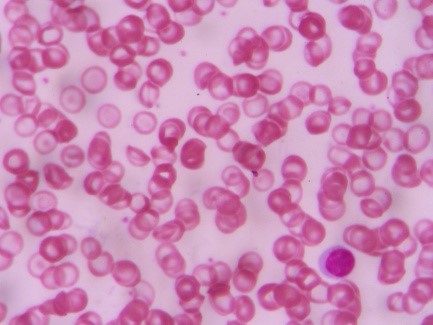
Macrocytosis and macrocytic anaemia
Macrocytosis refers to red blood cells which are larger than normal. It does not cause any symptoms in itself.
by Dr Philippa Vincent, MRCGP
Allergies, blood and immune system
Sickle cell disease
Sickle cell disease (SCD) is a serious, inherited condition affecting the blood and various organs in the body. It affects the red blood cells, causing episodes of 'sickling', which produce episodes of pain and other symptoms. In between episodes of sickling, people with SCD are normally well. Long-term complications can occur. Good treatment, started early in life, can prevent complications. So, early diagnosis and specialist treatment are advised for SCD. Sickle cell trait is not the same as sickle cell disease.
by Dr Hayley Willacy, FRCGP
Allergies, blood and immune system
Iron-deficiency anaemia
Iron-deficiency anaemia is a common type of anaemia that is caused by a lack of iron. Symptoms include pale skin and lack of energy. A low level of iron, leading to anaemia, can result from various causes. Some are more serious than others.
by Dr Rachel Hudson, MRCGP
Allergies, blood and immune system
Vitamin B12 deficiency and pernicious anaemia
Vitamin B12 is essential for life. It is needed to make new cells in the body, such as the many new red blood cells which are made every day. Vitamin B12 is found in meat, fish, eggs and milk - but not in fruit or vegetables. A normal balanced diet must contain enough vitamin B12. A lack of vitamin B12 leads to anaemia and sometimes to other problems.
by Dr Colin Tidy, MRCGP
Related patient information and medicines

Patient information leaflet
Glycogen storage disorders
What is glycogen. Your body needs the sugar glucose to provide energy so that your cells and organs can function normally. If both parents are carriers of t... X-linked inheritance pattern This occurs in some people with glycogen storage disorder type IX. X-linked inheritance pattern x-linked pattern of inheritance In this pattern of inheritance,.

Patient information leaflet
Diabetic kidney disease
What is diabetic kidney disease. Diabetic kidney disease (diabetic nephropathy) is a complication that occurs in some people with diabetes. Diabetic kidney disease is one of the causes of chronic kidney disease Chronic kidney disease , a long-term condition where... These 'cross-linked' proteins can trigger a localised scarring process. As the.

Patient information leaflet
Swollen legs
Heart failure If you have this condition, your heart is not working as effectively to push the blood around your circul... You may also feel out of breath, and this can be worse when lying down flat at night or on walking. Anaemia Anaemia. This is a problem with the red blood cells of your body. Venous insufficiency (which also causes varicose.
Patient information leaflet
Full blood count and blood film
Calculates the proportion... Measures the amount of haemoglobin in the red blood cells. What does a full blood count test look for. The main abnormalities which can be detected are: Anaemia Anaemia - this means that you have fewer red blood cells than normal, or have less haemoglobin than normal in each red blood cell. The most common reason for.

Patient information leaflet
Tiredness
One UK survey of over 15,000 people found that 10-18% reported tiredness that lasted for one month or longer, and a study looking at GP databases found that 1.5 in 100 people see their doctor about new tiredness every year. It's so common that doctors have an acron... Causes of tiredness Physical causes of tiredness Tiredness may be due to a wide.
Patient information leaflet
Myelofibrosis
Myelofibrosis is a serious bone marrow disorder that disrupts your body's normal production of blood cells. This leads to reduced levels of: Red blood cells (erythroc... Dr Sarah Jarvis, December 2021 NICE guidance on drug treatments for myelofibrosis Fedratinib for treating disease-related splenomegaly or symptoms in myelofibrosis The National.
Further reading and references
- X-linked sideroblastic anaemia; MedlinePlus, National Library of Medicine.
- Ducamp S, Campagna DR, Sendamarai AK, Schmidt PJ, Tsai HK, Heeney MM, Bottomley SS, Fleming MD. X-linked sideroblastic anemia in females. Blood. 2025 Apr 3;145(14):1583-1587. doi: 10.1182/blood.2024024475.
- Fujiwara T, Harigae H. Molecular pathophysiology and genetic mutations in congenital sideroblastic anemia. Free Radic Biol Med. 2019 Mar;133:179-185. doi: 10.1016/j.freeradbiomed.2018.08.008. Epub 2018 Aug 8.
- Jove-Solavera D, Ramila M, Ferrer-Cortes X, Olivella M, Venturi V, Morado M, Hernandez-Rodriguez I, Khan A, Perez-Montero S, Tornador C, Germing U, Gattermann N, Sanchez M. The role of genetic testing in accurate diagnosis of X-linked sideroblastic anemia: novel ALAS2 mutations and the impact of X-chromosome inactivation. Sci Rep. 2025 Apr 7;15(1):11843. doi: 10.1038/s41598-025-95590-x.
Share your thoughts or experiences with others in our patient communities.
Simple access to trusted treatments and health services online.
Common conditions
Get help with common conditions through the NHS, without a GP appointment.





Sign up to the Patient newsletter
Your weekly dose of clear, trustworthy health advice - written to help you feel informed, confident and in control.
By subscribing you accept our Privacy Policy. You can unsubscribe at any time. We never sell your data.