X-linked sideroblastic anaemia and ataxia
Last updated 18 Nov 2025
Meets Patient’s editorial guidelines
- DownloadDownload
- Share
- Language
- Discussion
- Ask Patient
- Audio Version
- Add to preferred sources on Google
X-linked sideroblastic anaemia and ataxia is a rare condition that is characterised by a blood disorder called sideroblastic anaemia and movement problems known as ataxia. This condition primarily occurs in males.
Video picks for Genetic conditionsVideo library
Description
X-linked sideroblastic anaemia and ataxia is a rare condition that is characterised by a blood disorder called sideroblastic anaemia and movement problems known as ataxia. This condition primarily occurs in males.
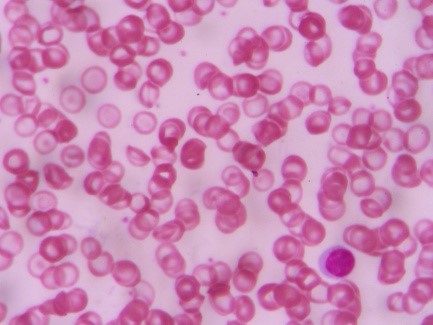
Anaemia is defined by a shortage of healthy red blood cells. Sideroblastic anaemia occurs when developing red blood cells called erythroblasts do not make enough hemoglobin, which is the protein that carries oxygen in the blood. People with X-linked sideroblastic anaemia and ataxia have red blood cells that are smaller than normal (microcytic) and appear pale (hypochromic) because of the shortage of hemoglobin. The anaemia seen in people with this condition is typically mild.
X-linked sideroblastic anaemia and ataxia leads to an abnormal accumulation of iron in red blood cells. The iron-loaded red blood cells, which are present in bone marrow, are called ring sideroblasts.
X-linked sideroblastic anaemia and ataxia causes problems with balance and coordination that appear early in life. Ataxia can make it difficult to sit, stand, and walk unassisted. People with this condition may find it difficult to make rapid, alternating movements (dysdiadochokinesia), such as tapping their foot.
In addition to ataxia, people with this condition often have trouble coordinating movements that involve judging distance or scale (dysmetria), such as reaching out to grab an object. Affected individuals can also experience involuntary rhythmic shaking that worsens during movement (intention tremor). Mild speech difficulties (dysarthria) and abnormal eye movements have also been reported in some individuals with X-linked sideroblastic anaemia and ataxia.
Inheritance patterns
The source lists the following possible inheritance patterns: X-linked. More than one pattern can apply in different cases.
Related genes
Other names
SCAX6
X-linked sideroblastic anaemia with ataxia
X-linked spinocerebellar ataxia-6 with or without sideroblastic anaemia
XLSA/A
Patient picks for Genetic conditions

Tests and investigations
CT scan
Note: the information below is a general guide only. The arrangements, and the way tests are performed, may vary between different hospitals. Always follow the instructions given by your doctor or local hospital.
by Dr Rachel Hudson, MRCGP

Allergies, blood and immune system
Anaemia
Anaemia means that you have fewer red blood cells than normal or you have less haemoglobin than normal in each red blood cell. In either case, a reduced amount of oxygen is carried around in the bloodstream.
by Dr Hayley Willacy, FRCGP

Allergies, blood and immune system
Signs you may have anaemia
It's usual to feel a little tired and run-down from time to time. But if the feeling continues, or is excessive, you may need to speak with your doctor. One common cause of feeling run-down is anaemia. Here we look at the signs and symptoms, whether you might be susceptible, and what to do next.
by Victoria Raw

Pregnancy
Multiple pregnancy
In a multiple pregnancy, there is more than one baby growing in the womb (uterus) at the same time. Being pregnant with twins is the most common example. Both mother and babies need extra monitoring during pregnancy as the risks are higher than in a singleton pregnancy.
by Dr Toni Hazell, FRCGP
Allergies, blood and immune system
Iron-deficiency anaemia
Iron-deficiency anaemia is a common type of anaemia that is caused by a lack of iron. Symptoms include pale skin and lack of energy. A low level of iron, leading to anaemia, can result from various causes. Some are more serious than others.
by Dr Rachel Hudson, MRCGP
Allergies, blood and immune system
Sickle cell disease
Sickle cell disease (SCD) is a serious, inherited condition affecting the blood and various organs in the body. It affects the red blood cells, causing episodes of 'sickling', which produce episodes of pain and other symptoms. In between episodes of sickling, people with SCD are normally well. Long-term complications can occur. Good treatment, started early in life, can prevent complications. So, early diagnosis and specialist treatment are advised for SCD. Sickle cell trait is not the same as sickle cell disease.
by Dr Hayley Willacy, FRCGP
Related patient information and medicines

Patient information leaflet
Coeliac disease
Coeliac disease (also spelled celiac disease) mainly affects the part of the gut called the small intestine. Common symptoms of coeliac disease in adults are: Anaemia Iron-deficiency anaemia due to poor absorption of iron. Coeliac disease tends to ... There are also other conditions that are linked with coeliac disease and may sometimes be caused.

Patient information leaflet
Glycogen storage disorders
Glycogen storage disorders are a group of inherited diseases that result from a lack of, or abnormal functioning of, one of the proteins (enzymes) involved in the conversion of glucose to glycogen or the breakdown of glycogen back into glucose. X-linked inheritance pattern This occurs in some people with glycogen storage disorder ty... X-linked.

Patient information leaflet
Cancer symptoms
Cancer symptoms will vary according to the type of cancer and how far the cancer has grown. Evidence of anaemia Anaemia - pale skin and pallor inside the lower eyelid. Any enlarged lym... Raised temperature Fever (fever) - some cancers can lead to high fever (for example, lymphoma). Enlargement of the liver which is knobbly in nature and may be.

Patient information leaflet
Full blood count and blood film
Calculates the proportion... Measures the amount of haemoglobin in the red blood cells. What does a full blood count test look for. The main abnormalities which can be detected are: Anaemia Anaemia - this means that you have fewer red blood cells than normal, or have less haemoglobin than normal in each red blood cell. The most common reason for.
Patient information leaflet
CT scan
Note : the information below is a general guide only. The arrangements, and the way tests are performed, may vary between different hospitals. Always follow the instructions given by your doctor or local hospital. What is a CT scan. A CT scan is a specialised X-ray test. It can give quite clear pictures of the inside of your body. In particular,.
Patient information leaflet
Anaemia
Anaemia means that you have fewer red blood cells than normal or you have less haemoglobin than normal in each red blood cell. In either case, a reduced amount of oxygen is carried around in the bloodstream. Anaemia types and causes Iron-deficiency anaemia Lack of iron is the most common type of anaemia in the UK. This is called iron-deficiency.
Further reading and references
- X-linked sideroblastic anaemia and ataxia; MedlinePlus, National Library of Medicine.
- Bottomley SS. Congenital sideroblastic anemias. Curr Hematol Rep. 2006 Mar;5(1):41-9.
- Camaschella C. Recent advances in the understanding of inherited sideroblastic anaemia. Br J Haematol. 2008 Oct;143(1):27-38. doi: 10.1111/j.1365-2141.2008.07290.x. Epub 2008 Jul 14.
- Chiabrando D, Bertino F, Tolosano E. Hereditary Ataxia: A Focus on Heme Metabolism and Fe-S Cluster Biogenesis. Int J Mol Sci. 2020 May 26;21(11):3760. doi: 10.3390/ijms21113760.
- Fleming MD. The genetics of inherited sideroblastic anemias. Semin Hematol. 2002 Oct;39(4):270-81. doi: 10.1053/shem.2002.35637.
- Furuyama K, Kaneko K. Iron metabolism in erythroid cells and patients with congenital sideroblastic anemia. Int J Hematol. 2018 Jan;107(1):44-54. doi: 10.1007/s12185-017-2368-0. Epub 2017 Nov 14.
- Hellier KD, Hatchwell E, Duncombe AS, Kew J, Hammans SR. X-linked sideroblastic anaemia with ataxia: another mitochondrial disease? J Neurol Neurosurg Psychiatry. 2001 Jan;70(1):65-9. doi: 10.1136/jnnp.70.1.65.
- Pagon RA, Bird TD, Detter JC, Pierce I. Hereditary sideroblastic anaemia and ataxia: an X linked recessive disorder. J Med Genet. 1985 Aug;22(4):267-73. doi: 10.1136/jmg.22.4.267.
- Protasova MS, Grigorenko AP, Tyazhelova TV, Andreeva TV, Reshetov DA, Gusev FE, Laptenko AE, Kuznetsova IL, Goltsov AY, Klyushnikov SA, Illarioshkin SN, Rogaev EI. Whole-genome sequencing identifies a novel ABCB7 gene mutation for X-linked congenital cerebellar ataxia in a large family of Mongolian ancestry. Eur J Hum Genet. 2016 Apr;24(4):550-5. doi: 10.1038/ejhg.2015.139. Epub 2015 Aug 5.
- Xiong S, Jia Y, Li S, Huang P, Xiong J, Mao D, He Q, Liu L. The First Case Report of X-Linked Sideroblastic Anemia With Ataxia of Chinese Origin and Literature Review. Front Pediatr. 2021 Jul 20;9:692459. doi: 10.3389/fped.2021.692459. eCollection 2021.
Share your thoughts or experiences with others in our patient communities.
Simple access to trusted treatments and health services online.
Common conditions
Get help with common conditions through the NHS, without a GP appointment.





Sign up to the Patient newsletter
Your weekly dose of clear, trustworthy health advice - written to help you feel informed, confident and in control.
By subscribing you accept our Privacy Policy. You can unsubscribe at any time. We never sell your data.