ATP binding cassette subfamily C member 8
Last updated 16 Jan 2026
Meets Patient’s editorial guidelines
- DownloadDownload
- Share
- Language
- Discussion
- Ask Patient
- Audio Version
- Add to preferred sources on Google
The ABCC8 gene provides instructions for making one part (subunit) of the ATP-sensitive potassium (KATP) channels that are found in specialized pancreas cells called beta cells. These KATP channels consist of eight subunits: four of these subunits are produced from the ABCC8 gene and four are produced from another gene called KCNJ11.
Video picks for GenesVideo library
Normal function
The ABCC8 gene provides instructions for making one part (subunit) of the ATP-sensitive potassium (KATP) channels that are found in specialized pancreas cells called beta cells. These KATP channels consist of eight subunits: four of these subunits are produced from the ABCC8 gene and four are produced from another gene called KCNJ11.
These KATP channels span the cell membranes of the beta cells. Beta cells secrete the hormone insulin, which helps control the levels of glucose in the blood, also called blood sugar. Glucose is a simple sugar and the primary energy source for most cells in the body. When blood glucose levels are high, the KATP channels close, which triggers the beta cells to release insulin into the bloodstream. In this way, KATP channels help regulate insulin secretion and control blood glucose levels.
Conditions referring to this gene or chromosome
Other names
ABC36
ATP-binding cassette, sub-family C (CFTR/MRP), member 8
ATP-binding cassette, sub-family C, member 8
MRP8
sulfonylurea receptor
sulfonylurea receptor, beta cell high affinity
SUR1
TNDM2
Patient picks for Genes

Pregnancy
Caesarean section
A caesarean section (C-section) may be planned (elective caesarean section) or unplanned (including emergency or crash caesarean sections).
by Dr Colin Tidy, MRCGP
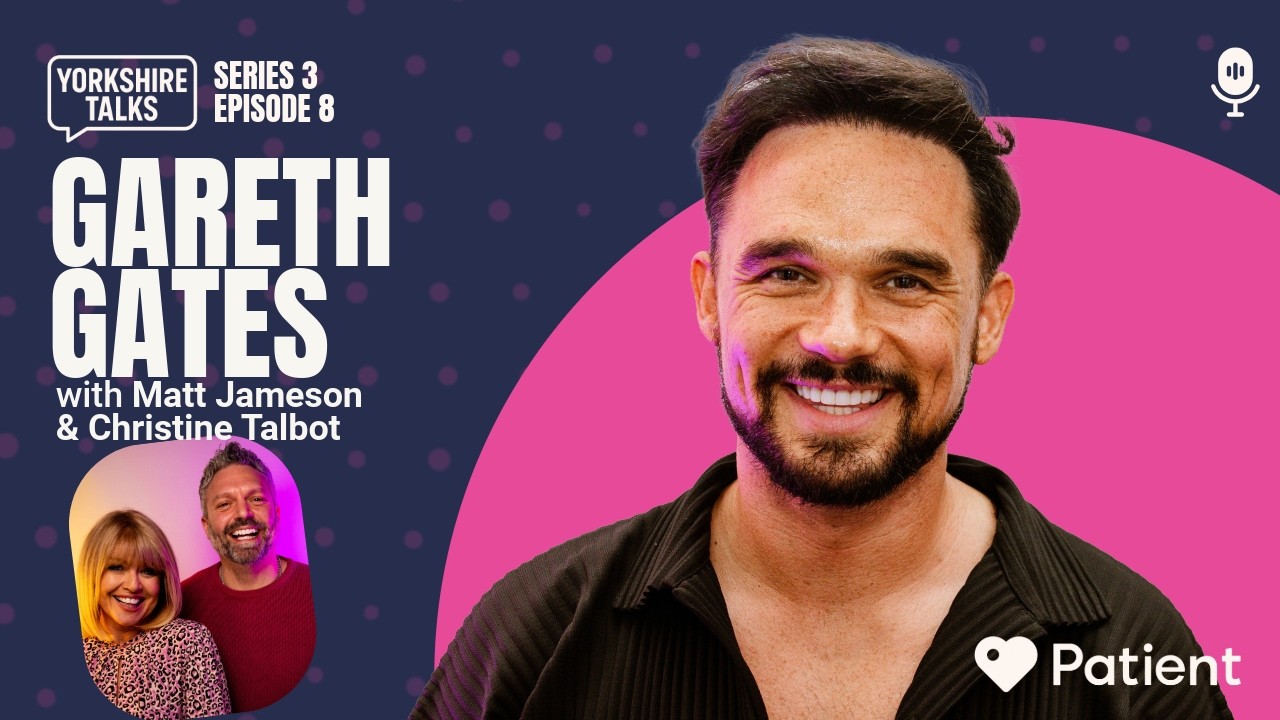
Yorkshire talks series 3
Gareth Gates: "I believed I was defective — my stammer was my superpower" | Yorkshire Talks
In our final episode of Series Three, our Yorkshire Talks guest is former Pop Idol star, producer and performer Gareth Gates. Bradford lad Gareth was first interviewed by Christine for a YTV talent show for young people nearly 30 years ago — so this episode was a bit of a reunion. Now all grown up, Gareth joins Matt and Christine to talk openly and honestly about his journey: from being bullied at school and living with a debilitating stammer, to reaching the final of the very first Pop Idol and having his whole life changed overnight. Gareth explains how taking part in the McGuire Programme has helped him manage his stammer, and how his experiences have shaped the work he does today. He also chats about his role in Boyband in the Buff, currently touring, his journey into becoming a music producer and entrepreneur, and his exciting new project — Speechless, a musical about stammering, due to hit the stage next year. Now a dad himself, with a daughter the same age he was when he first found fame, Gareth reflects on the last few decades with warmth, honesty and plenty of Yorkshire humour. 🎙️ It's a fascinating, funny and incredibly inspiring conversation — one you won't want to miss. If you enjoy the episode, don't forget to LIKE, SUBSCRIBE and leave us a comment. Follow Gareth: 📸 Instagram: @gareth_gates See Gareth on tour: 🎭 Boyband in the Buff is currently on tour. Find tour dates here: [paste official tour dates link] See Gareth in Beauty and the Beast: ✨ Gareth stars as the Beast in Beauty and the Beast at the Britannia Pier, Great Yarmouth, 8–31 December: britannia-pier.co.uk Follow the hosts: Matt Jameson: @matt_d_jameson Christine Talbot: @christineetalbot Yorkshire Talks is presented by Christine Talbot and Matt Jameson, and produced by Simon Fogal at Chapter 81 Studios in Leeds. Proudly sponsored by Patient.info.

Infections
Clostridioides difficile
Infection with Clostridioides difficile (sometimes just called 'C. diff') most commonly occurs in people who have recently had a course of antibiotics and are in hospital. Symptoms can range from mild diarrhoea to a life-threatening inflammation of the bowel. No treatment may be needed in mild cases except drinking plenty of fluids. However, treatment with specific antibiotics is needed in more severe cases.
by Dr Hayley Willacy, FRCGP

High blood pressure Q&A
What can you do to lower your blood pressure?
Dr Yassir Javaid Sometimes there is quite a bit you can do with lifestyle changes in order to lower your blood pressure, and in some people this may help them to avoid medication. [https://patient.info/health/high-blood-pressure-hypertension#nav-8](https://patient.info/health/high-blood-pressure-hypertension#nav-8)
by Dr Yassir Javaid, MRCGP
Medicine
Ascorbic acid tablets
Ascorbic acid is another name for vitamin C. One dose a day of 25-75 mg is sufficient to prevent vitamin C deficiency. Higher doses are sometimes prescribed by doctors to treat a condition called scurvy (although this occurs only rarely in the UK). Some ascorbic acid tablets should be chewed before they are swallowed and others need to be dissolved in water first. Check the label on the container and follow the directions given.
by Michael Stewart, MRPharmS

Heart attack Q&A
How do you reduce the risk of a heart attack?
Dr Yassir Javaid Heart attacks are usually thought to affect people over the age of 50. However, in reality, they can occur at any age. In fact, about 8 in every 100 heart attacks occur in those under 55, and 1 in 4 heart attacks in women affects an under-60. They are also twice as likely to be fatal in young women compared to young men, often because they are missed until too late. [https://patient.info/health/heart-attack-myocardial-infarction-leaflet/features/having-a-heart-attack-when-youre-young](https://patient.info/health/heart-attack-myocardial-infarction-leaflet/features/having-a-heart-attack-when-youre-young)
by Dr Yassir Javaid, MRCGP
Related patient information and medicines
Patient information leaflet
Can I take Atorvastatin and Fibre supplements together?
This means the statin may not work as well to lower your cholesterol. Why this happens Fibre supplements (like psyllium husk or methylcellulose) can bind to the atorvastatin in your stomach or intestines, preventing it from entering your bloodstream. What you should do You do not need to stop taking fibre, but you should separate the doses. Our.

Patient information leaflet
Marfan syndrome
It also helps move fat and nutrients around your body and ... In Marfan syndrome, your connective tissue becomes weak and 'floppy'. Marfan syndrome can affect the connective tissue in different parts of your body, including your heart, blood vessels, eyes and skeleton. Marfan syndrome is rare and is thought to affect about 1 in 3,000 to 1 in 5,000.

Patient information leaflet
The immune system
We are. The immune system is the body's defence against disease-causing microbes (pathogens). Lymphatic system lymphatic system The immune system is made up of non-specialised defences such as your skin (acting as a barrier) and strong acid stomach juices. However it also has some highly specialised defences which give you resistance to particular.
Patient information leaflet
Can I take Bisoprolol and Fibre supplements together?
Taking them without enough liquid can cause the supplement to swell a... Using other medicines Taking multiple medicines. Our Medicines Interaction Checker helps you check whether your prescriptions, over-the-counter medicines, and supplements are safe to take together. Simply search for your medicines to see potential interactions and what to do.

Patient information leaflet
Can I take Atorvastatin and Biotin together?
There is no known interaction between atorvastatin and biotin. It is generally considered safe to take these two together. Why this happens Atorvastatin is processed by specific liver enzymes (CYP3A4), while biotin (Vitamin B7) is a water-soluble vitamin that uses different pathways for absorption and processing. They do not interfere with each.
Patient information leaflet
Primary biliary cholangitis
Primary biliary cholangitis (PBC) is a condition that slowly damages the bile ducts in your liver, leading to liver damage and, sometimes, liver scarring (cirrhosis). Primary biliary cholangitis (PBC) is an auto-immune condition in which your immune system gradually destroys the tiny tubes (bile ducts) which take bile from the liver to the gut.
Further reading and references
- ATP binding cassette subfamily C member 8; MedlinePlus, National Library of Medicine.
- Bennett K, James C, Hussain K. Pancreatic beta-cell KATP channels: Hypoglycaemia and hyperglycaemia. Rev Endocr Metab Disord. 2010 Sep;11(3):157-63. doi: 10.1007/s11154-010-9144-2.
- De Leon DD, Pinney SE. Permanent Neonatal Diabetes Mellitus. 2008 Feb 8 [updated 2025 Sep 25]. In: Adam MP, Bick S, Mirzaa GM, Wallace SE, Amemiya A, editors. GeneReviews(R) [Internet]. Seattle (WA): University of Washington, Seattle; 1993-2026. Available from http://www.ncbi.nlm.nih.gov/books/NBK1447/
- Edghill EL, Flanagan SE, Ellard S. Permanent neonatal diabetes due to activating mutations in ABCC8 and KCNJ11. Rev Endocr Metab Disord. 2010 Sep;11(3):193-8. doi: 10.1007/s11154-010-9149-x.
- Ellard S, Flanagan SE, Girard CA, Patch AM, Harries LW, Parrish A, Edghill EL, Mackay DJ, Proks P, Shimomura K, Haberland H, Carson DJ, Shield JP, Hattersley AT, Ashcroft FM. Permanent neonatal diabetes caused by dominant, recessive, or compound heterozygous SUR1 mutations with opposite functional effects. Am J Hum Genet. 2007 Aug;81(2):375-82. doi: 10.1086/519174. Epub 2007 Jun 29.
- Flanagan SE, Clauin S, Bellanne-Chantelot C, de Lonlay P, Harries LW, Gloyn AL, Ellard S. Update of mutations in the genes encoding the pancreatic beta-cell K(ATP) channel subunits Kir6.2 (KCNJ11) and sulfonylurea receptor 1 (ABCC8) in diabetes mellitus and hyperinsulinism. Hum Mutat. 2009 Feb;30(2):170-80. doi: 10.1002/humu.20838.
- Flanagan SE, Patch AM, Mackay DJ, Edghill EL, Gloyn AL, Robinson D, Shield JP, Temple K, Ellard S, Hattersley AT. Mutations in ATP-sensitive K+ channel genes cause transient neonatal diabetes and permanent diabetes in childhood or adulthood. Diabetes. 2007 Jul;56(7):1930-7. doi: 10.2337/db07-0043. Epub 2007 Apr 19.
- Gloyn AL, Siddiqui J, Ellard S. Mutations in the genes encoding the pancreatic beta-cell KATP channel subunits Kir6.2 (KCNJ11) and SUR1 (ABCC8) in diabetes mellitus and hyperinsulinism. Hum Mutat. 2006 Mar;27(3):220-31. doi: 10.1002/humu.20292.
- Huopio H, Shyng SL, Otonkoski T, Nichols CG. K(ATP) channels and insulin secretion disorders. Am J Physiol Endocrinol Metab. 2002 Aug;283(2):E207-16. doi: 10.1152/ajpendo.00047.2002.
- Magge SN, Shyng SL, MacMullen C, Steinkrauss L, Ganguly A, Katz LE, Stanley CA. Familial leucine-sensitive hypoglycemia of infancy due to a dominant mutation of the beta-cell sulfonylurea receptor. J Clin Endocrinol Metab. 2004 Sep;89(9):4450-6. doi: 10.1210/jc.2004-0441.
- Pinney SE, MacMullen C, Becker S, Lin YW, Hanna C, Thornton P, Ganguly A, Shyng SL, Stanley CA. Clinical characteristics and biochemical mechanisms of congenital hyperinsulinism associated with dominant KATP channel mutations. J Clin Invest. 2008 Aug;118(8):2877-86. doi: 10.1172/JCI35414.
- Sandal T, Laborie LB, Brusgaard K, Eide SA, Christesen HB, Sovik O, Njolstad PR, Molven A. The spectrum of ABCC8 mutations in Norwegian patients with congenital hyperinsulinism of infancy. Clin Genet. 2009 May;75(5):440-8. doi: 10.1111/j.1399-0004.2009.01152.x.
Share your thoughts or experiences with others in our patient communities.
Simple access to trusted treatments and health services online.
Common conditions
Get help with common conditions through the NHS, without a GP appointment.





Sign up to the Patient newsletter
Your weekly dose of clear, trustworthy health advice - written to help you feel informed, confident and in control.
By subscribing you accept our Privacy Policy. You can unsubscribe at any time. We never sell your data.