ATP binding cassette subfamily G member 8
Last updated 18 Aug 2020
Meets Patient’s editorial guidelines
- DownloadDownload
- Share
- Language
- Discussion
- Ask Patient
- Audio Version
- Add to preferred sources on Google
The ABCG8 gene provides instructions for making sterolin-2, which makes up half of a protein called sterolin. The other half of the sterolin protein, sterolin-1, is produced from a gene called ABCG5. Sterolin is involved in eliminating plant sterols, which are fatty components of plant-based foods that cannot be used by human cells.
Video picks for GenesVideo library
Normal function
The ABCG8 gene provides instructions for making sterolin-2, which makes up half of a protein called sterolin. The other half of the sterolin protein, sterolin-1, is produced from a gene called ABCG5. Sterolin is involved in eliminating plant sterols, which are fatty components of plant-based foods that cannot be used by human cells.
Sterolin is a transporter protein, which is a type of protein that moves substances across cell membranes. It is found mostly in cells of the intestines and liver and transports plant sterols. After plant sterols are absorbed from food into intestinal cells, the sterolin transporters in these cells pump them back into the intestinal tract. Sterolin transporters in liver cells pump the plant sterols into a fluid called bile that is released into the intestine. From the intestine, the plant sterols are eliminated with the feces. This process removes most of the dietary plant sterols, and allows only about 5 percent of these substances to get into the bloodstream. Sterolin also helps regulate levels of cholesterol, another fatty substance found in animal products, in a similar fashion; normally about 50 percent of cholesterol in the diet is absorbed by the body.
Conditions referring to this gene or chromosome
Other names
ABCG8_HUMAN
ATP-binding cassette sub-family G member 8
ATP-binding cassette, sub-family G (WHITE), member 8
ATP-binding cassette, subfamily G, member 8
GBD4
sterolin 2
sterolin-2
STSL
Patient picks for Genes
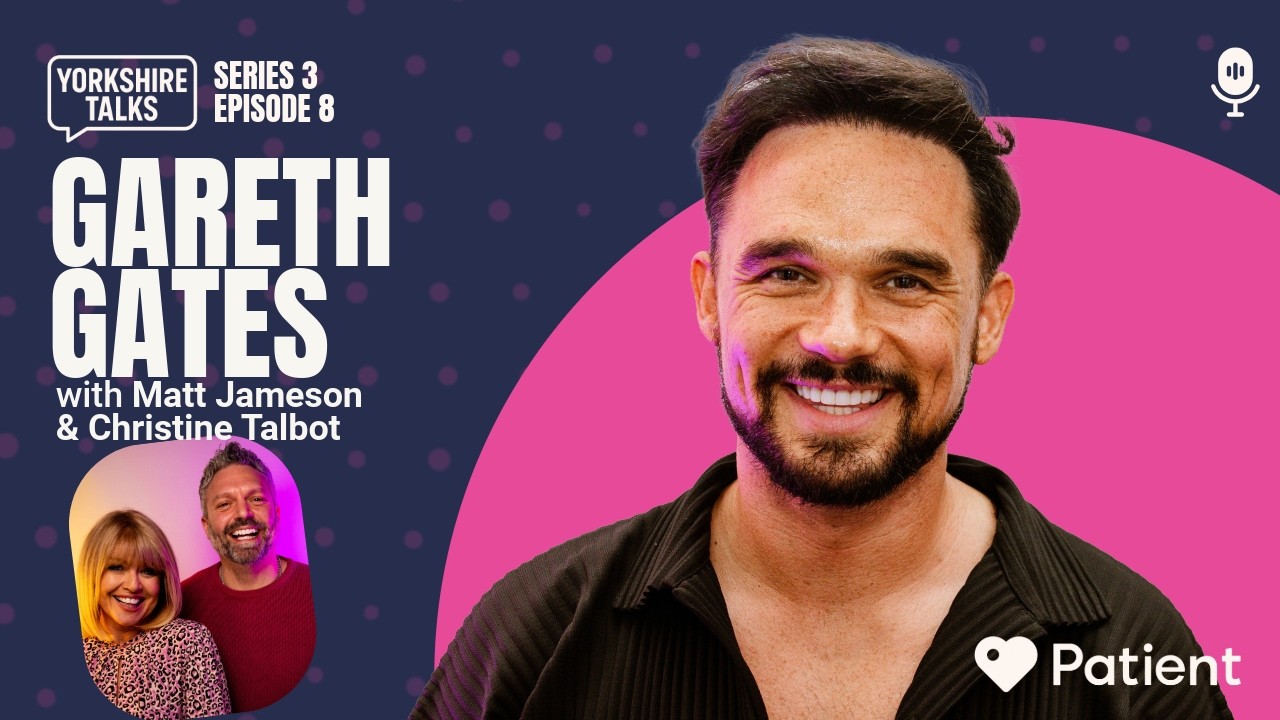
Yorkshire talks series 3
Gareth Gates: "I believed I was defective — my stammer was my superpower" | Yorkshire Talks
In our final episode of Series Three, our Yorkshire Talks guest is former Pop Idol star, producer and performer Gareth Gates. Bradford lad Gareth was first interviewed by Christine for a YTV talent show for young people nearly 30 years ago — so this episode was a bit of a reunion. Now all grown up, Gareth joins Matt and Christine to talk openly and honestly about his journey: from being bullied at school and living with a debilitating stammer, to reaching the final of the very first Pop Idol and having his whole life changed overnight. Gareth explains how taking part in the McGuire Programme has helped him manage his stammer, and how his experiences have shaped the work he does today. He also chats about his role in Boyband in the Buff, currently touring, his journey into becoming a music producer and entrepreneur, and his exciting new project — Speechless, a musical about stammering, due to hit the stage next year. Now a dad himself, with a daughter the same age he was when he first found fame, Gareth reflects on the last few decades with warmth, honesty and plenty of Yorkshire humour. 🎙️ It's a fascinating, funny and incredibly inspiring conversation — one you won't want to miss. If you enjoy the episode, don't forget to LIKE, SUBSCRIBE and leave us a comment. Follow Gareth: 📸 Instagram: @gareth_gates See Gareth on tour: 🎭 Boyband in the Buff is currently on tour. Find tour dates here: [paste official tour dates link] See Gareth in Beauty and the Beast: ✨ Gareth stars as the Beast in Beauty and the Beast at the Britannia Pier, Great Yarmouth, 8–31 December: britannia-pier.co.uk Follow the hosts: Matt Jameson: @matt_d_jameson Christine Talbot: @christineetalbot Yorkshire Talks is presented by Christine Talbot and Matt Jameson, and produced by Simon Fogal at Chapter 81 Studios in Leeds. Proudly sponsored by Patient.info.

High blood pressure Q&A
What can you do to lower your blood pressure?
Dr Yassir Javaid Sometimes there is quite a bit you can do with lifestyle changes in order to lower your blood pressure, and in some people this may help them to avoid medication. [https://patient.info/health/high-blood-pressure-hypertension#nav-8](https://patient.info/health/high-blood-pressure-hypertension#nav-8)
by Dr Yassir Javaid, MRCGP

Heart attack Q&A
How do you reduce the risk of a heart attack?
Dr Yassir Javaid Heart attacks are usually thought to affect people over the age of 50. However, in reality, they can occur at any age. In fact, about 8 in every 100 heart attacks occur in those under 55, and 1 in 4 heart attacks in women affects an under-60. They are also twice as likely to be fatal in young women compared to young men, often because they are missed until too late. [https://patient.info/health/heart-attack-myocardial-infarction-leaflet/features/having-a-heart-attack-when-youre-young](https://patient.info/health/heart-attack-myocardial-infarction-leaflet/features/having-a-heart-attack-when-youre-young)
by Dr Yassir Javaid, MRCGP

Pain
How much back pain is normal during pregnancy?
Dr Sarah Jarvis MBE Everyone can get back pain at some time in their life. The most common type of back pain, low back pain, affects about 8 in 10 people. Back pain even occurs in children: 3 out of every 10 young people have had pain in their back. [https://patient.info/health/back-and-spine-pain#nav-2](https://patient.info/health/back-and-spine-pain#nav-2)
by Dr Sarah Jarvis

Patient explainers
What is lung cancer? | Patient Explainers
Lung cancer (cancer of the lung) is common worldwide. Around 8 in 10 cases develop in people over the age of 60 years, usually in smokers. If lung cancer is diagnosed at an early stage, there is a chance of a cure. In general, the more advanced the cancer (the more it has grown and spread), the less chance that treatment will be curative. However, treatment can often slow the progress of the cancer. Find out more: [https://patient.info/health/lung-cancer-leaflet](https://patient.info/health/lung-cancer-leaflet) Follow Patient: Website: [https://patient.info/](https://patient.info/) Facebook: [https://www.facebook.com/patient](https://www.facebook.com/patient) Twitter: [https://twitter.com/patient](https://twitter.com/patient) Pinterest: [https://uk.pinterest.com/patient/](https://uk.pinterest.com/patient/) Instagram: [https://www.instagram.com/patient.info/](https://www.instagram.com/patient.info/)
by Dr Sarah Jarvis

STI Q&A
What is herpes?
Dr Rosemary Leonard Genital herpes is a viral infection. At least 8 in 10 people with the genital herpes virus do not know that they are infected. You catch it by having intimate (usually sexual) contact with someone who has the virus. In between episodes, the virus remains in your nerve system and can be reactivated from time to time to give you symptoms. [https://patient.info/health/sexually-transmitted-infections-leaflet/genital-herpes](https://patient.info/health/sexually-transmitted-infections-leaflet/genital-herpes)
by Dr Rosemary Leonard MBE, MRCGP
Related patient information and medicines
Patient information leaflet
Can I take Atorvastatin and Fibre supplements together?
This means the statin may not work as well to lower your cholesterol. Why this happens Fibre supplements (like psyllium husk or methylcellulose) can bind to the atorvastatin in your stomach or intestines, preventing it from entering your bloodstream. What you should do You do not need to stop taking fibre, but you should separate the doses. Our.

Patient information leaflet
Marfan syndrome
It also helps move fat and nutrients around your body and ... In Marfan syndrome, your connective tissue becomes weak and 'floppy'. Marfan syndrome can affect the connective tissue in different parts of your body, including your heart, blood vessels, eyes and skeleton. Marfan syndrome is rare and is thought to affect about 1 in 3,000 to 1 in 5,000.

Patient information leaflet
The immune system
We are. The immune system is the body's defence against disease-causing microbes (pathogens). Lymphatic system lymphatic system The immune system is made up of non-specialised defences such as your skin (acting as a barrier) and strong acid stomach juices. However it also has some highly specialised defences which give you resistance to particular.
Patient information leaflet
Can I take Bisoprolol and Fibre supplements together?
Taking them without enough liquid can cause the supplement to swell a... Using other medicines Taking multiple medicines. Our Medicines Interaction Checker helps you check whether your prescriptions, over-the-counter medicines, and supplements are safe to take together. Simply search for your medicines to see potential interactions and what to do.

Patient information leaflet
Can I take Atorvastatin and Biotin together?
Cooked eggs do not cause this issue. Using other medicines Taking multiple medicines. Our Medicines Interaction Checker helps you check whether your prescriptions, over-the-counter medicines, and supplements are safe to take together. Simply search for your medicines to see potential interactions and what to do about them. Disclaimer This.
Patient information leaflet
Primary biliary cholangitis
Primary biliary cholangitis (PBC) is a condition that slowly damages the bile ducts in your liver, leading to liver damage and, sometimes, liver scarring (cirrhosis). Primary biliary cholangitis (PBC) is an auto-immune condition in which your immune system gradually destroys the tiny tubes (bile ducts) which take bile from the liver to the gut.
Further reading and references
- ATP binding cassette subfamily G member 8; MedlinePlus, National Library of Medicine.
- Calandra S, Tarugi P, Speedy HE, Dean AF, Bertolini S, Shoulders CC. Mechanisms and genetic determinants regulating sterol absorption, circulating LDL levels, and sterol elimination: implications for classification and disease risk. J Lipid Res. 2011 Nov;52(11):1885-926. doi: 10.1194/jlr.R017855. Epub 2011 Aug 23.
- Chan J, Vandeberg JL. Hepatobiliary transport in health and disease. Clin Lipidol. 2012 Apr;7(2):189-202. doi: 10.2217/clp.12.12.
- Fitzgerald ML, Mujawar Z, Tamehiro N. ABC transporters, atherosclerosis and inflammation. Atherosclerosis. 2010 Aug;211(2):361-70. doi: 10.1016/j.atherosclerosis.2010.01.011. Epub 2010 Jan 21.
- Kerr ID, Haider AJ, Gelissen IC. The ABCG family of membrane-associated transporters: you don't have to be big to be mighty. Br J Pharmacol. 2011 Dec;164(7):1767-79. doi: 10.1111/j.1476-5381.2010.01177.x.
- Kidambi S, Patel SB. Cholesterol and non-cholesterol sterol transporters: ABCG5, ABCG8 and NPC1L1: a review. Xenobiotica. 2008 Jul;38(7-8):1119-39. doi: 10.1080/00498250802007930.
- Kuo KK, Shin SJ, Chen ZC, Yang YH, Yang JF, Hsiao PJ. Significant association of ABCG5 604Q and ABCG8 D19H polymorphisms with gallstone disease. Br J Surg. 2008 Aug;95(8):1005-11. doi: 10.1002/bjs.6178.
- Myrie SB, Steiner RD, Mymin D. Sitosterolemia. 2013 Apr 4 [updated 2020 Jul 16]. In: Adam MP, Bick S, Mirzaa GM, Wallace SE, Amemiya A, editors. GeneReviews(R) [Internet]. Seattle (WA): University of Washington, Seattle; 1993-2026. Available from http://www.ncbi.nlm.nih.gov/books/NBK131810/
- Niu DM, Chong KW, Hsu JH, Wu TJ, Yu HC, Huang CH, Lo MY, Kwok CF, Kratz LE, Ho LT. Clinical observations, molecular genetic analysis, and treatment of sitosterolemia in infants and children. J Inherit Metab Dis. 2010 Aug;33(4):437-43. doi: 10.1007/s10545-010-9126-2. Epub 2010 Jun 3.
- Rudkowska I, Jones PJ. Polymorphisms in ABCG5/G8 transporters linked to hypercholesterolemia and gallstone disease. Nutr Rev. 2008 Jun;66(6):343-8. doi: 10.1111/j.1753-4887.2008.00042.x.
- Sabeva NS, Liu J, Graf GA. The ABCG5 ABCG8 sterol transporter and phytosterols: implications for cardiometabolic disease. Curr Opin Endocrinol Diabetes Obes. 2009 Apr;16(2):172-7. doi: 10.1097/med.0b013e3283292312.
- Stender S, Frikke-Schmidt R, Nordestgaard BG, Tybjaerg-Hansen A. Sterol transporter adenosine triphosphate-binding cassette transporter G8, gallstones, and biliary cancer in 62,000 individuals from the general population. Hepatology. 2011 Feb;53(2):640-8. doi: 10.1002/hep.24046. Epub 2010 Dec 28.
Share your thoughts or experiences with others in our patient communities.
Simple access to trusted treatments and health services online.
Common conditions
Get help with common conditions through the NHS, without a GP appointment.





Sign up to the Patient newsletter
Your weekly dose of clear, trustworthy health advice - written to help you feel informed, confident and in control.
By subscribing you accept our Privacy Policy. You can unsubscribe at any time. We never sell your data.