arginine vasopressin receptor 2
Last updated 13 Aug 2024
Meets Patient’s editorial guidelines
- DownloadDownload
- Share
- Language
- Discussion
- Ask Patient
- Audio Version
- Add to preferred sources on Google
The AVPR2 gene provides instructions for making a protein known as the vasopressin V2 receptor. This receptor works together with a hormone called arginine vasopressin (AVP), which is sometimes also called antidiuretic hormone (ADH). The vasopressin V2 receptor is found in the kidneys in structures called collecting ducts, which are a series of small tubes that reabsorb water from the kidneys into the bloodstream.
Video picks for GenesVideo library
Normal function
The AVPR2 gene provides instructions for making a protein known as the vasopressin V2 receptor. This receptor works together with a hormone called arginine vasopressin (AVP), which is sometimes also called antidiuretic hormone (ADH). The vasopressin V2 receptor is found in the kidneys in structures called collecting ducts, which are a series of small tubes that reabsorb water from the kidneys into the bloodstream.
The interaction between AVP and the vasopressin V2 receptor triggers chemical reactions that control the body's water balance. When a person's fluid intake is low or when a lot of fluid is lost (for example, through sweating), AVP is released from the brain, where it is produced and stored. In the kidneys, this hormone attaches (binds) to the vasopressin V2 receptor and directs the kidneys to concentrate urine by reabsorbing some of the water back into the bloodstream. When fluid intake is adequate, the brain releases less AVP. At these times, less water is reabsorbed into the bloodstream and the urine is more dilute.
Conditions referring to this gene or chromosome
Other names
ADHR
antidiuretic hormone receptor
AVPR V2
V2R
V2R_HUMAN
vasopressin V2 receptor
Patient picks for Genes
Medicine
Irbesartan - an angiotensin receptor blocker
Take irbesartan once each day. You can take the tablets before or after meals. Side-effects are usually mild. They include feeling dizzy and mild stomach upset. Keep your regular appointments with your doctor to have your blood pressure measured. Some painkillers interfere with irbesartan, so ask a pharmacist for advice before you buy any medicines.
by Michael Stewart, MRPharmS
Medicine
Valsartan - an angiotensin receptor blocker
You can take valsartan either before or after a meal. Any side-effects are usually mild. The most common side-effect is dizziness. Some painkillers may interfere with valsartan and increase the risk of side-effects, so ask a pharmacist for advice before you buy any medicines.
by Michael Stewart, MRPharmS
Medicine
Eprosartan - an angiotensin receptor blocker
The usual dose is one 600 mg tablet daily. Side-effects are usually mild. They include headache, feeling dizzy and mild stomach upset. Keep your regular appointments with your doctor to have your blood pressure measured. Some painkillers interfere with eprosartan. Ask your pharmacist for advice before you buy any medicines 'over the counter'.
by Michael Stewart, MRPharmS

Diabetes Q&A
How do you get tested for type 2 diabetes?
Dr Sarah Jarvis MBE It is now recommended that the blood test for HbA1c can also be used as a test to diagnose type 2 diabetes. An HbA1c value of 48 mmol/mol (6.5%) or above is recommended as the blood level for diagnosing diabetes. In many cases type 2 diabetes is diagnosed during a routine medical or when tests are done for an unrelated medical condition. For more information on type 2 diabetes, go to [https://patient.info/health/type-2-diabetes](https://patient.info/health/type-2-diabetes)
by Dr Sarah Jarvis
Medicine
Azilsartan - an angiotensin receptor blocker
Take azilsartan once each day. You can take the tablets either before or after a meal. Any side-effects are usually mild. They include feeling dizzy and having diarrhoea. Keep your regular appointments with your doctor to have your blood pressure measured. Some painkillers can interfere with azilsartan and increase the risk of side-effects, so ask a pharmacist for advice before you buy any medicines 'over the counter'.
by Michael Stewart, MRPharmS
Medicine
Candesartan - an angiotensin receptor blocker
Take candesartan once each day. You can take the tablets either before or after a meal. Any side-effects are usually mild. They include headache and feeling dizzy. Some painkillers may interfere with candesartan and increase the risk of side-effects, so ask a pharmacist for advice before you buy any medicines.
by Michael Stewart, MRPharmS
Related patient information and medicines

Patient information leaflet
Osmolality, osmolarity and fluid homeostasis
In normal, healthy people the osmolality of the body's fluids is very closely regulated by the body. As the osmolality goes up You get a desire to drink - thirst. The brain releases a hormone called antidiuretic hormone (ADH) (also known as arginine vasopressin (AVP)). ADH changes the way the kidneys react to blood flowing through them. The.

Patient information leaflet
Myasthenia gravis
Myasthenia gravis (MG) is a condition where muscles become easily tired and weak. It is due to a problem with how the nerves stimulate the muscles to tighten (contract). The muscles around the eyes are commonly affected first. What causes myasthenia gravis. Myasthenia gravis is an autoimmune disease. This means that the immune system The immune.

Patient information leaflet
Diabetic kidney disease
An angiotensin-II receptor antagonist (AIIRA) There are several types and brands of this type of medication. The ones available in the UK are: azilsartan Azilsartan - an angiotensin receptor blocker , candesartan Candesartan - an angiotensin receptor blocker , eprosartan Eprosartan - an angiotensin receptor blocker , irbesartan Irbesartan - an.
Patient information leaflet
Alpha-blockers
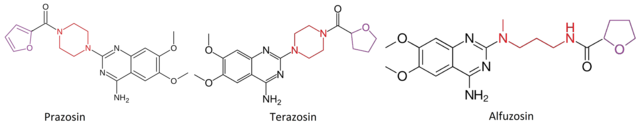
Alpha-blockers are medicines that are mainly used to treat high blood pressure (hypertension) and problems with passing urine in men who have enlargement of the prostate gland. Prostate gland enlargement is also called benign prostatic hyperplasia (BPH). What are alpha-blockers used for. In the past, some alpha-blockers were also used to treat.
Patient information leaflet
Can I take Diazepam and Tirzepatide together?
Additionally, both medications can cause drowsiness or slowed reactions. Why this happens Tirzepatide is a GLP-1 and GIP receptor agonist that delays gastric emptying (the rate at which food and pills leave the stomach). This can delay the absorption (Tmax) of oral medications like diazepam. There is also a potential for additive central nervo....

Patient information leaflet
5:2 diet
The 5:2 diet is a calorie-restricted diet that involves eating 'normally' for five days out of seven and then 'fasting' on the other two days out of seven. The proposed health effects of the 5:2 diet include weight loss, improvement in life expectancy, protection against certain cancers and protection against dementia. However, the evidence.
Further reading and references
- arginine vasopressin receptor 2; MedlinePlus, National Library of Medicine.
- Arthus MF, Lonergan M, Crumley MJ, Naumova AK, Morin D, DE Marco LA, Kaplan BS, Robertson GL, Sasaki S, Morgan K, Bichet DG, Fujiwara TM. Report of 33 novel AVPR2 mutations and analysis of 117 families with X-linked nephrogenic diabetes insipidus. J Am Soc Nephrol. 2000 Jun;11(6):1044-1054. doi: 10.1681/ASN.V1161044.
- Bichet DG. Vasopressin receptor mutations in nephrogenic diabetes insipidus. Semin Nephrol. 2008 May;28(3):245-51. doi: 10.1016/j.semnephrol.2008.03.005.
- Feldman BJ, Rosenthal SM, Vargas GA, Fenwick RG, Huang EA, Matsuda-Abedini M, Lustig RH, Mathias RS, Portale AA, Miller WL, Gitelman SE. Nephrogenic syndrome of inappropriate antidiuresis. N Engl J Med. 2005 May 5;352(18):1884-90. doi: 10.1056/NEJMoa042743.
- Hureaux M, Vargas-Poussou R. Genetic basis of nephrogenic diabetes insipidus. Mol Cell Endocrinol. 2023 Jan 15;560:111825. doi: 10.1016/j.mce.2022.111825. Epub 2022 Nov 30.
- Knoers NV. Hyperactive vasopressin receptors and disturbed water homeostasis. N Engl J Med. 2005 May 5;352(18):1847-50. doi: 10.1056/NEJMp058006. No abstract available.
- Robben JH, Knoers NV, Deen PM. Cell biological aspects of the vasopressin type-2 receptor and aquaporin 2 water channel in nephrogenic diabetes insipidus. Am J Physiol Renal Physiol. 2006 Aug;291(2):F257-70. doi: 10.1152/ajprenal.00491.2005.
- Rosenthal SM, Feldman BJ, Vargas GA, Gitelman SE. Nephrogenic syndrome of inappropriate antidiuresis (NSIAD): a paradigm for activating mutations causing endocrine dysfunction. Pediatr Endocrinol Rev. 2006 Dec;4 Suppl 1:66-70.
- Spanakis E, Milord E, Gragnoli C. AVPR2 variants and mutations in nephrogenic diabetes insipidus: review and missense mutation significance. J Cell Physiol. 2008 Dec;217(3):605-17. doi: 10.1002/jcp.21552.
- Valenti G, Tamma G. The vasopressin-aquaporin-2 pathway syndromes. Handb Clin Neurol. 2021;181:249-259. doi: 10.1016/B978-0-12-820683-6.00018-X.
Share your thoughts or experiences with others in our patient communities.
Simple access to trusted treatments and health services online.
Common conditions
Get help with common conditions through the NHS, without a GP appointment.





Sign up to the Patient newsletter
Your weekly dose of clear, trustworthy health advice - written to help you feel informed, confident and in control.
By subscribing you accept our Privacy Policy. You can unsubscribe at any time. We never sell your data.