calcium voltage-gated channel subunit alpha1 A
Last updated 4 May 2023
Meets Patient’s editorial guidelines
- DownloadDownload
- Share
- Language
- Discussion
- Ask Patient
- Audio Version
- Add to preferred sources on Google
The CACNA1A gene belongs to a family of genes that provide instructions for making calcium channels. These channels, which transport positively charged calcium atoms (calcium ions) across cell membranes, play a key role in a cell's ability to generate and transmit electrical signals. Calcium ions are involved in many different cellular functions, including cell-to-cell communication, the tensing of muscle fibers (muscle contraction), and the regulation of certain genes.
Video picks for GenesVideo library
Normal function
The CACNA1A gene belongs to a family of genes that provide instructions for making calcium channels. These channels, which transport positively charged calcium atoms (calcium ions) across cell membranes, play a key role in a cell's ability to generate and transmit electrical signals. Calcium ions are involved in many different cellular functions, including cell-to-cell communication, the tensing of muscle fibers (muscle contraction), and the regulation of certain genes.
The CACNA1A gene provides instructions for making one part (the alpha-1 subunit) of a calcium channel called CaV2.1. This subunit forms the hole (pore) through which calcium ions can flow. CaV2.1 channels play an essential role in communication between nerve cells (neurons) in the brain. These channels are especially abundant in neurons called Purkinje cells and granule cells. These neurons are found in the part of the brain that coordinates movement (the cerebellum) .
CaV2.1 channels help control the release of neurotransmitters, which are chemicals that relay signals from one neuron to another. Researchers believe that CaV2.1 channels are also involved in the survival of neurons and the ability of these cells to change and adapt over time (plasticity).
The CACNA1A gene also provides instructions for making another protein called alpha1-ACT (α1ACT). This protein acts as a transcription factor, which means it attaches (binds) to specific regions of DNA and helps control the activity of particular genes. The α1ACT protein is important for the development of neurons, especially Purkinje cells.
Near the tail end of the CACNA1A gene, a segment of three DNA building blocks (nucleotides) is repeated multiple times. This sequence, which is written as CAG, is called a triplet or trinucleotide repeat. The number of CAG repeats in this gene typically ranges from 4 to 18.
Conditions referring to this gene or chromosome
Other names
APCA
brain calcium channel 1
CAC1A_HUMAN
CACNL1A4
calcium channel, alpha 1A subunit
calcium channel, L type, alpha-1 polypeptide, isoform 4
calcium channel, voltage-dependent, P/Q type, alpha 1A subunit
CAV2.1
HPCA
SCA6
Voltage-gated calcium channel subunit alpha Cav2.1
Patient picks for Genes

Treatment and medication
Calcium channel blockers
Calcium channel blockers (sometimes called calcium antagonists) are a group of medicines that affect the way calcium passes into certain muscle cells. They are commonly prescribed to manage high blood pressure, angina, Raynaud's phenomenon and some abnormal heart rhythms (arrhythmias). They are also used to try to stop premature labour in pregnancy. A calcium-channel blocker can be used alone. However, one is often combined with another medicine to treat high blood pressure or angina, when one medicine alone has not worked so well.
by Dr Toni Hazell, FRCGP

Drug interactions checker
Can I take Levothyroxine and Calcium together?
Taking calcium at the same time as levothyroxine can stop your thyroid medication from working properly. This can lead to symptoms of an underactive thyroid, such as feeling very tired, feeling cold, or gaining weight.

Drug interactions checker
Can I take Calcium and Doxycycline together?
Taking calcium at the same time as doxycycline can stop the antibiotic from working properly. The calcium attaches to the medicine in your stomach, which prevents your body from absorbing it into your bloodstream. This means the infection you are treating might not clear up as it should.
Mental health
Mind and body control - how to channel your ‘internal telekinesis’
The dark nights have arrived, and right on cue, Mike Flanagan has turned his attention to one of Stephen King’s most iconic tales of teenage torment and supernatural terror... Carrie. The story of a schoolgirl with telekinetic powers - the fictional ability to move objects using the mind alone - has gripped our morbid imaginations for decades. Little wonder, then, that this horror classic is getting a new lease of life in a television adaptation. But while we ourselves may not be able to bend spoons or move furniture, we do possess our own real-world form of ‘internal-telekinesis’. Through mental focus and controlled breathing, we can influence our heart rate and help calm an overworked nervous system.
by Hannah Boynton-Forshaw
Drug interactions checker
Can I take Calcium and Ciprofloxacin together?
Taking calcium at the same time as ciprofloxacin can significantly reduce the amount of the antibiotic that gets into your bloodstream. This means the medicine may not work properly to clear your infection.

Medicine
Verapamil - a calcium-channel blocker
You can take verapamil either before or after meals. Do not drink grapefruit juice whilst you are on verapamil. The most common side-effect of treatment is constipation.
by Michael Stewart, MRPharmS
Related patient information and medicines
Patient information leaflet
Heart valve disease
If rheumatic fever is the cause then symptoms often start between the ages of 20 and 50 years, about 10-20 years after having had an episode of rheumatic fever as a child. Other causes of heart valve disease Other causes of heart valve disease include: Deposits of calcium (calcification) in parts of the valve. This is the most common cause of.

Patient information leaflet
Swollen legs
If there are low levels of protein in the blood, less fluid is drawn into the blood ... Conditions causing low protein levels include malnutrition, nephrotic syndrome, liver failure, Liver failure and a gut condition called protein-losing enteropathy. Side-effects of medicines such as calcium-channel blockers Calcium channel blockers. Having very.

Patient information leaflet
Can I take Levothyroxine and Felodipine together?
Taking levothy... If your thyroid levels are not well-controlled, it can change how your body processes the blood pressure medication. Why this happens Levothyroxine is a thyroid hormone, and felodipine is a calcium channel blocker used for high blood pressure. Thyroid hormones affect your metabolism. If you are hyperthyroid (too much hormone) or.

Patient information leaflet
Anal fissure
Other medicines Some studies have shown that other medicines may also help relax the anal sphincter muscle and increase the blood supply to the area, to encourage the anal fissure to heal. For example, medicines called calcium-channel blockers Calcium channel blockers , such as diltiazem Diltiazem. These medicines may sometimes be suggested for.
Patient information leaflet
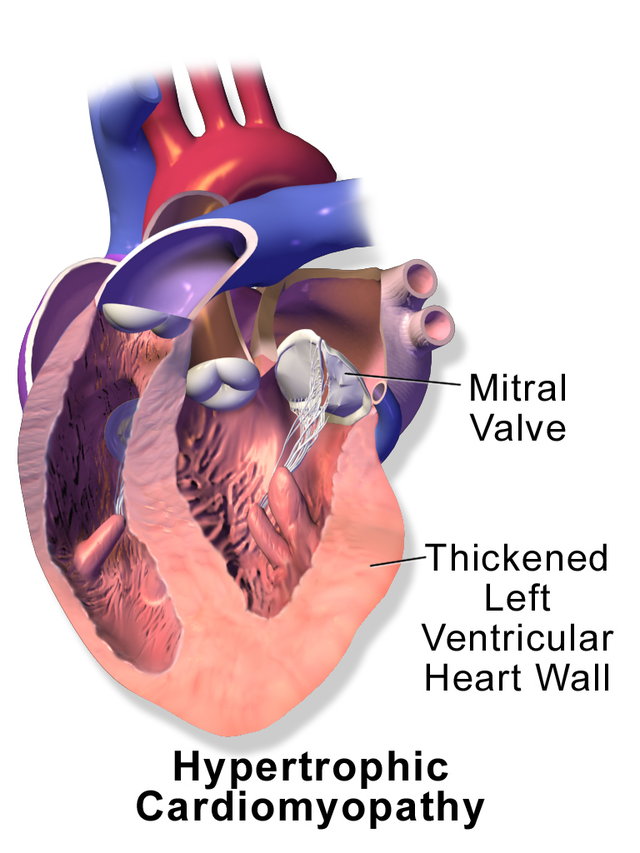
Hypertrophic cardiomyopathy
Smoking Smoking can cause more damage... Medication The medicines advised depend on what symptoms or complications develop. For example: Beta-blockers Beta-blockers (such as propranolol Propranolol - a beta-blocker ) and calcium channel blockers (antagonists) (especially verapamil Verapamil - a calcium-channel blocker ) are the commonly used.

Patient information leaflet
Angina
Angina is a pain that comes from the heart. It is usually caused by narrowing of the heart's ... Other treatments that may be advised Other medicines to prevent angina pains A beta-blocker may be sufficient to prevent angina pains but other medicines are available if required. They fall into three main groups: Calcium-channel blockers Calcium.
Further reading and references
- calcium voltage-gated channel subunit alpha1 A; MedlinePlus, National Library of Medicine.
- Auvin S, Holder-Espinasse M, Lamblin MD, Andrieux J. Array-CGH detection of a de novo 0.7-Mb deletion in 19p13.13 including CACNA1A associated with mental retardation and epilepsy with infantile spasms. Epilepsia. 2009 Nov;50(11):2501-3. doi: 10.1111/j.1528-1167.2009.02189.x. No abstract available.
- de Vries B, Freilinger T, Vanmolkot KR, Koenderink JB, Stam AH, Terwindt GM, Babini E, van den Boogerd EH, van den Heuvel JJ, Frants RR, Haan J, Pusch M, van den Maagdenberg AM, Ferrari MD, Dichgans M. Systematic analysis of three FHM genes in 39 sporadic patients with hemiplegic migraine. Neurology. 2007 Dec 4;69(23):2170-6. doi: 10.1212/01.wnl.0000295670.01629.5a.
- Du X, Wang J, Zhu H, Rinaldo L, Lamar KM, Palmenberg AC, Hansel C, Gomez CM. Second cistron in CACNA1A gene encodes a transcription factor mediating cerebellar development and SCA6. Cell. 2013 Jul 3;154(1):118-33. doi: 10.1016/j.cell.2013.05.059.
- Epi4K Consortium; Epilepsy Phenome/Genome Project; Allen AS, Berkovic SF, Cossette P, Delanty N, Dlugos D, Eichler EE, Epstein MP, Glauser T, Goldstein DB, Han Y, Heinzen EL, Hitomi Y, Howell KB, Johnson MR, Kuzniecky R, Lowenstein DH, Lu YF, Madou MR, Marson AG, Mefford HC, Esmaeeli Nieh S, O'Brien TJ, Ottman R, Petrovski S, Poduri A, Ruzzo EK, Scheffer IE, Sherr EH, Yuskaitis CJ, Abou-Khalil B, Alldredge BK, Bautista JF, Berkovic SF, Boro A, Cascino GD, Consalvo D, Crumrine P, Devinsky O, Dlugos D, Epstein MP, Fiol M, Fountain NB, French J, Friedman D, Geller EB, Glauser T, Glynn S, Haut SR, Hayward J, Helmers SL, Joshi S, Kanner A, Kirsch HE, Knowlton RC, Kossoff EH, Kuperman R, Kuzniecky R, Lowenstein DH, McGuire SM, Motika PV, Novotny EJ, Ottman R, Paolicchi JM, Parent JM, Park K, Poduri A, Scheffer IE, Shellhaas RA, Sherr EH, Shih JJ, Singh R, Sirven J, Smith MC, Sullivan J, Lin Thio L, Venkat A, Vining EP, Von Allmen GK, Weisenberg JL, Widdess-Walsh P, Winawer MR. De novo mutations in epileptic encephalopathies. Nature. 2013 Sep 12;501(7466):217-21. doi: 10.1038/nature12439. Epub 2013 Aug 11.
- Jeng CJ, Sun MC, Chen YW, Tang CY. Dominant-negative effects of episodic ataxia type 2 mutations involve disruption of membrane trafficking of human P/Q-type Ca2+ channels. J Cell Physiol. 2008 Feb;214(2):422-33. doi: 10.1002/jcp.21216.
- Jiang X, Raju PK, D'Avanzo N, Lachance M, Pepin J, Dubeau F, Mitchell WG, Bello-Espinosa LE, Pierson TM, Minassian BA, Lacaille JC, Rossignol E. Both gain-of-function and loss-of-function de novo CACNA1A mutations cause severe developmental epileptic encephalopathies in the spectrum of Lennox-Gastaut syndrome. Epilepsia. 2019 Sep;60(9):1881-1894. doi: 10.1111/epi.16316. Epub 2019 Aug 29.
- Kors EE, Haan J, Giffin NJ, Pazdera L, Schnittger C, Lennox GG, Terwindt GM, Vermeulen FL, Van den Maagdenberg AM, Frants RR, Ferrari MD. Expanding the phenotypic spectrum of the CACNA1A gene T666M mutation: a description of 5 families with familial hemiplegic migraine. Arch Neurol. 2003 May;60(5):684-8. doi: 10.1001/archneur.60.5.684.
- Kors EE, Terwindt GM, Vermeulen FL, Fitzsimons RB, Jardine PE, Heywood P, Love S, van den Maagdenberg AM, Haan J, Frants RR, Ferrari MD. Delayed cerebral edema and fatal coma after minor head trauma: role of the CACNA1A calcium channel subunit gene and relationship with familial hemiplegic migraine. Ann Neurol. 2001 Jun;49(6):753-60. doi: 10.1002/ana.1031.
- Luo X, Rosenfeld JA, Yamamoto S, Harel T, Zuo Z, Hall M, Wierenga KJ, Pastore MT, Bartholomew D, Delgado MR, Rotenberg J, Lewis RA, Emrick L, Bacino CA, Eldomery MK, Coban Akdemir Z, Xia F, Yang Y, Lalani SR, Lotze T, Lupski JR, Lee B, Bellen HJ, Wangler MF; Members of the UDN. Clinically severe CACNA1A alleles affect synaptic function and neurodegeneration differentially. PLoS Genet. 2017 Jul 24;13(7):e1006905. doi: 10.1371/journal.pgen.1006905. eCollection 2017 Jul.
- Nimmakayalu M, Horton VK, Darbro B, Patil SR, Alsayouf H, Keppler-Noreuil K, Shchelochkov OA. Apparent germline mosaicism for a novel 19p13.13 deletion disrupting NFIX and CACNA1A. Am J Med Genet A. 2013 May;161A(5):1105-9. doi: 10.1002/ajmg.a.35790. Epub 2013 Mar 13.
- Rajakulendran S, Schorge S, Kullmann DM, Hanna MG. Dysfunction of the Ca(V)2.1 calcium channel in cerebellar ataxias. F1000 Biol Rep. 2010 Jan 18;2:4. doi: 10.3410/B2-4.
- Riant F, Ducros A, Ploton C, Barbance C, Depienne C, Tournier-Lasserve E. De novo mutations in ATP1A2 and CACNA1A are frequent in early-onset sporadic hemiplegic migraine. Neurology. 2010 Sep 14;75(11):967-72. doi: 10.1212/WNL.0b013e3181f25e8f.
- Terwindt G, Kors E, Haan J, Vermeulen F, Van den Maagdenberg A, Frants R, Ferrari M. Mutation analysis of the CACNA1A calcium channel subunit gene in 27 patients with sporadic hemiplegic migraine. Arch Neurol. 2002 Jun;59(6):1016-8. doi: 10.1001/archneur.59.6.1016.
- Tottene A, Fellin T, Pagnutti S, Luvisetto S, Striessnig J, Fletcher C, Pietrobon D. Familial hemiplegic migraine mutations increase Ca(2+) influx through single human CaV2.1 channels and decrease maximal CaV2.1 current density in neurons. Proc Natl Acad Sci U S A. 2002 Oct 1;99(20):13284-9. doi: 10.1073/pnas.192242399. Epub 2002 Sep 16.
- Tottene A, Pivotto F, Fellin T, Cesetti T, van den Maagdenberg AM, Pietrobon D. Specific kinetic alterations of human CaV2.1 calcium channels produced by mutation S218L causing familial hemiplegic migraine and delayed cerebral edema and coma after minor head trauma. J Biol Chem. 2005 May 6;280(18):17678-86. doi: 10.1074/jbc.M501110200. Epub 2005 Mar 2.
- Wan J, Khanna R, Sandusky M, Papazian DM, Jen JC, Baloh RW. CACNA1A mutations causing episodic and progressive ataxia alter channel trafficking and kinetics. Neurology. 2005 Jun 28;64(12):2090-7. doi: 10.1212/01.WNL.0000167409.59089.C0.
- Zhuchenko O, Bailey J, Bonnen P, Ashizawa T, Stockton DW, Amos C, Dobyns WB, Subramony SH, Zoghbi HY, Lee CC. Autosomal dominant cerebellar ataxia (SCA6) associated with small polyglutamine expansions in the alpha 1A-voltage-dependent calcium channel. Nat Genet. 1997 Jan;15(1):62-9. doi: 10.1038/ng0197-62.
Share your thoughts or experiences with others in our patient communities.
Simple access to trusted treatments and health services online.
Common conditions
Get help with common conditions through the NHS, without a GP appointment.





Sign up to the Patient newsletter
Your weekly dose of clear, trustworthy health advice - written to help you feel informed, confident and in control.
By subscribing you accept our Privacy Policy. You can unsubscribe at any time. We never sell your data.