Familial hemiplegic migraine
Last updated 21 Mar 2023
Meets Patient’s editorial guidelines
- DownloadDownload
- Share
- Language
- Discussion
- Ask Patient
- Audio Version
- Add to preferred sources on Google
Familial hemiplegic migraine is a form of migraine headache that runs in families. Migraines usually cause intense, throbbing pain in one area of the head, often accompanied by nausea, vomiting, and extreme sensitivity to light and sound. These recurrent headaches typically begin in childhood or adolescence and can be triggered by certain foods, emotional stress, and minor head trauma. Each headache may last from a few hours to a few days.
Video picks for Genetic conditionsVideo library
Description
Familial hemiplegic migraine is a form of migraine headache that runs in families. Migraines usually cause intense, throbbing pain in one area of the head, often accompanied by nausea, vomiting, and extreme sensitivity to light and sound. These recurrent headaches typically begin in childhood or adolescence and can be triggered by certain foods, emotional stress, and minor head trauma. Each headache may last from a few hours to a few days.
In some types of migraine, including familial hemiplegic migraine, a pattern of neurological symptoms called an aura precedes the headache. The most common symptoms associated with an aura are temporary visual changes such as blind spots (scotomas), flashing lights, zig-zagging lines, and double vision. In people with familial hemiplegic migraine, auras are also characterised by temporary numbness or weakness, often affecting one side of the body (hemiparesis). Additional features of an aura can include difficulty with speech, confusion, and drowsiness. An aura typically develops gradually over a few minutes and lasts about an hour.
Unusually severe migraine episodes have been reported in some people with familial hemiplegic migraine. These episodes have included fever, seizures, prolonged weakness, coma, and, rarely, death. Although most people with familial hemiplegic migraine recover completely between episodes, neurological symptoms such as memory loss and problems with attention can last for weeks or months. About 20 percent of people with this condition develop mild but permanent difficulty coordinating movements (ataxia), which may worsen with time, and rapid, involuntary eye movements called nystagmus.
Inheritance patterns
The source lists the following possible inheritance patterns: Autosomal dominant. More than one pattern can apply in different cases.
Related genes
Other names
Hemiplegic migraine, familial
Hemiplegic-ophthalmoplegic migraine
Patient picks for Genetic conditions

Brain and nerves
Migraine
Migraine causes attacks of headaches, often making you feel sick or causing you to be sick. Treatment options include avoiding possible triggers, painkillers, anti-inflammatory painkillers, anti-sickness medicines, and triptan medicines. A medicine to prevent migraine attacks is an option if the attacks are frequent or severe.
by Dr Doug McKechnie, MRCGP

Brain and nerves
How to figure out your migraine triggers
Migraine is a very common disorder. If you don’t get them yourself, chances are you know someone who does. According to The Migraine Trust, around one in seven of us get migraines, yet fewer than half of us who do are happy with our treatment. So, rather than trying to treat a migraine once it's started, wouldn't it be better to try to prevent attacks? Working out what triggers yours could give you a better chance of doing just that.
by Paula Greenspan
Brain and nerves
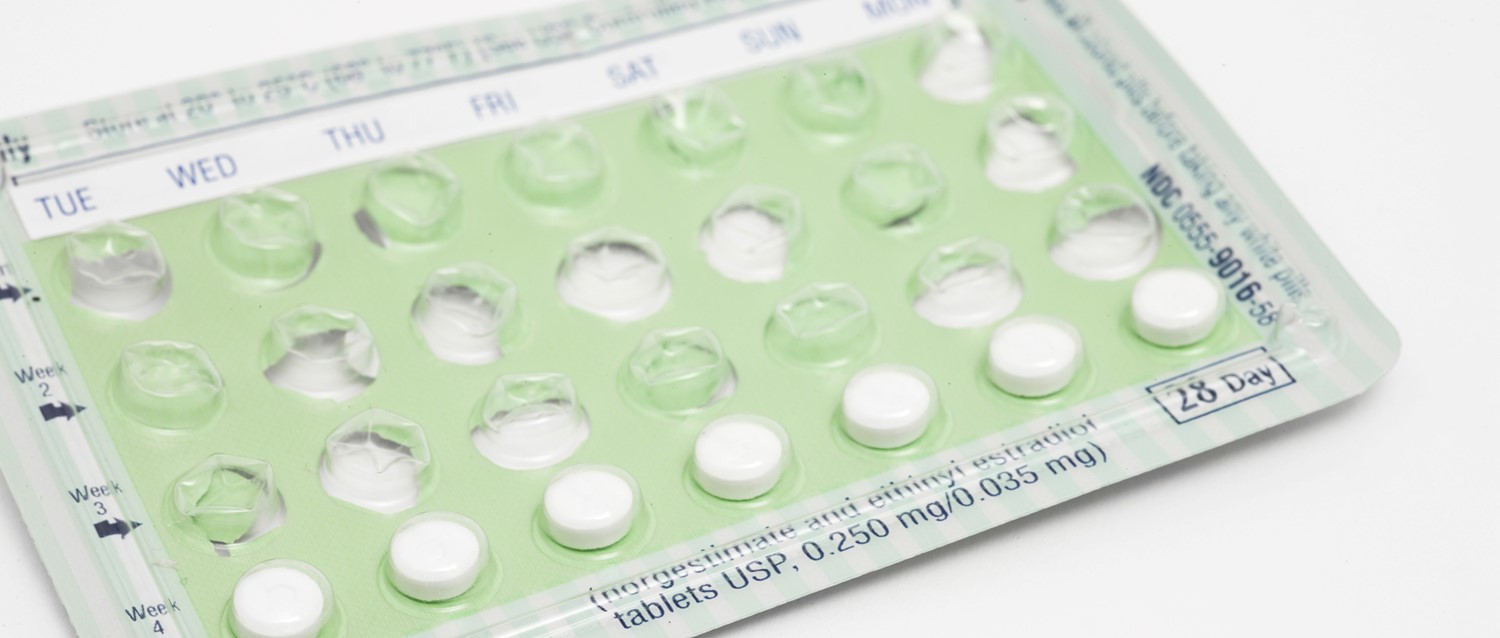
Should you avoid the pill if you get migraines?
For decades, migraine sufferers with aura have been told to avoid the combined oral contraceptive pill because of a slightly increased risk of stroke. But is this still the case? We ask experts about the latest guidance and what the best form of contraception is for those prone to migraines.
by Georgia Gallant
Brain and nerves
Migraine triggered by periods
Migraine attacks in women may be triggered by periods. Treatment of each migraine attack is no different than usual. However, there are treatments (detailed below) that may prevent period-related migraine attacks from occurring.
by Dr Hayley Willacy, FRCGP
Brain and nerves
Vyepti: a new drug for preventing migraines
A new drug for chronic migraine could improve access to effective migraine prevention treatment in the UK. How effective is Vyepti (eptinezumab)? And who could benefit from treatment?
by Amberley Davis
Treatment and medication
Migraine treatment
Medicines which are used to treat migraine attacks (episodes) include painkillers, anti-inflammatory painkillers, anti-sickness medicines and triptans.
by Dr Doug McKechnie, MRCGP
Related patient information and medicines
Patient information leaflet
Migraine
New treatments that target CGRP have been successfully used to treat migraine. There are also some very rare types of migraines that do have a clear genetic link, such as familial hemiplegic migraine (see below). Hemiplegic migraine can be inherited (familial hemiplegic migraine), which runs in families, or occur for the first time in people with.
Patient information leaflet
Headache
Headaches are very common and can affect. Most are not serious and improve with rest, fluids, or simple pain relief. Primary stabbing headaches are too short to treat although migraine prevention medications may reduce their frequency. Hemicrania continua Hemicrania continua is a primary chronic daily headache. It typically causes a continuous but.

Patient information leaflet
Cluster headaches
Cluster headaches occur as attacks of severe, one-sided headaches. An injection with a migraine medicine called sumatriptan, or a nasal spray containing a medicine called zolmitriptan, or breathing 100% oxygen, will usually relieve each headache. Symptoms of cluster headaches Cluster headaches consist of attacks of severe one-sided (unilateral).
Patient information leaflet
Functional neurological disorder
The term functional neurological disorder encompasses a wide range of symptoms that are often very debilitating. Doctors tend to categorise these symptoms according to their medical frame of reference, but often fail. The difficulty is many of these symptoms are present in other neurological conditions like Parkinson's disease Parkinson's disease.

Patient information leaflet
Visual problems
See the separate leaflet called Giant cell arteritis for more details Giant Cell Arteritis. Migraine Migraine can cause a temporary loss or alteration of vision which is referred to as an 'aura'. Usually patients experience a one-sided area of distorted or absent vision which affects both eyes but on the same side. See the separate leaflet called.

Patient information leaflet
Eye floaters, flashes and haloes
Migraines Eye flashes can also relate to migraines. Some people with migraine Migraine experience flashing lights. Usually, in migraine, these occur in both eyes simultaneously. They can last up to an hour and tend to increase to a maximum before fading away and being replaced by a headache, which is typically one-sided and which may or m....
Further reading and references
- Familial hemiplegic migraine; MedlinePlus, National Library of Medicine.
- Black DF. Sporadic and familial hemiplegic migraine: diagnosis and treatment. Semin Neurol. 2006 Apr;26(2):208-16. doi: 10.1055/s-2006-939921.
- Colson NJ, Fernandez F, Lea RA, Griffiths LR. The search for migraine genes: an overview of current knowledge. Cell Mol Life Sci. 2007 Feb;64(3):331-44. doi: 10.1007/s00018-006-5592-y.
- Dale RC, Gardiner A, Antony J, Houlden H. Familial PRRT2 mutation with heterogeneous paroxysmal disorders including paroxysmal torticollis and hemiplegic migraine. Dev Med Child Neurol. 2012 Oct;54(10):958-60. doi: 10.1111/j.1469-8749.2012.04394.x. Epub 2012 Jul 31.
- Jen JC. Familial Hemiplegic Migraine. 2001 Jul 17 [updated 2024 Jul 4]. In: Adam MP, Bick S, Mirzaa GM, Wallace SE, Amemiya A, editors. GeneReviews(R) [Internet]. Seattle (WA): University of Washington, Seattle; 1993-2026. Available from http://www.ncbi.nlm.nih.gov/books/NBK1388/
- Pietrobon D. Familial hemiplegic migraine. Neurotherapeutics. 2007 Apr;4(2):274-84. doi: 10.1016/j.nurt.2007.01.008.
- Ramagopalan SV, Ramscar NE, Cader MZ. Molecular mechanisms of migraine? J Neurol. 2007 Dec;254(12):1629-35. doi: 10.1007/s00415-007-0641-5. Epub 2007 Nov 7.
- Riant F, Roze E, Barbance C, Meneret A, Guyant-Marechal L, Lucas C, Sabouraud P, Trebuchon A, Depienne C, Tournier-Lasserve E. PRRT2 mutations cause hemiplegic migraine. Neurology. 2012 Nov 20;79(21):2122-4. doi: 10.1212/WNL.0b013e3182752cb8. Epub 2012 Oct 17.
- van de Ven RC, Kaja S, Plomp JJ, Frants RR, van den Maagdenberg AM, Ferrari MD. Genetic models of migraine. Arch Neurol. 2007 May;64(5):643-6. doi: 10.1001/archneur.64.5.643.
- van den Maagdenberg AM, Haan J, Terwindt GM, Ferrari MD. Migraine: gene mutations and functional consequences. Curr Opin Neurol. 2007 Jun;20(3):299-305. doi: 10.1097/WCO.0b013e3281338d1f.
Share your thoughts or experiences with others in our patient communities.
Simple access to trusted treatments and health services online.
Common conditions
Get help with common conditions through the NHS, without a GP appointment.





Sign up to the Patient newsletter
Your weekly dose of clear, trustworthy health advice - written to help you feel informed, confident and in control.
By subscribing you accept our Privacy Policy. You can unsubscribe at any time. We never sell your data.