sodium voltage-gated channel alpha subunit 1
Last updated 1 May 2023
Meets Patient’s editorial guidelines
- DownloadDownload
- Share
- Language
- Discussion
- Ask Patient
- Audio Version
- Add to preferred sources on Google
The SCN1A gene belongs to a family of genes that provide instructions for making sodium channels. These channels, which transport positively charged sodium atoms (sodium ions) into cells, play a key role in a cell's ability to generate and transmit electrical signals.
Video picks for GenesVideo library
Normal function
The SCN1A gene belongs to a family of genes that provide instructions for making sodium channels. These channels, which transport positively charged sodium atoms (sodium ions) into cells, play a key role in a cell's ability to generate and transmit electrical signals.
The SCN1A gene provides instructions for making one part (the alpha subunit) of a sodium channel called NaV1.1. These channels are primarily found in the brain, where they control the flow of sodium ions into cells. NaV1.1 channels are involved in transmitting signals from one nerve cell (neuron) to another. Communication between neurons depends on chemicals called neurotransmitters, which are released from one neuron and taken up by neighboring neurons. The flow of sodium ions through NaV1.1 channels helps determine when neurotransmitters will be released.
Conditions referring to this gene or chromosome
Other names
GEFSP2
HBSCI
NAC1
Nav1.1
SCN1
SCN1A_HUMAN
sodium channel protein, brain I alpha subunit
sodium channel, voltage gated, type I alpha subunit
sodium channel, voltage-gated, type I, alpha
sodium channel, voltage-gated, type I, alpha polypeptide
sodium channel, voltage-gated, type I, alpha subunit
Patient picks for Genes
Mental health
Mind and body control - how to channel your ‘internal telekinesis’
The dark nights have arrived, and right on cue, Mike Flanagan has turned his attention to one of Stephen King’s most iconic tales of teenage torment and supernatural terror... Carrie. The story of a schoolgirl with telekinetic powers - the fictional ability to move objects using the mind alone - has gripped our morbid imaginations for decades. Little wonder, then, that this horror classic is getting a new lease of life in a television adaptation. But while we ourselves may not be able to bend spoons or move furniture, we do possess our own real-world form of ‘internal-telekinesis’. Through mental focus and controlled breathing, we can influence our heart rate and help calm an overworked nervous system.
by Hannah Boynton-Forshaw

Treatment and medication
Calcium channel blockers
Calcium channel blockers (sometimes called calcium antagonists) are a group of medicines that affect the way calcium passes into certain muscle cells. They are commonly prescribed to manage high blood pressure, angina, Raynaud's phenomenon and some abnormal heart rhythms (arrhythmias). They are also used to try to stop premature labour in pregnancy. A calcium-channel blocker can be used alone. However, one is often combined with another medicine to treat high blood pressure or angina, when one medicine alone has not worked so well.
by Dr Toni Hazell, FRCGP
Healthy living
How much sodium should you have?
Sodium in the diet primarily comes from eating salt. While some of it comes from directly adding it to food, most of the salt we eat is already present in processed foods.
by Dr Hayley Willacy, FRCGP
Treatment and medication
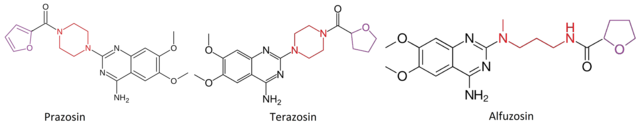
Alpha-blockers
Alpha-blockers are medicines that are mainly used to treat high blood pressure (hypertension) and problems with passing urine in men who have enlargement of the prostate gland. Prostate gland enlargement is also called benign prostatic hyperplasia (BPH).
by Dr Doug McKechnie, MRCGP
Medicine
Alfacalcidol capsules and drops
Alfacalcidol is a type of vitamin D. You will need to have regular blood tests while you are taking the medicine so that your doctor can adjust your dose. Make sure you know the symptoms of too much calcium in your blood - these are losing your appetite, feeling thirsty, being sick (vomiting), feeling tired and losing weight. Please let your doctor know if you develop these symptoms.
by Michael Stewart, MRPharmS
Medicine
Sodium valproate for epilepsy
Read the information leaflet from inside your pack. Take sodium valproate regularly every day. Do not suddenly stop taking it as this can cause your symptoms to return. If you develop tummy (abdominal) pain, sickness, yellowing of your skin or of the whites of your eyes (jaundice) or any unexplained bruising or bleeding, tell your doctor straightaway.
by Michael Stewart, MRPharmS
Related patient information and medicines

Patient information leaflet
High blood pressure
High blood pressure (hypertension) happens when the force on the walls of blood vessels (caused by the blood within them) is more than normal. This means the heart has to work harder and the blood vessels are under more strain, making it a major risk factor for heart disease , stroke and other serious conditions. What is high blood pressure. High.

Patient information leaflet
6-in-1 vaccine
The 6-in-1 vaccine is part of routine childhood immunisations and protects babies against six different serious illnesses. Three doses are given. Further boosters without all six components are given at other times later in childhood and in adult life. The 6-in-1 vaccine used to be given as the 3-in-1 vaccine DTaP along with the polio vaccine.

Patient information leaflet
Can I take Magnesium and Flecainide together?
In some cases, magnesium can actually be helpful for heart rhythm issues, but it must be balanced correctly. Why this happens Both magnesium and flecainide affect the electrical signals and mineral channels (like sodium and potassium) in your heart cells. While they don't usually stop each other from being absorbed, having too much or too little.
Patient information leaflet
Swollen lymph glands
If your glands haven't gone down after 2 weeks, are getting bigger, or you are struggling to breathe, you should seek medical help immediately. What are swollen glands. Dr Sarah Jarvis MBE, GP and Clinical Director of Patient.info There are a number of causes of swollen lymph glands. The most common cause is infection. See your doctor if you have.

Patient information leaflet
Cystoscopy
A cystoscopy is a procedure which looks into the bladder with a special telescope called a cystoscope. Note : the information below is a general guide only. The arrangements, and the way tests are performed, may vary between different hospitals. Always follow the instructions given by your doctor or local hospital. Why is a cystoscopy done. To.

Patient information leaflet
Achalasia
Achalasia is an uncommon condition that affects the muscles of the gullet (oesophagus). It usually causes difficulty in swallowing both food and fluids. There are different treatments available which can improve symptoms. What is achalasia. Achalasia affects both the muscles and the nerves of the oesophagus, especially initially the nerves that.
Further reading and references
- sodium voltage-gated channel alpha subunit 1; MedlinePlus, National Library of Medicine.
- Dichgans M, Freilinger T, Eckstein G, Babini E, Lorenz-Depiereux B, Biskup S, Ferrari MD, Herzog J, van den Maagdenberg AM, Pusch M, Strom TM. Mutation in the neuronal voltage-gated sodium channel SCN1A in familial hemiplegic migraine. Lancet. 2005 Jul 30-Aug 5;366(9483):371-7. doi: 10.1016/S0140-6736(05)66786-4.
- Fujiwara T. Clinical spectrum of mutations in SCN1A gene: severe myoclonic epilepsy in infancy and related epilepsies. Epilepsy Res. 2006 Aug;70 Suppl 1:S223-30. doi: 10.1016/j.eplepsyres.2006.01.019. Epub 2006 Jun 27.
- Gargus JJ, Tournay A. Novel mutation confirms seizure locus SCN1A is also familial hemiplegic migraine locus FHM3. Pediatr Neurol. 2007 Dec;37(6):407-10. doi: 10.1016/j.pediatrneurol.2007.06.016.
- Martin MS, Dutt K, Papale LA, Dube CM, Dutton SB, de Haan G, Shankar A, Tufik S, Meisler MH, Baram TZ, Goldin AL, Escayg A. Altered function of the SCN1A voltage-gated sodium channel leads to gamma-aminobutyric acid-ergic (GABAergic) interneuron abnormalities. J Biol Chem. 2010 Mar 26;285(13):9823-9834. doi: 10.1074/jbc.M109.078568. Epub 2010 Jan 25.
- Mulley JC, Scheffer IE, Petrou S, Dibbens LM, Berkovic SF, Harkin LA. SCN1A mutations and epilepsy. Hum Mutat. 2005 Jun;25(6):535-42. doi: 10.1002/humu.20178.
- Pietrobon D. Familial hemiplegic migraine. Neurotherapeutics. 2007 Apr;4(2):274-84. doi: 10.1016/j.nurt.2007.01.008.
- Spampanato J, Escayg A, Meisler MH, Goldin AL. Functional effects of two voltage-gated sodium channel mutations that cause generalized epilepsy with febrile seizures plus type 2. J Neurosci. 2001 Oct 1;21(19):7481-90. doi: 10.1523/JNEUROSCI.21-19-07481.2001.
- Tate SK, Depondt C, Sisodiya SM, Cavalleri GL, Schorge S, Soranzo N, Thom M, Sen A, Shorvon SD, Sander JW, Wood NW, Goldstein DB. Genetic predictors of the maximum doses patients receive during clinical use of the anti-epileptic drugs carbamazepine and phenytoin. Proc Natl Acad Sci U S A. 2005 Apr 12;102(15):5507-12. doi: 10.1073/pnas.0407346102. Epub 2005 Apr 1.
- Tate SK, Singh R, Hung CC, Tai JJ, Depondt C, Cavalleri GL, Sisodiya SM, Goldstein DB, Liou HH. A common polymorphism in the SCN1A gene associates with phenytoin serum levels at maintenance dose. Pharmacogenet Genomics. 2006 Oct;16(10):721-6. doi: 10.1097/01.fpc.0000230114.41828.73.
- Vanmolkot KR, Babini E, de Vries B, Stam AH, Freilinger T, Terwindt GM, Norris L, Haan J, Frants RR, Ramadan NM, Ferrari MD, Pusch M, van den Maagdenberg AM, Dichgans M. The novel p.L1649Q mutation in the SCN1A epilepsy gene is associated with familial hemiplegic migraine: genetic and functional studies. Mutation in brief #957. Online. Hum Mutat. 2007 May;28(5):522. doi: 10.1002/humu.9486.
- Volkers L, Kahlig KM, Verbeek NE, Das JH, van Kempen MJ, Stroink H, Augustijn P, van Nieuwenhuizen O, Lindhout D, George AL Jr, Koeleman BP, Rook MB. Nav 1.1 dysfunction in genetic epilepsy with febrile seizures-plus or Dravet syndrome. Eur J Neurosci. 2011 Oct;34(8):1268-75. doi: 10.1111/j.1460-9568.2011.07826.x. Epub 2011 Aug 22.
- Yamakawa K. Na channel gene mutations in epilepsy--the functional consequences. Epilepsy Res. 2006 Aug;70 Suppl 1:S218-22. doi: 10.1016/j.eplepsyres.2005.11.025. Epub 2006 Jun 27.
Share your thoughts or experiences with others in our patient communities.
Simple access to trusted treatments and health services online.
Common conditions
Get help with common conditions through the NHS, without a GP appointment.





Sign up to the Patient newsletter
Your weekly dose of clear, trustworthy health advice - written to help you feel informed, confident and in control.
By subscribing you accept our Privacy Policy. You can unsubscribe at any time. We never sell your data.