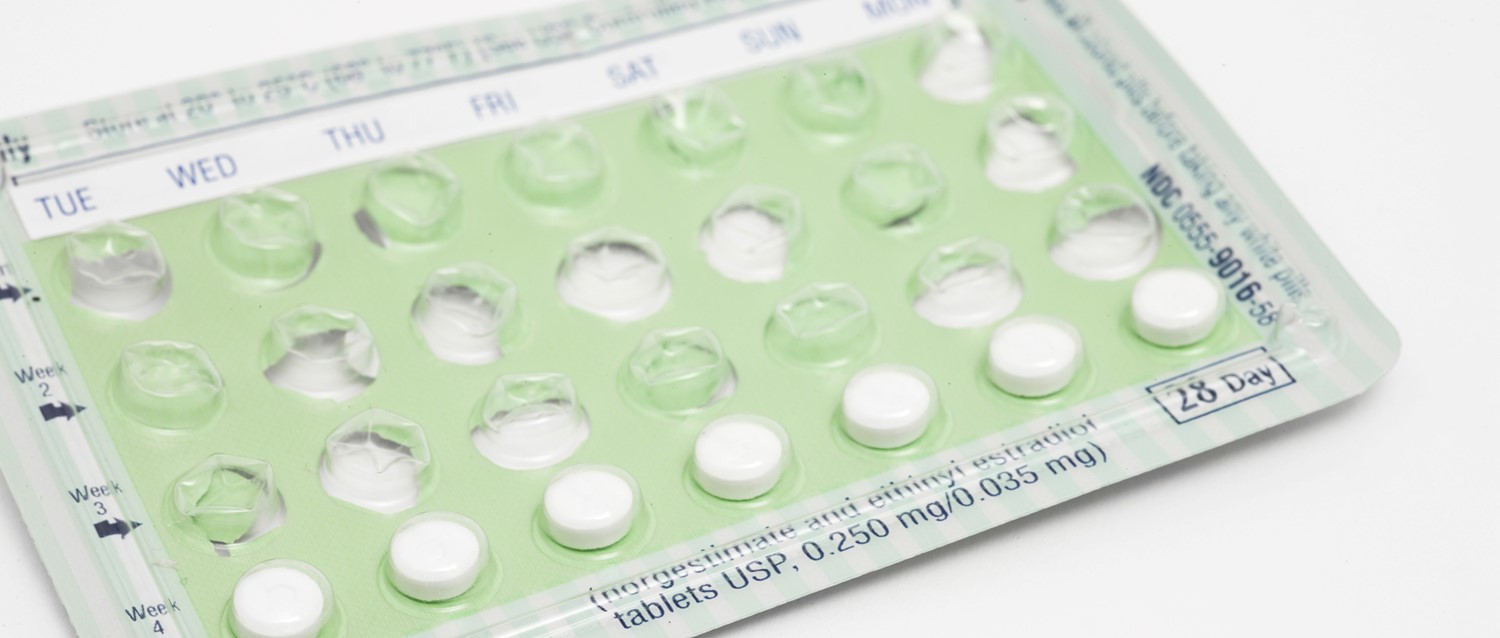
Should you avoid the pill if you get migraines?
Peer reviewed by Dr Sarah JarvisAuthored by Georgia GallantOriginally published 7 Mar 2019
Meets Patient’s editorial guidelines
- DownloadDownload
- Share
- Language
- Discussion
- Ask Patient
- Audio Version
- Add to preferred sources on Google
For decades, migraine sufferers with aura have been told to avoid the combined oral contraceptive pill because of a slightly increased risk of stroke. But is this still the case? We ask experts about the latest guidance and what the best form of contraception is for those prone to migraines.
Want to access contraception online?
Start a quick NHS Pharmacy First consultation online through Patient.info.
- Online and available 24/7, treatment can often be delivered next day.
- Free service, just pay the NHS prescription charge online if required.
- Just answer a few questions then choose a time for a clinician call.
Powered by Evaro, a UK regulated healthcare service supporting over 2 million patients. Reviewed by UK registered clinicians.

Video picks for MigraineVideo library
I've been fortunate that the combined pill hasn't caused me any issues in the eight years I’ve been on it. It can be a struggle to find a long-term contraceptive that works for you, so when you do, you tend to cling on to it for dear life. Which, admittedly, means I tell a white lie when I go for my biannual pill review and refill.
Unfortunately, many of the women in my family suffer from migraine (they're not classed as hereditary, but often occur in several family members). When being supplied with the pill, your healthcare professional will always ask you two questions, even if you've been taking it for years: “Do you smoke?” and “Do you experience migraines with aura?”.
I'm not a smoker but occasionally experience an aura migraine every four to six months for a day or two. As I don't consider this to be regular enough to risk changing my trusted contraception, it goes unmentioned against my better judgement. But that could be about to change.
Risky business
Auras act as a warning sign before the migraine headache begins. Most common is a visual aura, causing symptoms such as a temporary loss to one side of your vision, extremely bright zig-zag or kaleidoscope patterns or both. Numbness and pins and needles are also common, and it's even possible for auras to affect speech, smell and food cravings. So what does this have to do with the pill?
"There are different types of pill: the progestogen-only pill (or mini-pill), which as the name suggests contains only progesterone, and the combined pill, which contains both oestrogen and progesterone," explains Dr Caroline Cooper, associate specialist in sexual and reproductive health and spokesperson for the Faculty of Sexual and Reproductive Healthcare (FSRH) of The Royal College of Obstetricians and Gynaecologists (RCOG).
The combined oral contraceptive pill is associated with a small increased risk of ischaemic stroke. Una Farrell of The Migraine Trust says the risk increases "when the pill is taken by women who have additional risks for stroke, such as smoking and migraine with aura".
"Statistics show that the risk is extremely small but nevertheless it is still a risk which can be avoided," she continues.
Cooper goes further, highlighting new guidance from the FSRH that states there is 'an unacceptable health risk' from taking the combined pill if you suffer with migraines with aura. So even if you only experience aura occasionally, you should never take the combined pill, according to these guidelines.
How the pill has changed
Although the dosage of hormones in the combined pill has significantly reduced since it was first introduced in the 1960s (in turn decreasing many of the associated risks), the increased risk of ischaemic stroke is still significant enough to advise against it for those who have migraines with aura.
"This advice also applies to other methods of combined hormonal contraception such as the ring and the patch," Cooper adds.
If you don't have aura with your migraines, your doctor may give you the go-ahead to take the combined pill. Farrell notes that as the dosage of hormones in the pill is now much lower, "unwanted effects like headaches and migraines are much less likely to occur".
"However," Cooper warns, "if your migraines do become more frequent whilst taking the combined pill, you should consider stopping it, as the risk of continuing generally outweighs any benefits."
Can the pill cause headaches?
Experiencing headaches around your period is common whether you use hormonal contraception or not.
"For those who have taken the pill for many months or years, it can be difficult to tell whether headaches are associated with contraception or other lifestyle factors," states Cooper.
"Around 50% of women with migraine say their menstrual cycle directly affects it," Farrell reveals, with attacks becoming more severe or frequent during the break week, potentially due to the drop in oestrogen or the release of prostaglandins (chemicals associated with pain).
There are solutions, however. Cooper suggests forgoing your period by taking the pill continuously if you find you suffer with headaches during the pill-free week.
"Alternatively, some women find changing to a different pill with a lower dose of oestrogen can help with headaches," she says.
As for the combined pill causing headaches, Cooper notes that there is a lack of evidence, with studies finding no consistent link.
A recent breakthrough
Traditionally you were advised to take a seven-day break in each pill packet to have a 'withdrawal bleed'. However, recently updated FSRH guidelines state there are actually no health benefits to this hormone-free interval for most people.
"Taking a continuous dose of hormones rather than stopping and starting is as safe and effective as the traditional way and can help to avoid headaches and mood changes during the break," assures Cooper. "And many women find their bleeds become lighter and may stop completely."
Do be aware that taking the pill continuously may cause breakthrough bleeding, so have spare menstrual products to hand just in case.
The right contraceptive for you
The pill has decreased in popularity over the last decade due to growing concerns about a link between the contraceptive and depression. If you feel the pill is no longer working for you, or you suffer from migraines, consider switching to long-acting reversible contraceptives (LARCs) such as the coil or implant. The main benefit is that you don't have to remember to take them every day so there's less risk of unwanted pregnancy.
If you have problems when coming off the pill after a long period of time, consult your GP. Many people find that it can affect your mood, skin and weight, which is unsurprising as your body will be used to a regular dose of synthetic hormones.
But it's not all bad news. If you do have migraines with or without aura and want to continue using hormonal contraception, Cooper assures that "the advantages of using the progestogen-only pill generally outweigh the risks" and it has not been associated with an increased risk of stroke or migraine.
"This makes the progestogen-only pill a good alternative for women with migraines who are unable to take the combined pill," she says.
Remember, other progestogen-only methods, such as the implant or contraceptive injection, are also available. Speak with your GP or local sexual health clinic for more advice and a one-to-one assessment.
Now I've spoken to the experts, I will definitely be choosing caution over convenience.
Patient picks for Migraine
Sexual health
Signs you're on the wrong contraceptive pill
The contraceptive pill can affect everyone differently, and side effects that are difficult to manage may be a sign that your current pill isn't right for you. Knowing what to look out for can help you decide when to speak to your doctor about your options.
by Josh Alderman

Brain and nerves
Is your period causing your migraines?
Headaches and migraines are a common problem that affect both sexes. But women tend to be more frequently affected. This is thought to be due to the influence of hormones. Interestingly, most women who experience migraines remember their first attack occurring around the time they started their period. So what can you do if menstrual migraines are affecting your quality of life?
by Dr Jennifer Kelly, MRCGP

Brain and nerves
Could histamine be the cause of your migraines?
Here in the UK, migraine affects 1 in 7 people and is more prevalent than diabetes, epilepsy and asthma combined. It is the most common and disabling neurological disorder in the UK with 190,000 attacks daily. We investigate the evidence linking histamine and migraine and the treatment options available.
by Ginny Weeks

Bones, joints and muscles
When should you worry about neck pain?
Many of us will get neck pain at some point, often walking up with a sore or aching neck. It's hardly surprising - the neck is a miracle of natural engineering. It allows us to twist our heads in all directions while still supporting the weight of our skulls and protecting the vital nerves connecting our brains with the rest of our bodies.
by Victoria Raw
General health
AskPatient
AskPatient is a safer, clinically informed AI assistant designed to help you understand health information and find reliable guidance on Patient.info. Whether you have a symptom, want to understand a condition, or need help finding the right information, AskPatient can guide you to clear, trusted content written and reviewed by healthcare professionals. Start by typing your question below. Open in a new window
by Patient infomatics team

Ear, nose and throat
What should you eat if you have tonsillitis?
You've got tonsillitis and your throat feels like sandpaper. You feel nauseous and it is difficult to swallow, which is making eating - and wanting to eat - challenging. When you're not feeling well, however, it's important to keep your strength up. So, if you're wondering what to eat with tonsillitis, we've got you covered.
by Victoria Raw
About the authorView full bio
Authored by

Georgia Gallant
BA (Hons), MA
Georgia graduated from Bournemouth University with a BA (Hons) in Scriptwriting for Film and Television and an MA in Literary Media.
About the reviewerView full bio

Dr Sarah Jarvis
Clinical Consultant
MA (Cantab), BM, BCh (Oxon), DRCOG, FRCGP, MBE
After training in medicine at Cambridge and Oxford, Dr Sarah Jarvis MBE became a GP.
Article history
Article also available in English, German, Spanish, French, Italian, Portuguese, Hindi, Hebrew, Arabic, and Swedish.
7 Mar 2019 | Originally published
Authored by:
Georgia GallantPeer reviewed by
Dr Sarah Jarvis
Share your thoughts or experiences with others in our patient communities.
Sign up to the Patient newsletter
Your weekly dose of clear, trustworthy health advice - written to help you feel informed, confident and in control.
By subscribing you accept our Privacy Policy. You can unsubscribe at any time. We never sell your data.