chromodomain helicase DNA binding protein 7
Last updated 26 Sept 2025
Meets Patient’s editorial guidelines
- DownloadDownload
- Share
- Language
- Discussion
- Ask Patient
- Audio Version
- Add to preferred sources on Google
The CHD7 gene provides instructions for making a protein called chromodomain helicase DNA binding protein 7. This protein is found in many parts of the body before birth, including the eye, the inner ear, and the brain. In the brain, the CHD7 protein is active in several areas, including a bundle of nerve cells (neurons) called the olfactory bulb that is critical for the perception of odors.
Video picks for GenesVideo library
Normal function
The CHD7 gene provides instructions for making a protein called chromodomain helicase DNA binding protein 7. This protein is found in many parts of the body before birth, including the eye, the inner ear, and the brain. In the brain, the CHD7 protein is active in several areas, including a bundle of nerve cells (neurons) called the olfactory bulb that is critical for the perception of odors.
The CHD7 protein belongs to a family of proteins that are thought to play a role in the organisation of chromatin. Chromatin is the complex of DNA and protein that packages DNA into chromosomes. The CHD7 protein regulates the activity (expression) of several other genes through a process known as chromatin remodeling. The structure of chromatin can be changed (remodeled) to alter how tightly DNA is packaged. When DNA is tightly packed, gene expression is lower than when DNA is loosely packed. Researchers are working to determine which genes the CHD7 protein regulates.
Conditions referring to this gene or chromosome
Other names
CHD7_HUMAN
FLJ20357
FLJ20361
IS3
KIAA1416
Patient picks for Genes

Tests and investigations
Is DNA testing a good idea?
'DIY' genetic tests are heavily hyped these days - they claim to be able to predict your risk of dementia, cancer, heart disease and much more. But should you shell out your money for them? Absolutely not, according to most doctors. However, there are situations where DNA tests can save lives.
by Dr Sarah Jarvis

Diet and nutrition
How a protein-packed breakfast can boost your health
When we think of breakfast, we often picture a bowl of cornflakes with milk. While it’s a classic morning staple, it might not be the most effective way to start your day, as it lacks protein. Adding more protein to your breakfast can boost your energy levels and help keep you feeling full for longer.
by Victoria Raw
Healthy living
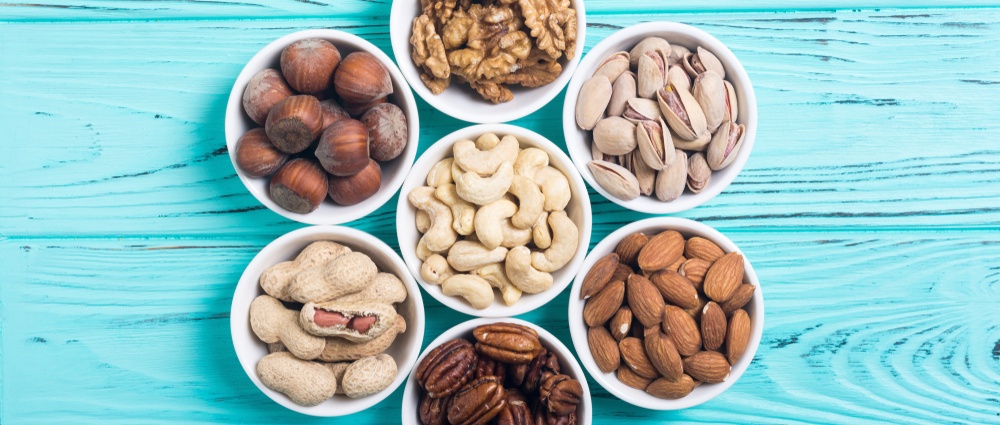
8 high-protein nuts to boost your strength
Packed with protein, delicious, easy to eat, and versatile - nuts are a great source of fuel for people building their fitness and strength. But not all nuts are created equal, which is why we count down the top eight nuts you should eat while strength training and serve these up with tasty recipe ideas.
by Lynn Stephen

Kidney and urinary tract
Proteinuria
Proteins are molecules that are found in almost every part of the body, including in the blood. The kidneys normally have a filter which stops protein from entering the urine, except in very tiny amounts; however, kidney problems can cause higher levels of protein to be found in the urine.
by Dr Doug McKechnie, MRCGP
Healthy living
Natural protein verses protein powder: which is better for strength training?
Consuming enough protein is essential for building strong muscles. Protein powder shakes are not a complete replacement for natural protein sources found in your food. However, you may consider supplementing your diet and strength-training regime with protein shakes. Before you decide if this is right for you, there are several benefits and considerations to take into account.
by Amberley Davis

Diet and nutrition
10 sources of plant-based protein for bone health
Plant-based diets are growing in popularity. People choose this way of eating for various reasons - to boost their health, help animals, and protect the environment. But switching to a plant-based diet may mean you're missing out on vital, bone-friendly nutrients. One of these is protein.
by Victoria Raw
Related patient information and medicines

Patient information leaflet
Genetic testing
Genetic testing is a type of medical test that identifies changes in chromosomes, genes or proteins. Genetic tests examine a person's DNA in a variety of ways to assess a person's genetic health. They are all designed to identify a particular gene that may cause a genetic disorder. We all have 46 chromosomes in our cells. Chromosomes are made from.
Patient information leaflet
Childhood leukaemias
Most children with leukaemia will have acute lymphoblastic leukaemia. Some will have acute myeloid leukaemia. The outlook (prognosis) for children with leukaemia is usually very good and most children are cured. This leaflet gives a general overview of childhood leukaemias. What is leukaemia. (The word leukaemia comes from a Greek word which means.

Patient information leaflet
The immune system
These diseases are managed by the specialist who knows most about the system affected for that person - eg, multiple sclerosis is managed by a neurologist. What is the immune system. We are surrounded by millions of bacteria, viruses and other germs (microbes) that have the potential to enter our bodies and cause harm. The immune system is the.

Patient information leaflet
Colour vision deficiency
Pa... Leukaemia Leukaemia. Sickle cell disease Sickle cell disease. DNA, genes and chromosomes In most cells of your body you have 46 chromosomes arranged in 23 pairs. 22 of the pairs are matching pairs. The 23rd pair of chromosomes are the sex chromosomes, which match exactly in women (who have two X chromosomes) but not in men - who have one X.

Patient information leaflet
Muscular dystrophy
There are different types of muscular dystrophy, which vary as to how severe they are, ranging from very mild to severe. The different types also vary as to what age they begin. If muscular dystrophy is suspected, tests can help to make an accurate diagnosis. Other people in the family can also be tested to see if they have a muscular dystrophy.

Patient information leaflet
Causes of cancer
Different parts of the body such as organs, bones, muscles, skin and blood are made up from different specialised cells. Most cells have a centre called a nucleus. The nucleus in each cell contains thousands of genes which are made up from a chemical called DNA. The genes are like codes which control the functions of the cell. For example,.
Further reading and references
- chromodomain helicase DNA binding protein 7; MedlinePlus, National Library of Medicine.
- Balasubramanian R, Choi JH, Francescatto L, Willer J, Horton ER, Asimacopoulos EP, Stankovic KM, Plummer L, Buck CL, Quinton R, Nebesio TD, Mericq V, Merino PM, Meyer BF, Monies D, Gusella JF, Al Tassan N, Katsanis N, Crowley WF Jr. Functionally compromised CHD7 alleles in patients with isolated GnRH deficiency. Proc Natl Acad Sci U S A. 2014 Dec 16;111(50):17953-8. doi: 10.1073/pnas.1417438111. Epub 2014 Dec 3.
- Balasubramanian R, Crowley WF Jr. Isolated Gonadotropin-Releasing Hormone (GnRH) Deficiency. 2007 May 23 [updated 2022 May 12]. In: Adam MP, Bick S, Mirzaa GM, Wallace SE, Amemiya A, editors. GeneReviews(R) [Internet]. Seattle (WA): University of Washington, Seattle; 1993-2026. Available from http://www.ncbi.nlm.nih.gov/books/NBK1334/
- Bergman JE, de Ronde W, Jongmans MC, Wolffenbuttel BH, Drop SL, Hermus A, Bocca G, Hoefsloot LH, van Ravenswaaij-Arts CM. The results of CHD7 analysis in clinically well-characterized patients with Kallmann syndrome. J Clin Endocrinol Metab. 2012 May;97(5):E858-62. doi: 10.1210/jc.2011-2652. Epub 2012 Mar 7.
- Bergman JE, Janssen N, Hoefsloot LH, Jongmans MC, Hofstra RM, van Ravenswaaij-Arts CM. CHD7 mutations and CHARGE syndrome: the clinical implications of an expanding phenotype. J Med Genet. 2011 May;48(5):334-42. doi: 10.1136/jmg.2010.087106. Epub 2011 Mar 4.
- Bouazoune K, Kingston RE. Chromatin remodeling by the CHD7 protein is impaired by mutations that cause human developmental disorders. Proc Natl Acad Sci U S A. 2012 Nov 20;109(47):19238-43. doi: 10.1073/pnas.1213825109. Epub 2012 Nov 7.
- Jongmans MC, van Ravenswaaij-Arts CM, Pitteloud N, Ogata T, Sato N, Claahsen-van der Grinten HL, van der Donk K, Seminara S, Bergman JE, Brunner HG, Crowley WF Jr, Hoefsloot LH. CHD7 mutations in patients initially diagnosed with Kallmann syndrome--the clinical overlap with CHARGE syndrome. Clin Genet. 2009 Jan;75(1):65-71. doi: 10.1111/j.1399-0004.2008.01107.x. Epub 2008 Nov 17.
- Kim HG, Kurth I, Lan F, Meliciani I, Wenzel W, Eom SH, Kang GB, Rosenberger G, Tekin M, Ozata M, Bick DP, Sherins RJ, Walker SL, Shi Y, Gusella JF, Layman LC. Mutations in CHD7, encoding a chromatin-remodeling protein, cause idiopathic hypogonadotropic hypogonadism and Kallmann syndrome. Am J Hum Genet. 2008 Oct;83(4):511-9. doi: 10.1016/j.ajhg.2008.09.005. Epub 2008 Oct 2.
- Lalani SR, Safiullah AM, Fernbach SD, Harutyunyan KG, Thaller C, Peterson LE, McPherson JD, Gibbs RA, White LD, Hefner M, Davenport SL, Graham JM, Bacino CA, Glass NL, Towbin JA, Craigen WJ, Neish SR, Lin AE, Belmont JW. Spectrum of CHD7 mutations in 110 individuals with CHARGE syndrome and genotype-phenotype correlation. Am J Hum Genet. 2006 Feb;78(2):303-14. doi: 10.1086/500273. Epub 2005 Dec 29.
- Marcos S, Sarfati J, Leroy C, Fouveaut C, Parent P, Metz C, Wolczynski S, Gerard M, Bieth E, Kurtz F, Verier-Mine O, Perrin L, Archambeaud F, Cabrol S, Rodien P, Hove H, Prescott T, Lacombe D, Christin-Maitre S, Touraine P, Hieronimus S, Dewailly D, Young J, Pugeat M, Hardelin JP, Dode C. The prevalence of CHD7 missense versus truncating mutations is higher in patients with Kallmann syndrome than in typical CHARGE patients. J Clin Endocrinol Metab. 2014 Oct;99(10):E2138-43. doi: 10.1210/jc.2014-2110. Epub 2014 Jul 31.
- Schulz Y, Wehner P, Opitz L, Salinas-Riester G, Bongers EM, van Ravenswaaij-Arts CM, Wincent J, Schoumans J, Kohlhase J, Borchers A, Pauli S. CHD7, the gene mutated in CHARGE syndrome, regulates genes involved in neural crest cell guidance. Hum Genet. 2014 Aug;133(8):997-1009. doi: 10.1007/s00439-014-1444-2. Epub 2014 Apr 13.
- van Ravenswaaij-Arts CM, Hefner M, Blake K, Martin DM. CHD7 Disorder. 2006 Oct 2 [updated 2025 Aug 14]. In: Adam MP, Bick S, Mirzaa GM, Wallace SE, Amemiya A, editors. GeneReviews(R) [Internet]. Seattle (WA): University of Washington, Seattle; 1993-2026. Available from http://www.ncbi.nlm.nih.gov/books/NBK1117/
- Vissers LE, van Ravenswaaij CM, Admiraal R, Hurst JA, de Vries BB, Janssen IM, van der Vliet WA, Huys EH, de Jong PJ, Hamel BC, Schoenmakers EF, Brunner HG, Veltman JA, van Kessel AG. Mutations in a new member of the chromodomain gene family cause CHARGE syndrome. Nat Genet. 2004 Sep;36(9):955-7. doi: 10.1038/ng1407. Epub 2004 Aug 8.
Share your thoughts or experiences with others in our patient communities.
Simple access to trusted treatments and health services online.
Common conditions
Get help with common conditions through the NHS, without a GP appointment.





Sign up to the Patient newsletter
Your weekly dose of clear, trustworthy health advice - written to help you feel informed, confident and in control.
By subscribing you accept our Privacy Policy. You can unsubscribe at any time. We never sell your data.