docking protein 7
Last updated 13 Feb 2026
Meets Patient’s editorial guidelines
- DownloadDownload
- Share
- Language
- Discussion
- Ask Patient
- Audio Version
- Add to preferred sources on Google
The DOK7 gene provides instructions for making a protein that helps form connections between nerve cells and muscle cells at the neuromuscular junction. The neuromuscular junction is the area between nerve cells and muscle cells where signals are passed on to trigger muscle movement.
Video picks for GenesVideo library
Normal function
The DOK7 gene provides instructions for making a protein that helps form connections between nerve cells and muscle cells at the neuromuscular junction. The neuromuscular junction is the area between nerve cells and muscle cells where signals are passed on to trigger muscle movement.
The Dok-7 protein participates in turning on (activating) a protein called MuSK that helps organize the various proteins that are important for developing and maintaining the neuromuscular junction. In particular, MuSK is involved in gathering a protein called the acetylcholine receptor (AChR) on the surface of the muscle cells at the neuromuscular junction. The AChR protein is critical for signaling between nerve and muscle cells.
Conditions referring to this gene or chromosome
Other names
C4orf25
CMS1B
Dok-7
DOK7_HUMAN
downstream of tyrosine kinase 7
Patient picks for Genes
Kidney and urinary tract
Proteinuria
Proteins are molecules that are found in almost every part of the body, including in the blood. The kidneys normally have a filter which stops protein from entering the urine, except in very tiny amounts; however, kidney problems can cause higher levels of protein to be found in the urine.
by Dr Doug McKechnie, MRCGP

Diet and nutrition
How a protein-packed breakfast can boost your health
When we think of breakfast, we often picture a bowl of cornflakes with milk. While it’s a classic morning staple, it might not be the most effective way to start your day, as it lacks protein. Adding more protein to your breakfast can boost your energy levels and help keep you feeling full for longer.
by Victoria Raw

Diet and nutrition
10 sources of plant-based protein for bone health
Plant-based diets are growing in popularity. People choose this way of eating for various reasons - to boost their health, help animals, and protect the environment. But switching to a plant-based diet may mean you're missing out on vital, bone-friendly nutrients. One of these is protein.
by Victoria Raw

Diet and nutrition
How much protein do you need to build muscle?
If you wish to build muscle, there is no escaping the importance of protein. Why do we need protein to build muscle, and how much protein intake do we need to maximise muscle gain?
by Amberley Davis
Healthy living
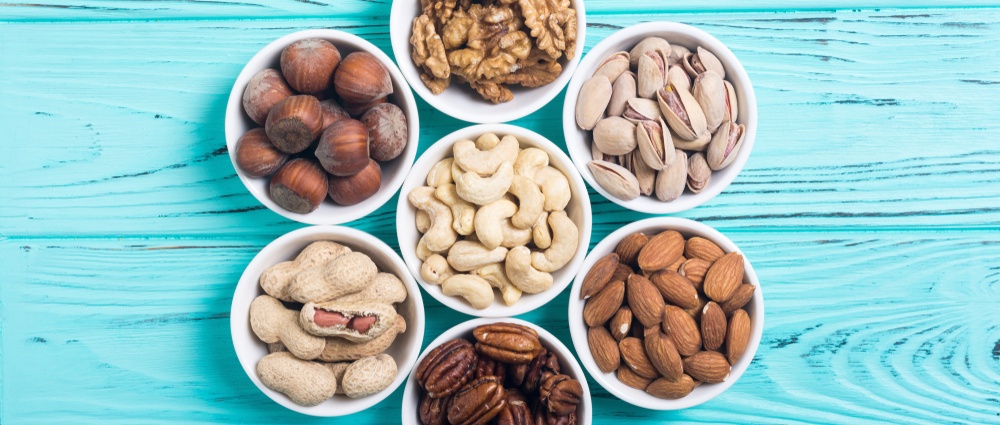
8 high-protein nuts to boost your strength
Packed with protein, delicious, easy to eat, and versatile - nuts are a great source of fuel for people building their fitness and strength. But not all nuts are created equal, which is why we count down the top eight nuts you should eat while strength training and serve these up with tasty recipe ideas.
by Lynn Stephen

Diet and nutrition
Plant-based proteins could help prevent high blood pressure
Eating a greater amount of minimally processed plant-based proteins - such as beans, nuts and lentils - may lower your chance of developing high blood pressure, according to new research.
by Laura Williamson
Related patient information and medicines
Patient information leaflet
Proteinuria
Proteins are molecules that are found in almost every part of the body, including in the blood. The kidneys normally have a filter which stops protein from entering the urine, except in very tiny amounts; however, kidney problems can cause higher levels of protein to be found in the urine. What is proteinuria. Proteinuria means that there is an.

Patient information leaflet
Nephrotic syndrome
Nephrotic syndrome is a condition where the 'filters' in the kidney become 'leaky' and large amounts of protein leak from the blood into the urine. The main symptom is fluid retention (oedema) which is mainly due to the low protein level in the blood. Various diseases can cause nephrotic syndrome, some more serious than others. Treatment and.

Patient information leaflet
Gastrointestinal malabsorption
Gastrointestinal malabsorption syndrome means a failure to fully absorb digested foods from the gut (bowel) into your body. There are many different causes. Prolonged intestinal malabsorption may cause problems because of a lack of carbohydrates, proteins, fats, minerals and vitamins that are essential to keep you healthy. The treatment will.
Patient information leaflet
Glomerulonephritis
However, in others, glomerulonephritis can cause symptoms that you may notice. These symptoms can develop slowly, or more quickly in acute glomerulonephritis. Glomerulonephritis can lead to two main clinical syndromes (sets of symptoms and signs that occur together). These are nephrotic syndrome and nephritic syndrome. The type of.

Patient information leaflet
Diabetic kidney disease
To find out more about the kidneys and urine, see the leaflet called What do kidneys do. What is diabetic kidney disease. Diabetic kidney disease (diabetic nephropathy) is a complication that occurs in some people with diabetes. Diabetic kidney disease is one of the causes of chronic kidney disease Chronic kidney disease , a long-term condition.

Patient information leaflet
Immunisation for flu
Getting the flu vaccine is a safe and effective way to protect against becoming seriously ill with flu. What is the flu jab for. Influenza (flu) Flu is a common viral infection that tends to be most common in the winter. Flu can cause much more severe symptoms than the common cold Common cold. Some people can become seriously ill with flu, needing.
Further reading and references
- docking protein 7; MedlinePlus, National Library of Medicine.
- Abicht A, Muller JS, Lochmuller H. Congenital Myasthenic Syndromes Overview. 2003 May 9 [updated 2021 Dec 23]. In: Adam MP, Bick S, Mirzaa GM, Wallace SE, Amemiya A, editors. GeneReviews(R) [Internet]. Seattle (WA): University of Washington, Seattle; 1993-2026. Available from http://www.ncbi.nlm.nih.gov/books/NBK1168/
- Beeson D, Webster R, Cossins J, Lashley D, Spearman H, Maxwell S, Slater CR, Newsom-Davis J, Palace J, Vincent A. Congenital myasthenic syndromes and the formation of the neuromuscular junction. Ann N Y Acad Sci. 2008;1132:99-103. doi: 10.1196/annals.1405.049.
- Engel AG, Shen XM, Selcen D, Sine SM. What have we learned from the congenital myasthenic syndromes. J Mol Neurosci. 2010 Jan;40(1-2):143-53. doi: 10.1007/s12031-009-9229-0. Epub 2009 Aug 18.
- Engel AG. Current status of the congenital myasthenic syndromes. Neuromuscul Disord. 2012 Feb;22(2):99-111. doi: 10.1016/j.nmd.2011.10.009. Epub 2011 Nov 21.
- Kinali M, Beeson D, Pitt MC, Jungbluth H, Simonds AK, Aloysius A, Cockerill H, Davis T, Palace J, Manzur AY, Jimenez-Mallebrera C, Sewry C, Muntoni F, Robb SA. Congenital myasthenic syndromes in childhood: diagnostic and management challenges. J Neuroimmunol. 2008 Sep 15;201-202:6-12. doi: 10.1016/j.jneuroim.2008.06.026. Epub 2008 Aug 15.
- Muller JS, Herczegfalvi A, Vilchez JJ, Colomer J, Bachinski LL, Mihaylova V, Santos M, Schara U, Deschauer M, Shevell M, Poulin C, Dias A, Soudo A, Hietala M, Aarimaa T, Krahe R, Karcagi V, Huebner A, Beeson D, Abicht A, Lochmuller H. Phenotypical spectrum of DOK7 mutations in congenital myasthenic syndromes. Brain. 2007 Jun;130(Pt 6):1497-506. doi: 10.1093/brain/awm068. Epub 2007 Apr 17.
- Radhakrishnan P, Shukla A, Girisha KM, Nayak SS. Biallelic c.1263dupC in DOK7 results in fetal akinesia deformation sequence. Am J Med Genet A. 2020 Apr;182(4):804-807. doi: 10.1002/ajmg.a.61473. Epub 2019 Dec 27.
- Selcen D, Milone M, Shen XM, Harper CM, Stans AA, Wieben ED, Engel AG. Dok-7 myasthenia: phenotypic and molecular genetic studies in 16 patients. Ann Neurol. 2008 Jul;64(1):71-87. doi: 10.1002/ana.21408.
Share your thoughts or experiences with others in our patient communities.
Simple access to trusted treatments and health services online.
Common conditions
Get help with common conditions through the NHS, without a GP appointment.





Sign up to the Patient newsletter
Your weekly dose of clear, trustworthy health advice - written to help you feel informed, confident and in control.
By subscribing you accept our Privacy Policy. You can unsubscribe at any time. We never sell your data.