dihydropyrimidine dehydrogenase
Last updated 18 Aug 2020
Meets Patient’s editorial guidelines
- DownloadDownload
- Share
- Language
- Discussion
- Ask Patient
- Audio Version
- Add to preferred sources on Google
The DPYD gene provides instructions for making an enzyme called dihydropyrimidine dehydrogenase, which is involved in the breakdown of molecules called uracil and thymine when they are not needed. Uracil and thymine are pyrimidines, which are one type of nucleotide. Nucleotides are building blocks of DNA, its chemical cousin RNA, and molecules such as ATP and GTP that serve as energy sources in the cell.
Video picks for GenesVideo library
Normal function
The DPYD gene provides instructions for making an enzyme called dihydropyrimidine dehydrogenase, which is involved in the breakdown of molecules called uracil and thymine when they are not needed. Uracil and thymine are pyrimidines, which are one type of nucleotide. Nucleotides are building blocks of DNA, its chemical cousin RNA, and molecules such as ATP and GTP that serve as energy sources in the cell.
Dihydropyrimidine dehydrogenase is involved in the first step of the breakdown of pyrimidines. This enzyme converts uracil to another molecule called 5,6-dihydrouracil and converts thymine to 5,6-dihydrothymine. The molecules created when pyrimidines are broken down are excreted by the body or used in other cellular processes.
Conditions referring to this gene or chromosome
Other names
DHP
DHPDHASE
dihydropyrimidine dehydrogenase [NADP+]
dihydrothymine dehydrogenase
dihydrouracil dehydrogenase
DPD
DPYD_HUMAN
MGC132008
MGC70799
Related patient information and medicines

Patient information leaflet
Testicular cancer
Testicular cancer is a cancer that arises from a testicle (testis). Around half of all cases occur in men aged under 35 but testicular cancer rarel... Another useful test is the marker blood test. The tumour markers commonly tested for are alpha-fetoprotein (AFP), beta human chorionic gonadotrophin (beta-hCG), lactic dehydrogenase (LDH) and.

Patient information leaflet
Planning to become pregnant
Duchenne muscular dystrophy. Duchenne muscular dystrophy Fragile X syndrome. Haemophilias A and B. Glucose-6-phosphate dehydrogenase deficiency. Other medical conditions Other conditions for which it is best to see a doctor before becoming pregnant include: Thyroid problems - an underactive thyroid gland (hypothyroidism) Underactive thyroid gland.

Patient information leaflet
Newborn bloodspot test
Mothers of all newborn babies are offered testing for certain rare but serious health conditions by testing blood taken from the baby's heel. ... Medium-chain acyl-Co-A dehydrogenase deficiency (MCADD)- this is a very rare, but potentially life-threatening, inherited disorder, where fat cannot be broken down by the body as well as usual. Babies.

Patient information leaflet
Jaundice
Jaundice means that the skin and other body parts turn a yellow colour. This increased amount of bilirubin then spills into the tissues of the bod... Conditions that cause an increased rate of breakdown of red blood cells include: Some genetic diseases, such as sickle cell anaemia Sickle cell disease , thalassaemia Thalassaemia , spherocytosis,.
Patient information leaflet
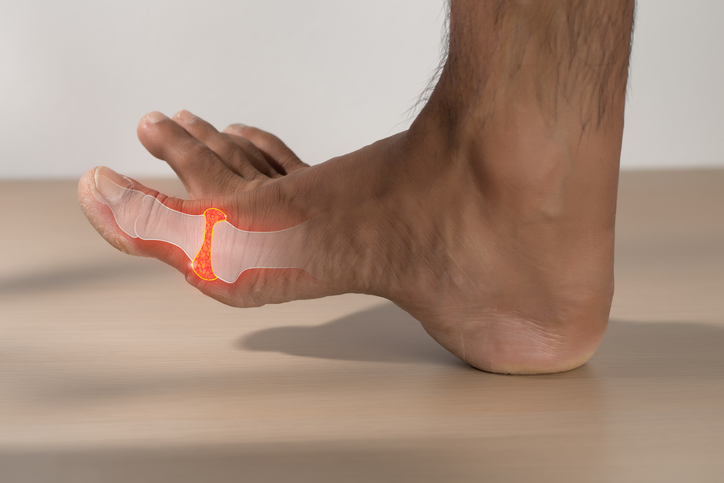
Gout
Uric acid is usually harmless and is made in the body. Most is passed out with the urine and some from the gut with the stools. In people with gout the levels of uric acid in the blood builds up. Lipid disorders (especially hypertriglyceridaemia). Vascular disease. Enzyme defects such as hypoxanthine guanine phosphoribosyltransferase (HGPRT).

Patient information leaflet
Can I take Devil's claw and Vitamin C together?
Kidney stones (oxalate) High doses of vitamin C can increase the amount of oxalate in your urine, significantly raising the risk of developing kidney stones, especially if you have a history of them. G6PD deficiency If you have glucose-6-phosphate dehydrogenase (G6PD) deficiency, high doses of vitamin C can cause your red blood cells to break down.
Further reading and references
- dihydropyrimidine dehydrogenase; MedlinePlus, National Library of Medicine.
- Al-Sanna'a NA, Van Kuilenburg AB, Atrak TM, Abdul-Jabbar MA, Van Gennip AH. Dihydropyrimidine dehydrogenase deficiency presenting at birth. J Inherit Metab Dis. 2005;28(5):793-6. doi: 10.1007/s10545-005-4218-0.
- Ciccolini J, Gross E, Dahan L, Lacarelle B, Mercier C. Routine dihydropyrimidine dehydrogenase testing for anticipating 5-fluorouracil-related severe toxicities: hype or hope? Clin Colorectal Cancer. 2010 Oct;9(4):224-8. doi: 10.3816/CCC.2010.n.033.
- Mattison LK, Fourie J, Desmond RA, Modak A, Saif MW, Diasio RB. Increased prevalence of dihydropyrimidine dehydrogenase deficiency in African-Americans compared with Caucasians. Clin Cancer Res. 2006 Sep 15;12(18):5491-5. doi: 10.1158/1078-0432.CCR-06-0747.
- Saif MW, Mattison L, Carollo T, Ezzeldin H, Diasio RB. Dihydropyrimidine dehydrogenase deficiency in an Indian population. Cancer Chemother Pharmacol. 2006 Sep;58(3):396-401. doi: 10.1007/s00280-005-0174-5. Epub 2006 Jan 19.
- van Kuilenburg AB, De Abreu RA, van Gennip AH. Pharmacogenetic and clinical aspects of dihydropyrimidine dehydrogenase deficiency. Ann Clin Biochem. 2003 Jan;40(Pt 1):41-5. doi: 10.1258/000456303321016150.
- van Kuilenburg AB, Dobritzsch D, Meinsma R, Haasjes J, Waterham HR, Nowaczyk MJ, Maropoulos GD, Hein G, Kalhoff H, Kirk JM, Baaske H, Aukett A, Duley JA, Ward KP, Lindqvist Y, van Gennip AH. Novel disease-causing mutations in the dihydropyrimidine dehydrogenase gene interpreted by analysis of the three-dimensional protein structure. Biochem J. 2002 May 15;364(Pt 1):157-63. doi: 10.1042/bj3640157.
- van Kuilenburg AB, Meijer J, Mul AN, Hennekam RC, Hoovers JM, de Die-Smulders CE, Weber P, Mori AC, Bierau J, Fowler B, Macke K, Sass JO, Meinsma R, Hennermann JB, Miny P, Zoetekouw L, Vijzelaar R, Nicolai J, Ylstra B, Rubio-Gozalbo ME. Analysis of severely affected patients with dihydropyrimidine dehydrogenase deficiency reveals large intragenic rearrangements of DPYD and a de novo interstitial deletion del(1)(p13.3p21.3). Hum Genet. 2009 Jun;125(5-6):581-90. doi: 10.1007/s00439-009-0653-6. Epub 2009 Mar 19.
- Van Kuilenburg AB, Vreken P, Abeling NG, Bakker HD, Meinsma R, Van Lenthe H, De Abreu RA, Smeitink JA, Kayserili H, Apak MY, Christensen E, Holopainen I, Pulkki K, Riva D, Botteon G, Holme E, Tulinius M, Kleijer WJ, Beemer FA, Duran M, Niezen-Koning KE, Smit GP, Jakobs C, Smit LM, Van Gennip AH, et al. Genotype and phenotype in patients with dihydropyrimidine dehydrogenase deficiency. Hum Genet. 1999 Jan;104(1):1-9. doi: 10.1007/pl00008711.
Share your thoughts or experiences with others in our patient communities.
Simple access to trusted treatments and health services online.
Common conditions
Get help with common conditions through the NHS, without a GP appointment.





Sign up to the Patient newsletter
Your weekly dose of clear, trustworthy health advice - written to help you feel informed, confident and in control.
By subscribing you accept our Privacy Policy. You can unsubscribe at any time. We never sell your data.