general transcription factor IIH subunit 5
Last updated 6 Apr 2023
Meets Patient’s editorial guidelines
- DownloadDownload
- Share
- Language
- Discussion
- Ask Patient
- Audio Version
- Add to preferred sources on Google
The GTF2H5 gene provides instructions for making a protein called p8 or TTDA. This protein is one part (subunit) of a group of related proteins known as the general transcription factor 2 H (TFIIH) complex. The TFIIH complex has two major functions: it is involved in the process of gene transcription, which is the first step in protein production, and it helps repair damaged DNA.
Video picks for GenesVideo library
Normal function
The GTF2H5 gene provides instructions for making a protein called p8 or TTDA. This protein is one part (subunit) of a group of related proteins known as the general transcription factor 2 H (TFIIH) complex. The TFIIH complex has two major functions: it is involved in the process of gene transcription, which is the first step in protein production, and it helps repair damaged DNA.
DNA can be damaged by ultraviolet (UV) rays from the sun and by toxic chemicals, such as those found in cigarette smoke. DNA damage occurs frequently, but normal cells are usually able to fix it before it can cause problems.
One of the major mechanisms that cells use to fix DNA is known as nucleotide excision repair (NER). As part of this repair mechanism, the TFIIH complex opens up the section of double-stranded DNA that surrounds the damage. The TTDA protein helps with this process by stabilizing the TFIIH complex and maintaining its structure. Once the damaged region has been exposed, other proteins snip out (excise) the abnormal section and replace the damaged area with the correct DNA.
Conditions referring to this gene or chromosome
Other names
bA120J8.2
C6orf175
FLJ30544
general transcription factor IIH, polypeptide 5
TF2H5_HUMAN
TFB5
TFB5 ortholog
TFIIH basal transcription factor complex TTD-A subunit
TFIIH basal transcription factor complex TTDA subunit
TGF2H5
Patient picks for Genes

Heart health and blood vessels
Breasts aren't barriers - the St John Ambulance 'CPR Bra' campaign
If someone needed cardiopulmonary resuscitation (CPR) and you had the skills, you’d give it to them without wasting a second, right? Wrong. Almost a third of men say they would hesitate to perform CPR on a woman for fear of being accused of inappropriate touching. A similar number also worry about accidentally hurting women, and almost a quarter are concerned they could make the situation worse. So, to remind everyone that it’s ok to touch someone’s chest when you’re trying to save their life, we’re raising awareness with St John Ambulance.
by Claire Kenny
Men's health
Is 'male menopause' real?
Menopause is a natural stage of life that women go through as they age. During this time, their reproductive hormone levels fluctuate and gradually decline, causing a range of physical and emotional symptoms. But can men experience something similar? Often referred to as ‘male menopause’, hormonal changes as men get older can also affect their health and wellbeing. We explore the symptoms, causes, and science behind 'male menopause' and why it deserves more attention.
by Victoria Raw
Women's health
Ferritin face - signs of low iron, or viral skin trend?
There’s a new viral wellness term in town called ‘ferritin face’. It’s being used to describe the apparent link between low iron stores and symptoms such as dark circles under your eyes, dull, tired-looking skin, cracked lips, and hair loss. But what exactly is ferritin, and can low levels really affect your facial appearance? We spoke to consultant gynaecologist, Dr Lamia Zafrani, and consultant dermatologist, Dr Sidra Khan, to demystify what ferritin is, how it affects our bodies, and why women are more vulnerable to lower levels.
by Hannah Boynton-Forshaw
Cancer
Liver cancer deaths are rising - what you need to know
Liver cancer deaths have risen by more than a quarter over the past decade. That’s why we’re helping raise awareness of liver cancer alongside Liver UK. We want more people to recognise the symptoms and understand the risk factors, so they can take action early.
by Claire Kenny
Heart health and blood vessels
Dilated cardiomyopathy causes: what are the risk factors?
Having dilated cardiomyopathy means that your heart muscle is weakened, which affects how your heart pumps blood around your body. There are a wide range of dilated cardiomyopathy causes, including genetics, other health conditions, alcohol consumption and a poor diet. While we can't control some of these risk factors, we can make positive lifestyle changes to reduce our risk of developing dilated cardiomyopathy.
by Amberley Davis

Cancer
Pancreatic cancer - recognising the symptoms that can be easy to dismiss
Pancreatic cancer can hide behind seemingly ordinary symptoms, and is often mistaken for more common conditions - such as indigestion. Potential warning signs may go unnoticed, and can be easily overlooked indicators of something more serious. In the UK, twenty-nine people are newly diagnosed with the disease each day. But recognising the symptoms early, receiving a diagnosis, and getting medical treatment quickly can increase your chances of survival and recovery.
by Hannah Boynton-Forshaw
Related patient information and medicines
Patient information leaflet
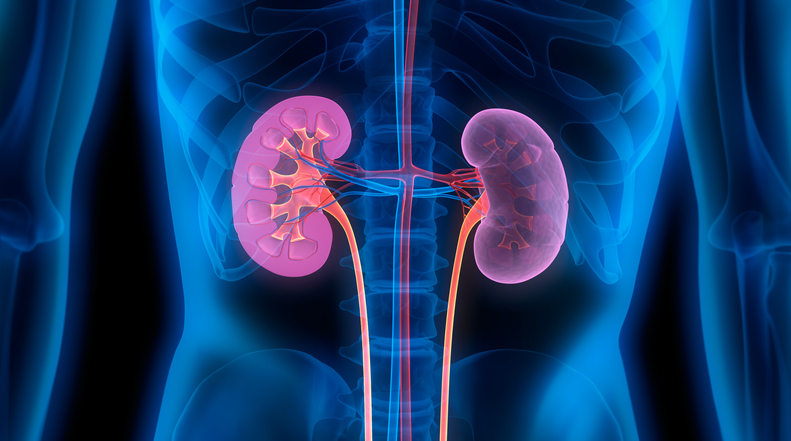
Chronic kidney disease
With more severe chronic kidney disease, symptoms. A poor appetite. Weight loss. Dry, itchy skin. Muscle cramps. Fluid retention Oedema which causes swollen feet and ankles. Puffiness around the eyes. A need to pass urine more often than usual. Being pale due to anaemia. Feeling sick. If the kidney function declines to stage 4 or 5 then various.
Patient information leaflet
Cardiovascular disease
Cardiovascular diseases (CVD) is a general term to describe diseases of the heart or blood vessels. The cause of most cardiovascular disease is a build-up of atheroma - a fatty deposit within the inside lining of arteries. The blood flow to the heart muscle may also be restricted by a blood clot in an artery taking blood to the heart muscle.
Patient information leaflet
Haemodialysis
The kidneys have a very important function in the body. Healthy kidneys balance fluid and chemicals in the body, and remove harmful waste products. The kidneys also make hormones that help to control blood pressure, make red blood cells, and keep bones strong and healthy. Dialysis can be used to remove waste products and excess fluid from the.
Patient information leaflet
Hip replacement
Surgery to replace a worn-out hip joint is very common. The usual reason that someone has a hip replacement is because they have very painful arthritis in their hip. It is also sometimes done to treat a broken hip (hip fracture), depending on where the hip has broken. How do I know if I need a hip replacement. The main reasons for having a hip.
Patient information leaflet
Hip fracture
You should discuss the options available with the surgeon who is performing your operation. Current guidelines from the National Institute for Health and Care Excellence (NICE) recommend that surgery should be performed, if possible, on the day of, or the day after, admission to hospital. The guidelines also say that adequate pain relief before.

Patient information leaflet
Breast cancer facts and risk factors
What are the risk factors for breast cancer. Dr Sarah Jarvis MBE Although breast cancer can develop for no apparent reason, there are certain risk factors which increase the chance that breast cancer will develop. [https://patient.info/health/breast-cancer-leaflet](https://patient.info/health/breast-cancer-leaflet) Most cases of breast cancer.
Further reading and references
- general transcription factor IIH subunit 5; MedlinePlus, National Library of Medicine.
- Coin F, Proietti De Santis L, Nardo T, Zlobinskaya O, Stefanini M, Egly JM. p8/TTD-A as a repair-specific TFIIH subunit. Mol Cell. 2006 Jan 20;21(2):215-26. doi: 10.1016/j.molcel.2005.10.024.
- Faghri S, Tamura D, Kraemer KH, Digiovanna JJ. Trichothiodystrophy: a systematic review of 112 published cases characterises a wide spectrum of clinical manifestations. J Med Genet. 2008 Oct;45(10):609-21. doi: 10.1136/jmg.2008.058743. Epub 2008 Jun 25.
- Giglia-Mari G, Coin F, Ranish JA, Hoogstraten D, Theil A, Wijgers N, Jaspers NG, Raams A, Argentini M, van der Spek PJ, Botta E, Stefanini M, Egly JM, Aebersold R, Hoeijmakers JH, Vermeulen W. A new, tenth subunit of TFIIH is responsible for the DNA repair syndrome trichothiodystrophy group A. Nat Genet. 2004 Jul;36(7):714-9. doi: 10.1038/ng1387. Epub 2004 Jun 27.
- Giglia-Mari G, Miquel C, Theil AF, Mari PO, Hoogstraten D, Ng JM, Dinant C, Hoeijmakers JH, Vermeulen W. Dynamic interaction of TTDA with TFIIH is stabilized by nucleotide excision repair in living cells. PLoS Biol. 2006 Jun;4(6):e156. doi: 10.1371/journal.pbio.0040156. Epub 2006 May 9.
- Hashimoto S, Egly JM. Trichothiodystrophy view from the molecular basis of DNA repair/transcription factor TFIIH. Hum Mol Genet. 2009 Oct 15;18(R2):R224-30. doi: 10.1093/hmg/ddp390.
- Kraemer KH, Patronas NJ, Schiffmann R, Brooks BP, Tamura D, DiGiovanna JJ. Xeroderma pigmentosum, trichothiodystrophy and Cockayne syndrome: a complex genotype-phenotype relationship. Neuroscience. 2007 Apr 14;145(4):1388-96. doi: 10.1016/j.neuroscience.2006.12.020. Epub 2007 Feb 1.
- Ranish JA, Hahn S, Lu Y, Yi EC, Li XJ, Eng J, Aebersold R. Identification of TFB5, a new component of general transcription and DNA repair factor IIH. Nat Genet. 2004 Jul;36(7):707-13. doi: 10.1038/ng1385. Epub 2004 Jun 27.
- Vermeulen W, Bergmann E, Auriol J, Rademakers S, Frit P, Appeldoorn E, Hoeijmakers JH, Egly JM. Sublimiting concentration of TFIIH transcription/DNA repair factor causes TTD-A trichothiodystrophy disorder. Nat Genet. 2000 Nov;26(3):307-13. doi: 10.1038/81603.
Share your thoughts or experiences with others in our patient communities.
Simple access to trusted treatments and health services online.
Common conditions
Get help with common conditions through the NHS, without a GP appointment.





Sign up to the Patient newsletter
Your weekly dose of clear, trustworthy health advice - written to help you feel informed, confident and in control.
By subscribing you accept our Privacy Policy. You can unsubscribe at any time. We never sell your data.