general transcription factor IIi
Last updated 11 Apr 2023
Meets Patient’s editorial guidelines
- DownloadDownload
- Share
- Language
- Discussion
- Ask Patient
- Audio Version
- Add to preferred sources on Google
The GTF2I gene provides instructions for making two proteins, TFII-I and BAP-135. TFII-I attaches (binds) to specific areas of DNA and helps regulate the activity of other genes. Based on this role, TFII-I is called a transcription factor. This protein is active in the brain and many other tissues in the body. Studies suggest that the TFII-I protein is involved in coordinating cell growth and division, and it may also play a role in controlling the flow of calcium into cells. Studies show it may be important in a process called myelination, which is the formation of the protective coating around nerve cells called the myelin sheath. This coating insulates nerve cells and promotes the rapid transmission of nerve impulses.
Video picks for GenesVideo library
Normal function
The GTF2I gene provides instructions for making two proteins, TFII-I and BAP-135. TFII-I attaches (binds) to specific areas of DNA and helps regulate the activity of other genes. Based on this role, TFII-I is called a transcription factor. This protein is active in the brain and many other tissues in the body. Studies suggest that the TFII-I protein is involved in coordinating cell growth and division, and it may also play a role in controlling the flow of calcium into cells. Studies show it may be important in a process called myelination, which is the formation of the protective coating around nerve cells called the myelin sheath. This coating insulates nerve cells and promotes the rapid transmission of nerve impulses.
Less is known about BAP-135, the other protein produced from the GTF2I gene. The protein is active in B cells, which are a specialized type of white blood cell that protects the body against infection. When a B cell senses a foreign substance (such as a virus), it triggers a series of chemical reactions that instruct the cell to mature, divide, and produce specific proteins called antibodies to fight the infection. The BAP-135 protein is turned on as part of this series of chemical reactions.
Conditions referring to this gene or chromosome
Other names
BAP-135
BAP135
Bruton tyrosine kinase-associated protein 135
BTK-associated protein, 135kD
BTKAP1
DIWS
GTF2I_HUMAN
IB291
SPIN
TFII-I
WBSCR6
Patient picks for Genes

Men's health
Is 'male menopause' real?
Menopause is a natural stage of life that women go through as they age. During this time, their reproductive hormone levels fluctuate and gradually decline, causing a range of physical and emotional symptoms. But can men experience something similar? Often referred to as ‘male menopause’, hormonal changes as men get older can also affect their health and wellbeing. We explore the symptoms, causes, and science behind 'male menopause' and why it deserves more attention.
by Victoria Raw

Heart health and blood vessels
Breasts aren't barriers - the St John Ambulance 'CPR Bra' campaign
If someone needed cardiopulmonary resuscitation (CPR) and you had the skills, you’d give it to them without wasting a second, right? Wrong. Almost a third of men say they would hesitate to perform CPR on a woman for fear of being accused of inappropriate touching. A similar number also worry about accidentally hurting women, and almost a quarter are concerned they could make the situation worse. So, to remind everyone that it’s ok to touch someone’s chest when you’re trying to save their life, we’re raising awareness with St John Ambulance.
by Claire Kenny

Cancer
Liver cancer deaths are rising - what you need to know
Liver cancer deaths have risen by more than a quarter over the past decade. That’s why we’re helping raise awareness of liver cancer alongside Liver UK. We want more people to recognise the symptoms and understand the risk factors, so they can take action early.
by Claire Kenny
Women's health
Ferritin face - signs of low iron, or viral skin trend?
There’s a new viral wellness term in town called ‘ferritin face’. It’s being used to describe the apparent link between low iron stores and symptoms such as dark circles under your eyes, dull, tired-looking skin, cracked lips, and hair loss. But what exactly is ferritin, and can low levels really affect your facial appearance? We spoke to consultant gynaecologist, Dr Lamia Zafrani, and consultant dermatologist, Dr Sidra Khan, to demystify what ferritin is, how it affects our bodies, and why women are more vulnerable to lower levels.
by Hannah Boynton-Forshaw

Cancer
Pancreatic cancer - recognising the symptoms that can be easy to dismiss
Pancreatic cancer can hide behind seemingly ordinary symptoms, and is often mistaken for more common conditions - such as indigestion. Potential warning signs may go unnoticed, and can be easily overlooked indicators of something more serious. In the UK, twenty-nine people are newly diagnosed with the disease each day. But recognising the symptoms early, receiving a diagnosis, and getting medical treatment quickly can increase your chances of survival and recovery.
by Hannah Boynton-Forshaw

Sexual health
Erectile dysfunction in your 20s and 30s - what causes it?
Erectile dysfunction is often associated with growing older, but it can affect people at any age. If you are in your 20s or 30s and find it difficult to get or keep an erection, you are not alone. It can be frustrating or upsetting, particularly if it feels unexpected, but it is often possible to identify contributing factors and find a treatment that helps. Stress, anxiety, and relationship difficulties can all affect erections. Physical health conditions, medicines, and lifestyle factors can also play a part. Understanding what might be behind the issue is the first step towards getting support.
by Thomas Andrew Porteus, MBCS
Related patient information and medicines

Patient information leaflet
Chronic obstructive pulmonary disease
However, in many of these people (perhaps as many as two million), the condition has not been formally diagnosed (normally these would be mild cases). This is because in the early stages, many people put up with a cough or mild breathlessness without seeing their doctor, perhaps dismissing it as a 'smoker's cough'. They may only see their doctor.

Patient information leaflet
Breast cancer facts and risk factors
What are the risk factors for breast cancer. Dr Sarah Jarvis MBE Although breast cancer can develop for no apparent reason, there are certain risk factors which increase the chance that breast cancer will develop. [https://patient.info/health/breast-cancer-leaflet](https://patient.info/health/breast-cancer-leaflet) Most cases of breast cancer.

Patient information leaflet
Cardiotocography
Cardiotocography is usually called a 'CTG' by doctors and midwives. It can be used to monitor a baby's heart rate and a mother's contractions during labour. Note : the information below is a general guide only. The arrangements, and the way tests are performed, may vary between different hospitals. Always follow the instructions given by your.

Patient information leaflet
Sweat test
Sweat tests analyse the amount of salt left on the skin when a person sweats. This can help to diagnose cystic fibrosis. Note : the information below is a general guide only. The arrangements, and the way tests are performed, may vary between different hospitals. Always follow the instructions given by your doctor or local hospital. What is a.
Patient information leaflet
Chronic kidney disease
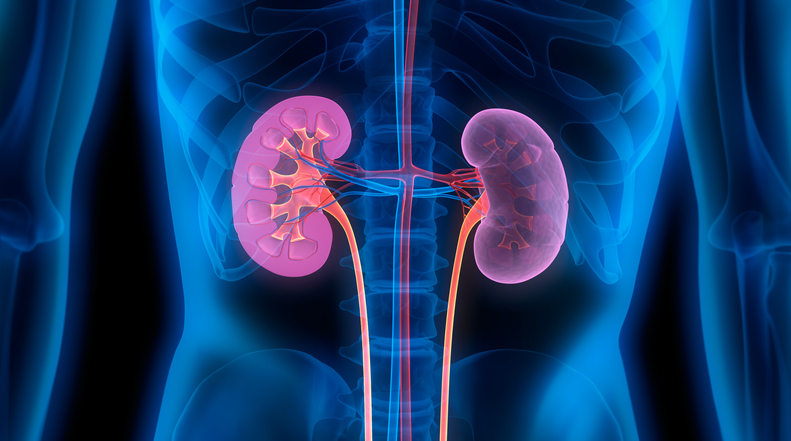
End-stage kidney failure (stage 5) is eventually fatal unless treated. What are the stages of chronic kidney disease. Chronic kidney disease is diagnosed by blood tests including an eGFR test and is divided into five stages: Stage of Chronic Kidney Disease eGFR ml/min/1.73 m Stage 1: the eGFR shows normal kidney function but you are already known.

Patient information leaflet
Sexual assault
Sexual assault, rape, or sexual violence violate your basic right to 'own' your own body and it takes away your power. This has psychological, emotional and physical effects, which can last for a long... Learning more can help you find the best form of care to begin the healing process. Understanding your options can help you decide what to do..
Further reading and references
- general transcription factor IIi; MedlinePlus, National Library of Medicine.
- Barak B, Zhang Z, Liu Y, Nir A, Trangle SS, Ennis M, Levandowski KM, Wang D, Quast K, Boulting GL, Li Y, Bayarsaihan D, He Z, Feng G. Neuronal deletion of Gtf2i, associated with Williams syndrome, causes behavioral and myelin alterations rescuable by a remyelinating drug. Nat Neurosci. 2019 May;22(5):700-708. doi: 10.1038/s41593-019-0380-9. Epub 2019 Apr 22.
- Caraveo G, van Rossum DB, Patterson RL, Snyder SH, Desiderio S. Action of TFII-I outside the nucleus as an inhibitor of agonist-induced calcium entry. Science. 2006 Oct 6;314(5796):122-5. doi: 10.1126/science.1127815.
- Danoff SK, Taylor HE, Blackshaw S, Desiderio S. TFII-I, a candidate gene for Williams syndrome cognitive profile: parallels between regional expression in mouse brain and human phenotype. Neuroscience. 2004;123(4):931-8. doi: 10.1016/j.neuroscience.2003.08.038.
- Egloff AM, Desiderio S. Identification of phosphorylation sites for Bruton's tyrosine kinase within the transcriptional regulator BAP/TFII-I. J Biol Chem. 2001 Jul 27;276(30):27806-15. doi: 10.1074/jbc.M103692200. Epub 2001 May 23.
- Hirota H, Matsuoka R, Chen XN, Salandanan LS, Lincoln A, Rose FE, Sunahara M, Osawa M, Bellugi U, Korenberg JR. Williams syndrome deficits in visual spatial processing linked to GTF2IRD1 and GTF2I on chromosome 7q11.23. Genet Med. 2003 Jul-Aug;5(4):311-21. doi: 10.1097/01.GIM.0000076975.10224.67.
- Kozel BA, Barak B, Kim CA, Mervis CB, Osborne LR, Porter M, Pober BR. Williams syndrome. Nat Rev Dis Primers. 2021 Jun 17;7(1):42. doi: 10.1038/s41572-021-00276-z.
- Makeyev AV, Bayarsaihan D. New TFII-I family target genes involved in embryonic development. Biochem Biophys Res Commun. 2009 Sep 4;386(4):554-8. doi: 10.1016/j.bbrc.2009.06.045. Epub 2009 Jun 13.
- Martin LA, Iceberg E, Allaf G. Consistent hypersocial behavior in mice carrying a deletion of Gtf2i but no evidence of hyposocial behavior with Gtf2i duplication: Implications for Williams-Beuren syndrome and autism spectrum disorder. Brain Behav. 2017 Dec 19;8(1):e00895. doi: 10.1002/brb3.895. eCollection 2018 Jan.
- Mervis CB, Klein-Tasman BP, Huffman MJ, Velleman SL, Pitts CH, Henderson DR, Woodruff-Borden J, Morris CA, Osborne LR. Children with 7q11.23 duplication syndrome: psychological characteristics. Am J Med Genet A. 2015 Jul;167(7):1436-50. doi: 10.1002/ajmg.a.37071. Epub 2015 Apr 21.
- Meyer-Lindenberg A, Mervis CB, Berman KF. Neural mechanisms in Williams syndrome: a unique window to genetic influences on cognition and behaviour. Nat Rev Neurosci. 2006 May;7(5):380-93. doi: 10.1038/nrn1906.
- Morris CA, Mervis CB, Hobart HH, Gregg RG, Bertrand J, Ensing GJ, Sommer A, Moore CA, Hopkin RJ, Spallone PA, Keating MT, Osborne L, Kimberley KW, Stock AD. GTF2I hemizygosity implicated in mental retardation in Williams syndrome: genotype-phenotype analysis of five families with deletions in the Williams syndrome region. Am J Med Genet A. 2003 Nov 15;123A(1):45-59. doi: 10.1002/ajmg.a.20496.
- Perez Jurado LA, Wang YK, Peoples R, Coloma A, Cruces J, Francke U. A duplicated gene in the breakpoint regions of the 7q11.23 Williams-Beuren syndrome deletion encodes the initiator binding protein TFII-I and BAP-135, a phosphorylation target of BTK. Hum Mol Genet. 1998 Mar;7(3):325-34. doi: 10.1093/hmg/7.3.325.
- Roy AL. Signal-induced functions of the transcription factor TFII-I. Biochim Biophys Acta. 2007 Nov-Dec;1769(11-12):613-21. doi: 10.1016/j.bbaexp.2007.10.002. Epub 2007 Oct 11.
- Sakurai T, Dorr NP, Takahashi N, McInnes LA, Elder GA, Buxbaum JD. Haploinsufficiency of Gtf2i, a gene deleted in Williams Syndrome, leads to increases in social interactions. Autism Res. 2011 Feb;4(1):28-39. doi: 10.1002/aur.169. Epub 2010 Dec 3.
- Tassabehji M. Williams-Beuren syndrome: a challenge for genotype-phenotype correlations. Hum Mol Genet. 2003 Oct 15;12 Spec No 2:R229-37. doi: 10.1093/hmg/ddg299. Epub 2003 Sep 2.
- Yang W, Desiderio S. BAP-135, a target for Bruton's tyrosine kinase in response to B cell receptor engagement. Proc Natl Acad Sci U S A. 1997 Jan 21;94(2):604-9. doi: 10.1073/pnas.94.2.604.
Share your thoughts or experiences with others in our patient communities.
Simple access to trusted treatments and health services online.
Common conditions
Get help with common conditions through the NHS, without a GP appointment.





Sign up to the Patient newsletter
Your weekly dose of clear, trustworthy health advice - written to help you feel informed, confident and in control.
By subscribing you accept our Privacy Policy. You can unsubscribe at any time. We never sell your data.