hexosaminidase subunit alpha
Last updated 3 Apr 2025
Meets Patient’s editorial guidelines
- DownloadDownload
- Share
- Language
- Discussion
- Ask Patient
- Audio Version
- Add to preferred sources on Google
The HEXA gene provides instructions for making one part (subunit) of an enzyme called beta-hexosaminidase A. Specifically, the protein produced from the HEXA gene forms the alpha subunit of this enzyme. One alpha subunit joins with one beta subunit (produced from the HEXB gene) to form a functioning beta-hexosaminidase A enzyme.
Video picks for GenesVideo library
Normal function
The HEXA gene provides instructions for making one part (subunit) of an enzyme called beta-hexosaminidase A. Specifically, the protein produced from the HEXA gene forms the alpha subunit of this enzyme. One alpha subunit joins with one beta subunit (produced from the HEXB gene) to form a functioning beta-hexosaminidase A enzyme.
Beta-hexosaminidase A plays a critical role in the brain and spinal cord (central nervous system). This enzyme is found in lysosomes, which are structures in cells that break down toxic substances and act as recycling centers. Within lysosomes, beta-hexosaminidase A forms part of a complex that breaks down a fatty substance called GM2 ganglioside found in cell membranes.
Conditions referring to this gene or chromosome
Other names
Beta-hexosaminidase A
beta-N-Acetylhexosaminidase A
Hex A
HEXA_HUMAN
hexosaminidase A (alpha polypeptide)
N-acetyl-beta-glucosaminidase
Patient picks for Genes
Treatment and medication
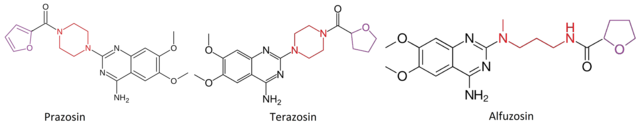
Alpha-blockers
Alpha-blockers are medicines that are mainly used to treat high blood pressure (hypertension) and problems with passing urine in men who have enlargement of the prostate gland. Prostate gland enlargement is also called benign prostatic hyperplasia (BPH).
by Dr Doug McKechnie, MRCGP
Medicine
Indoramin - an alpha-blocker
Indoramin is prescribed for two different medical conditions: 20 mg strength tablets are prescribed for men with prostate problems, and 25 mg strength tablets are prescribed for people with high blood pressure. You are advised not to drink alcohol while you are on indoramin. Do not drive and do not use tools or machines if you feel tired or dizzy.
by Michael Stewart, MRPharmS
Medicine
Phenoxybenzamine - an alpha-blocker
Adults will normally start with one capsule a day. This dose may then be increased over the next few days. It is common to feel dizzy or light-headed initially. This should soon settle. You may be given other medicines to take alongside phenoxybenzamine.
by Michael Stewart, MRPharmS
Medicine
Alfacalcidol capsules and drops
Alfacalcidol is a type of vitamin D. You will need to have regular blood tests while you are taking the medicine so that your doctor can adjust your dose. Make sure you know the symptoms of too much calcium in your blood - these are losing your appetite, feeling thirsty, being sick (vomiting), feeling tired and losing weight. Please let your doctor know if you develop these symptoms.
by Michael Stewart, MRPharmS

Children's health
Alpha-1 antitrypsin deficiency
Alpha-1 antitrypsin deficiency is an inherited genetic condition. A genetic condition is one that can be passed on from parents through genes. In alpha-1 antitrypsin deficiency the result of a genetic abnormality leads to lung and, in some people, liver damage. Lung symptoms are the most common and include shortness of breath, cough and wheezing. Symptoms can worsen over time. At present, there is no cure for alpha-1 antitrypsin deficiency. Treatment aims at slowing down the progression of the disease.
by Dr Philippa Vincent, MRCGP

Medicine
Terazosin - an alpha-blocker
Take terazosin once every day. Your first dose of terazosin may make you feel dizzy or faint, or start sweating. Take your first dose at bedtime and remain lying down until these symptoms have completely passed. Terazosin can cause dizziness which may affect your ability to drive. Make sure your reactions are normal before you drive and before you use tools or machines.
by Michael Stewart, MRPharmS
Related patient information and medicines
Patient information leaflet
Primary liver cancer
There are around 6,200 cases of primary liver cancer each year in the UK, making it the 18th most common cancer, accounting for 2% of all new cancer cases. It occurs most commonly in people aged 85 - 89, with 40% of all cases being diagnosed in those aged 75 or over. Secondary (metastatic) liver cancer means that a cancer which started in another.

Patient information leaflet
Testicular cancer
Testicular cancer is a cancer that arises from a testicle (testis). Around half of all cases occur in men aged under 35 but testicular cancer rarely occurs before puberty. It is the most common cancer in men aged 15-44 years. There are about 2,000 new cases in the UK each year. The common early symptom of testicular cancer is a painless lump that.

Patient information leaflet
Enlarged prostate
Medicines The decision to treat with medicines usually depends on how much bother the symptoms are causing you. There are two groups of medicines that may help: Alpha-blockers. 5-alpha reductase inhibitors. Medicines do not cure the problem, nor do they usually make symptoms go completely. These work by blocking the... They do this by blocking a.

Patient information leaflet
Prostate problems
Prostate and urethral problems can affect the smooth flow of urine in men. This leaflet will give you a brief explanation of the different prostate and urethral conditions and how the urine system can be affected. There are various treatments for the symptoms of BPH, including drugs such as alfuzosin/doxazosin (alpha-blockers),.
Patient information leaflet
Can I take Doxazosin and Evolocumab together?
It is generally considered safe to take these two medications together. Why this happens Doxazosin is an alpha-blocker used to treat high blood pressure or prostate enlargement, while evolocumab is a monoclonal antibody (PCSK9 inhibitor) used to lower cholesterol. They work through entirely different pathways in the body and are processed.
Patient information leaflet
Psoriatic arthritis
The tests look for some possible side-effects before they become serious.). Some DMARDs also have a beneficial effect on reducing the rash of psoriasis. Newer disease-modifying medicines A new class of recently developed medicines modify the effect of TNF alpha. The chemical TNF alpha plays an important role in causing inflammation in joints and.
Further reading and references
- hexosaminidase subunit alpha; MedlinePlus, National Library of Medicine.
- Dersh D, Iwamoto Y, Argon Y. Tay-Sachs disease mutations in HEXA target the alpha chain of hexosaminidase A to endoplasmic reticulum-associated degradation. Mol Biol Cell. 2016 Dec 1;27(24):3813-3827. doi: 10.1091/mbc.E16-01-0012. Epub 2016 Sep 28.
- Lemieux MJ, Mark BL, Cherney MM, Withers SG, Mahuran DJ, James MN. Crystallographic structure of human beta-hexosaminidase A: interpretation of Tay-Sachs mutations and loss of GM2 ganglioside hydrolysis. J Mol Biol. 2006 Jun 16;359(4):913-29. doi: 10.1016/j.jmb.2006.04.004. Epub 2006 Apr 27.
- Matsuzawa F, Aikawa S, Sakuraba H, Lan HT, Tanaka A, Ohno K, Sugimoto Y, Ninomiya H, Doi H. Structural basis of the GM2 gangliosidosis B variant. J Hum Genet. 2003;48(11):582-9. doi: 10.1007/s10038-003-0082-7. Epub 2003 Oct 24.
- Montalvo AL, Filocamo M, Vlahovicek K, Dardis A, Lualdi S, Corsolini F, Bembi B, Pittis MG. Molecular analysis of the HEXA gene in Italian patients with infantile and late onset Tay-Sachs disease: detection of fourteen novel alleles. Hum Mutat. 2005 Sep;26(3):282. doi: 10.1002/humu.9363.
- Myerowitz R, Lawson D, Mizukami H, Mi Y, Tifft CJ, Proia RL. Molecular pathophysiology in Tay-Sachs and Sandhoff diseases as revealed by gene expression profiling. Hum Mol Genet. 2002 May 15;11(11):1343-50. doi: 10.1093/hmg/11.11.1343.
- Toro C, Shirvan L, Tifft C. HEXA Disorders. 1999 Mar 11 [updated 2020 Oct 1]. In: Adam MP, Bick S, Mirzaa GM, Wallace SE, Amemiya A, editors. GeneReviews(R) [Internet]. Seattle (WA): University of Washington, Seattle; 1993-2026. Available from http://www.ncbi.nlm.nih.gov/books/NBK1218/
Share your thoughts or experiences with others in our patient communities.
Simple access to trusted treatments and health services online.
Common conditions
Get help with common conditions through the NHS, without a GP appointment.





Sign up to the Patient newsletter
Your weekly dose of clear, trustworthy health advice - written to help you feel informed, confident and in control.
By subscribing you accept our Privacy Policy. You can unsubscribe at any time. We never sell your data.