isovaleryl-CoA dehydrogenase
Last updated 18 Aug 2020
Meets Patient’s editorial guidelines
- DownloadDownload
- Share
- Language
- Discussion
- Ask Patient
- Audio Version
- Add to preferred sources on Google
The IVD gene provides instructions for making an enzyme called isovaleryl-CoA dehydrogenase. This enzyme plays an essential role in processing proteins obtained from the diet. Normally, the body breaks down proteins from food into smaller parts called amino acids. Amino acids can be further processed to provide energy for growth and development. In cells throughout the body, isovaleryl-CoA dehydrogenase is found within specialized structures called mitochondria. Mitochondria convert energy from food to a form that cells can use.
Video picks for GenesVideo library
Normal function
The IVD gene provides instructions for making an enzyme called isovaleryl-CoA dehydrogenase. This enzyme plays an essential role in processing proteins obtained from the diet. Normally, the body breaks down proteins from food into smaller parts called amino acids. Amino acids can be further processed to provide energy for growth and development. In cells throughout the body, isovaleryl-CoA dehydrogenase is found within specialized structures called mitochondria. Mitochondria convert energy from food to a form that cells can use.
Isovaleryl-CoA dehydrogenase helps process a particular amino acid called leucine. Specifically, this enzyme is responsible for the third step in the breakdown of leucine. This step is a chemical reaction that converts a molecule called isovaleryl-CoA to another molecule, 3-methylcrotonyl-CoA. Additional chemical reactions convert 3-methylcrotonyl-CoA into molecules that are used for energy.
Conditions referring to this gene or chromosome
Other names
ACAD2
isovaleryl CoA dehydrogenase
IVD_HUMAN
Patient picks for Genes
Heart health and blood vessels
Coarctation of the aorta
Coarctation of the aorta is a type of congenital heart disease where there is a narrowing in part of the aorta, the main artery that leaves the left side of the heart.
by Dr Toni Hazell, FRCGP

Workplace & corporate wellbeing
Developing Coaching Skills
Duration: 6:40.
by Stephen Brown

Workplace & corporate wellbeing
The difference between managing and coaching
Duration: 5:36.
by Stephen Brown
Related patient information and medicines

Patient information leaflet
Newborn bloodspot test
Mothers of all newborn babies are offered testing for certain rare but serious health conditions by testing blood taken from the baby's heel. ... Medium-chain acyl-Co-A dehydrogenase deficiency (MCADD)- this is a very rare, but potentially life-threatening, inherited disorder, where fat cannot be broken down by the body as well as usual. Babies.

Patient information leaflet
Planning to become pregnant
This leaflet offers advice for women who are planning to become pregnant. The aim is to plan ahead to reduce the risk of any harm to the baby and to reduce the risk of pregnancy complications. Haemophilias A and B. Glucose-6-phosphate dehydrogenase deficiency. Other medical conditions Other conditions for which it is best to see a doctor before.

Patient information leaflet
Testicular cancer
Testicular cancer is a cancer that arises from a testicle (testis). Around half of all cases occur in men aged under 35 but testicular cancer rarely occurs before puberty. Another useful test i... The tumour markers commonly tested for are alpha-fetoprotein (AFP), beta human chorionic gonadotrophin (beta-hCG), lactic dehydrogenase (LDH) and.
Patient information leaflet
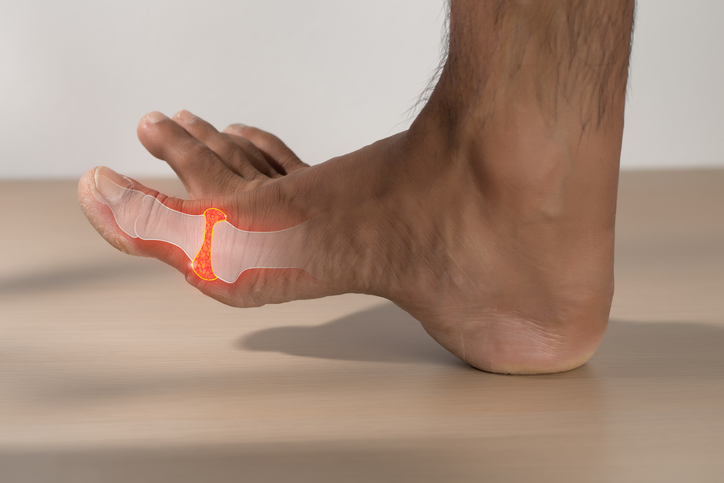
Gout
An anti-inflammatory painkiller usually eases an attack quickly. What is gout? | Patient Explainers Gout causes attacks of pain and swelling in one or more joints. ...fo/) Facebook: [https://www.facebook.com/patient](https://www.facebook.com/patient) Twitter: [https://twitter.com/patient](https://twitter.com/patient) Pinterest:.
Patient information leaflet
Can I take Devil's claw and Vitamin C together?
There are no known significant interactions between devil's claw and vitamin C. It is generally considered safe to take these two supplements together. Why this happens Devil's claw and vitamin C are processed by the body through different pathways and do not interfere with each other's absorption, metabolism, or effects. What you should do You.
Patient information leaflet
Can I take Iron and Vitamin C together?
G6PD deficiency If you have glucose-6-phosphate dehydrogenase (G6PD) deficiency, high doses of vitamin C can cause your red blood cells to break down (haemolysis). Simply search for your medicines to see potential interactions a... Disclaimer This information is for general educational purposes only and should not be relied upon as a substitute.
Further reading and references
- isovaleryl-CoA dehydrogenase; MedlinePlus, National Library of Medicine.
- Ensenauer R, Fingerhut R, Maier EM, Polanetz R, Olgemoller B, Roschinger W, Muntau AC. Newborn screening for isovaleric acidemia using tandem mass spectrometry: data from 1.6 million newborns. Clin Chem. 2011 Apr;57(4):623-6. doi: 10.1373/clinchem.2010.151134. Epub 2011 Feb 18.
- Ensenauer R, Vockley J, Willard JM, Huey JC, Sass JO, Edland SD, Burton BK, Berry SA, Santer R, Grunert S, Koch HG, Marquardt I, Rinaldo P, Hahn S, Matern D. A common mutation is associated with a mild, potentially asymptomatic phenotype in patients with isovaleric acidemia diagnosed by newborn screening. Am J Hum Genet. 2004 Dec;75(6):1136-42. doi: 10.1086/426318. Epub 2004 Oct 14.
- Lin WD, Wang CH, Lee CC, Lai CC, Tsai Y, Tsai FJ. Genetic mutation profile of isovaleric acidemia patients in Taiwan. Mol Genet Metab. 2007 Feb;90(2):134-9. doi: 10.1016/j.ymgme.2006.08.011. Epub 2006 Oct 4.
- Mohsen AW, Anderson BD, Volchenboum SL, Battaile KP, Tiffany K, Roberts D, Kim JJ, Vockley J. Characterization of molecular defects in isovaleryl-CoA dehydrogenase in patients with isovaleric acidemia. Biochemistry. 1998 Jul 14;37(28):10325-35. doi: 10.1021/bi973096r.
- Vockley J, Ensenauer R. Isovaleric acidemia: new aspects of genetic and phenotypic heterogeneity. Am J Med Genet C Semin Med Genet. 2006 May 15;142C(2):95-103. doi: 10.1002/ajmg.c.30089.
- Vockley J, Rogan PK, Anderson BD, Willard J, Seelan RS, Smith DI, Liu W. Exon skipping in IVD RNA processing in isovaleric acidemia caused by point mutations in the coding region of the IVD gene. Am J Hum Genet. 2000 Feb;66(2):356-67. doi: 10.1086/302751.
Share your thoughts or experiences with others in our patient communities.
Simple access to trusted treatments and health services online.
Common conditions
Get help with common conditions through the NHS, without a GP appointment.





Sign up to the Patient newsletter
Your weekly dose of clear, trustworthy health advice - written to help you feel informed, confident and in control.
By subscribing you accept our Privacy Policy. You can unsubscribe at any time. We never sell your data.