potassium sodium-activated channel subfamily T member 1
Last updated 4 Aug 2025
Meets Patient’s editorial guidelines
- DownloadDownload
- Share
- Language
- Discussion
- Ask Patient
- Audio Version
- Add to preferred sources on Google
The KCNT1 gene belongs to a large family of genes that provide instructions for making potassium channels. These channels, which transport positively charged atoms (ions) of potassium into and out of cells, play a key role in a cell's ability to generate and transmit electrical signals.
Video picks for GenesVideo library
Normal function
The KCNT1 gene belongs to a large family of genes that provide instructions for making potassium channels. These channels, which transport positively charged atoms (ions) of potassium into and out of cells, play a key role in a cell's ability to generate and transmit electrical signals.
Potassium channels are made up of several protein components (subunits). Each channel contains four alpha subunits that form the hole (pore) through which potassium ions move. Potassium channels can be made from four alpha subunits produced from the KCNT1 gene, or they can be made from subunits produced from both the KCNT1 gene and another gene called the KCNT2 gene.
The specific function of a potassium channel depends on its protein components and its location in the body. Channels that are made with the KCNT1 protein are active in nerve cells (neurons) in the brain, where they transport potassium ions out of cells. This flow of ions helps generate currents that activate (excite) neurons and send signals in the brain.
Researchers have determined that a molecule called PKC can increase the activity of channels that are made with the KCNT1 protein. While these channels can generate electrical currents without PKC, the currents are stronger when PKC attaches to the channel and increases the channel's activity.
Conditions referring to this gene or chromosome
Other names
KCa4.1
KIAA1422
potassium channel, sodium activated subfamily T, member 1
potassium channel, subfamily T, member 1
SLACK
Slo2.2
Patient picks for Genes
Treatment and medication
Potassium-sparing diuretics
Diuretics are medicines which increase the amount of fluid removed from the body when we pass urine. Potassium-sparing diuretics are one type of diuretic. They are weak diuretics usually prescribed in combination with other types of diuretics. They are used to increase the amount of fluid passed from the body in urine, whilst also preventing too much potassium being lost with it. Side-effects are uncommon when routine low doses are used. Most people are able to take these medicines.
by Dr Doug McKechnie, MRCGP
Mental health
Mind and body control - how to channel your ‘internal telekinesis’
The dark nights have arrived, and right on cue, Mike Flanagan has turned his attention to one of Stephen King’s most iconic tales of teenage torment and supernatural terror... Carrie. The story of a schoolgirl with telekinetic powers - the fictional ability to move objects using the mind alone - has gripped our morbid imaginations for decades. Little wonder, then, that this horror classic is getting a new lease of life in a television adaptation. But while we ourselves may not be able to bend spoons or move furniture, we do possess our own real-world form of ‘internal-telekinesis’. Through mental focus and controlled breathing, we can influence our heart rate and help calm an overworked nervous system.
by Hannah Boynton-Forshaw
Drug interactions checker
Can I take Lisinopril and Potassium together?
Taking lisinopril and potassium supplements together can cause the levels of potassium in your blood to become dangerously high (a condition called hyperkalaemia). While your body needs potassium for your heart and muscles to work, too much of it can lead to serious heart rhythm problems or even cause the heart to stop. Symptoms of high potassium can include muscle weakness, tingling sensations, or palpitations, but often there are no symptoms until the level is very high.
Drug interactions checker
Can I take Spironolactone and Potassium together?
Taking spironolactone and potassium supplements together can lead to dangerously high levels of potassium in your blood (a condition called hyperkalaemia). While your body needs potassium for your heart and muscles to work, too much of it can cause serious heart rhythm problems or even cause the heart to stop beating. Symptoms of high potassium can include muscle weakness, tingling sensations, or palpitations, but often there are no symptoms until the level is very high.
Healthy living
How much sodium should you have?
Sodium in the diet primarily comes from eating salt. While some of it comes from directly adding it to food, most of the salt we eat is already present in processed foods.
by Dr Hayley Willacy, FRCGP

Healthy living
Dietary potassium
Potassium is a mineral found naturally in many foods. It is needed in the body for the normal functioning of the heart, nerves and muscles. High potassium levels can lead to dangerous heart rhythms. Low potassium levels can cause muscle weakness and problems with the heart rhythm too. Long-term low levels of potassium has been linked to high blood pressure, heart disease, and stroke. Low potassium is particularly likely to raise your blood pressure if you have a high intake of salt (sodium chloride). Potassium relaxes the walls of the blood vessels, lowering blood pressure. It also protects against muscle cramping.
by Dr Surangi Mendis, MRCGP
Related patient information and medicines

Patient information leaflet
6-in-1 vaccine
The 6-in-1 vaccine is part of routine childhood immunisations and protects babies against six different serious illnesses. Three doses are given. Further boosters without all six components are given at other times later in childhood and in... It is given in one single injection into the thigh from one single syringe. This leaflet explains when.

Patient information leaflet
Refeeding syndrome
Refeeding syndrome was first described in Far East prisoners after the second world war when they developed heart failure after starting to eat again after a prolonged period of starvation. Refeeding syndrome is a dangerous and life threatening shift of fluids and body salts (electrolytes) that can occur when malnourished patients receive.

Patient information leaflet
Can I take Magnesium and Flecainide together?
In some cases, magnesium can actually be helpful for heart rhythm issues, but it must be balanced correctly. Why this happens Both magnesium and flecainide affect the electrical signals and mineral channels (like sodium and potassium) in your heart cells. While they don't usually stop each other from being absorbed, having too much or too little.

Patient information leaflet
Idiopathic oedema
Idiopathic oedema is the term for fluid retention which it not caused by a known medical condition. It is most common in women and can sometimes worsen as you get older. Although there is no cure for idiopathic oedema, having a healthy diet which is low in salt can make a real difference. Support stockings and regular exercise are also beneficial..

Patient information leaflet
Alpha-1 antitrypsin deficiency
Alpha-1 antitrypsin deficiency is an inherited genetic condition. A genetic condition is one that can be passed on from parents through genes. In alpha-1 antitrypsin deficiency the result of a genetic abnormality leads to lung and, in some people, liver damage. Alpha-1 antitrypsin (A1AT) is a protein made by cells in the liver. It passes from the.
Patient information leaflet
Medicine for high blood pressure
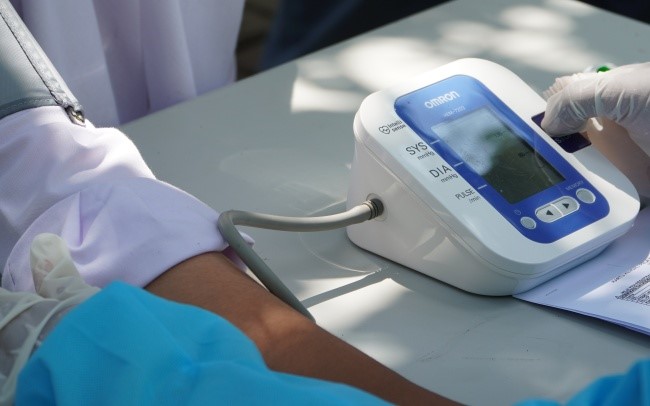
For detailed information about your own medication you should read the leaflet that comes inside the medicine packet. What are the types of blood pressure medicines. There are six main classes of medicines that are used to lower blood pressure: Angiotensin-converting enzyme (ACE) inhibitors. Angiotensin receptor blockers (ARBs). Calcium-channel.
Further reading and references
- potassium sodium-activated channel subfamily T member 1; MedlinePlus, National Library of Medicine.
- Barcia G, Fleming MR, Deligniere A, Gazula VR, Brown MR, Langouet M, Chen H, Kronengold J, Abhyankar A, Cilio R, Nitschke P, Kaminska A, Boddaert N, Casanova JL, Desguerre I, Munnich A, Dulac O, Kaczmarek LK, Colleaux L, Nabbout R. De novo gain-of-function KCNT1 channel mutations cause malignant migrating partial seizures of infancy. Nat Genet. 2012 Nov;44(11):1255-9. doi: 10.1038/ng.2441. Epub 2012 Oct 21.
- Bhattacharjee A, Kaczmarek LK. For K+ channels, Na+ is the new Ca2+. Trends Neurosci. 2005 Aug;28(8):422-8. doi: 10.1016/j.tins.2005.06.003.
- Gertler T, Bearden D, Bhattacharjee A, Carvill G. KCNT1-Related Epilepsy. 2018 Sep 20. In: Adam MP, Bick S, Mirzaa GM, Wallace SE, Amemiya A, editors. GeneReviews(R) [Internet]. Seattle (WA): University of Washington, Seattle; 1993-2026. Available from http://www.ncbi.nlm.nih.gov/books/NBK525917/
- Heron SE, Smith KR, Bahlo M, Nobili L, Kahana E, Licchetta L, Oliver KL, Mazarib A, Afawi Z, Korczyn A, Plazzi G, Petrou S, Berkovic SF, Scheffer IE, Dibbens LM. Missense mutations in the sodium-gated potassium channel gene KCNT1 cause severe autosomal dominant nocturnal frontal lobe epilepsy. Nat Genet. 2012 Nov;44(11):1188-90. doi: 10.1038/ng.2440. Epub 2012 Oct 21.
- Ishii A, Shioda M, Okumura A, Kidokoro H, Sakauchi M, Shimada S, Shimizu T, Osawa M, Hirose S, Yamamoto T. A recurrent KCNT1 mutation in two sporadic cases with malignant migrating partial seizures in infancy. Gene. 2013 Dec 1;531(2):467-71. doi: 10.1016/j.gene.2013.08.096. Epub 2013 Sep 10.
- Kurahashi H, Hirose S. Autosomal Dominant Sleep-Related Hypermotor (Hyperkinetic) Epilepsy. 2002 May 16 [updated 2023 Mar 23]. In: Adam MP, Bick S, Mirzaa GM, Wallace SE, Amemiya A, editors. GeneReviews(R) [Internet]. Seattle (WA): University of Washington, Seattle; 1993-2026. Available from http://www.ncbi.nlm.nih.gov/books/NBK1169/
- Santi CM, Ferreira G, Yang B, Gazula VR, Butler A, Wei A, Kaczmarek LK, Salkoff L. Opposite regulation of Slick and Slack K+ channels by neuromodulators. J Neurosci. 2006 May 10;26(19):5059-68. doi: 10.1523/JNEUROSCI.3372-05.2006.
- Zuberi SM, Wirrell E, Yozawitz E, Wilmshurst JM, Specchio N, Riney K, Pressler R, Auvin S, Samia P, Hirsch E, Galicchio S, Triki C, Snead OC, Wiebe S, Cross JH, Tinuper P, Scheffer IE, Perucca E, Moshe SL, Nabbout R. ILAE classification and definition of epilepsy syndromes with onset in neonates and infants: Position statement by the ILAE Task Force on Nosology and Definitions. Epilepsia. 2022 Jun;63(6):1349-1397. doi: 10.1111/epi.17239. Epub 2022 May 3.
Share your thoughts or experiences with others in our patient communities.
Simple access to trusted treatments and health services online.
Common conditions
Get help with common conditions through the NHS, without a GP appointment.





Sign up to the Patient newsletter
Your weekly dose of clear, trustworthy health advice - written to help you feel informed, confident and in control.
By subscribing you accept our Privacy Policy. You can unsubscribe at any time. We never sell your data.