killin, p53 regulated DNA replication inhibitor
Last updated 2 Feb 2021
Meets Patient’s editorial guidelines
- DownloadDownload
- Share
- Language
- Discussion
- Ask Patient
- Audio Version
- Add to preferred sources on Google
The KLLN gene provides instructions for making a protein called killin. The activity of the KLLN gene is controlled by a protein called p53 (which is produced from the TP53 gene). Little is known about the function of killin, although it is thought to trigger cells to self-destruct (undergo apoptosis) when they are damaged or no longer needed. In this way, killin helps to prevent abnormal cells from growing and dividing unchecked to form tumours. Through its role in regulating cell division, killin helps maintain the stability of a cell's genetic information. Based on these roles, killin is thought to be a tumour suppressor.
Video picks for GenesVideo library
Normal function
The KLLN gene provides instructions for making a protein called killin. The activity of the KLLN gene is controlled by a protein called p53 (which is produced from the TP53 gene). Little is known about the function of killin, although it is thought to trigger cells to self-destruct (undergo apoptosis) when they are damaged or no longer needed. In this way, killin helps to prevent abnormal cells from growing and dividing unchecked to form tumours. Through its role in regulating cell division, killin helps maintain the stability of a cell's genetic information. Based on these roles, killin is thought to be a tumour suppressor.
Conditions referring to this gene or chromosome
Other names
KILIN_HUMAN
KILLIN
killin
killin, p53-regulated DNA replication inhibitor
Patient picks for Genes

Tests and investigations
Is DNA testing a good idea?
'DIY' genetic tests are heavily hyped these days - they claim to be able to predict your risk of dementia, cancer, heart disease and much more. But should you shell out your money for them? Absolutely not, according to most doctors. However, there are situations where DNA tests can save lives.
by Dr Sarah Jarvis

Treatment and medication
ACE inhibitors
ACE inhibitors are medicines that are used mainly in the treatment of high blood pressure (hypertension) and heart failure. They are also used in some people with diabetes, for some forms of kidney disease, and after a heart attack, to help protect the heart. They have a variety of effects on the body. Their ability to relax blood vessels is one of the most important. The side-effects most commonly associated with ACE inhibitors are usually minor. A common side-effect is a persistent dry cough.
by Dr Toni Hazell, FRCGP

Treatment and medication
Proton pump inhibitors
Proton pump inhibitors reduce the amount of acid made by the stomach. They are commonly used to treat acid reflux and ulcers of the stomach and part of the gut called the duodenum. Most people who take a proton pump inhibitor do not develop any side-effects.
by Dr Philippa Vincent, MRCGP
Medicine
Trandolapril - an ACE inhibitor
Take trandolapril once daily. The first dose may make you feel dizzy, so it is best taken at bedtime. Some painkillers and indigestion remedies interfere with trandolapril. Ask your pharmacist for advice before you buy any medicines 'over the counter'. Some people taking trandolapril can develop a troublesome cough. If this happens to you, let your doctor know.
by Michael Stewart, MRPharmS

Medicine
Fosinopril - an ACE inhibitor
The first dose of fosinopril can make you feel dizzy. It is best taken at bedtime. Fosinopril is generally well tolerated but if you develop a troublesome cough, you should let your doctor know. Some painkillers and indigestion remedies interfere with fosinopril. Ask your pharmacist for advice before you buy any medicines 'over the counter'.
by Michael Stewart, MRPharmS

Medicine
Captopril - an ACE inhibitor
Captopril is used to treat a number of different conditions. The first dose may make you feel dizzy, so it is best taken just before you go to bed. Some painkillers and indigestion remedies interfere with captopril, so ask your pharmacist for advice before you buy any medicines. Some people taking captopril develop a troublesome cough. If this happens to you, let your doctor know.
by Michael Stewart, MRPharmS
Related patient information and medicines

Patient information leaflet
Chronic myeloid leukaemia
Chronic myeloid leukaemia (CML) is sometimes called chronic myelogenous leukaemia, chronic granulocytic leukaemia, or chronic myelocytic leukaemia. What is chronic myeloid leukaemia. Chronic myeloid leukaemia (CML) is sometimes called chronic myelogenous leukaemia, chronic granulocytic leukaemia, or chronic myelocytic leukaemia. CML develops due.

Patient information leaflet
Kidney cancer
If kidney cancer is diagnosed at an early stage, there is a good chance of a cure. A description of what kidneys are and how they work is at the bottom of this article. This is sometimes called renal adenocarcinoma or renal cell carcinoma or hypernephroma. Renal cell cancer This type of cancer develops from a cell in a kidney tubule, which becomes.

Patient information leaflet
Genetic testing
Genetic testing is a type of medical test that identifies changes in chromosomes, genes or proteins. Genetic tests examine a person's DNA in a variety of ways to assess a person's genetic health. Different types of cells form the differen... DNA in Eukaryote cell DNA in Eukaryote cell In the centre (nucleus) of most cells in your body, the DNA.

Patient information leaflet
Parkinson's disease
The main symptoms of Parkinson's disease are usually stiffness, shaking (tremor), and slowness of movement. Parkinson's disease symptoms The brain cells and nerves affected in Parkinson's disease (PD) normally help to produce smooth, co-ordinated movements of muscles. When this system goes wrong, movement disorders (motor symptoms) occur. Three.

Patient information leaflet
Erectile dysfunction
Also, your doctor may prescribe a statin medicine Statins and other lipid-lower... They may also suggest blood pressure-lowering medication, if you have high blood pressure. Because of the way they work, these medicines are called phosphodiesterase type 5 (PDE5) inhibitors. PDE5 inhibitors aren't suitable for everyone. Your doctor or pharmacist.
Patient information leaflet
Alpha-blockers
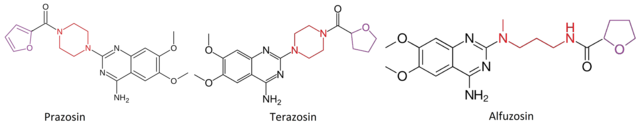
Alpha-blockers are medicines that are mainly used to treat high blood pressure (hypertension) and problems with passing urine in men who have enlargement of the prostate gland. Prostate gland enlargement is also called benign prostatic hyperplasia (BPH). What are alpha-blockers used for. In the past, some alpha-blockers were also used to treat.
Further reading and references
- killin, p53 regulated DNA replication inhibitor; MedlinePlus, National Library of Medicine.
- Bennett KL, Mester J, Eng C. Germline epigenetic regulation of KILLIN in Cowden and Cowden-like syndrome. JAMA. 2010 Dec 22;304(24):2724-31. doi: 10.1001/jama.2010.1877.
- Jelovac D, Park BH. PTEN promoter silencing and Cowden syndrome: the role of epigenetic regulation of KILLIN. JAMA. 2010 Dec 22;304(24):2744-5. doi: 10.1001/jama.2010.1863. No abstract available.
- Nizialek EA, Sankunny M, Niazi F, Eng C. Cancer-predisposition gene KLLN maintains pericentric H3K9 trimethylation protecting genomic stability. Nucleic Acids Res. 2016 May 5;44(8):3586-94. doi: 10.1093/nar/gkv1481. Epub 2015 Dec 15.
- Sankunny M, Eng C. Identification of nuclear export signal in KLLN suggests potential role in proteasomal degradation in cancer cells. Oncotarget. 2020 Dec 15;11(50):4625-4636. doi: 10.18632/oncotarget.27833. eCollection 2020 Dec 15.
- Sankunny M, Eng C. KLLN-mediated DNA damage-induced apoptosis is associated with regulation of p53 phosphorylation and acetylation in breast cancer cells. Cell Death Discov. 2018 Sep 11;4:31. doi: 10.1038/s41420-018-0094-x. eCollection 2018.
Share your thoughts or experiences with others in our patient communities.
Simple access to trusted treatments and health services online.
Common conditions
Get help with common conditions through the NHS, without a GP appointment.





Sign up to the Patient newsletter
Your weekly dose of clear, trustworthy health advice - written to help you feel informed, confident and in control.
By subscribing you accept our Privacy Policy. You can unsubscribe at any time. We never sell your data.