KRIT1 ankyrin repeat containing
Last updated 27 Jun 2022
Meets Patient’s editorial guidelines
- DownloadDownload
- Share
- Language
- Discussion
- Ask Patient
- Audio Version
- Add to preferred sources on Google
The KRIT1 gene (also known as CCM1) provides instructions for making a protein that strengthens the interactions between cells that form blood vessels and limits leakage from the vessels. The KRIT1 protein interacts with a number of other proteins to form a complex that is found in the junctions that connect neighboring cells. As part of this complex, the KRIT1 protein helps turn off (suppress) a signaling molecule known as RhoA-GTPase. This molecule plays a role in regulating the actin cytoskeleton, which is a network of fibers that makes up the cell's structural framework. When turned on, RhoA-GTPase stimulates the formation of actin fibers, which has been linked to weakened junctions between cells and increased leakage from blood vessels.
Video picks for GenesVideo library
Normal function
The KRIT1 gene (also known as CCM1) provides instructions for making a protein that strengthens the interactions between cells that form blood vessels and limits leakage from the vessels. The KRIT1 protein interacts with a number of other proteins to form a complex that is found in the junctions that connect neighboring cells. As part of this complex, the KRIT1 protein helps turn off (suppress) a signaling molecule known as RhoA-GTPase. This molecule plays a role in regulating the actin cytoskeleton, which is a network of fibers that makes up the cell's structural framework. When turned on, RhoA-GTPase stimulates the formation of actin fibers, which has been linked to weakened junctions between cells and increased leakage from blood vessels.
Conditions referring to this gene or chromosome
Other names
ankyrin repeat-containing protein Krit1
CAM
CCM1
cerebral cavernous malformations 1
krev interaction trapped 1
KRIT1_HUMAN
Patient picks for Genes

Healthy living
Walk, jog, repeat: what is Jeffing?
No, it’s not about perfecting your best Jeff Goldblum impression, and it’s not a quirky new social media challenge either. Jeffing is actually a fitness method created in the 1970s by Olympian Jeff Galloway. Also known as the run-walk-run method, Jeffing combines running with short walking breaks to make exercise easier and more manageable. We spoke with an expert to break down what it’s all about and if it’s actually good for your health and fitness.
by Victoria Raw

Medicine
Preparations for piles - containing a corticosteroid
Common symptoms of piles (haemorrhoids) are pain, and bleeding after going to the toilet. Preparations containing corticosteroids reduce inflammation, which helps to ease discomfort. Do not use the preparation for longer than seven days at a time.
by Michael Stewart, MRPharmS

MSK
Settling Breath
Bring the feet hip distance wide. The arms are by your side, palms facing out. As you inhale your arms float up to your side and overhead. As you exhale, palms face down towards the earth and you draw your arms and hands down in front of the body. You repeat this three times and each time your intention changes. The first time you are clearing out what no longer serves you from the form of your body, the sedond time you are filling with energy and intention and the third time you are sealing what you filled into your body.

MSK
Drawing Bow & Arrow Fly
Settle into horse stance, feet wide and knees softly bent. Bring the hands into gentle fists in front of the chest, elbows relaxed. Extend the left arm and open the hand into an “L” shape with the thumb and index finger while the other three fingers curl inward. The left arm reaches out as though holding the bow. Keeping the knees bent, let the right fist remain in front of the chest, then draw the right elbow straight back along a clean line, as if pulling a bowstring. Turn the head and gaze through the space between the left thumb and index finger. With a steady exhale, “release” the arrow. Repeat to the other side, maintaining the rootedness of the legs and the spaciousness of the chest. Traditionally, this form is said to regulate the Wood, Metal, and Fire elements, supporting the Liver, Lungs, and Heart meridians. It helps open the chest, strengthen the back and legs, and cultivate clear focus—beneficial for vision, direction, and the sense of moving toward one’s aims.
Condition & symptom support
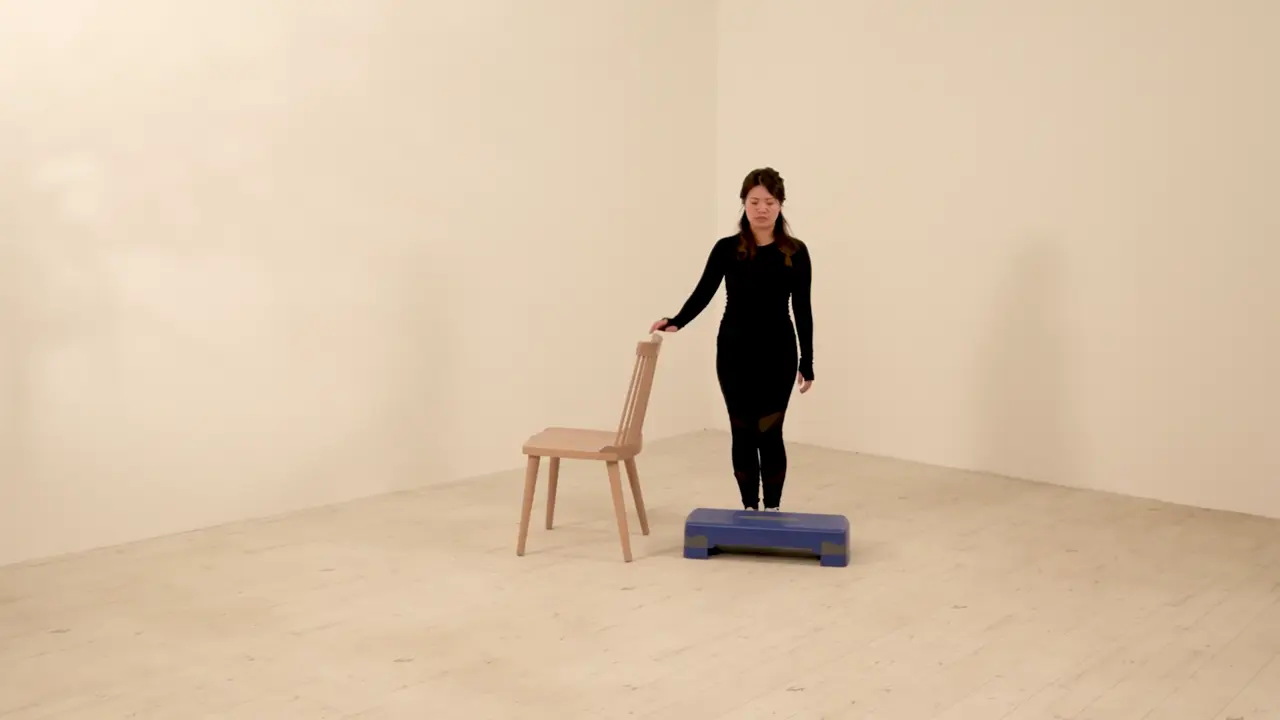
Supported Standing Step Ups Slow
The Supported Standing Step Up Slow is a lower-body strength and balance exercise that targets the legs and glutes. Stand in front of a low step or platform and hold a support for balance. Step up slowly with one foot, then bring the other to meet it before stepping down. Repeat with control. This exercise enhances strength, coordination, and stability.

Patient explainers
Patient Access introduction – GP services at your fingertips
Book appointments, order repeat prescriptions, view your medical record and more with Patient Access. [https://www.patientaccess.com/](https://www.patientaccess.com/)
Related patient information and medicines

Patient information leaflet
Blood glucose test (blood sugar) and HbA1c
...dangerous) Follow Patient: Website: [https://patient.info/](https://patient.info/) Facebook: [https://www.facebook.com/patient](https://www.facebook.com/patient) Twitter: [https://twitter.com/patient](https://twitter.com/patient) Pinterest: [https://uk.pinterest.com/patient/](https://uk.pinterest.com/patient/) Instagram:.

Patient information leaflet
Olecranon bursitis
Olecranon bursitis is a condition where there is inflammation and soft swelling at the back of your elbow. The olecranon is the bony tip of your elbow. A bursa is a soft bag of fluid lying over a joint in the body. '-itis' means inflammation. Elbow with olecranon bursitis Olecranon Bursitis Elbow What is olecranon bursitis. Olecranon bursitis,.

Patient information leaflet
DMSA scan
The arrangements, and the way tests are performed, may vary between different hospitals. Always follow the instructions given by your doctor or local hospital. What is a DMSA scan. DMSA stands for dimercaptosuccinic acid. A DMSA scan uses radioactive chemicals to create special pictures of the kidneys. An example of a DMSA scan of the kidneys is.

Patient information leaflet
Migraine treatment
Prochlorperazine Prochlorperazine comes in a buccal form which dissolves between the gum and cheek. The National Institute for Health and Care Excellence (NICE) has updated its guidance on using metoclopramide or prochlorperazine for people with migraine. They recommend that your doctor discuss the risks and benefits of these medicines with you.

Patient information leaflet
Tonic-clonic seizures
During a generalised tonic clonic seizure, you are unconscious and unaware of what is happ... Duration. This may last from a few seconds to a few minutes. Grand mal seizures Grand mal seizures is an older term for generalized tonic-clonic seizures. It has essentially the same meaning, but is no longer used as often by medical professionals. What.

Patient information leaflet
Steroid nasal sprays
Steroid nasal sprays are medicines that are commonly used to treat symptoms of stuffiness or congestion in the nose. They are used most often for allergies of the nose, such as hay fever. They are also used for other causes of persistent inflammation of the nose ( rhinitis ). Steroid sprays reduce swelling and mucus in the nose, and usually work.
Further reading and references
- KRIT1 ankyrin repeat containing; MedlinePlus, National Library of Medicine.
- Cave-Riant F, Denier C, Labauge P, Cecillon M, Maciazek J, Joutel A, Laberge-Le Couteulx S, Tournier-Lasserve E. Spectrum and expression analysis of KRIT1 mutations in 121 consecutive and unrelated patients with Cerebral Cavernous Malformations. Eur J Hum Genet. 2002 Nov;10(11):733-40. doi: 10.1038/sj.ejhg.5200870.
- Glading A, Han J, Stockton RA, Ginsberg MH. KRIT-1/CCM1 is a Rap1 effector that regulates endothelial cell cell junctions. J Cell Biol. 2007 Oct 22;179(2):247-54. doi: 10.1083/jcb.200705175.
- Gunel M, Laurans MS, Shin D, DiLuna ML, Voorhees J, Choate K, Nelson-Williams C, Lifton RP. KRIT1, a gene mutated in cerebral cavernous malformation, encodes a microtubule-associated protein. Proc Natl Acad Sci U S A. 2002 Aug 6;99(16):10677-82. doi: 10.1073/pnas.122354499. Epub 2002 Jul 24.
- Guzeloglu-Kayisli O, Kayisli UA, Amankulor NM, Voorhees JR, Gokce O, DiLuna ML, Laurans MS, Luleci G, Gunel M. Krev1 interaction trapped-1/cerebral cavernous malformation-1 protein expression during early angiogenesis. J Neurosurg. 2004 May;100(5 Suppl Pediatrics):481-7. doi: 10.3171/ped.2004.100.5.0481.
- Laberge-le Couteulx S, Jung HH, Labauge P, Houtteville JP, Lescoat C, Cecillon M, Marechal E, Joutel A, Bach JF, Tournier-Lasserve E. Truncating mutations in CCM1, encoding KRIT1, cause hereditary cavernous angiomas. Nat Genet. 1999 Oct;23(2):189-93. doi: 10.1038/13815.
- Plummer NW, Zawistowski JS, Marchuk DA. Genetics of cerebral cavernous malformations. Curr Neurol Neurosci Rep. 2005 Sep;5(5):391-6. doi: 10.1007/s11910-005-0063-7.
- Stockton RA, Shenkar R, Awad IA, Ginsberg MH. Cerebral cavernous malformations proteins inhibit Rho kinase to stabilize vascular integrity. J Exp Med. 2010 Apr 12;207(4):881-96. doi: 10.1084/jem.20091258. Epub 2010 Mar 22.
- Verlaan DJ, Davenport WJ, Stefan H, Sure U, Siegel AM, Rouleau GA. Cerebral cavernous malformations: mutations in Krit1. Neurology. 2002 Mar 26;58(6):853-7. doi: 10.1212/wnl.58.6.853.
- Verlaan DJ, Laurent SB, Sure U, Bertalanffy H, Andermann E, Andermann F, Rouleau GA, Siegel AM. CCM1 mutation screen of sporadic cases with cerebral cavernous malformations. Neurology. 2004 Apr 13;62(7):1213-5. doi: 10.1212/01.wnl.0000118299.55857.bb.
- Whitehead KJ, Plummer NW, Adams JA, Marchuk DA, Li DY. Ccm1 is required for arterial morphogenesis: implications for the etiology of human cavernous malformations. Development. 2004 Mar;131(6):1437-48. doi: 10.1242/dev.01036.
- Zawistowski JS, Stalheim L, Uhlik MT, Abell AN, Ancrile BB, Johnson GL, Marchuk DA. CCM1 and CCM2 protein interactions in cell signaling: implications for cerebral cavernous malformations pathogenesis. Hum Mol Genet. 2005 Sep 1;14(17):2521-31. doi: 10.1093/hmg/ddi256. Epub 2005 Jul 21.
Share your thoughts or experiences with others in our patient communities.
Simple access to trusted treatments and health services online.
Common conditions
Get help with common conditions through the NHS, without a GP appointment.





Sign up to the Patient newsletter
Your weekly dose of clear, trustworthy health advice - written to help you feel informed, confident and in control.
By subscribing you accept our Privacy Policy. You can unsubscribe at any time. We never sell your data.