keratin 81
Last updated 18 Aug 2020
Meets Patient’s editorial guidelines
- DownloadDownload
- Share
- Language
- Discussion
- Ask Patient
- Audio Version
- Add to preferred sources on Google
The KRT81 gene provides instructions for making the type II hair keratin K81 protein (K81). This protein belongs to a group of proteins known as keratins, which are tough, fibrous proteins that form the structural framework of cells that make up the hair, skin, and nails. Each keratin protein partners with another keratin protein to form molecules called intermediate filaments. These filaments assemble into strong networks that provide strength and resiliency to the tissues and protect them from being damaged by everyday physical stresses. The K81 protein is found in cells that make up the inner compartment of the hair shaft known as the cortex, and this protein helps give hair its strength and elasticity.
Video picks for GenesVideo library
Normal function
The KRT81 gene provides instructions for making the type II hair keratin K81 protein (K81). This protein belongs to a group of proteins known as keratins, which are tough, fibrous proteins that form the structural framework of cells that make up the hair, skin, and nails. Each keratin protein partners with another keratin protein to form molecules called intermediate filaments. These filaments assemble into strong networks that provide strength and resiliency to the tissues and protect them from being damaged by everyday physical stresses. The K81 protein is found in cells that make up the inner compartment of the hair shaft known as the cortex, and this protein helps give hair its strength and elasticity.
Conditions referring to this gene or chromosome
Other names
ghHb1
hair keratin K2.9
hard keratin, type II, 1
Hb-1
HB1
hHAKB2-1
hHb1
keratin 81, type II
keratin, hair, basic, 1
keratin-81
KRT81_HUMAN
KRTHB1
type II hair keratin Hb1
Patient picks for Genes
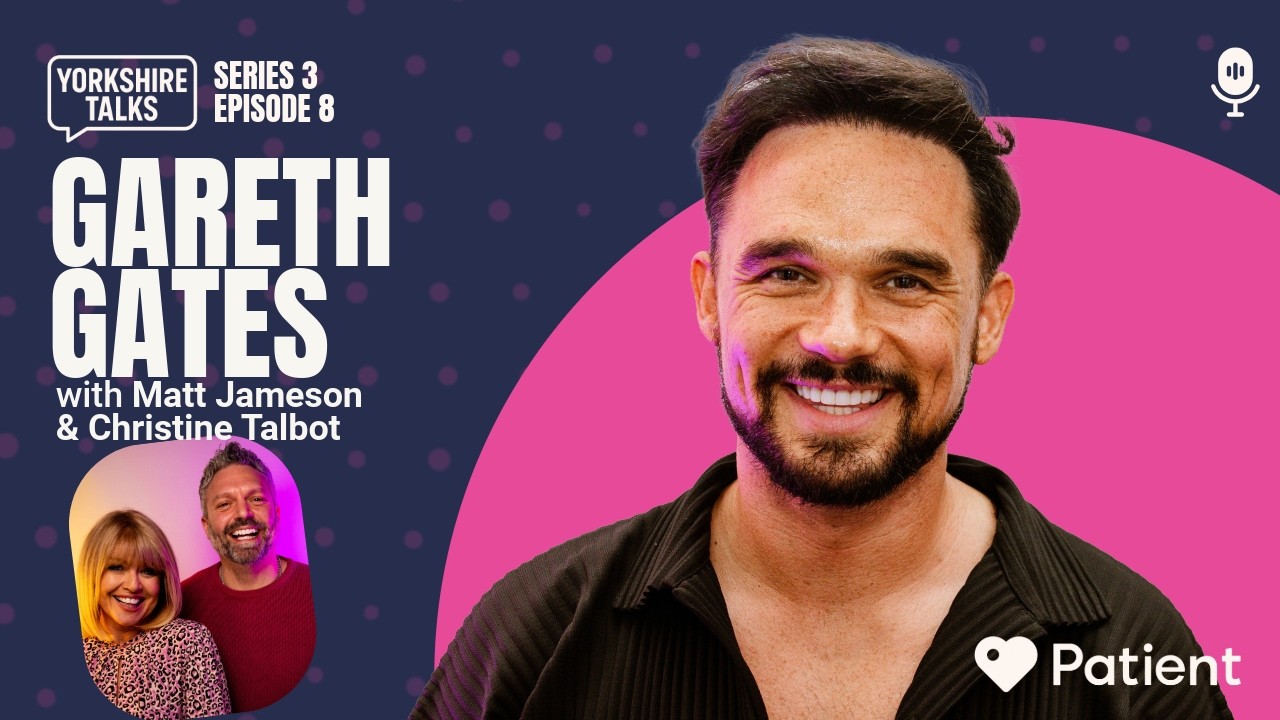
Yorkshire talks series 3
Gareth Gates: "I believed I was defective — my stammer was my superpower" | Yorkshire Talks
In our final episode of Series Three, our Yorkshire Talks guest is former Pop Idol star, producer and performer Gareth Gates. Bradford lad Gareth was first interviewed by Christine for a YTV talent show for young people nearly 30 years ago — so this episode was a bit of a reunion. Now all grown up, Gareth joins Matt and Christine to talk openly and honestly about his journey: from being bullied at school and living with a debilitating stammer, to reaching the final of the very first Pop Idol and having his whole life changed overnight. Gareth explains how taking part in the McGuire Programme has helped him manage his stammer, and how his experiences have shaped the work he does today. He also chats about his role in Boyband in the Buff, currently touring, his journey into becoming a music producer and entrepreneur, and his exciting new project — Speechless, a musical about stammering, due to hit the stage next year. Now a dad himself, with a daughter the same age he was when he first found fame, Gareth reflects on the last few decades with warmth, honesty and plenty of Yorkshire humour. 🎙️ It's a fascinating, funny and incredibly inspiring conversation — one you won't want to miss. If you enjoy the episode, don't forget to LIKE, SUBSCRIBE and leave us a comment. Follow Gareth: 📸 Instagram: @gareth_gates See Gareth on tour: 🎭 Boyband in the Buff is currently on tour. Find tour dates here: [paste official tour dates link] See Gareth in Beauty and the Beast: ✨ Gareth stars as the Beast in Beauty and the Beast at the Britannia Pier, Great Yarmouth, 8–31 December: britannia-pier.co.uk Follow the hosts: Matt Jameson: @matt_d_jameson Christine Talbot: @christineetalbot Yorkshire Talks is presented by Christine Talbot and Matt Jameson, and produced by Simon Fogal at Chapter 81 Studios in Leeds. Proudly sponsored by Patient.info.

Video
From Journalism to 'My Kind of Mum': The Shock of Motherhood
Yorkshire Talks is hosted by Matt Jameson and Christine Talbot and produced by Chapter 81
Yorkshire talks series 2
From lost Oofy to the arrival of Ufeta!
Yorkshire Talks is hosted by Matt Jameson and Christine Talbot and produced by Chapter 81

Video
Mum Guilt as a Person: The Constant Internal Critic
Yorkshire Talks is hosted by Matt Jameson and Christine Talbot and produced by Chapter 81

Video
How Old School Parenting Shapes Us Today
Yorkshire Talks is hosted by Matt Jameson and Christine Talbot and produced by Chapter 81
Video
The epic tale of a lost childhood comforter
Yorkshire Talks is hosted by Matt Jameson and Christine Talbot and produced by Chapter 81
Related patient information and medicines

Patient information leaflet
Bowen's disease
...than Bowen's diseaseKeratinocytes. These cells are in layers above the basal layer. They make a substance called keratin which is a hard waxy material. Keratinocytes are constantly dividing and a certain number are dying at any given time. The top (horny) layer of the epidermis is made of dead keratinocytes which contain keratin. The top of the.
Patient information leaflet
Epidermoid and pilar cysts
Epidermoid and pilar cysts are commonly referred to as 'sebaceous cysts' (pronounced 'seb-ay-shuss'). They are overgrowths of skin cells (called keratin) held together in a little capsule, or sac. There are lots of other names for epidermoid cysts, suc... This substance is soggy keratin. Keratin is made by skin cells and is the substance that.

Patient information leaflet
Skin cancer types
This leaflet gives a general overview about skin cancer and the different skin cancer types - melanoma and non-melanoma. What is cancer. Keratinocytes. These cells are in layers above the basal layer. They make a substance called keratin which is a hard wax-like material. Keratinocytes are constantly dividing and a certain number are dying at any.

Patient information leaflet
Milia
In other people, they may take longer to clear. In persistent cases, treatment may be suggested. What are milia. A milium is a small, raised bump on the skin. It is a type of tiny skin cyst filled with a protein called keratin. Many are usually found together and so they are called milia (the plural of milium). What do milia look like. Milia in a.

Patient information leaflet
Corns and calluses
Chemical treatment... These usually contain salicylic acid, which is also present in many wart-removal products. Salicylic acid is a keratolytic, which means it dissolves the protein (keratin) that makes up most of both the corn and the thick layer of dead skin which usually tops it. It is important to use these products as directed in the package.

Patient information leaflet
Cholesteatoma
Cholesteatoma is the name given to a collection of skin cells that form a pearly-white greasy-looking lump deep in the ear, usually at the top of the area behind the eardrum. A cholesteatoma is a non-cancerous abnormal growth of skin-like tissue in the middle ear. Cholesteatoma cholesteatoma What does a cholestea... In the close-up image below,.
Further reading and references
- keratin 81; MedlinePlus, National Library of Medicine.
- Korge BP, Hamm H, Jury CS, Traupe H, Irvine AD, Healy E, Birch-MacHin M, Rees JL, Messenger AG, Holmes SC, Parry DA, Munro CS. Identification of novel mutations in basic hair keratins hHb1 and hHb6 in monilethrix: implications for protein structure and clinical phenotype. J Invest Dermatol. 1999 Oct;113(4):607-12. doi: 10.1046/j.1523-1747.1999.00722.x.
- Langbein L, Rogers MA, Winter H, Praetzel S, Schweizer J. The catalog of human hair keratins. II. Expression of the six type II members in the hair follicle and the combined catalog of human type I and II keratins. J Biol Chem. 2001 Sep 14;276(37):35123-32. doi: 10.1074/jbc.M103305200. Epub 2001 Jul 9.
- Rogers MA, Langbein L, Praetzel S, Moll I, Krieg T, Winter H, Schweizer J. Sequences and differential expression of three novel human type-II hair keratins. Differentiation. 1997 Feb;61(3):187-94. doi: 10.1046/j.1432-0436.1997.6130187.x.
- Schweizer J, Bowden PE, Coulombe PA, Langbein L, Lane EB, Magin TM, Maltais L, Omary MB, Parry DA, Rogers MA, Wright MW. New consensus nomenclature for mammalian keratins. J Cell Biol. 2006 Jul 17;174(2):169-74. doi: 10.1083/jcb.200603161. Epub 2006 Jul 10.
Share your thoughts or experiences with others in our patient communities.
Simple access to trusted treatments and health services online.
Common conditions
Get help with common conditions through the NHS, without a GP appointment.





Sign up to the Patient newsletter
Your weekly dose of clear, trustworthy health advice - written to help you feel informed, confident and in control.
By subscribing you accept our Privacy Policy. You can unsubscribe at any time. We never sell your data.