mitogen-activated protein kinase kinase 1
Last updated 12 Apr 2023
Meets Patient’s editorial guidelines
- DownloadDownload
- Share
- Language
- Discussion
- Ask Patient
- Audio Version
- Add to preferred sources on Google
The MAP2K1 gene provides instructions for making a protein known as MEK1 protein kinase. This protein is part of a signaling pathway called the RAS/MAPK pathway, which transmits chemical signals from outside the cell to the cell's nucleus. RAS/MAPK signaling helps control the growth and division (proliferation) of cells, the process by which cells mature to carry out specific functions (differentiation), cell movement (migration), and the self-destruction of cells (apoptosis). MEK1 protein kinase appears to be essential for normal development before birth and for survival after birth.
Video picks for GenesVideo library
Normal function
The MAP2K1 gene provides instructions for making a protein known as MEK1 protein kinase. This protein is part of a signaling pathway called the RAS/MAPK pathway, which transmits chemical signals from outside the cell to the cell's nucleus. RAS/MAPK signaling helps control the growth and division (proliferation) of cells, the process by which cells mature to carry out specific functions (differentiation), cell movement (migration), and the self-destruction of cells (apoptosis). MEK1 protein kinase appears to be essential for normal development before birth and for survival after birth.
Conditions referring to this gene or chromosome
Other names
Dual Specificity Mitogen-Activated Protein Kinase Kinase 1
ERK Activator Kinase 1
MAP Kinase Kinase 1
MAPK/ERK kinase 1
MAPKK1
MEK-1
MEK-1 Protein Kinase
MEK1
MKK-1 Protein Kinase
MKK1
MKK1 Protein Kinase
MP2K1_HUMAN
PRKMK1
protein kinase, mitogen-activated, kinase 1 (MAP kinase kinase 1)
Patient picks for Genes

Diet and nutrition
How a protein-packed breakfast can boost your health
When we think of breakfast, we often picture a bowl of cornflakes with milk. While it’s a classic morning staple, it might not be the most effective way to start your day, as it lacks protein. Adding more protein to your breakfast can boost your energy levels and help keep you feeling full for longer.
by Victoria Raw

Diet and nutrition
10 sources of plant-based protein for bone health
Plant-based diets are growing in popularity. People choose this way of eating for various reasons - to boost their health, help animals, and protect the environment. But switching to a plant-based diet may mean you're missing out on vital, bone-friendly nutrients. One of these is protein.
by Victoria Raw
Healthy living
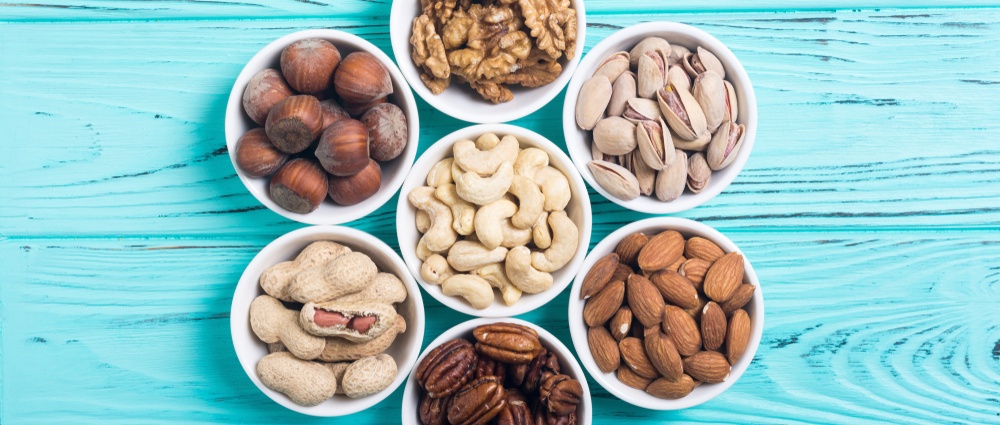
8 high-protein nuts to boost your strength
Packed with protein, delicious, easy to eat, and versatile - nuts are a great source of fuel for people building their fitness and strength. But not all nuts are created equal, which is why we count down the top eight nuts you should eat while strength training and serve these up with tasty recipe ideas.
by Lynn Stephen

Kidney and urinary tract
Proteinuria
Proteins are molecules that are found in almost every part of the body, including in the blood. The kidneys normally have a filter which stops protein from entering the urine, except in very tiny amounts; however, kidney problems can cause higher levels of protein to be found in the urine.
by Dr Doug McKechnie, MRCGP

Diet and nutrition
Plant-based proteins could help prevent high blood pressure
Eating a greater amount of minimally processed plant-based proteins - such as beans, nuts and lentils - may lower your chance of developing high blood pressure, according to new research.
by Laura Williamson

Treatment and medication
Are protein shakes good for weight loss?
Protein shakes have experienced a surge in popularity recently, with many people now drinking them daily to aid their journeys to improved fitness and better health. But what benefits do they offer, and can you drink protein shakes for weight loss?
by Emily Jane Bashforth
Related patient information and medicines

Patient information leaflet
Muscular dystrophy
Muscular dystrophy is an inherited (genetic) disorder causing muscle weakness. There are different types of muscular dystrophy, which vary as to how severe they are, ranging from very mild to severe. The different types also vary as to what age they begin. If muscular dystrophy is suspected, tests can help to make an accurate diagnosis. Other.

Patient information leaflet
Primary liver cancer
If you already have cirrhosis and your health becomes worse quite quickly, the cause may be a liver cancer which has developed. Everyone with cirrhosis should be having regular monitoring with an ultrasound and blood tests to detect any development of a liver cancer. There are new medicines being developed for the treatment of liver cancer. For.

Patient information leaflet
Juvenile idiopathic arthritis
As they are relatively new medicines, there are still studies being done to establish whether there are any long-term health risks from taking them. Options include: Etanercept Etanercept Tocilizumab Infliximab Abatacept Adalimumab Tofacitinib is another new drug. It belongs to a type of drug called JAK kinase inhibitors. It is sometimes used if.

Patient information leaflet
Mastocytosis and mast cell disorders
If the condition is severe, surgery to remove the spleen (splenectomy), medicines that have an effect on the immune system (such as interferon), bone marrow transplant or... Dr Sarah Jarvis , 28th September 2021 Midostaurin for treating advanced systemic mastocytosis The National Institute for Health and Care Excellence (NICE) has brought out new.

Patient information leaflet
Mouth cancer
Diagnosing mouth cancer Your healthcare professional may suspect mouth cancer if you have a lesion in your mouth (such as a sore, an ulcer or a lump) which has not healed for 3 wee... Dr Krishna Vakharia , 16th October 2023 The National Institute for Health and Care Excellence (NICE) has recommended that a person should receive a diagnosis or.

Patient information leaflet
Glycogen storage disorders
Glycogen storage disorders are a group of inherited diseases. They result from a problem with one of the proteins (known as enzymes) involved in the conversion of glucose to glycogen, or the breakdown of glycogen back into glucose. They mostly tend to affect your liver and muscles. Most are diagnosed in childhood. However, type II (infantile.
Further reading and references
- mitogen-activated protein kinase kinase 1; MedlinePlus, National Library of Medicine.
- Brown NA, Furtado LV, Betz BL, Kiel MJ, Weigelin HC, Lim MS, Elenitoba-Johnson KS. High prevalence of somatic MAP2K1 mutations in BRAF V600E-negative Langerhans cell histiocytosis. Blood. 2014 Sep 4;124(10):1655-8. doi: 10.1182/blood-2014-05-577361. Epub 2014 Jun 30.
- Chakraborty R, Hampton OA, Shen X, Simko SJ, Shih A, Abhyankar H, Lim KP, Covington KR, Trevino L, Dewal N, Muzny DM, Doddapaneni H, Hu J, Wang L, Lupo PJ, Hicks MJ, Bonilla DL, Dwyer KC, Berres ML, Poulikakos PI, Merad M, McClain KL, Wheeler DA, Allen CE, Parsons DW. Mutually exclusive recurrent somatic mutations in MAP2K1 and BRAF support a central role for ERK activation in LCH pathogenesis. Blood. 2014 Nov 6;124(19):3007-15. doi: 10.1182/blood-2014-05-577825. Epub 2014 Sep 8.
- Kang H, Jha S, Deng Z, Fratzl-Zelman N, Cabral WA, Ivovic A, Meylan F, Hanson EP, Lange E, Katz J, Roschger P, Klaushofer K, Cowen EW, Siegel RM, Marini JC, Bhattacharyya T. Somatic activating mutations in MAP2K1 cause melorheostosis. Nat Commun. 2018 Apr 11;9(1):1390. doi: 10.1038/s41467-018-03720-z.
- Nava C, Hanna N, Michot C, Pereira S, Pouvreau N, Niihori T, Aoki Y, Matsubara Y, Arveiler B, Lacombe D, Pasmant E, Parfait B, Baumann C, Heron D, Sigaudy S, Toutain A, Rio M, Goldenberg A, Leheup B, Verloes A, Cave H. Cardio-facio-cutaneous and Noonan syndromes due to mutations in the RAS/MAPK signalling pathway: genotype-phenotype relationships and overlap with Costello syndrome. J Med Genet. 2007 Dec;44(12):763-71. doi: 10.1136/jmg.2007.050450. Epub 2007 Aug 17.
- Nelson DS, van Halteren A, Quispel WT, van den Bos C, Bovee JV, Patel B, Badalian-Very G, van Hummelen P, Ducar M, Lin L, MacConaill LE, Egeler RM, Rollins BJ. MAP2K1 and MAP3K1 mutations in Langerhans cell histiocytosis. Genes Chromosomes Cancer. 2015 Jun;54(6):361-8. doi: 10.1002/gcc.22247. Epub 2015 Mar 31.
- Nishi E, Mizuno S, Nanjo Y, Niihori T, Fukushima Y, Matsubara Y, Aoki Y, Kosho T. A novel heterozygous MAP2K1 mutation in a patient with Noonan syndrome with multiple lentigines. Am J Med Genet A. 2015 Feb;167A(2):407-11. doi: 10.1002/ajmg.a.36842. Epub 2014 Nov 25.
- Rodriguez-Viciana P, Tetsu O, Tidyman WE, Estep AL, Conger BA, Cruz MS, McCormick F, Rauen KA. Germline mutations in genes within the MAPK pathway cause cardio-facio-cutaneous syndrome. Science. 2006 Mar 3;311(5765):1287-90. doi: 10.1126/science.1124642. Epub 2006 Jan 26.
Share your thoughts or experiences with others in our patient communities.
Simple access to trusted treatments and health services online.
Common conditions
Get help with common conditions through the NHS, without a GP appointment.





Sign up to the Patient newsletter
Your weekly dose of clear, trustworthy health advice - written to help you feel informed, confident and in control.
By subscribing you accept our Privacy Policy. You can unsubscribe at any time. We never sell your data.